#DynamicalSystems

Fabrizio MusacchioFabMusacchio
2026-02-10

is a central subfield of studying timedependent and its governing . It examines how evolve, how stable or unstable patterns arise, and how reshapes them. Neural dynamics forms the backbone for how & generate complex activity over time. This post gives a brief overview of the field & its historical milestones:

🌍fabriziomusacchio.com/blog/202

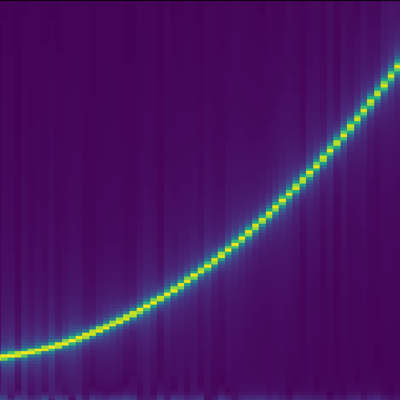
Phase plane (left) of an action potential generated by the FitzHugh–Nagumo model. Neural dynamics is largely concerned with understanding how such action potentials arise from the underlying biophysical and network dynamics. However, it also goes beyond and studies the dynamics of, e.g., neuronal populations, synaptic plasticity, and learning. In this post, we provide a definitional overview of the field of neural dynamics in order to situate it within the broader context of computational neuroscience and clarify some common misconceptions.Spiking activity in a recurrent network of model neurons (Izhikevich model). Shown are the spike times of all neurons in a recurrent spiking neural network as a function of time. The network consists of 800 excitatory neurons with regular spiking (RS) dynamics and 200 inhibitory neurons with low-threshold spiking (LTS) dynamics, separated by the horizontal line. Each vertical mark corresponds to an action potential (spike) emitted by a single neuron. In the context of neural dynamics, this representation illustrates how single-neuron events, such as the action potentials described above, combine to form structured, time-dependent activity patterns at the network level. Such spiking rasters provide a direct link between microscopic neuronal dynamics and emerging population activity, which can later be analyzed in terms of collective states, low-dimensional structure, and neural manifolds.Two complementary perspectives on population activity in neural dynamics. The figure contrasts a “circuit” perspective with a “neural manifold” perspective. In circuit models, neurons are organized in an abstract tuning space, where proximity reflects tuning similarity, and recurrent connectivity 
W
i
j
 together with external inputs generates time-dependent firing rates 
r
i
(
t
)
 (panels A–C). In the neural manifold view, the joint activity vector 
r
(
t
)
∈
R
N
 of a recorded population evolves along low-dimensional trajectories embedded in a high-dimensional space (panels D–F). This is illustrated by ring-like manifolds for head-direction representations and by rotational trajectories in motor cortex, both of which can often be captured by a small number of latent variables
Îș
1
(
t
)
,


,
Îș
D
(
t
)
 with 
D
â‰Ș
N
. In the context of our overview post here, I think, the figure highlights very well why neural dynamics naturally connects mechanistic network modeling with state-space descriptions of population activity. These are not competing accounts, but complementary levels of description that emphasize different aspects of the same underlying dynamical system. Source: Figure 1 from Pezon, Schmutz, Gerstner, Linking neural manifolds to circuit structure in recurrent networks, 2024, bioRxiv 2024.02.28.582565, DOI: 10.1101/2024.02.28.582565ꜛ (license: CC-BY-NC-ND 4.0)
Prof. R. I. Sujithrisujith
2026-01-15

Our reduced-order modeling approach to obtain a low-dimensional, analytically tractable model, captures both continuous & abrupt transitions to thermoacoustic instability observed in experimental observations; got published in @APSphysics

doi.org/10.1103/kf5z-xy15


Fabrizio MusacchioFabMusacchio
2026-01-13

Is there a framework for abrupt change? Christopher Zeeman was one of the key figures behind , a topological approach to discontinuous behavior that later informed much of today’s work on . Just came across his elegant 1976 paper, outlining his core ideas:

📄 jstor.org/stable/24950329

Diagram explaining catastrophe theory, showing how small changes can lead to sudden, large shifts in behavior and how systems fold and stabilize.
Fabrizio MusacchioFabMusacchio
2026-01-08

🧠 New preprint by Behrad et al. introducing , a much faster way to compare neural systems at the level of their dynamics, not just geometry or task performance.

What’s cool here: similarity is defined by shared , i.e. by the computational mechanism itself. This provides the first tool for mechanistic comparison of neural computations (to my knowledge).

🌍 arxiv.org/abs/2511.22828
đŸ’» github.com/CMC-lab/fastDSA

Figure 1. Schematic overview of methods for estimating dynamic (dis)similarity: DSA, family of fastDSA methods, and kwDSA.Figure 2. Demonstration of automatic rank reduction with SVHT:
European Mathematical SocietyEuroMathSoc@mathstodon.xyz
2025-12-10

🏆 Congratulations to the 2026 AMS–EMS Mikhail Gordin Prize laureates Simion Filip (University of Chicago) and Vadim Gorin (University of California, Berkeley)!

euromathsoc.org/news/2026-ams-

#Mathematics #EMS #AMS #Probability #DynamicalSystems

2025-12-10

I was thinking about climate tipping points and realized I needed to learn more about the math describing these kinds of phenomena. I found this excellent set of lecture notes, Bifurcations in Biological Dynamics, by André M. de Roos.
staff.fnwi.uva.nl/a.m.deroos/p

#dynamicalSystems
#tippingPoints
#bifurcations

Barcelona Dynamical SystemsDynSysBCN@mathstodon.xyz
2025-12-01

On equilateral central configurations in the \(1+4\) -body problem now in Communications in Nonlinear Science and Numerical Simulation from our colleagues E. Barrabés and J.M. Cors and their collaborators M. Álvarez-Ramírez.

Check it out here to learn more:sciencedirect.com/science/arti

#dynamicalSystems #appliedMath #MathgoesCelestial

2025-11-01

Strange Attractors
blog.shashanktomar.com/posts/s

Thomas,Aizawa, Simone ,Chen - Lee, Lorenz, Wang - Sun, Dequan Li , Dadras, Rossler, Arneodo, Halvorsen ,Three Scroll ,Chua's Circuit

#vizualization #dynamicalSystems #threejs #simulation #math

Barcelona Dynamical SystemsDynSysBCN@mathstodon.xyz
2025-10-30

Great 8th Barcelona Dynamic Systems Day! Key highlights:
🧠 "Clar que sí. Hi ha sistemes dinàmics dins la nostra ment" by Catalina Vich.
đŸȘ "Sobre l'estabilitat d'un sistema planetari Sol-JĂșpiter-Saturn" by Alex Haro.
🏆 Barcelona Dynamical Systems Prize: "Benjamin-Feir instability of Stokes waves" by Massimiliano Berti, Alberto Maspero & Paolo Ventura.

A brilliant day of maths and community. Congrats to the winners and thanks to all!

#DynamicalSystems #Maths #Neuroscience #SolarSystem #Barcelona #8JSD

🔗 sistemesdinamics.cat/jornades_

Barcelona Dynamical SystemsDynSysBCN@mathstodon.xyz
2025-09-22

On a Countable Sequence of Homoclinic Orbits Arising Near a Saddle–Center Point, now in Communications in Mathematical Physics from our colleague I. Baldomá and his collaborators M. Guardia and D. E. Pelinovsky.

Check it out here to learn more:
link.springer.com/article/10.1

#DynamicalSystems #PeriodicOrbits #SplittingOfSeparatrices

Prof. R. I. Sujithrisujith
2025-09-15

We discover that upon variation of an additional parameter, a complex system undergoes a change in the nature of the transition from continuous to abrupt, involving an intricate metamorphosis of the transition, published in Physical Review E by @APSphysics.

doi.org/10.1103/qn17-x37z

Christophe BousquetKrisAnathema@fediscience.org
2025-08-06

The twelth day of the Konstanz School of Collective Behaviour 2025 (#KSCB2025) starts with a #keynote by Francesco Ginelli on how #physics of #DynamicalSystems shape #animal #collectives.

@cbehav.bsky.social

exc.uni-konstanz.de/kscb/

Christophe BousquetKrisAnathema@fediscience.org
2025-07-29

We finish the sixth day of the Konstanz School of Collective Behaviour 2025 (#KSCB2025) with a #tutorial by Marco Fele on #modelling #DecisionMaking in #DynamicalSystems

@cbehav.bsky.social

exc.uni-konstanz.de/kscb/

2025-07-08

Today, on #ICongressoDoIMECC, Prof. Marco Antonio Teixeira (IMECC/UNICAMP) will present a plenary talk on "Refractive Systems".

"I will briefly and roughly discuss a topic in NSDS (Refractive Systems) that I am currently interested in. We intend to, colloquially discussing some properties of such class of non-smooth dynamical systems (NSDS). In this way, local stability conditions in dimension 3 are discussed. It is worth to say that such subject is still poorly understood in higher dimension."

#Unicamp #IMECC #DynamicalSystems

youtube.com/live/vHXBEZMS7U0?s

"Romeo is quite the emotional type. Let R(t) denote his feelings at time point t."

What did I just read?? This blog is crazy

fabiandablander.com/r/Linear-L

#DynamicalSystems

WilliamLMillerwilliamlmiller
2025-06-21

Happy Summer Solstice! ☀

The longest day of the year—when the sun completes its fullest arc, and light holds sway.

In dynamical terms, it’s the high tide of energy fed into a chaotic system.

The solstice reminds us: chaos isn’t just disorder. It’s the rhythm of cycles—pushing edges, testing limits, and creating new value.

Don’t fear the light. Or the heat.

Let’s strengthen our thriving. The future beckons.

Minimalist graphic with a pale cream background. Centered is a stylized golden sun with sharp triangular rays. Above the sun, bold serif text reads “Happy Summer Solstice!” with a small sun icon replacing the final period. The design is clean and understated, evoking warmth and calm.
Andrei A. Klishinaklishin@fediscience.org
2025-06-19

re-#introduction
Hi Fediscience! I am an Assistant Professor of Mechanical Engineering at University of Hawaiʻi at Mānoa (Honolulu). I got here starting from Physics training with many scientific detours into data-driven models, complex systems, nanomaterial self-assembly, human learning of complex networks, naval ships, and design problems.
I grew up in Belarus and have *opinions* on that region of the world. I've been on Fediverse since late 2022 when *something* happened to our previous cybersocial infrastructure, but the previous server I was on is sunsetting. Please come say hi and recommend cool people to follow here.
I have a blog with longer thoughts on science-adjacent topics.
aklishin.science/blog/
#ComplexSystems #NetworkScience #DataScience #DynamicalSystems #CollectiveBehavior #StatisticalPhysics

Khurram Wadee ✅mkwadee@mastodon.org.uk
2025-06-13

A few days back, I posted some #AnimatedGifs of the exact solution for a large-amplitude undamped, unforced #Pendulum. I then thought to complete the study to include the case when it has been fed enough #energy to allow it just to undergo #FullRotations, rather than just #oscillations. Well, it turns out that it is “a bit more complicated than I first expected” but I finally managed it.

#Mathematics #AppliedMathematics #SpecialFunctions #DynamicalSystems #NonlinearPhenomena

Barcelona Dynamical SystemsDynSysBCN@mathstodon.xyz
2025-05-27

Explicit numerical computation of normal forms for Poincaré maps, now in Communications in Nonlinear Science and Numerical Simulation from our colleague M. Jorba-Cuscó and his collaborators J. Gimeno, A. Jorba and M. Zou.

This publication is dedicated to the memory of A. Jorba.

Check it out here to learn more:
sciencedirect.com/science/arti

#DynamicalSystems #PoincareSections #NormalForms

Client Info

Server: https://mastodon.social
Version: 2025.07
Repository: https://github.com/cyevgeniy/lmst