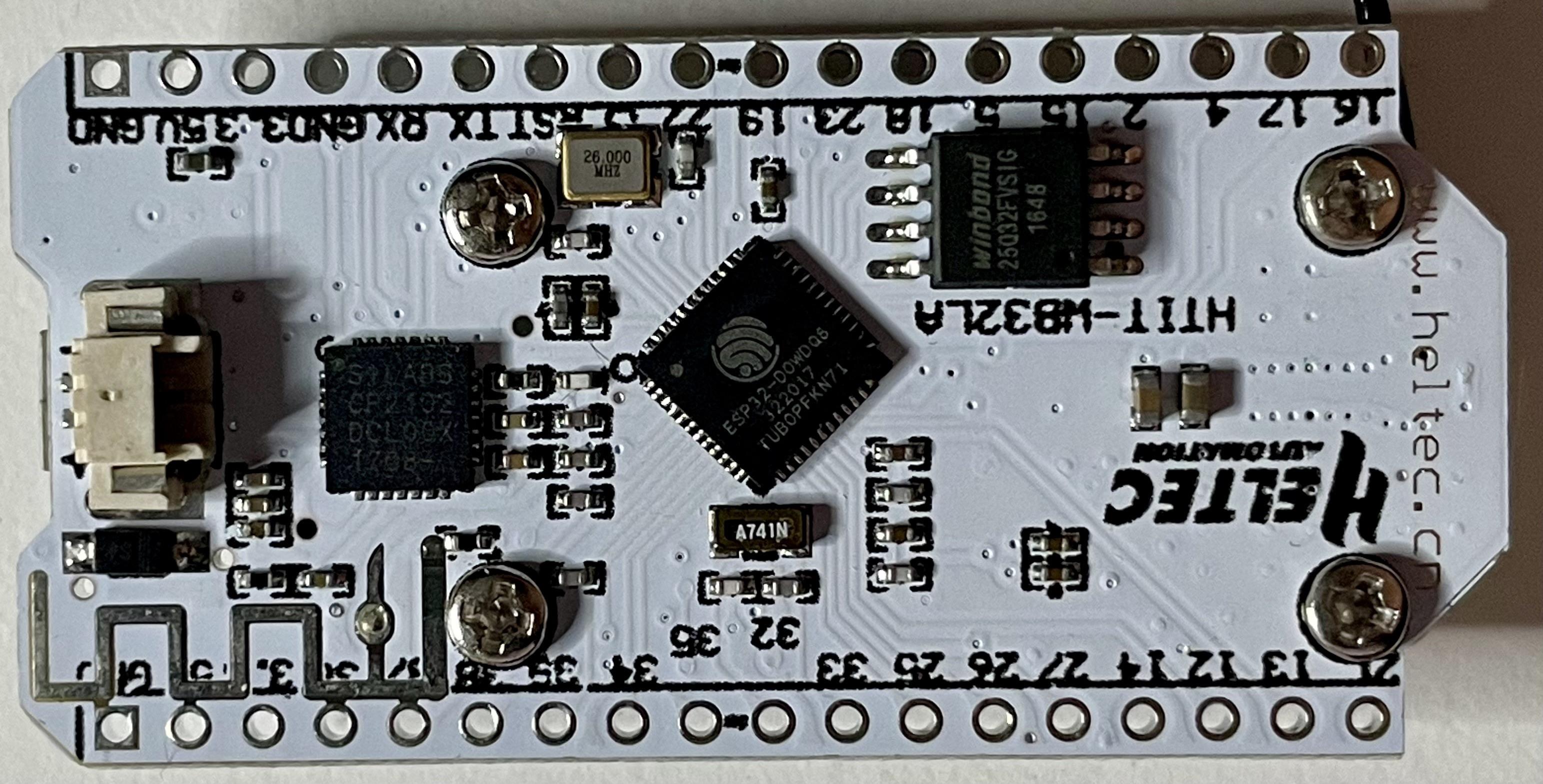
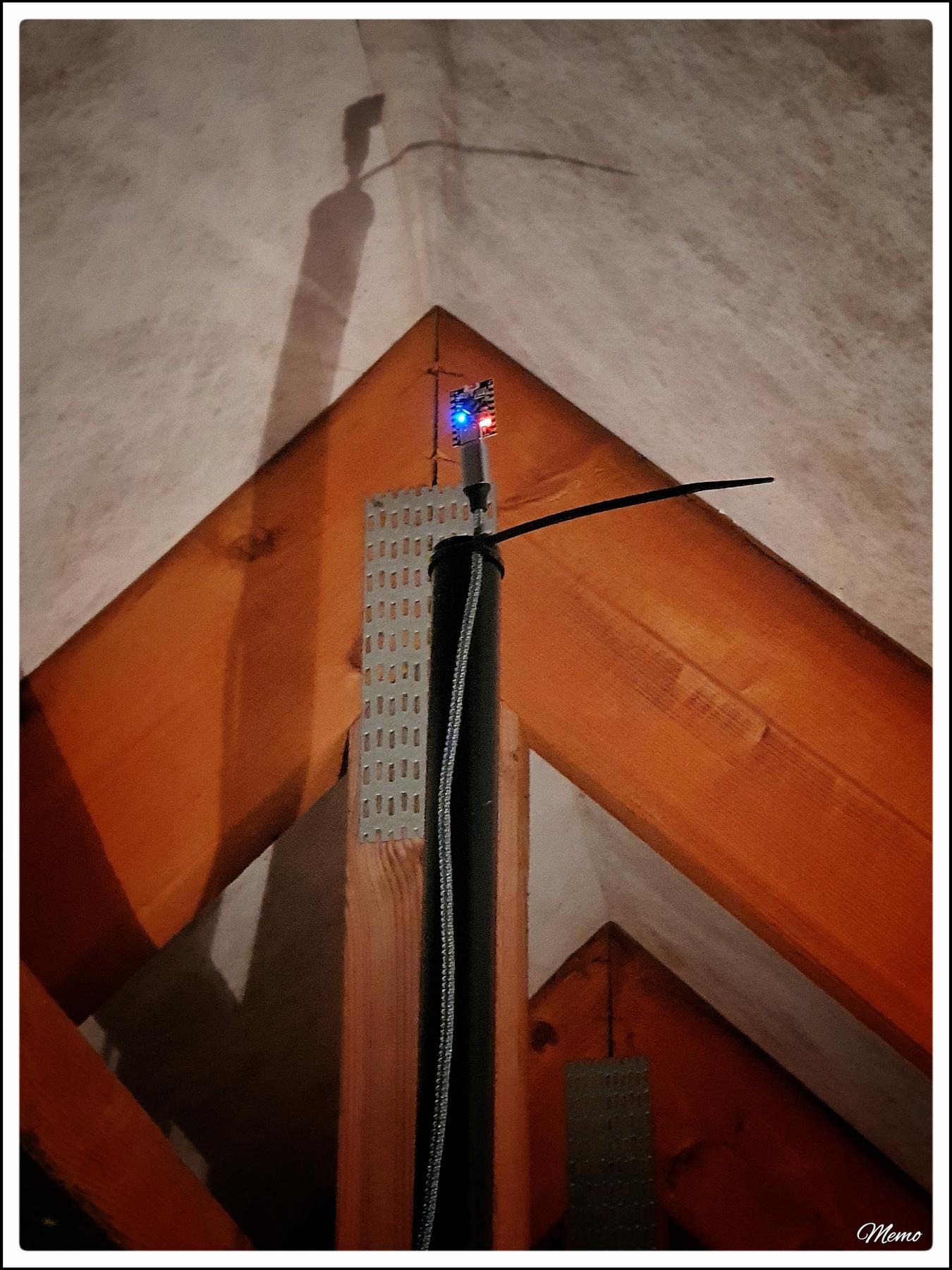
≪ Erste Tests ≫
Das ist jetzt zwar nicht der ESP32-C3 Mini, der schlussendlich auf den Dachboden soll, tatsächlich kommt dort eine Version mit einem externen Antennenanschluss hin, aber einen ersten Test lasse ich mir dann doch nicht nehmen. 😀
🔗 https://de.aliexpress.com/item/1005009475909411.html
#Geogram #Messenger #Kommunikation #Notfallkommunikation #Mesh #LoRa #WiFi #ESP32



![[ImageSource: MatAtBread]
⁉️The oscilloscope doesn’t have a display; instead, it hosts a webpage that displays the signal trace and provides the interface. Since the software uses direct memory access to continually read a signal from the ADC, it’s easy to adjust the sampling rate up to the hardware’s limit of 83,333 Hz.⁉️
In addition to sampling-rate adjustment options, the browser interface includes a crosshair pointer for easy voltage reading, an adjustable trigger level, attenuation controls, and the ability to set the test signal frequency.
👾The oscilloscope’s hardware is simply a Seeed Studio Xiao development board mounted inside a 3D-printed case with an AA battery holder and three pin breakouts for ground, signal input, and the test signal output.👾](https://files.mastodon.social/cache/media_attachments/files/116/064/511/818/102/092/original/73aeea60757c2211.jpeg)



![<div><img alt="" class="attachment-large size-large wp-post-image" height="450" src="https://hackaday.com/wp-content/uploads/2026/02/sstv-camera-main.jpg?w=800" style="margin: 0 auto; margin-bottom: 15px;" width="800" /></div><p>Ham radio operators may be familiar with slow-scan television (SSTV) where an image is sent out over the airwaves to be received, decoded, and displayed on a computer monitor by other radio operators. It’s a niche mode that isn’t as popular as modern digital modes like FT8, but it still has its proponents. SSTV isn’t only confined to the radio, though. <a href="https://hackaday.io/project/205004-digital-analog-tape-picture-camera" target="_blank">[BLANCHARD Jordan] used this encoding method to store digital images on a cassette tape in a custom-built tape deck</a> for future playback and viewing.</p>
<p>The self-contained device first uses an ESP32 and its associated camera module to take a picture, with a screen that shows the current view of the camera as the picture is being taken. In this way it’s fairly similar to any semi-modern digital camera. From there, though, it starts to diverge from a typical digital camera. The digital image is converted first to analog and then stored as audio on a standard cassette tape, which is included in the module in lieu of something like an SD card.</p>
<p>To view the saved images, the tape is played back and the audio signal captured by an RP2040. It employs a number of methods to ensure](https://files.mastodon.social/cache/media_attachments/files/116/061/571/151/472/081/original/bc806d1b06dabbca.jpg)