#WeekendStories

Weekend Storiesweekendstories
2026-01-07

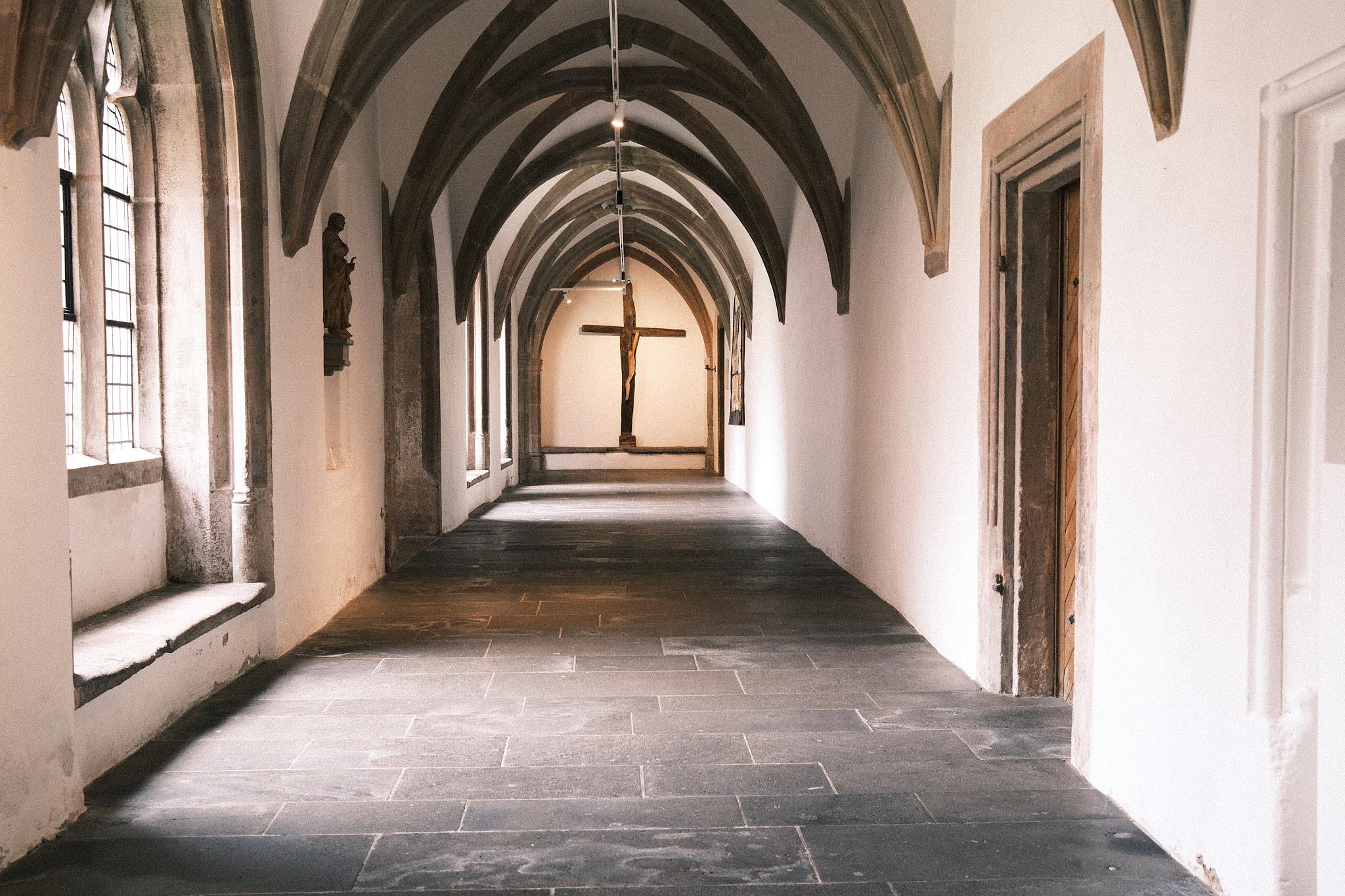
Also seen in April 2025: The for in hosts a small exhibition called "The Line", dedicated to calligraphic principles in . It highlights how and serve as unifying aesthetic principles across media, from painting to ceramics and bronzes, tracing a continuity from the period to . Here's a brief summary of that visit:

🌍 fabriziomusacchio.com/weekend_

The flyer of the exhibition.Characters of the Korean Phonetic Script, Ven. Mun Suan, Ink on paper, Korea, dated 1989. The monk Mun Suan of Tongdosa Temple wrote vowels, consonants and the beginning of the alphabet of the Korean phonetic script Hangeul ‘In the early spring of the year 4322 after Dangun’, i.e. 1989, as can be seen from the inscription. The strokes are written with an ink-rich brush. The shaky-looking lines are intended to be reminiscent of historical writings (Kor. goche).The River Rhine (Kor. 라인강, ra-in-kang), Jeon Myungok (b. 1954), Ink on paper, Korea, 2007.Long necked Ewer, Stoneware with engobe under celadon glaze, Korea, Goryeo Period (918-1392), mid-12th cent.
Weekend Storiesweekendstories
2026-01-07

In April 2025, I visited the exhibition "Ink Roamings" by the Chinese ink artist Jianfeng Pan at the in . The exhibition presented around 60 works on paper produced over the past decade, ranging from monumental to small album formats and serial works. Here's a summary of what I have seen and learned from the exhibition:

🌍 fabriziomusacchio.com/weekend_

‘Self-Portrait’ hanging in the entrance area of the exhibition.Unlimited, 2018-2020, Chinese ink, Chinese mineral colors, xuan-paper, cardboard, 20 assembled sheets mounted as a fanfold-book, total dimensions 45 × 1360 cm. Unlimited is inspired by what Pan calls the paradise village surroundings of his Finnish hometown, in an attempt to capture the, to him seemingly unreal pink of the early morning sky seen in the North in spring-time. All the same, the landscape remains essentially fictive; it springs from Pan’s imagination and does not represent any real existing natural setting. The ghostly creatures embedded in the scenery could be understood as haunting warning spirits that are meant to remind us of life and death in the everyday world - and the sometimes dangerous dream world in between. As the artist himself points out, his fanfold-book contains numerous hidden graphic elements. And as is usual in the Chinese pictorial tradition of narrative handscrolls, its stories unfold only when spread out and observed slowly.Ink Meditations, 2014, Chinese ink, xuan-paper, 9 mounted album leaves, each leaf 35 x 35 cm.For Pan, 2014 was marked by intensive travels and a longer sojourn in Germany, particularly in the Hanseatic city of Hamburg. Pan describes the extensively created work series Ink Meditations, of which a small selection is shown, as a ‘visual diary’. It indicates his gradual departure from graphic design and decisive turning towards ink art. In terms of both motif and technique, Pan’s snapshot-like ink sketches can be contemplated as exercises in mindfulness. The brushstrokes are applied with deliberation and concentration, likewise effortlessly and playfully. No stroke is redundant, just as every left-out area of the picture plane is filled with meaning. Pan’s ‘ink meditations’ condense what is also known in the Chinese literati tradition as the esteemed art of so-called ‘ink play’ (moxi).Hanging Inspirations, 2021, Chinese ink, xuan-paper, 3 mounted hanging scrolls, each scroll 130 x 37 cm. In minimalist and flawless manner, Pan’s Hanging Inspirations fuse the elementary graphic forms of the centrally placed circle and rectangle that frames the image. Forming a visual contrast surface, they highlight emptiness as a constitutive part of the visual composition, condensing what is known in ink discourse as the ‘dialectical conversation between black and white’! The centered iconic round figure evokes the hand-drawn ‘Circle of Enlightenment’ (Jap. Enso), which was established in the calligraphic practice of Zen-Buddhist monks as an iconographic tradition.
Weekend Storiesweekendstories
2026-01-06

I was also lucky to visit the exhibition 'From Line to Landscape' at the of in in December 2024. The show focused on the work of Tanaka Ryōhei (1933–2019) and offered a rare opportunity to see a comprehensive selection of his etchings spanning more than five decades. Here's a post summarizing what I have seen and taken home from the exhibition:

🌍 fabriziomusacchio.com/weekend_

Tanaka Ryōhei, ‘From Line to Landscape’, Museum für ostasiatische Kunst Köln, Dec 2024.Tanaka Ryōhei, Barn and House No. 3, from the exhibition ‘From Line to Landscape’ at the Museum für ostasiatische Kunst Köln, Dec 2024. Etching and aquatint, 1993. Tanaka created this impressive work shortly before he underwent long-postponed heart surgery. During his convalescence he produced a number of smaller etchings. The edition of the present work was printed in the following year after the artist had fully recovered. The richly varied thatch, particularly in the roof of the smaller building, is achieved by an extreme density of deeply etched lines. When using such a technique the artist has to take great care that the individual lines do not get bitten too deeply. This could affect the tiny copper ridges that define each line and hold the ink. A sideways breakthrough of these minute ridges would create a flat section which will no longer hold the ink and print as blank instead of the desired hues of black.Tanaka Ryōhei, Snow and Thatched Roof, from the exhibition ‘From Line to Landscape’ at the Museum für ostasiatische Kunst Köln, Dec 2024. Etching and aquatint, 1993. Even a well-trained eye could easily mistake this print for a multi plate (of a multi plate color etching), which it technically is not. The lineetched roof and the aquatinted sky were etched into - and printed off - the same plate. The drawn lines were etched much deeper than the aquatinted areas. Tanaka carefully mixed black and indigo ink so that the deeply etched lines still show as almost black: the blueish hue, on the other hand, is the result of the thin layer of ink remaining in the rather shallowly bitten aquatint section of the sky. This gives the impression that two plates, one black and one indigo, were used. The result is a rare technical feat, one that Tanaka was able to repeat only once more in his Snow Bird of 2008.Tanaka Ryōhei, Summer Room (Sepia), from the exhibition ‘From Line to Landscape’ at the Museum für ostasiatische Kunst Köln, Dec 2024.Color etching and aquatint, 1986. Tanaka printed two versions of this color etching of two plates: he used sepia on the key plate for 60 prints - another 60 were printed with black ink on the key plate. Japanese architectural details lend themselves extremely well for the interplay of abstract subdivisions of the kind we observe here. The variations in the divisions of shōji (sliding doors), kōshi (latticework), hanging curtains, and even the tatami (straw matting), provide a Mondrianesque mosaic. Tanaka’s contemporaries, particularly woodblock printmakers such as Sekmo Junichiro (1914-1988), see fig. 78a) and Clifton Karhu (1927-2007) repeatedly explored these graphically tempting architectural features.
Weekend Storiesweekendstories
2026-01-06

In October 2024 I was lucky to visit the exhibition "Expeditions – travelogues and photographs by the founders 1897–1899" at the Museum of in . It tells the fascinating story of Adolf and Frieda Fischer, whose travels to and laid the foundation for the museum. Here's a brief recap of that visit:

🌍 fabriziomusacchio.com/weekend_

Expeditions – travelogues and photographs by the museum founders 1897-1899, Museum für ostasiatische Kunst Köln, Dec 2024.Mr. and Mrs. Fischer at Christmas in Kyoto 1898, Wada Eisaku (1874-1959).Sword of the Atayal or the Seediq (Atayal: lalaw tuki), iron, wood, bamboo, rattan, hemp Taiwan, 2nd half 19th cent. Sword of the Atayal or the Seediq (Atayal: lalaw tuki), iron, wood, bamboo, rattan, hemp Taiwan, 2nd half 19th cent.Bird on a lotus leaf, bronze, Japan, Meiji period (1868-1912). The bird’s wings are removable and incense could be burned in the cavity below. The fragrant smoke escaped through slits in the wings.
Weekend Storiesweekendstories
2026-01-06

I’ve created a new primary account under my personal handle:

👉 @FabMusacchio

I did this mainly for the handle.

This account will remain active for .

Weekend Storiesweekendstories
2026-01-04

Martin Parr (1952–2025) profoundly changed with his bold use of color, flash, and focus on everyday life. His work challenged traditional norms, provoking debate while influencing generations of photographers. I was shocked when I heard of his passing in December 2025. I put together some personal reflections on his legacy:

🌍 fabriziomusacchio.com/weekend_

Martin Parr in 2024. Source: Wikimedia Commonsꜛ (license: CC BY 2.0), photo by Raph_PHꜛ.Martin Parr, Butlin’s Filey, North Yorkshire, England, 1972.Martin Parr, Crimsworth Dean Methodist Chapel, England, 1977.Martin Parr, Union Hotel, Manchester, England, 1974
Weekend Storiesweekendstories
2026-01-04

Parallel to the "From Dawn Till Dusk" exhibition at the , a retrospective of Gregory Crewdson's work was on display (and still is until February 22, 2026. Known for his cinematic, staged photographs that explore suburban American life, I was fascinated by the meticulous detail and cinematic expression in his work. I summarized some highlights on this post:

🌍 fabriziomusacchio.com/weekend_

Gregory Crewdson Retrospektive, exhibited at the Kunstmuseum Bonn, Oct. 10, 2025 to Feb. 22, 2026.Gregory Crewdson Retrospektive, exhibited at the Kunstmuseum Bonn, Oct. 10, 2025 to Feb. 22, 2026.Gregory Crewdson Retrospektive, exhibited at the Kunstmuseum Bonn, Oct. 10, 2025 to Feb. 22, 2026.Gregory Crewdson Retrospektive, exhibited at the Kunstmuseum Bonn, Oct. 10, 2025 to Feb. 22, 2026.
Weekend Storiesweekendstories
2026-01-03

In October 2025, I visited "From Dawn Till Dusk" at the Kunstmuseum Bonn, exploring shadow as a central element in contemporary art. The exhibition featured works by artists like Vito Acconci, Marlene Dumas, and Jeff Wall, showcasing shadow's playful and surprising uses. Here are some photos from the visit:

🌍 fabriziomusacchio.com/weekend_

Weekend Storiesweekendstories
2026-01-02

Before heading to teh St. Servatius Basilica in , we visited the on the same day. Here are some reflections of that visit along with some photos I took there:

🌍 fabriziomusacchio.com/weekend_

Bonnefanten Museum’s Old Masters collection.Jan Van Brussel, Dual Justice, ca. 1475 - 1477 (datering van restauratie 1599), oil on panel (detail)Folkert de Jong, The Shooting at Watou, 2006Laure Provost, Cooling System 10 for Global Warming, 2019.
Fabrizio Musacchiopixeltracker@sigmoid.social
2026-01-02
Shot with No Fusion by "NC".Shot with No Fusion by "NC".Shot with No Fusion by "NC".Shot with No Fusion by "NC".
Weekend Storiesweekendstories
2026-01-02

In August 2025, I visited the Basilica of St. Servatius in , a site rich in Romanesque architecture and religious history. I wrote a short reflection with some photos here:

🌍 fabriziomusacchio.com/weekend_

Main entrance portal of the Basilika von Sankt Servatius.A wooden statue, most likely of Saint Servatius, at the entrance of the basilica.The main nave of the basilica.Cloister courtyard with a giant, old bell in one corner.
Weekend Storiesweekendstories
2026-01-01

I recently watched a documentary exploring whether all humans once shared a single ancestral . I decided to recap its key points as a follow-up to my series on the origins of languages and from last year:

🌍 fabriziomusacchio.com/weekend_

Language families of the world (only spoken languages). Source: Wikimedia Commonsꜛ (license: CC BY-SA 3.0).
Weekend Storiesweekendstories
2026-01-01

In June 2025, we had a lab retreat at Kloster in the . Chosen for practical reasons, the place itself turned out to be quietly striking: a monastery balancing sacred heritage and everyday use, from basilica to seminar rooms. I wrote a short reflection with photos on architecture, history, and transformation:

🌍 fabriziomusacchio.com/weekend_

Kloster Steinfeld, Kall, Eifel, Germany. Shown is the central building complex.Part of the cloister of the monastery complex.The basilica of Kloster Steinfeld, Kall, Eifel, Germany.A seating area in the garden.
Weekend Storiesweekendstories
2026-01-01
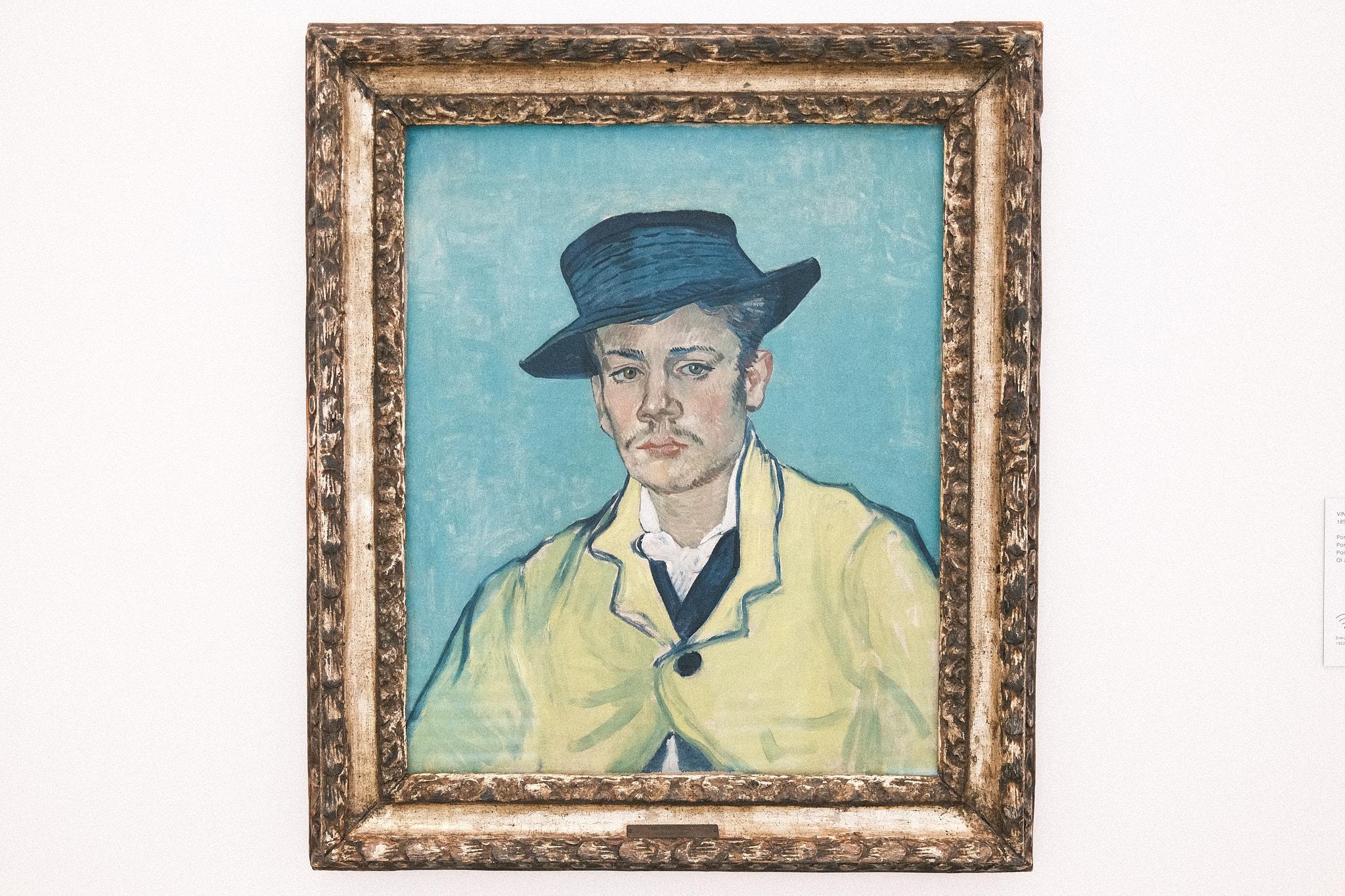
Folkwang MuseumFolkwang MuseumVincent van Gogh (1853 Groot-Zundert - 1890 Auvers-sur-Oise), Portrait d'Armand Roulin, 1888, Öl auf Leinwand.Armin Boehm (geb. Aachen 1972), Climate change (Greta Thunberg), 2022, Öl und Stoff auf Leinwand.
Fabrizio Musacchiopixeltracker@sigmoid.social
2025-12-30

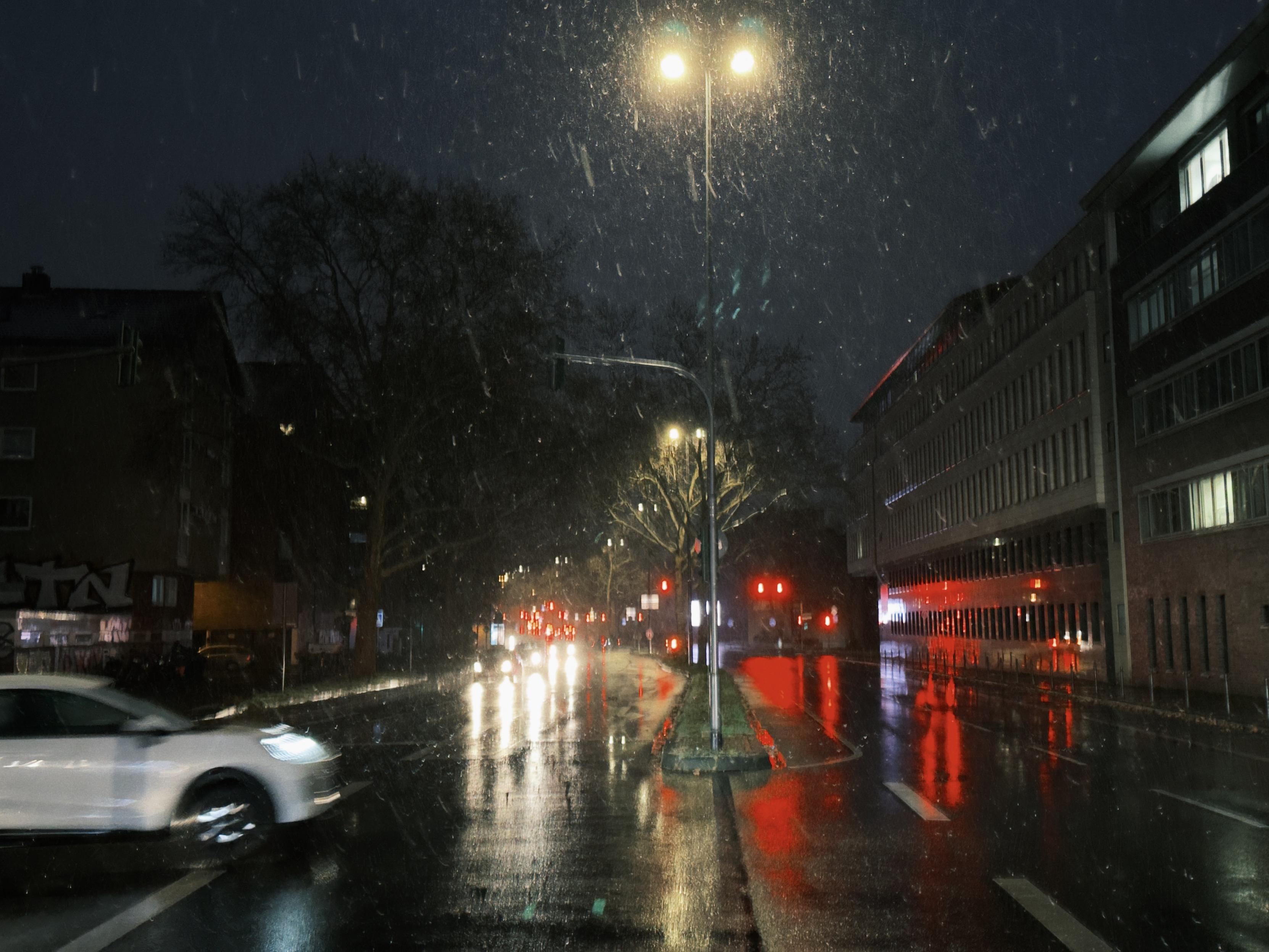
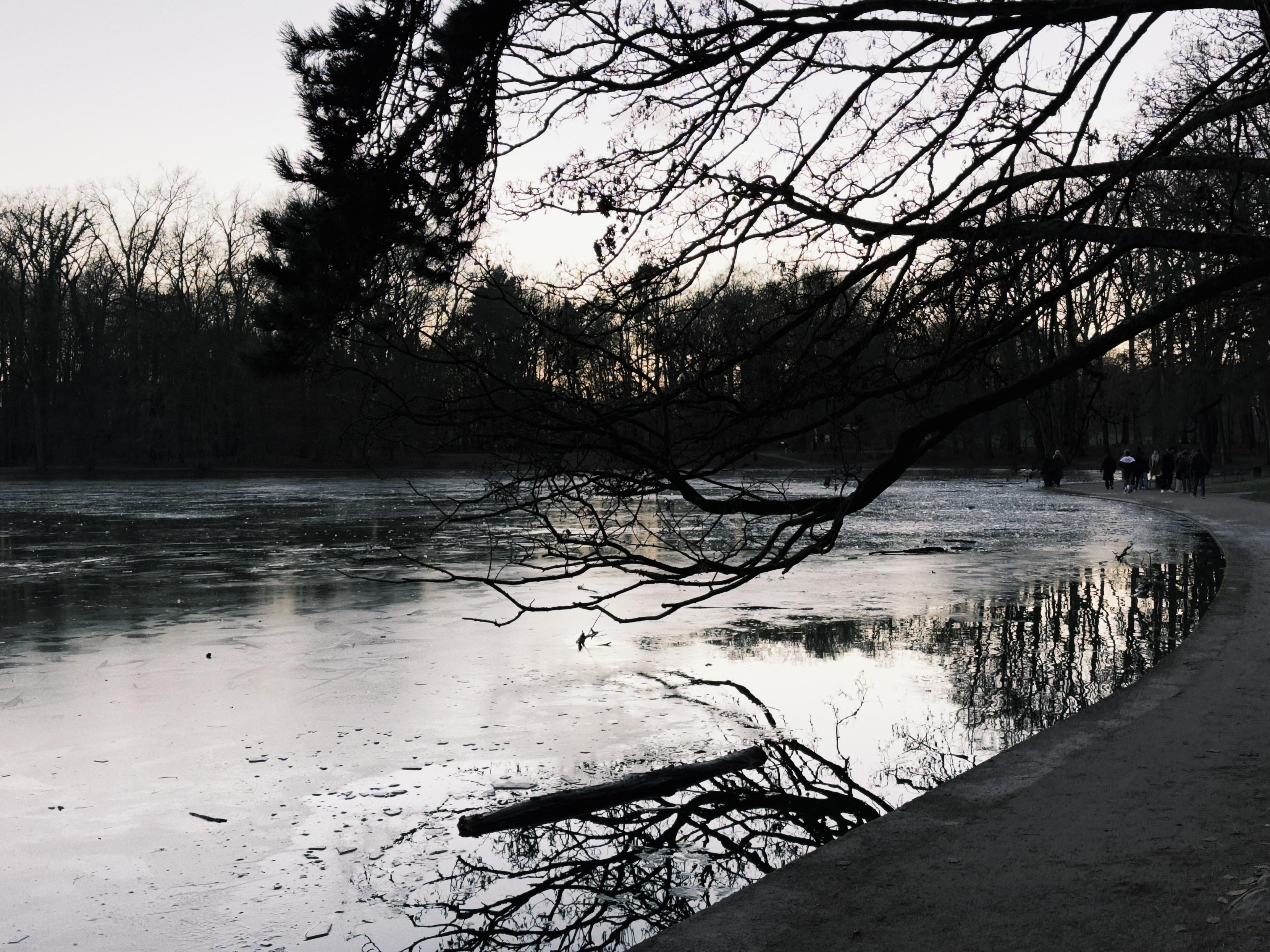
With a slight delay, winter has finally arrived in #Cologne ⛄️
#NoFusion #WeekendStories

Shot with No Fusion by "NC".Shot with No Fusion by "NC".Shot with No Fusion by "NC".Shot with No Fusion by "NC".
Weekend Storiesweekendstories
2025-12-28

’s historical entanglement with exposes a troubling contradiction: a tradition rooted in and non-attachment became complicit in imperial . In the early 20th century, Zen institutions reshaped core teachings to support nationalist ideology, with prominent figures justifying war through ideas of selflessness and detachment. This ethical failure challenges the image of Zen as inherently peaceful.

🌍 fabriziomusacchio.com/weekend_

The entry of the Japanese Navy Land Forces into the memorial service ceremonial site of Nanking (18 December 1937). The Nanking Massacre had occurred only weeks earlier and constitutes one of the most brutal atrocities in modern history, perpetrated by the Japanese military during its invasion of China. Although not caused by Japanese Zen Buddhism, the brutality of this period unfolded in a wider cultural and ideological environment in which several religious institutions, including Zen, offered moral support, spiritual rhetoric, or ideological justification that facilitated imperial aggression. Source: Wikimedia Commonsꜛ (license: public domain)
Weekend Storiesweekendstories
2025-12-27

's relationship with reflects diverse interpretations across traditions. While early texts permitted meat under specific conditions, strongly advocate plant-based diets as expressions of and the ideal. Contemporary movements increasingly link dietary to concerns and , demonstrating Buddhism's adaptive response to modern challenges.

🌍 fabriziomusacchio.com/weekend_

Buddhist monks during a meal. Buddhism does not universally mandate vegetarianism, but many traditions advocate it as an expression of compassion and non-harming. Source: pxhere.comꜛ (license: CC0ꜛ)
Weekend Storiesweekendstories
2025-12-21

How can and inspire real-world change? bridges ancient with today’s social, political, and challenges, showing that practice and can go hand in hand. Read more about this dynamic movement here:

🌍 fabriziomusacchio.com/weekend_

Buddhist monks on their daily alms round. Source: Pexelsꜛ (license: CC0ꜛ)
Weekend Storiesweekendstories
2025-12-19

's frames care as imperative rather than mere conservation. Through (), non-harming (), and the ideal, it extends to all sentient beings affected by . () invites engagement, not passivity, distinguishing natural cycles from destruction.

🌍 fabriziomusacchio.com/weekend_

The last batch of sawnwood from the peat forest in Indragiri Hulu, Riau Province, Indonesia. Deforestation for oil palm plantation. Source: Wikimedia Commonsꜛ (license: CC BY-SA 2.0)
Weekend Storiesweekendstories
2025-12-14

offers a nuanced approach to that differs from many traditions: rather than condemning relationships, core teachings evaluate actions based on intention, harm, and attachment. Early texts lack explicit prohibitions of , while monastic celibacy rules apply universally regardless of orientation. However, Buddhism's invites engagement beyond rigid identity categories.

🌍 fabriziomusacchio.com/weekend_

+

Artistic representation of the intersection of Buddhism and LGBTQ people shown by the Buddhist flag and rainbow flag. Source: Wikimedia Commonsꜛ (license: public domain)

Client Info

Server: https://mastodon.social
Version: 2025.07
Repository: https://github.com/cyevgeniy/lmst