Interesting …
The original Interim Mail Access Protocol was implemented as a Xerox Lisp Machine client and a TOPS-20 server.
https://en.wikipedia.org/wiki/Internet_Message_Access_Protocol?wprov=sfti1#
Interesting …
The original Interim Mail Access Protocol was implemented as a Xerox Lisp Machine client and a TOPS-20 server.
https://en.wikipedia.org/wiki/Internet_Message_Access_Protocol?wprov=sfti1#
People have brought up the TOPS-20 command processor already.
Just for completeness, I'll mention DCL on VMS, which had long parameter names (e.g. /COPIES to PRINT and /FULL to DIRECTORY).
There's also MCR on VMS (and RSX), with HELLO and BYE for logging on and off.
Don't forget the whole "* commands" system on the BBC MIcro, either.
#VMS #CLI #TOPS20 #DCL #DIGITAL #retrocomputing #MCR #RSX #BBCMicro
@larsbrinkhoff @onokoto
My memory is hazy, but I don't remember working on an ITS machine at that time. Our work was almost exclusively on TOPS-20.
I also don't know where that mode code originated from. I made improvements to it. Apart from Emacs I also adapted the Pascal debugger to split the VT100 screen into source and execution halves. I was a TA and wasn't involved with the research community at all.
> file versioning
optionally :)
I'd add networked file system, though it hides in "virtual devices". And integrated debugger (DDT).
But the big, underappreciared thing about the ITS operating system (OS), too easily seen as a weakness, was the LACK of security.
Today, security is essential. But the luxury of working WITHOUT it back then was a HUGE productivity gain.
ITS existed on the ARPANET for YEARS with NO file security, NO protection against ANY user (even not logged in users) shutting down timesharing, tools that let ANY user spy on any other, and commands to read interactive messages or email that took a command line argument of WHOSE to read. Yet abuse was negligible/tolerable for a LONG time.
Partly an artifact of the time. Some combination of (1) most folks not thinking to make mischief, (2) most users knowing how precious it was and being asked to behave like adults and respect it, (3) using those same tools to see what others were doing and mutually policing, (4) using spy tools to make sure people weren't floundering and frustrated but helped to succeed, (5) treating even guests (tourists) with respect, (6) "security through obscurity" still worked back then.
I didn't understand how critical this was until I started using a Digital Equpment Corporation (DEC) commercial TOPS-20 OS on basically the same (PDP-10) hardware. I felt suddenly WAY less productive and was at a loss for why. I went back to an ITS host and enumerated all the programs in the system directories (SYS, SYS1, SYS2, SYS3) to see what was missing.
One realization was that most of that software just supported other ITS software. It wasn't what was missing.
The other realization, something I then had no name for but with benefit of history I now do, was that ITS was an early form of social media--a better, less nutty way to perceive its spying capabilities--like a DDT (shell) command ("os", for Output Spy) to say WHOSE console to spy on.
Like in Star Trek TNG episode "I, Borg", TOPS-20 made me feel like Hugh did: I couldn't "hear the voices" of other users. (Metaphorically hear. We mostly had no audio back then.) The difference from ITS? I was lonely. I could send messages, but only private ones. Socializing information, knowing what others were doing, sharing work? All hard. The silence was deafening.
Why WOULD anyone be allowed to see somebody else's screen? Why would that EVER not be creepy? Why would someone WANT you to read their messages to/from others?
Isn't that what we do on Facebook? Somebody starts a conversation and others arrive to see it, see what's been said so far, and add to it. That's how ITS felt. You'd login, notice friends were online, read their recent messages to find out what was going on, and then (once caught up in conversations), join in. Details were different, but in the social media paradigm it's easier to see why it felt not so much creepy as fabulously useful, especially compared to the isolation of other OSes of the time (and now). It made us enormously more efficient.
And the ability to watch somebody else's screen? We do it in zoom today, though we now elect when we do it and when we can't. Still, powerful. People imagine it was more primitive back then, and it was. But different too. No camera, just screen, but no ability to opt out of sharing it. Not really the screen, the output buffer (kinda like a low-level, ephemeral event queue). Often it looked crappy on a slow terminal trying to watch a fast one because of data loss trying to keep up, or trying to watch a screen with sophisticated display capability from a screen (or even "paper terminal") lacking such capability. Even so, it worked pretty well.
It was ALSO an early interactive, collaborative development environment. Programmers worked with each other AND users (who they could watch). We didn't lack ideas. A lot of today's "new inventions" may be things we knew we wanted. We were limited by what tools were implemented, so progress started slow. Processors were slower. But people were clever, and much more careful with time/space efficiency than today.
I recall Emacs starting in about 3 seconds on ITS, on a PDP-10 with 10-15 users, slower if 30. Today, on MUCH faster personal hardware, it starts fast but still not instantly. More happens now under the covers. More flexibility AND sloppiness are allowed.
Back then if something didn't work, you sent a bug report. Someone might say "show me". So you'd do it on your console and assume they could watch. Like zoom (sans video).
Most stuff lacked documentation but people just typed queries to command line (like copilot?). It'd say syntax error but often someone spying would volunteer an answer, maybe before the user asked. :)
We built many sketches of our imagined futures. ITS was all about that in a way other OSes of the time were not.
#DEC #TOPS20 #ITS #TechHistory #history #tech #SocialMedia #collaboration #DevelopmentTools #programming #security #sharing
Just a sampling of the #hashtags I used and followed during the past year...
** Current Tech
- #SwiftUI
+ #Arduino
** #RetroComputing
- #AppleII
+ #pdp10 #tops20
+ #8bit #z80 #mos6502
** #RetroGaming
- #TextAdventure
- #InteractiveFiction
- #Zork
+ #Inform7
** Miscellany
- #WrexhamAFC
- #GenX
- #GenerationJones
+ #Jewish
+ #Hanukkah
+ #Mazeldon
+ #Secondhand
+ #Thrifting
If you're not following hashtags or including them in your posts, you're really missing out on the best part of Mastodon!
So I think I have #DECnet running.
I see lots of (UNKNOWN) packets in tcpdump between my klh10/pdp-10 #tops20 instance and the pydecnet router.
I guess I need to read some manuals now to figure out how to actually test it.
I found the pyDECnet router here:
http://mim.stupi.net/pydecnet.htm


@symbology Wait, are we reviving the #VMS v #UNIX rivalry? Or is more of a #TOPS10 / #TOPS20 subtoot? Surely not an appeal to #multics, #its, or #os400 lovers.
(Won’t some nerd update http://www.snee.com/bob/opsys/fullbook.pdf while we’re at it?)
/cc @SDF
The mighty @SDF #TWENEX empire is growing! https://mastodon.sdf.org/@SDF/109821138918349789
#SystemConcepts #SCgroup #Mars #SC40 #DEC #PDP10 #DECsystem10 #KL10 #TOPS20 #retrocomputing #mainframe #BigIron
Kind of a long shot but does anyone know how to get a data off an old 9-track tape?
(Scotch 777, taken from a TOPS-20 system)
Powering down the DECSYSTEM-20 (c.1986 VHS)
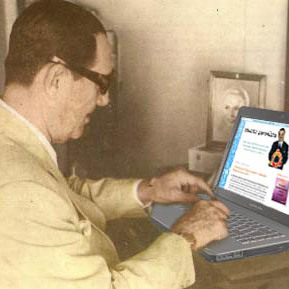
Juan #Perón te enseña a utilizar #TOPS20 desde #Ubuntu. ¡Dominá el antediluviano sistema operativo de cómputo a tiempo compartido basal de la cultura Hacker, el #TWENEX! https://tinyurl.com/2p8czf84


@SDF has migrated the twenex tops-20 users to a new XKL TOAD2 system. (If you don't know what that is, it's like a modern re-imagined PDP-10) - it's really obscure, really rare, and super neat! It apparently now also is able to run bash?! (I never thought I'd see bash on tops-20) - seems to be doing some mapping of the tops-20 paths to be more unix-like. Also sounds like a tops-20 bootcamp is in the works. #tops20 #pdp10 #sdf - Now i just need to get it working better w/ my terminal. :)

@bkhan @imakefoss I use Linux 'cause unfortunately the BSDs didn't really take off as well* as Linux did and #SunOS, #VMS and #TOPS20 are not really viable options anymore.
* Insert long discussion about the FreeBSD layer on top of the Mach kernel that is (apple not Cisco) IOS here.