
The Landscape of Lisp
#lisp

Here is another one screenshot. I changed the palette a bit.
I also gamma corrected it to uhhhh I forgot to do that on the default shader.
#lisp #gamedev #indiedev

Neil Munro: Ningle Tutorial 14: Pagination, Part 1 - https://nmunro.github.io/nmunro.github.io/2026/01/31/ningle-14.html
## Contents
* [Part 1 (Hello World)][1]
* [Part 2 (Basic Templates)][2]
* [Part 3 (Introduction to middleware and Static File management)][3]
* [Part 4 (Forms)][4]
* [Part 5 (Environmental...
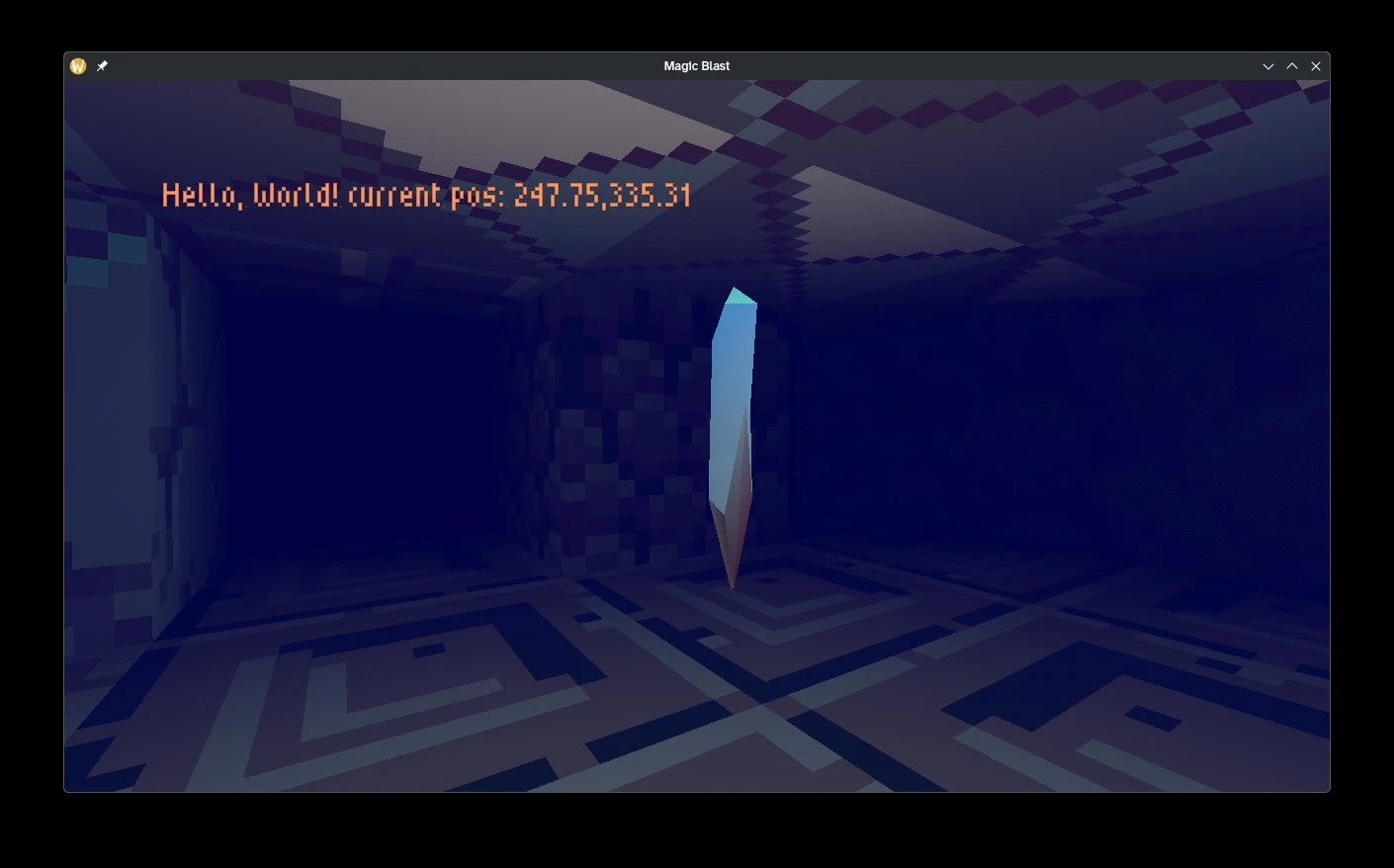
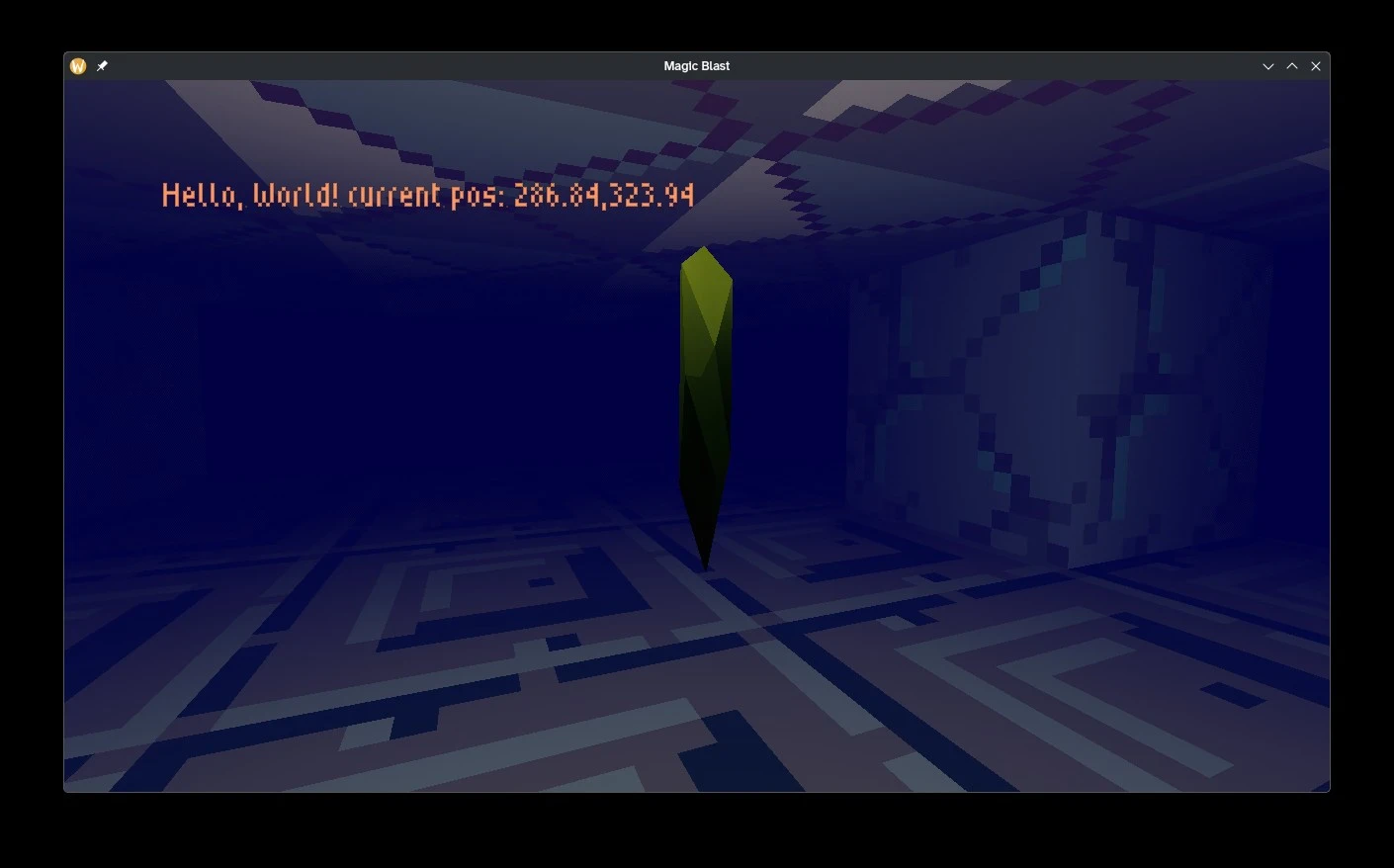
Nothing major, but I did learn about gradient textures so I made the floating crystal to use it. I also had to change up how I handle texture filtering in opengl to make it look nice.
The benefit this gives me is that I can shift the uvs and change the color of the crystal with a small texture. I'm using a 32x32 texture of a color palette.
#lisp #gamedev #indiedev



Books using #lisp to illustrate programming concepts: „we picked lisp because it has easy syntax and is easy to understand.”
The same books: here are hundreds of crazy lisp tricks, helper functions with strange names, macros, and black magic we employed to make the examples work.

And we, in the early days of the Internet and World Wide Web, were Punk:
Passionately writing software and then giving it away for free. Self expression through code. Hacking at systems to free it from its tightly held constraints.
Renegades and outlaws... coding #Forth even when the establishment said it encourages bad habits. Poetry expressed via #perl. Doing things with #awk that the left the original authors in shock and awe ("..we never intended *that*"). Embedding adhoc DSLs and #lisp interpreters inside of applications to extend capabilities....
"The street finds its own uses for things..." .
Indeed.


Daniel Kochmański @jackdaniel is revising the manual of McCLIM, starting from the chapters on the development history and getting started.
From this I learned that in 2026 it has been 10 years since he took over maintenance of McCLIM. Thanks to Daniel and all contributors for their work on this great implementation of the Common Lisp Interface Manager GUI toolkit.
A new CLX release: https://github.com/sharplispers/clx/releases/tag/0.7.8
Thanks to @bmansurov for refactoring demos.

@screwlisp @kentpitman regarding the discussion we had after the #LispyGopherClimate show ended, MiniKanren is logic programming language embedded in Scheme (sort-of like a Prolog implemented in Scheme and coded with S-expressions), and you can use machine leaning methods like neural networks to guide the search tree of the goal solver mechanism. This paper is an example of what I was talking about.
Even before LLMs were invented, MiniKanren was able to do program synthesis using purely symbolic logic. They developed a prototype called Barliman where you would provide example input->output pairs as constraints, and using a constraint solver, could generalize those examples to a function that generates any output for any input. As a simple example, you could give it the following input-output pairs:
- () -> ()
- (a) () -> (a)
- () (a) -> (a)
- (a) (a) -> (a a)
…and the constraint solver could determine that you are trying to implement the append function for lists and write the code automatically — without LLMs, using purely symbolic logic.
As you might expect, the solver could be very slow, or even diverge (never returning an answer). The paper I mentioned above talks about using neural networks to try to guide the constraint solver to improve the performance and usefulness of the results returned by the solver.
Now imagine applying this technique to other domains besides code generation or optimization, for example, auto-completion, or cache pre-fetching, and building it into a programmable computing environment like Emacs. You could have a tool like “Cursor,” but instead of using LLMs, it uses classical computing and constraint solvers, while taking a fraction of the amount of energy that LLMs use.
#tech #software #AI #LLM #MachineLearning #NeuralNetwork #ConstraintLogic #ConstraintSolver #LogicProgramming #Prolog #MiniKanren #Emacs #Lisp #Scheme #SchemeLang #ProgramSynthesis
Debugging Lisp: fix and resume a program from any point in stack [video]

#lispyGopherClimate #lisp #technology #podcast #archive, #climate #haiku by @kentpitman
https://communitymedia.video/w/c3GdAXe7BQTbK3VrcXCm7E
& @ramin_hal9001
On the #climate I would like to talk about the company that found #curl and #openssl's #deeplearning many (10ish) 0-day vulns "using #ai ". (#llm s were involved).
This obviously relates to my #lisp #symbolic #DL https://screwlisp.small-web.org/conditions/symbolic-d-l/ (ffnn equiv). Thanks to everyone involved with that so far.
I implemented that using #commonLisp #condition handling viz KMP.


“(There are many (many (nested)) parentheses: ritual magic, realtime spell-casting, hasn’t been the same since John McCarthy.)”
– Charlie Stross, The Apocalypse Codex
(Yep, I’m rereading the #LaundryFiles by @cstross as a refresher for #TheRegicideReport)
Help wanted!
testing #ecl before the next release:
https://gitlab.com/embeddable-common-lisp/ecl/-/work_items/798
Thanks :)

In #Clojure, if you query a set for a member, and that member is present, that member is returned:
user=> (#{:a :b :c} :a)
:a
The traditional #Lisp function ASSOC has the signature
(ASSOC store key) => value
where store is assumed to be a list of (key . value) dotted pairs.
In the experimental Lisp I'm working on, I want you to be able to put maps onto assoc lists as well as (key . value) pairs, which raises the questions...
/Continued

Implementing Tail Call Optimization in my interpeter so I can do speed tests with huge fibonacci sequences.
It's actually fairly simple once you get the algorithm!
Client Info
Server: https://mastodon.social
Version: 2025.07
Repository: https://github.com/cyevgeniy/lmst