
#happybirthday #jamesspader #actor #ultron #avengers #ageofultron #visionquest #stargate #theblacklist #thepractice #bostonlegal #sexliesandvideotapes #theoffice #supernova #secretary #crash #frasier #PrettyinPink #Mannequin #WallStreet #AlienHunter #lessthanzero #lincoln #TheHomesman
#supernova


THE COWS / SUPERNOVA / RETARDBUS
Bands THE COWS SUPERNOVA RETARDBUS Venue - Venue name: REPTILE HOUSE - Date: SAT. FEB. 11, 1995

Musikalisch ausgdrückt .. "ich geb mir Aufgaben, damit ich was aufhabe" ... ♾️ tunes
😍 #Balbina 🌱 #Hanfgeschichten #DerHaken ✅
🎶 https://youtu.be/__5re3MgIEw 🎵 👩🎤 🌌
#Poesie #poetry #kunst #Kultur #art #culture #music #writing #writer #Gedanken #Traumzeitwirbelsturm #Supernova #Zeitdilatation #myHallofFame


6:34am Supernova by Martin Bejerano from #CubanAmerican
#MartinBejerano #Supernova #JazzNetwork #KUVO




A Supernova in Motion
In 1604, astronomers first caught sight of Kepler’s Supernova Remnant, a massive explosion some 17,000 light-years away. Twenty-five years of observations from the Chandra X-ray Observatory went into making this timelapse, which shows the supernova remnant‘s material pushing into the surrounding gas and dust.
In its fastest regions, the supernova remnant is moving around 2% of the speed of light–some 22 million kilometers per hour. Slower parts of the remnant are moving at just 0.5% of light-speed. (Image credit: NASA/CXC/SAO/Pan-STARRS; via Gizmodo)
#astrophysics #compressibleFlow #flowVisualization #fluidDynamics #physics #science #shockwave #supernova #turbulence
FH Bradley and Max Weber are having a moment right now as the #US #solipsism of the last 56 years explodes spectacularly. It started with the Moral Majority, got gaslit by Lee Atwater, Fox News, and Karl Rove, and has achieved #supernova status under Steve Bannon and #Qanon.

NASA Supercomputer Probes Tangled Magnetospheres of Merging Neutron Stars ✨
#Ast #Astrophysics #GammaRayBurst #NeutronStar #Space #Star #Supernova #Universe
⏩ 2 new pictures and 2 new videos from NASA (SVS) https://commons.wikimedia.org/wiki/Special:ListFiles?limit=20&user=OptimusPrimeBot&ilshowall=1&offset=20260129181802



Mit meinem Blick von außen auf die #USA muss ich feststellen: George W. #Bush war wohl nicht der hellste Stern am Firmament. Aber im Vergleich zu Donald Jay #Trump war er eine #Supernova.
The First Radio View of a Type Ibn Supernova in SN 2023fyq - understanding the Mass-loss History in the Last Decade before the Explosion: https://iopscience.iop.org/article/10.3847/2041-8213/ae1cb8 -> First Radio Signals from Rare #Supernova Reveal Star’s Final Years: https://as.virginia.edu/news/first-radio-signals-rare-supernova-reveal-stars-final-years

Fellow #space nerds! 🌌 I can finally show another work thing I've done … uh, 2024? It's a scene for a #fulldome show about particle acceleration in #supernova remnants:
https://jfml.eu/2025/12/3d-supernova-ueberrest-fuer-das-planetarium-bochum/
Main challenge was having macro scale (the nebular) and micro scale objects (the particles) in one scene which resulted in a lot of juggling with alpha masks etc. in post ^__^
#JfmlArt #art #illustration #creative #DigitalArt #blender #blender3d #3d #b3d #physics #cgi #3d #3dart #3dmodeling #universe


Fellow #space nerds! 🌌 I can finally show another work thing I've done … uh, 2024? It's a scene for a #fulldome show about particle acceleration in #supernova remnants:
https://jfml.eu/2025/12/3d-supernova-ueberrest-fuer-das-planetarium-bochum/
Main challenge was having macro scale (the nebular) and micro scale objects (the particles) in one scene which resulted in a lot of juggling with alpha masks etc. in post ^__^
#art #illustration #creative #DigitalArt #blender #blender3d #3d #b3d #physics #cgi #3d #3dart #3dmodeling #universe
https://jfml.eu/2025/12/3d-supernova-ueberrest-fuer-das-planetarium-bochum/
Main challenge was having macro scale (the nebular) and micro scale objects (the particles) in one scene which resulted in a lot of juggling with alpha masks etc. in post ^__^
#art #illustration #creative #DigitalArt #blender #blender3d #3d #b3d #physics #cgi #3d #3dart #3dmodeling #universe


Gloeiende nevel blijkt stellaire kraamkamer te zijn
De Vela Junior-supernova explodeerde een paar duizend jaar geleden en liet een gloeiende nevel achter, maar astronomen konden niet vaststellen
#eso #HerbigHaro #MUSE #PlanetaireNevel #ster #stervorming #supernova #Ve727 #VelaJunior #VeryLargeTelescope
https://www.kuuke.nl/gloeiende-nevel-blijkt-stellaire-kraamkamer-te-zijn/

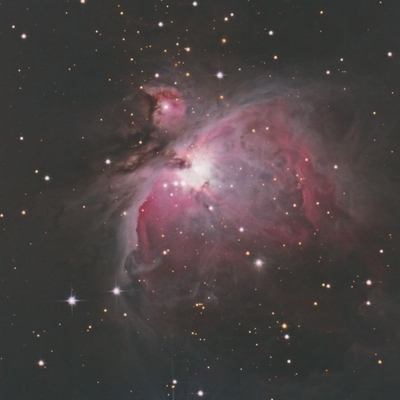
Der #Krebsnebel M1, ein #Supernova-Überrest.
The #Crabnebula M1 is a supernova remnant.
https://www.astropage.eu/wp-content/gallery/nebel/krebsnebel20260117_lab.jpg
#Astrofotografie #Astrophotography #Deepsky #Astroimage #Astrobild #Astronomie #Astronomy


Archiv: #Adidas #Supernova Rise Test – Laufschuh-Klassiker, der neue Wege beschreitet https://www.sports-insider.de/adidas-supernova-rise-test-laufschuh-klassiker-der-neue-wege-beschreitet-53155/ #AdidasSupernova #Laufschuhtest

Das Rad habe ich wieder komplett zerlegt und die Muffen mit Kunststoffgranulat und Farbe eingefärbt.
Dann die Seilzugbremsen gegen Magura Hydraulikbremsen ausgetauscht (made in Germany 😉).
Der neue Lowrider, von Racktime, stört jetzt auch nicht mehr den Lichtstrahl des M99DY von Supernova.
Bisher (nur) 14000km gefahren, auch im Winter.
#Eigenbau #Bambus #diy #madeinGermany #Magura #Farbe #Bambusfahrrad #Reiserad #Fahrrad #Trekkingrad #Alltag #Abenteuer #Overnighter #Microabenteuer #Supernova



"Astronomen zien oudste supernova ooit"
-> "Astronomen hebben het licht opgevangen van een zware ster die een miljard jaar na het ontstaan van het heelal is geëxplodeerd. Het is de oudste supernova die we tot nog toe hebben gezien – en mogelijk de oudste die we ooit zúllen zien."
-> "Het onderzoek toonde ook aan dat de ster die ontplofte maar weinig elementen naast waterstof en helium bevatte"
(Via #newscientist_NL ) #supernova
https://www.newscientist.nl/nieuws/astronomen-zien-oudste-supernova-ooit/

The Life Cycle of Stars: From Nebulae to Stellar evolution
Stellar evolution | The Cosmic Engines: Why Stars Define the Universe
Stars are not just twinkling points of light in the night sky; they are the fundamental engines of the cosmos. The study of stellar evolution—the process by which a star changes over its lifetime—is central to astronomy because stars govern the structure, chemistry, and very habitability of the universe. Every star follows a predictable life cycle dictated by a single, simple property: its initial mass. A star’s mass determines its internal temperature, its luminosity, its lifetime, and its ultimate, often violent, fate. The narrative of stellar evolution is a story of constant battle between two opposing forces: gravity, which seeks to crush the star inward, and the pressure from nuclear fusion in its core, which pushes outward. For the vast majority of a star’s life, these forces are in a stable balance, but this equilibrium cannot last forever. As a star exhausts its nuclear fuel, gravity gains the upper hand, leading to a series of dramatic transformations that seed the galaxy with heavy elements, trigger the formation of new stars, and leave behind exotic remnants like black holes and neutron stars. Understanding stellar evolution explains the origin of every atom in our bodies (we are literally “star stuff,” as Carl Sagan famously said), the light that illuminates planets, and the explosive events that shape galaxies. From the majestic pillars of star-forming nebulae to the eerie glow of supernova remnants, the life cycle of stars is the grand narrative that connects the birth of the universe in the Big Bang to the existence of life on Earth.
The story begins in the cold, dark clouds of gas and dust scattered throughout galaxies, known as nebulae or molecular clouds. Regions like the Orion Nebula are stellar nurseries. Within these clouds, local pockets can become gravitationally unstable, often triggered by a shockwave from a nearby supernova or the collision of gas clouds. As such a pocket collapses under its own gravity, it spins faster and flattens into a protostellar disk. The central ball of gas, the protostar, heats up as it contracts. When the core temperature reaches about 10 million Kelvin, a nuclear fusion reaction ignites: hydrogen nuclei (protons) fuse to form helium, releasing enormous amounts of energy. This is the moment a star is truly born, joining the main sequence—the long, stable adult phase of its life where it will spend about 90% of its existence. On the main sequence, a star’s position is fixed by its mass. Massive, hot, blue stars are luminous but short-lived, burning out in just a few million years. Low-mass, cooler, red stars are frugal with their fuel and can shine for trillions of years. Our Sun, a medium-mass, yellow dwarf star, has a main sequence lifetime of about 10 billion years; it is currently middle-aged, about 4.6 billion years old. During this stable phase, the star is in hydrostatic equilibrium, with outward pressure from fusion perfectly balancing inward gravitational pressure. But the hydrogen fuel in the core is finite. When it is nearly exhausted, the balance is broken, and the star embarks on the final, often tumultuous, chapters of its life. The specific path it takes—whether it ends as a gentle ember or a catastrophic explosion—depends entirely on the mass it was born with, making stellar evolution one of the most elegant and predictive theories in all of astrophysics.
The Main Sequence and Beyond: Paths Diverge by Mass
A star’s fate is a function of its birth mass:
- Low-Mass Stars (like our Sun): After hydrogen fusion ends in the core, the core contracts and heats up, causing the outer layers to expand and cool, turning the star into a red giant. The hot, compressed core eventually becomes hot enough (100 million K) to fuse helium into carbon and oxygen. In stars like the Sun, this helium fusion is unstable and occurs in a sudden flash. Eventually, the star cannot fuse carbon, and its outer layers are gently ejected into space, forming a beautiful planetary nebula. The exposed, hot core—now a white dwarf—is left behind. A white dwarf is an Earth-sized, incredibly dense remnant made of carbon and oxygen, supported against gravity by quantum mechanical pressure (electron degeneracy pressure). It will slowly cool over billions of years to become a black dwarf.
- High-Mass Stars (More than ~8 Solar Masses): These stars live fast and die young. They progress through successive stages of nuclear fusion in their layered cores: hydrogen to helium, helium to carbon, carbon to neon, oxygen, and silicon, and finally silicon to iron. Iron fusion does not release energy; it consumes it, so an iron core builds up. When the iron core becomes too massive (about 1.4 solar masses, the Chandrasekhar limit), electron degeneracy pressure can no longer support it. The core catastrophically collapses in less than a second. The implosion rebounds in a titanic supernova explosion (Type II or core-collapse supernova), outshining an entire galaxy for a brief period. This explosion forges elements heavier than iron and blasts them into space, enriching the interstellar medium for future generations of stars and planets.
The Exotic Endpoints: Neutron Stars and Black Holes
The collapsed core left behind after a supernova is itself a star of extreme physics.
- Neutron Stars: If the collapsing core is between about 1.4 and 3 solar masses, it crushes protons and electrons together to form neutrons, creating a city-sized object so dense that a teaspoon of its material would weigh billions of tons. It is supported by neutron degeneracy pressure. Neutron stars often have incredibly strong magnetic fields and spin rapidly, emitting beams of radiation; those detected as pulsed radio signals are called pulsars.
- Black Holes: If the collapsing core exceeds about 3 solar masses, no known force can stop the collapse. Gravity wins completely, crushing the matter into an infinitely dense point—a singularity—surrounded by an event horizon from which not even light can escape. This is the formation path for many stellar-mass black holes.
The Cycle of Cosmic Rebirth
The death of stars is not an end, but a vital part of a grand cycle. The material expelled by red giants, planetary nebulae, and supernovae—now enriched with heavy elements like carbon, oxygen, silicon, and iron—mixes back into the interstellar medium. This enriched gas collapses to form new stars, but now of a later generation that contain the elements necessary to form rocky planets and the chemistry of life. Our Sun, Earth, and everything on it are products of this recycling process that occurred over multiple stellar lifetimes. The study of stellar evolution thus connects us directly to the cosmos, revealing that we are not merely observers of the universe, but active participants in an ongoing cosmic story of birth, death, and rebirth that plays out on a galactic scale.
👉 Share your thoughts in the comments, and explore more insights on our Journal and Magazine. Please consider becoming a subscriber, thank you: https://borealtimes.org/subscriptions – Follow The Dunasteia News on social media. Join the Oslo Meet by connecting experiences and uniting solutions: https://oslomeet.org
References
- Carroll, B.W., & Ostlie, D.A. (2017). An Introduction to Modern Astrophysics (2nd ed.). Cambridge University Press. (Comprehensive chapter on stellar evolution).
- NASA. (n.d.). Stars. https://science.nasa.gov/astrophysics/focus-areas/how-do-stars-form-and-evolve/
- Chandra X-ray Observatory. (n.d.). Supernovas and Remnants. https://chandra.harvard.edu/xray_sources/supernovas.html
- LIGO Scientific Collaboration. (n.d.). Neutron Stars. https://www.ligo.org/science/GW-NeutronStars.php
- Hubble Space Telescope. (n.d.). Planetary Nebulae Gallery. https://hubblesite.org/contents/media/images/2005/27/1778-Image.html


I got bored one day - and I put everything on a bagel. Everything. All my hopes and dreams, my old report cards, every breed of dog, every last personal ad on Craigslist. Sesame. Poppy seed. Salt. And it collapsed in on itself.
Theorized stars collapsing without a supernova now observed by astronomers.
https://www.newscientist.com/article/2512066-star-appears-to-have-vanished-in-a-failed-supernova
Non-paywall: https://archive.ph/NGMno
Client Info
Server: https://mastodon.social
Version: 2025.07
Repository: https://github.com/cyevgeniy/lmst