
The US will see a rare 'blood moon' eclipse before sunrise this March: Where and when to look. Via @live_science #SkyWatchers 🌃✨🌠 #LunarEclipse #BloodMoon #Space #Astrophysics #OrbitalMechanics #Astronomy 🚀 🌌 ☄️ 🛰️
The US will see a rare 'blood ...
#space

Rocket Report: SpaceX probes upper stage malfunction; Starship testing resumes https://arstechni.ca/UkA5 #spacelaunchsystem #FireflyAerospace #rocketreport #blueorigin #newshepard #artemisII #starship #Science #spacex #Space #china #NASA




What is Webb observing?
https://spacetelescopelive.org/webb?obsId=01KG0HH0KBWM94V5W19MK3QTZR

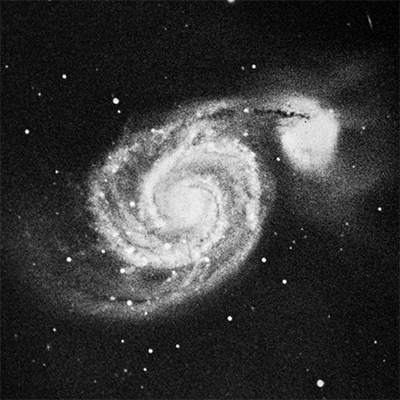
Hubble image of Arp 273, also known as UGC 1810 and UGC 1813.
UGC 1810, the larger galaxy in this interacting pair, has a disk that is distorted into a rose-like shape by the gravitational pull of the companion galaxy below it.
The smaller, nearly edge-on UGC 1813 shows signs of intense star formation at its nucleus, perhaps triggered by the encounter with its companion.
Credit: NASA, ESA, STScI, Hubble Heritage Team
Source: https://science.nasa.gov/asset/hubble/a-rose-made-of-galaxies-highlights-hubbles-21st-anniversary/


Une startup réinvente l’accès à l’espace : cinq satellites/jour lancés sans une goutte de fuel. https://www.science-et-vie.com/ciel-et-espace/ce-canon-futuriste-peut-lancer-cinq-satellites-par-jour-sans-bruler-un-gramme-de-fuel-225123.html #Space #Science #Innovation #AerospaceEngineering #OrbitalLaunch #SpinLaunch #CleanSpaceTech #LaunchTech
So, #Perseverance has now come back closer to the planned route, after a short deviation to the west and is about 140m away from Lac De Charmes. It should be there within one sol, if its present location proves to be not of much interest to the team.
Map drawn using #QGIS, #NASA's #MMGIS, #USGS and #HiRISE data

Une fenêtre inédite vers les trous noirs pourrait s’ouvrir si des signaux de rayonnement de Hawking sont enfin détectés dans la prochaine décennie 🌌 https://www.geo.fr/sciences/une-nouvelle-fenetre-sur-lunivers-un-trou-noir-theorise-par-stephen-hawking-pourrait-bientot-etre-detecte-230761 #Space #Science #Innovation #Astrophysics #BlackHolePhysics #HawkingRadiation #Cosmology #AstroBreakthrough

Why the Artemis II Crew Stays in Quarantine Before Their Journey to Moon

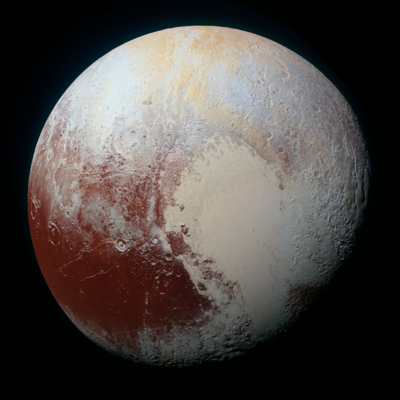
A bit of Pluto
#pluto #nasa #space #astronomy #science #plutopics


2026-02-06 12:00:00 UTC (Delta: 2026-01-30)
URANUS
- Distance (km): 2,886,096,561.34 km (+17,345,666.19 km)
- Distance (AU): 19.29 (+0.12)
- Light travel time: 2 h 40 min 26.98 s (+57.86 s)
- Orbital speed: 6.71 km/s (+0.00 km/s)
Image: Uranus - Discrete Cloud
Credit: NASA/JPL


A reminder Erwin made this #masterpiece of a cover, and Matias' #logo is just chef's kiss... suck it, #Nolan 😜
Want it? Get it here: https://www.kickstarter.com/projects/redwulfcomics/space-odyssey-1-homers-epic-like-youve-never-seen-it
#theodyssey #odyssey #scifi #sciencefiction #space #odysseus #greekmythology #epic #homer #comics #indiecomics

Will a bright comet adorn our early spring sky? Why astronomers are getting excited about Comet C/2026 A1 (MAPS). Via @spacedotcom #Space #Astrophysics #OrbitalMechanics #Astronomy 🚀 🌌 ☄️ 🛰️
Will a bright comet adorn our ...

1/ Dorothee Bär, German Federal Minister of Research, Technology and Space, has visited our Paranal Observatory.
The Minister was joined by Markus Blume, Bavarian State Minister for Science and the Arts, Thomas Reiter, Director General ‘Space and Security’, Federal Ministry of Research, Technology and Space of Germany, and several high-profile German dignitaries.
Read more: https://www.eso.org/public/announcements/annlang26002-es-cl/


🪐✨ #Venus might look like a peaceful morning star, but it is actually the most hostile #environment in our neighborhood.
New #research highlights how a runaway greenhouse effect and clouds of sulfuric acid turned this "#Earth twin" into a planet where the pressure is like being a kilometer under the #ocean. Its beautiful glow is actually caused by its extreme reflectivity, as those thick clouds bounce 70% of sunlight back into #space.
👉 https://bigthink.com/starts-with-a-bang/venus-brightest-most-extreme/
Maan asioista kiinnostuneille,
https://www.youtube.com/watch?v=_QVoUX6kNxo
Markku Poutasen hieno Ursa-esitelmä kolmen vuoden takaa planeetta Maan moninaisista liikkeistä asetti etenkin aikaperspektiiviä kivasti paikalleen. Samaten oli tässäyttävää tajuta, että tässä istuessani kiidän parhaillaan yli 800 km/t nopeudella maan pyöriessä akselinsa ympäri, ja vauhti auringon ympäri on vielä aivan eri luokkaa. Myös matala- ja korkeapaineen vaikutus maan pinnan korkeuteen tuli havainnollisesti esille, samoin napapiirin siirtyminen, paljosta muusta puhumattakaan.
#maa #earth #earthObservation #planeetat #liike #movement #ursa #tähdet #stars #avaruus #space #esitelma #lecture #havainnollisuus #aurinko #linnunrata #napapiiri
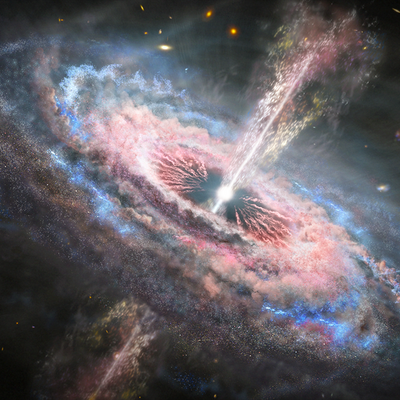
The Pipe Dark Nebula
Credits: Jerry Lodriguss
#nature #space #astrophotography

Counterintuitively, ultra-low Earth Orbits are not about less sustainable, but rather about more sustainable and eco-friendly spaceflight. If done, right: which would mean real air-breathing thrusters, which could (theoretically) allow satellites to stay in low orbit indefinitely, without needing more propellant.
The problem with New Orbit startup is that while they declare this intention, their actual Aura thruster is xenon powered, so the demonstration mission won't actually be sustainable (as I understand it).
The low orbit has numerous advantages - eg. reducing impact on astronomy, because low flying satellites would pass overhead very quickly and most of the time would not be illuminated by sun. There is also zero risk of Kessler syndrome, because most satellites would re-enter quickly. But prolonged lifetime of such satellites is essential, to reduce dangerously high number of launches and re-entries.
https://neworbit.space/news/can-a-humble-startup-boldly-go-where-no-spacetech-has-gone-before
Client Info
Server: https://mastodon.social
Version: 2025.07
Repository: https://github.com/cyevgeniy/lmst