
Correct me as a friend, and I as a friend will requite with kindness.
-- Linnaeus
#linnaeus

About 300 years ago, Swedish naturalist Carl #Linnaeus set out on a bold quest: to identify and name every living #organism on Earth. Now celebrated as the father of modern taxonomy, he developed the binomial naming system and described more than 10,000 species of plants and animals.
#Ecology #EvolutionaryBiology #sflorg
https://www.sflorg.com/2025/12/eco12232501.html

“Alchemy. The link between the immemorial magic arts and modern science. Humankind’s first systematic effort to unlock the secrets of matter by reproducible experiment.”*…
As (AI/tech pro and writer) Dale Markowitz explains, for scientists of yore anything—from mermaids to alchemy—was on the table…
In 1936, the economist John Maynard Keynes purchased a trove of Isaac Newton’s unpublished notes. These included more than 100,000 words on the great physicist’s secret alchemical experiments. Keynes, shocked and awed, dubbed them “wholly magical and wholly devoid of scientific value.” This unexpected discovery, paired with things like Newton’s obsession with searching for encrypted messages in the Bible’s Book of David, showed that Newton “was not the first of the age of reason,” Keynes concluded. “He was the last of the magicians.”
When it came to fascination with the occult, Newton was hardly alone. Many contemporary scientists may cast aspersions on spells, mythical tales, and powers of divination. Not so for many of the early modern thinkers who laid the foundations of modern science. To them, the world teemed with the uncanny: witches, unicorns, mermaids, stars that foretold the future, base metals that could be coaxed into gold or distilled into elixirs of eternal life.
These fantastical beliefs were shared by the illiterate and educated elite alike—including many of the forebears of contemporary science, including chemist Robert Boyle, who gave us modern chemistry and Boyle’s law, and biologist Carl Linnaeus, who developed the taxonomic system by which scientists classify species today. Rather than stifling discovery, their now-arcane beliefs may have helped drive them and other scientists to endure hot smoky days in the bowels of alchemical laboratories or long frigid nights on the balconies of astronomical towers.
To understand the role of magic in spurring scientific progress, it helps to understand the state of learning in Europe in those times. Throughout the Middle Ages, many scholars were fixated on the idea that knowledge could only be gleaned from ancient texts. Universities taught from incomplete, often poorly translated copies of Aristotle, Ptolemy, and Galen. To stray from the giants was a crime: In 14th-century Oxford, scholars could be charged 5 shillings for contradicting Aristotle. Curiosity was considered a sin on par with lust. A powerful motivator was needed to shuck off ancient thinking.
One of the first influential thinkers to break with the old ways was the 16th-century Swiss-German physician Paracelsus. The father of toxicology, known for his pioneering use of chemicals in medicine, Paracelsus was among the first of his time to champion the importance of experimentation and observation—a philosophy which would set the foundations for the scientific method. Paracelsus showed the scholars what he thought of their old books by publicly burning his copies of Galen and Avicenna.
But what led him to this experiment-first approach? Perhaps it was because, to Paracelsus, experimentation was a kind of magic. His writing fuses scientific observation with the occult. To him, medicine, astrology, and alchemy were inextricably linked—different ways of unveiling sacred truths hidden in nature by God. Paracelsus considered himself a kind of magus, as he believed Moses and Solomon had been, as Newton would view himself 150 years later. Paracelsus believed, though, that divine knowledge could be gained not just by studying scripture, but also by studying nature. The alchemical workbench, the night sky—these were even surer routes to God than any dusty old textbook…
[Markowitz recounts the stories of Tycho Brahe [almanac entry here], his patron Holy Roman Emperor Rudolf II, Robert Boyle, William Harvey, and Linnaeus [here], who, in 1749, urged the Royal Swedish Academy of Sciences to launch a hunt for mermaids…]
… To our contemporary ears, most all of this may sound fairly ridiculous. But as Edward Donlick puts it in The Clockwork Universe, “The world was so full of marvels, in other words, that the truly scientific approach was to reserve judgment about what was possible and what wasn’t, and to observe and experiment instead.” To the 17th-century scientist, anything was on the table, so long as it could be experimentally studied.
Today, we know how the story ends: Belief in astrology, alchemy, and witchcraft declined in places where empiricism and skepticism became cornerstones of science. But perhaps early scientists’ fascination with the occult should remind us of other tenants of discovery: open-mindedness and curiosity. Witches, mermaids, and the philosopher’s stone may not have survived modern scrutiny, but it was curiosity about them that drove real progress and allowed early thinkers to stray from established norms. In this sense, curiosity is a kind of magic…
“How the Occult Gave Birth to Science,” from @dalequark.bsky.social in @nautil.us.
See also: “The importance of experimental proof, on the other hand, does not mean that without new experimental data we cannot make advances” and “Everyone knows Newton as the great scientist. Few remember that he spent half his life muddling with alchemy, looking for the philosopher’s stone. That was the pebble by the seashore he really wanted to find.”
###
As we think about transmutation, we might spare a thought for a rough contemporary (and fellow-traveler) of Newton’s, Rasmus Bartholin; he died on this date in 1698. A physician, mathematician, and physicist, he is best known for his discovery of the optical phenomenon of double refraction. In 1669, Bartholin observed that images seen through Icelandic feldspar (calcite) were doubled and that, when the crystal was rotated, one image remained stationary while the other rotated with the crystal. Such behaviour of light could not be explained using Newton’s optical theories of the time. Subsequently, this was explained as the effect of the polarisation of the light.
Bartholin also wrote a several mathematical works and made astronomical observations (including the comets of 1665). And he is famed for his medical work, in particular his introduction of quinine in the fight against malaria.
(Bartholin’s family was packed with pioneering scientists, 12 of whom became professors at the University of Copenhagen; perhaps most notable, his elder brother Thomas, who discovered the lymphatic system in humans and advanced the theory of “refrigeration anesthesia”(being the first to describe it scientifically).
Rasmus Bartholin (source)#alchemy #astology #culture #Discovery #doubleRefraction #history #IsaacNewton #Linnaeus #lymphaticSystem #malaria #occult #optics #Paracelsus #philosophy #quinine #RasmusBartholin #Science #Technology #ThomasBartholin #TychoBrahe #witchcraft



Correct me as a friend, and I as a friend will requite with kindness.
-- Linnaeus
⬆ #Wisdom #Quotes #Linnaeus #Criticism #Kindness
⬇ #Photography #Panorama #Mangrove #RabbitKey #Everglades #Florida

Correct me as a friend, and I as a friend will requite with kindness.
-- Linnaeus
⬆ #Wisdom #Quotes #Linnaeus #Criticism #Kindness
⬇ #Photography #Panorama #LakePowell #SlickRock #Canyon #Utah

Because garter belts are not terribly visible even when popular, here's a crop of Jean-François de Troy's "The Garter" (at The Met in NYC). They were often beautifully embroidered and looked a lot like snakes. Linnaeus use of 'sirtalis' ("like a garter" in Latin) was apt. #GarterBelt #garter #stockings #painting #Linnaeus #LatinBinomial #snake

@siltaer
Attends tu peux en rajouter encore
Sous-ordre Psocomorpha
Infra-ordre Caeciliusetae
Super-famille Caeciliusoidea
Famille Stenopsocidae
#Genre Graphopsocus
Espèce Graphopsocus cruciatus (#Linnaeus, 1758)
Et en grattant, tu dois pouvoir trouver
Une sous famille
Une tribu
Un sous genre
En plus...
Et tout ceci peux sembler absurde, mais c'est en fait une carte, un chemin, une piste pour situer un #organisme au sein du #vivant..
Ci dessous un arbre du vivant explorable
Chaque nom est une branche...
http://lifemap.univ-lyon1.fr/mobile.index.html
Correct me as a friend, and I as a friend will requite with kindness.
-- Linnaeus
⬆ #Wisdom #Quotes #Linnaeus #Criticism #Kindness
⬇ #Photography #Panorama #ChacoCanyon #PuebloBonito #Ruins #NewMexico

New review: This scholarly biography provides a full immersion in the life of Linnaeus, revealing the polymath behind his reputation as the father of taxonomy.
#Books #BookReview #Bookstodon #Linnaeus #Taxonomy #Biography #HistoryOfScience #ScienceHistory #HistSci #Scicomm @bookstodon @princetonupress @princetonnature
Expect some radio silence while The Inquisitive Biologist is delving into the history of #Taxonomy over the next few weeks with these three intriguing books.
Reviews coming soon to https://inquisitivebiologist.com!
#Taxonomy #Biography #Linnaeus #HistoryOfScience #ScienceHistory #HistSci #Books #BookReview #Bookstodon #Scicomm @princetonupress @princetonnature


Last time, we looked at a species named after its contemporary, Napoleon. This time we're going further back, to the very beginning, with a namesake from Carl Lenneaus himself.
https://matildaslab.wordpress.com/2024/10/17/oedipus-rex-the-cotton-top-maramin/
#scicomm #oedipus #linnaeus #tamarin
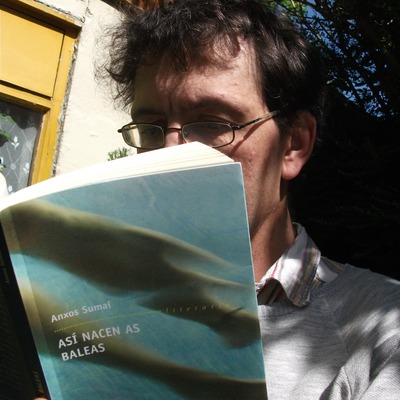
19-Sep-2024
Are cows pickier than goats?
To answer this question, #Linnaeus collected 643 different plant species that were then fed to #horses, #cows, #pigs, #sheep and #goats. The results were carefully compiled but not analysed until now, 275 years later, when they are also published by the Linnean Society in London.
https://www.eurekalert.org/news-releases/1058613 #science #ecology
MT VOID #2339: Film reviews of #TheSpectacularFailureOfTheStarWarsHotel #TheStarWarsHotel #LifeMovie #DiscontinuedMovie; book comments on #EveryLivingThing #JasonRoberts #RobDunn #Linnaeus #Bouffon #taxonomy on http://leepers.us/mtvoid/VOID0802.htm from @eleeper and #MarkRLeeper Tagged @scifi


Sprach- vs. Naturanalyse #Linnaeus
'..Der Philosoph Michel Foucault beschrieb Linnés Vorgehensweise des Klassifizierens so, dass es ihm darum [..ging], „systematisch wenige Dinge zu sehen“. Ihm sei es insbesondere darum gegangen, die Ähnlichkeiten der Dinge in der Welt aufzulösen..'
La parola #araba " #gharānīq " del "verso satanico" è un #hapax ovvero un #vocabolo che ricorre solo in questo testo - e si riferirebbe, secondo i commentatori, alle #gru, detta damigella della #Numidia (Grus virgo #linnaeus, 1758)
.
#elzevirista studi #semitici #salmanrushdie #michailbulgakov

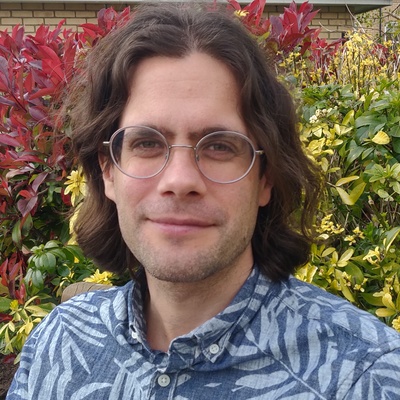
Today in 1758, Carl von Linné, better known as Linnaeus, played the first game of 'Animal, Vegetable, or Mineral', or in the original Latin, 'Animale, Vegetabile, Lapideum, Systema naturæ per regna tria naturæ.' #OnThisDay #Linnaeus #AnimalVegetableMineral #Taxonomy

When publishers send you review copies of books you’d happily have bought yourself. #Linnaeus: the official specimen of the species Homo sapiens! #Taxonomy #Science #Evolution #AmReading


Correct me as a friend, and I as a friend will requite with kindness.
-- Linnaeus
Client Info
Server: https://mastodon.social
Version: 2025.07
Repository: https://github.com/cyevgeniy/lmst