Catch-all cryptids
Among the few things I’ve noticed while following the history of certain cryptids for many years is how the same supposed creature changes in description over time. Considering that no one has captured a cryptid to carefully document is, we don’t actually know the details of what they look like. Therefore, each telling of a story, or imaginative depiction, adds or subtracts a feature which can be carried on or dropped in the next iteration.
If you have not yet sensed a theme in the 12 days of cryptids, here it is: cryptids are creatures of culture, not so much of zoology. It is expected their descriptions will change in response to cultural trends and influences because stories are their flesh and blood.
No cryptid exhibits this better than the chupacabra. That’s where I’ll start with the idea of catch-all cryptids.
Chupacabras – the leader in catch-all cryptids
Head back to this first post in this series to get the story of Type 1 (spiky alien) and Type 2 (hairless dog) chupas. However, the chupa is still changing. Checking on the latest online art or objects for sale, chupas increasingly look like dogmen… or are confused with anything that kills livestock. The 2025 chupacabra is becoming a blend of the two originally unique types with a heaping addition of testosterone.
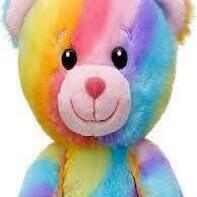
A chupacabra “screamer” gaming model. Why is this not a dogman?Or you can even make it cute to appeal to younger crowds. Cute cryptids are certainly marketable.
You can depict a chupacabra in almost any way you want because its features always remained unclear. It was never pinned down to one description possibly because the initial description was improbable. Or, because the only lifelike visuals showed it as a dog.
The term chupacabra moved rapidily from Spanish speaking areas to English speaking areas and, in doing so, became culturally valuable meaning “any weird-looking or mysterious creature”. It was applied to rotting carcasses, diseased animals, and real animals that couldn’t be readily identified by the average person. The use of a new strange term for a mystery animal revealed how little people knew about wildlife and the animals around them. It also carried a scent of controversy that invited online commentary, generating sharing and clicks, enhancing the growing trend in conspiracies and mysteries, and providing a signal that something weird and possibly dangerous was around.
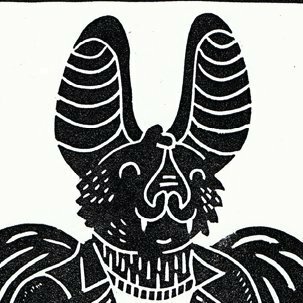
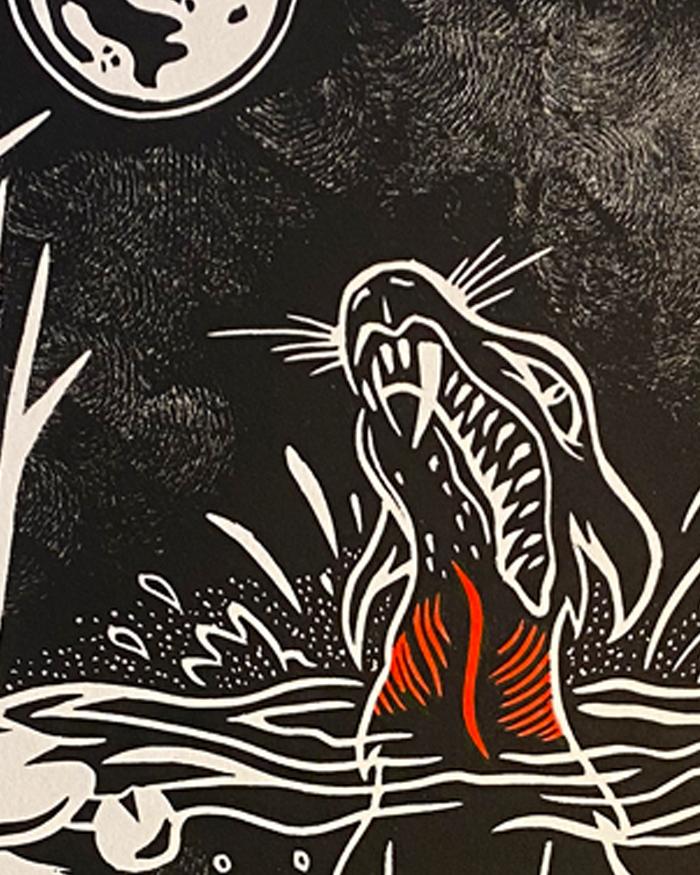
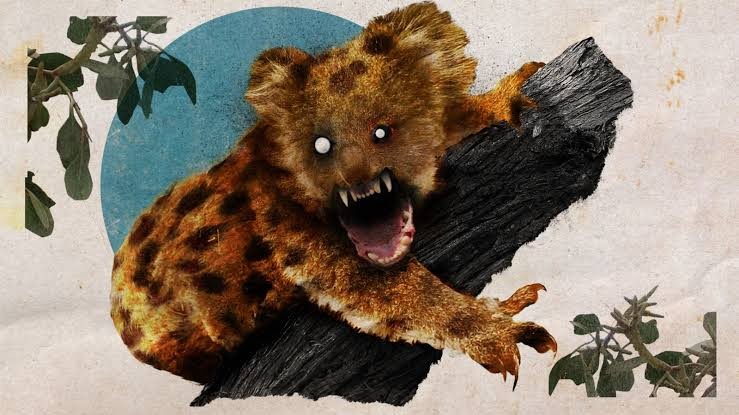
Various depictions of a chupacabra in media where anything goes:
There are other catch-all cryptids or monsters. Two in particular are ambiguous “monster” legends native to Australia and New Zealand.
Bunyip
Another perfect example of a changeable, anything goes cryptid/monster is the Australian bunyip. It is a spirit being of Aboriginal lore. However, when white colonists came to the continent and saw all the unique and astounding wildlife, they assumed that the bunyip was just another of these oddities. According to Quirk (2023, Folklore, 134:1), The continent certainly was teeming with bizarre and dangerous creatures, why not another one! Everyone heard of a “bunyip”, but no one saw it. What did it even look like? Apparently, it could look like nothing or anything.
Derived from ‘banib’ of the Wemba Wemba language of the people of Western Victoria, the descriptions varied wildly. The creature could be huge or small, and included characteristics of starfish, emu, platypus, alligator, seal, water rat, dugong, and bittern.
Mostly associated with water (a medium most able to hide a big unknown creature), rumors of the beast spread.
The bunyip, like other indigenous cryptids, both exists and does not exist – it’s a matter of worldview. When Europeans encountered these concepts in the framework of The Dreaming – the Australian Aboriginal mythology of the world – they had no Western analog. Belief in layered ideas of reality was not well-received by the white westerners, so they removed the bunyip from its context as a spirit creature and imposed their status upon it. (The term and concept of cryptid did not yet exist, but they assumed it was a mysterious animal). Quirk’s explanation painted a picture of a rich, culturally meaningful entity that was reduced to just another animal that the colonists must capture.
The bunyip was said to be aggressive and was feared because it ate people. The stories included supernatural qualities for the creature – it could hurt you with just its roar, it could change the water levels or even hypnotize people. The bunyip was associated with the mulyawonk, another pre-European Aboriginal idea, that represented a creature that inhabited Ngarrindjeri Country. When drownings occurred, people might still say the mulyawonk got him.
Being a water being, it was vulnerable to drought. Eventually, it became a symbol of respecting the environment, especially areas where waters were naturally dangerous, especially to children. The Bunyip was used as an excuse to not exploit natural resources.
Various depictions of a bunyip:
The term ‘bunyip’ was applied to monsters said to be aquatic, amphibious, or known from near water. Some indigenous tribes identified the bunyip as an emu-like animal, and others described a large, bulky, quadrupedal mammal with thick limbs and a short or absent tail. (From Naish, Hunting Monsters). Infamous Australian natural mystery monger, Rex Gilroy represented them as big cats or reptiles.
One idea about the identity of the bunyip was that it represented the cultural memory of people who lived alongside diprotodon, that died out around 46,000 years ago. If indigenous people lived alongside diprotodon for thousands of years, could that have influenced the story? Maybe. There is no way to tell for sure.
The bunyip was also used as a bogeyman to keep children close by. It eventually featured in popular children’s literature and for conservation purposes.
Occasional sighting were recorded, usually in the form of a seal-dog, but any mystery animal could be a bunyip. Some websites still consider the bunyip to be a genuine cryptid, although a bizarre, shapeshifting one.
Healy and Cropper’s Out of the Shadows has a wonderful chapter on the bunyip. They describe how serious scientific interest peaked in 1847 when a ‘bunyip skull’ was discovered. Oh, the scientists were going to pin it down, now! Upon scientific examination, however, the skull was found to be that of a calf. After this, scientific interest cooled. The term ‘bunyip’ became synonymous with a hoax or fraud. And, subsequently, it was used in pejorative political discourse.
The bunyip is important as an aboriginal tradition that was embraced by non-aboriginal Australians. Weinstein & Koolmatrie (2025, Folklore, 136:2) noted that the stories surrounding the bunyip had changed so much that, with the loss of traditional knowledge, tribal lore of today incorporated modern depictions of the monsters. This goes to show that monsters like the bunyip dwell, change, adapt, and may disappear, as the worlds in which they exist and function change.
Taniwha
Sailing from Australia to New Zealand, we find the taniwha acts as a monster of many forms and supernatural powers. Also a water creature, it can take the form of a whale, share, eel, dolphin, dragon, or log and lived in the sea, lakes, rivers or caves. Taniwha (pronounced TAN-ee-FA) was a spirit guardian or protector of the Maori, though it could also be dangerous. People made offerings to their local taniwha. Its depiction could resemble our idea of a dragon.
Traditional depictions of taniwhaEarly cryptozoologists were eager to strip away the myth and figure it as a real animal. Some thought it was a cultural memory of large monitor lizards that existed previously. Eberhart (Mysterious Creatures) mentioned the idea that could be an undiscovered population of giant gecko. Others assumed it was folklore developed from rare crocodile attacks, or that it was a prehistoric survivor, like a mosasaur. Magin (2016, Time and Mind, 9:3) writes of the comparison to the Loch Ness monster. He cites an article from the New Zealand Evening Post in December 1933, which labeled Nessie (all the rage that year) as a ‘Scottish Taniwha’. Today, he clarifies, Nessie has overtaken that tale in popularity. Every lake creature is a version of local “Nessie”.
When a rotting carcass was hauled up in 1977 by the Zuiyo Maru fishing vessel off the coast of Christchurch, people not only thought it was a plesiosaur, but also a taniwha.
Modern usage continues to invoke the taniwha as a protector. Local Maori will utilize the legend against disturbance from development.
- In 2002, the Ngāti Naho hapū in Waikato objected to construction of a highway in a particular area, because it would destroy the lair of one of their taniwha, known as Karutahi. Eventually, Transit New Zealand agreed to partially reroute the highway.
- The building of a prison in Ngāwhā, Northland, was also opposed in 2001 because of belief in a taniwha, Takauere, in the form of a log. The prison was built over the objections.
The taniwha remains culturally valuable no matter what form it takes.
Mapinguary
Finally, the mapinguary is a highly confusing creature of the Brazilian rainforests. Often listed as a cryptid, it is historically described as a supernatural creature – a giant, one-eyed, monster with a mouth in its belly and its feet facing backwards. Like the taniwha, the bunyip, and even the Sasquatch, it was seen as a protector of its domain from those who seek to exploit it.
Cryptozoologists like Heuvelmans and others stripped it of its more fantastical features and suggested it was a hairy anthropoid creature that just smelled bad, like a Bigfoot. You will find it categorized this way in cryptid media. More recently, however, Oren proposed it was an extant giant ground sloth based on the description of its size and large claws. Sloths don’t eat people, though. But, cryptozoologists will pick and choose their characteristics.
Making sense of ambiguous cryptids
Almost all cryptids can be extremely flexible in their definitions because they are unconfirmed. We can obviously see the wide variation of creatures that did not have what I might call an “anchoring” imagery -unlike the Patterson-Gimlin film of Bigfoot, or the Loch Ness Surgeon’s photo. But even with these iconic touchstones, we see the framework spread to other varieties and evolve like the skunk ape, Momo, Yeti, etc. which eventually become their own things and continue to change with the times.
Why does this happen? To be frank, it’s because these are not real creatures. The descriptions are not converging over time, they are changing due to cultural trends.
For those who have an cryptid experience, they will attempt to make sense out what they see in terms of what they already know. If an experience defies immediate explanation, the brain will attempt to fill in the details based on existing experiences or cultural knowledge. Sometimes people know more about a legendary creature than biological creatures so the experience is said to be that of an encounter with Bigfoot, a dogman, a bunyip or a taniwha, depending upon where you are. Applying these categories make for easy references for the listener as well as the experiencer.
Ambiguous, catch-all cryptids are a problem for cryptozoology. But often they are made into opportunities to say there must be something going on here. The widespread belief is fallaciously assumed to represent a mysterious creature that will eventually be dragged out of the shadows and identified. However, the cryptid in the shadows has much more to do with human social interactions and our need for storytelling. We will always, therefore, have abundant mysterious monsters in the shadows.
This is part 11 of the 12 Days of Cryptids.