#12DaysOfCryptids

21st Century Cryptozoology

We’ve come to the end of this experiment I called the 12 Days of Cryptids. There is still much left to be said about folklore, belief, and today’s cryptid scene. I’d like to use this post to note some observations on why I’m convinced that the traditional idea of cryptozoology is dead, but a vibrant new life exists for a modern version of cryptid research.

First, the reaction to these posts and my model of Pop Cryptids has been decidedly mixed. A few scholarly researchers (who understand that cryptids are just as much a social phenomenon as a zoological one (and usually more so)) got what I was trying to do: distill current information into understandable essays on the topics for curious readers. The rest of the cryptozoology audience thought these were pointless efforts, or they exist within a 40-year-old+ mindset of cryptozoology as a legitimate zoological effort. Remember that the ISC, the official society, folded in 1996. It’s been downhill from there.

Argument for a ‘modern’ view of cryptozoology

I still insist that Heuvelmans’ concept of cryptozoology was ultimately unsuccessful or non-useful. Here are some of the reasons why:

  • Zoologists already use credible data from local observers – that’s not unique.
  • The past examples often cited for the success of cryptozoology, such as the giant squid, okapi, the mountain gorilla, Komodo dragon, etc. were all discovered well before 1920. The world is far more explored and known now. Large animals, that are ethnoknown, can’t hide anymore.
  • While new species are found every year, they are not cryptids in the sense that we know of them before discovery, and they are found by zoologists.
  • We have not found any of the cryptids that we do know well. The evidence has not increased, even with technology improvements, but has mostly dissipated in value.
  • Framing cryptozoology as a subfield of zoology with a strictly scientific methodology, creates such a narrow and niche research area, that the opportunities would be so limited as to be nonexistent.

The uniqueness of cryptozoology as a specialty area, however, comes from the recognition of folklore and social aspects about an animal that continues far past the reasonable time necessary to locate and describe that animal. This is what makes a cryptid a mysterious thing in the first place – when the social reputation does not match the zoological data. The folklore and social aspects allow for amateurs to be involved and for enthusiasts (including “‘skeptics”) to indulge in their interests based on history, art, eyewitness accounts, conservation, etc. Alternatively, moving past a singular goal of “finding a cryptid” can and often does result in gaining useful knowledge. Example: Adrian Shine’s work at Loch Ness.

Acknowledging the factions of cryptozoology

A shift to a “modern” cryptozoology encounters furious opposition. As part of this experiment, I posted some of the content to two related subreddits. This online forum is second to perhaps TV or YouTube viewing for the greatest audience interest exhibited in the topic. It is where you can clearly view the split(s) in viewpoints. The particular lightning rod post was “We need to talk about Dogman“.

I knew this would happen. Dogman is probably the third most popular cryptid in all media these days, behind Bigfoot and Mothman. Yet, cryptozoo-purists HATE it. They say it does not deserve to be mentioned as a cryptid because it’s an absurd creature that cannot exist. Claims of sightings and pleas from believers to hear their evidence is ridiculed and sometimes deleted. Many of the commenters who spewed negative opinions, obviously didn’t even click on the post to read it. They did not bother to recognize that the piece also stated that the Dogman phenomenon was troubling in many ways and, ultimately, absurd. (Sure, that’s Reddit, but some of these commenters are serious about their cryptid interests.)

Yet, it is still important to understand why so many are accepting of and obsessed with a supernatural creature roaming the US. It’s weird and the curious among us want to know why! The increased interest and attention to claims of impossible creatures (moth-man, dog-man, and goat-man) is worthy of inquiry.

Old school cryptozoology types seem closed to these lines of inquiry – where the shift is away from zoology, leaning heavily on folklore and contemporary legends. Their interest is dependent on if they personally perceive the cryptid to be zoologically plausible. That subjective opinion closes down most opportunities to discovery what, if anything, is really going on with cryptid sightings. It’s basically a form of hard Skepticism that dismisses claims out of hand because they sound nonsensical.

Then there are the active cryptid enthusiasts. They collect and propagate the past accounts and promote the constant stream of new ones. I demonstrated in the various posts that cryptid/monster stories are spreading readily, maybe more so than ever before, and reaching the mainstream. These creatures have become important to communities that now embrace and celebrate them.

This may seem new, but such tales have always been part of human civilization. Cryptid content creators/researchers would benefit from examining concepts within monster studies. But they mostly don’t go there, perhaps because it’s difficult going, and they would rather be doing more “boots on the ground” stuff or sharing sensational stories for their media channels. The context is important. To be taken seriously, a researcher must include it.

I, and others, have provided more than adequate evidence of how incredibly socially useful cryptids are. However, every effort bumps up against those that hold a narrow outlook about cryptozoology. Those that didn’t consider or outright rejected the post on Fearsome cryptid creatures likely subscribe to the sharp line fallacy mentioned in that post – that these tales do not correspond to potentially real animals so they are unimportant.

It’s interesting that these same people, some of whom are well known researchers and authors, accuse skeptics of being closed-minded when they are the ones closed to the evolution of the field of cryptozoology itself. I’m sure they missed this point:

If we consider all the sub-categories of cryptids, this would allow for unrestricted study into the entire history of each creature, fiction and nonfiction, which is important for understanding. Maybe they represent real animals, spiritual beliefs, cultural fears, or all of them together. Those who are well-versed in cryptozoology should consider how indigenous lore about Cannibal giants, water cats, and little people have been used to justify the possibility of real cryptids. Are the antecedents of today’s purported zoo-cryptids cryptids themselves? It’s complex. Recognizing that complexity opens up new areas of research and understanding.

Broad horizons

I am advocating for the application of various lenses to the subject of cryptozoology. This is already happening, despise the resistance of traditionalists that they only accept “scientific cryptozoology”. More will certainly be forthcoming as cryptids flourish in popularity.

It is not a zero-sum game; it does not benefit anyone to limit the subject to only the small niche of scholarship defined and defended by the “Heuvelmans bros” (a [pejorative] term coined by Floe Foxon, personal communication). If you want to focus on obscure animals still remaining to be zoologically unclassified, that’s excellent. If you want to research explanations for historical accounts of anomalous creatures, that’s fantastic and interesting. If you want to investigate claims of Bigfoot, it’s all good. If you want to find out about the economics that drive cryptid town festivals and cryptid tourism, that’s valuable! The scope of cryptozoology must be wide. It can help us understand human nature and wild nature. We need that.

Thanks to those who commented that they enjoyed this series of posts. And to those that didn’t, well, I hope I at least gave you some choice bits to ponder. Long live the cryptids, no matter how you define them.

This is post 12 of 12 Days of Cryptids. See all posts here.

If you liked this series and want to follow the trends in Modern Cryptozoology, please subscribe to the (always free) website.

#12DaysOfCryptids #cryptid #Cryptozoology #dogman

Catch-all cryptids

Among the few things I’ve noticed while following the history of certain cryptids for many years is how the same supposed creature changes in description over time. Considering that no one has captured a cryptid to carefully document is, we don’t actually know the details of what they look like. Therefore, each telling of a story, or imaginative depiction, adds or subtracts a feature which can be carried on or dropped in the next iteration.

If you have not yet sensed a theme in the 12 days of cryptids, here it is: cryptids are creatures of culture, not so much of zoology. It is expected their descriptions will change in response to cultural trends and influences because stories are their flesh and blood.

No cryptid exhibits this better than the chupacabra. That’s where I’ll start with the idea of catch-all cryptids.

Chupacabras – the leader in catch-all cryptids

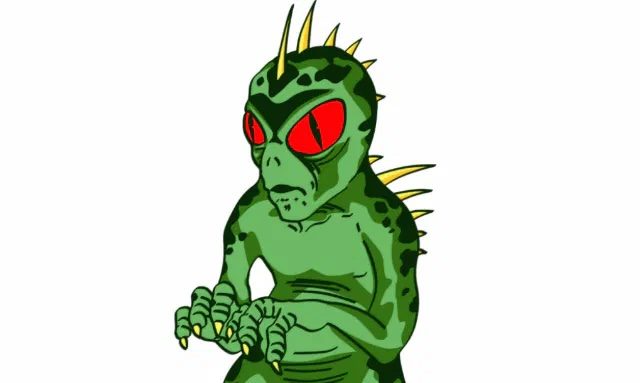
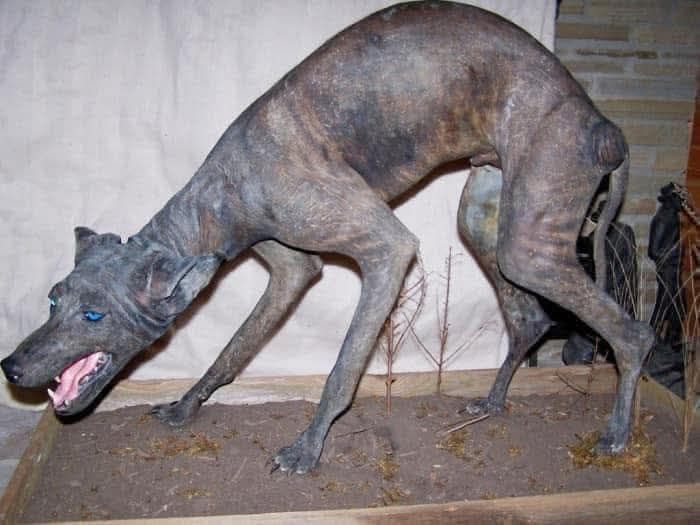
Head back to this first post in this series to get the story of Type 1 (spiky alien) and Type 2 (hairless dog) chupas. However, the chupa is still changing. Checking on the latest online art or objects for sale, chupas increasingly look like dogmen… or are confused with anything that kills livestock. The 2025 chupacabra is becoming a blend of the two originally unique types with a heaping addition of testosterone.

A chupacabra “screamer” gaming model. Why is this not a dogman?

Or you can even make it cute to appeal to younger crowds. Cute cryptids are certainly marketable.

You can depict a chupacabra in almost any way you want because its features always remained unclear. It was never pinned down to one description possibly because the initial description was improbable. Or, because the only lifelike visuals showed it as a dog.

The term chupacabra moved rapidily from Spanish speaking areas to English speaking areas and, in doing so, became culturally valuable meaning “any weird-looking or mysterious creature”. It was applied to rotting carcasses, diseased animals, and real animals that couldn’t be readily identified by the average person. The use of a new strange term for a mystery animal revealed how little people knew about wildlife and the animals around them. It also carried a scent of controversy that invited online commentary, generating sharing and clicks, enhancing the growing trend in conspiracies and mysteries, and providing a signal that something weird and possibly dangerous was around.

Various depictions of a chupacabra in media where anything goes:

There are other catch-all cryptids or monsters. Two in particular are ambiguous “monster” legends native to Australia and New Zealand.

Bunyip

Another perfect example of a changeable, anything goes cryptid/monster is the Australian bunyip. It is a spirit being of Aboriginal lore. However, when white colonists came to the continent and saw all the unique and astounding wildlife, they assumed that the bunyip was just another of these oddities. According to Quirk (2023, Folklore, 134:1), The continent certainly was teeming with bizarre and dangerous creatures, why not another one! Everyone heard of a “bunyip”, but no one saw it. What did it even look like? Apparently, it could look like nothing or anything.

Derived from ‘banib’ of the Wemba Wemba language of the people of Western Victoria, the descriptions varied wildly. The creature could be huge or small, and included characteristics of starfish, emu, platypus, alligator, seal, water rat, dugong, and bittern.
Mostly associated with water (a medium most able to hide a big unknown creature), rumors of the beast spread.

The bunyip, like other indigenous cryptids, both exists and does not exist – it’s a matter of worldview. When Europeans encountered these concepts in the framework of The Dreaming – the Australian Aboriginal mythology of the world – they had no Western analog. Belief in layered ideas of reality was not well-received by the white westerners, so they removed the bunyip from its context as a spirit creature and imposed their status upon it. (The term and concept of cryptid did not yet exist, but they assumed it was a mysterious animal). Quirk’s explanation painted a picture of a rich, culturally meaningful entity that was reduced to just another animal that the colonists must capture.

The bunyip was said to be aggressive and was feared because it ate people. The stories included supernatural qualities for the creature – it could hurt you with just its roar, it could change the water levels or even hypnotize people. The bunyip was associated with the mulyawonk, another pre-European Aboriginal idea, that represented a creature that inhabited Ngarrindjeri Country. When drownings occurred, people might still say the mulyawonk got him.

Being a water being, it was vulnerable to drought. Eventually, it became a symbol of respecting the environment, especially areas where waters were naturally dangerous, especially to children. The Bunyip was used as an excuse to not exploit natural resources.

Various depictions of a bunyip:

The term ‘bunyip’ was applied to monsters said to be aquatic, amphibious, or known from near water. Some indigenous tribes identified the bunyip as an emu-like animal, and others described a large, bulky, quadrupedal mammal with thick limbs and a short or absent tail. (From Naish, Hunting Monsters). Infamous Australian natural mystery monger, Rex Gilroy represented them as big cats or reptiles.

One idea about the identity of the bunyip was that it represented the cultural memory of people who lived alongside diprotodon, that died out around 46,000 years ago. If indigenous people lived alongside diprotodon for thousands of years, could that have influenced the story? Maybe. There is no way to tell for sure.

The bunyip was also used as a bogeyman to keep children close by. It eventually featured in popular children’s literature and for conservation purposes.

Occasional sighting were recorded, usually in the form of a seal-dog, but any mystery animal could be a bunyip. Some websites still consider the bunyip to be a genuine cryptid, although a bizarre, shapeshifting one.

Healy and Cropper’s Out of the Shadows has a wonderful chapter on the bunyip. They describe how serious scientific interest peaked in 1847 when a ‘bunyip skull’ was discovered. Oh, the scientists were going to pin it down, now! Upon scientific examination, however, the skull was found to be that of a calf. After this, scientific interest cooled. The term ‘bunyip’ became synonymous with a hoax or fraud. And, subsequently, it was used in pejorative political discourse.

The bunyip is important as an aboriginal tradition that was embraced by non-aboriginal Australians. Weinstein & Koolmatrie (2025, Folklore, 136:2) noted that the stories surrounding the bunyip had changed so much that, with the loss of traditional knowledge, tribal lore of today incorporated modern depictions of the monsters. This goes to show that monsters like the bunyip dwell, change, adapt, and may disappear, as the worlds in which they exist and function change.

Taniwha

Sailing from Australia to New Zealand, we find the taniwha acts as a monster of many forms and supernatural powers. Also a water creature, it can take the form of a whale, share, eel, dolphin, dragon, or log and lived in the sea, lakes, rivers or caves. Taniwha (pronounced TAN-ee-FA) was a spirit guardian or protector of the Maori, though it could also be dangerous. People made offerings to their local taniwha. Its depiction could resemble our idea of a dragon.

Traditional depictions of taniwha

Early cryptozoologists were eager to strip away the myth and figure it as a real animal. Some thought it was a cultural memory of large monitor lizards that existed previously. Eberhart (Mysterious Creatures) mentioned the idea that could be an undiscovered population of giant gecko. Others assumed it was folklore developed from rare crocodile attacks, or that it was a prehistoric survivor, like a mosasaur. Magin (2016, Time and Mind, 9:3) writes of the comparison to the Loch Ness monster. He cites an article from the New Zealand Evening Post in December 1933, which labeled Nessie (all the rage that year) as a ‘Scottish Taniwha’. Today, he clarifies, Nessie has overtaken that tale in popularity. Every lake creature is a version of local “Nessie”.

When a rotting carcass was hauled up in 1977 by the Zuiyo Maru fishing vessel off the coast of Christchurch, people not only thought it was a plesiosaur, but also a taniwha.

Modern usage continues to invoke the taniwha as a protector. Local Maori will utilize the legend against disturbance from development.

  • In 2002, the Ngāti Naho hapū in Waikato objected to construction of a highway in a particular area, because it would destroy the lair of one of their taniwha, known as Karutahi. Eventually, Transit New Zealand agreed to partially reroute the highway.
  • The building of a prison in Ngāwhā, Northland, was also opposed in 2001 because of belief in a taniwha, Takauere, in the form of a log. The prison was built over the objections.

The taniwha remains culturally valuable no matter what form it takes.

Mapinguary

Finally, the mapinguary is a highly confusing creature of the Brazilian rainforests. Often listed as a cryptid, it is historically described as a supernatural creature – a giant, one-eyed, monster with a mouth in its belly and its feet facing backwards. Like the taniwha, the bunyip, and even the Sasquatch, it was seen as a protector of its domain from those who seek to exploit it.

Cryptozoologists like Heuvelmans and others stripped it of its more fantastical features and suggested it was a hairy anthropoid creature that just smelled bad, like a Bigfoot. You will find it categorized this way in cryptid media. More recently, however, Oren proposed it was an extant giant ground sloth based on the description of its size and large claws. Sloths don’t eat people, though. But, cryptozoologists will pick and choose their characteristics.

Making sense of ambiguous cryptids

Almost all cryptids can be extremely flexible in their definitions because they are unconfirmed. We can obviously see the wide variation of creatures that did not have what I might call an “anchoring” imagery -unlike the Patterson-Gimlin film of Bigfoot, or the Loch Ness Surgeon’s photo. But even with these iconic touchstones, we see the framework spread to other varieties and evolve like the skunk ape, Momo, Yeti, etc. which eventually become their own things and continue to change with the times.

Why does this happen? To be frank, it’s because these are not real creatures. The descriptions are not converging over time, they are changing due to cultural trends.

For those who have an cryptid experience, they will attempt to make sense out what they see in terms of what they already know. If an experience defies immediate explanation, the brain will attempt to fill in the details based on existing experiences or cultural knowledge. Sometimes people know more about a legendary creature than biological creatures so the experience is said to be that of an encounter with Bigfoot, a dogman, a bunyip or a taniwha, depending upon where you are. Applying these categories make for easy references for the listener as well as the experiencer.

Ambiguous, catch-all cryptids are a problem for cryptozoology. But often they are made into opportunities to say there must be something going on here. The widespread belief is fallaciously assumed to represent a mysterious creature that will eventually be dragged out of the shadows and identified. However, the cryptid in the shadows has much more to do with human social interactions and our need for storytelling. We will always, therefore, have abundant mysterious monsters in the shadows.

This is part 11 of the 12 Days of Cryptids.

#12DaysOfCryptids #bunyip #chupacabra #mapinguary #taniwha

Effects of AI on cryptozoology

The world of cryptids is lousy with hoaxes, and will always be. It’s enticing, and now very easy, for creative content producers to pass off fake eyewitness accounts, photos, and videos as “real”. Countless creators do it for the purpose of attention and notoriety, ad revenue, or to promote a particular view using a fraudulent piece of “evidence” with the excuse that the real evidence is out there (aka, a pious fraud). Controversial images and stories are more likely to be shared and commented upon.

In the last 20 years, we’ve seen the mainstreaming of photoshopped images, computer generated graphics, and artificial intelligence applications that can generate realistic images and video. But more importantly, the platform for freely distributing and promoting content immediately and worldwide with no filtering or vetting is a key factor. The creator of the cryptid image or story is no longer subject to fact-checking and can even be anonymous (and still profit).

We ought to know better by now than to accept visual evidence at face value. A singular instance captured by photo and video evidence was never sufficient to claim an extraordinary animal was real because of the potential for error or fakery. But now, it is blatantly obvious that the majority of cryptid media is manufactured.

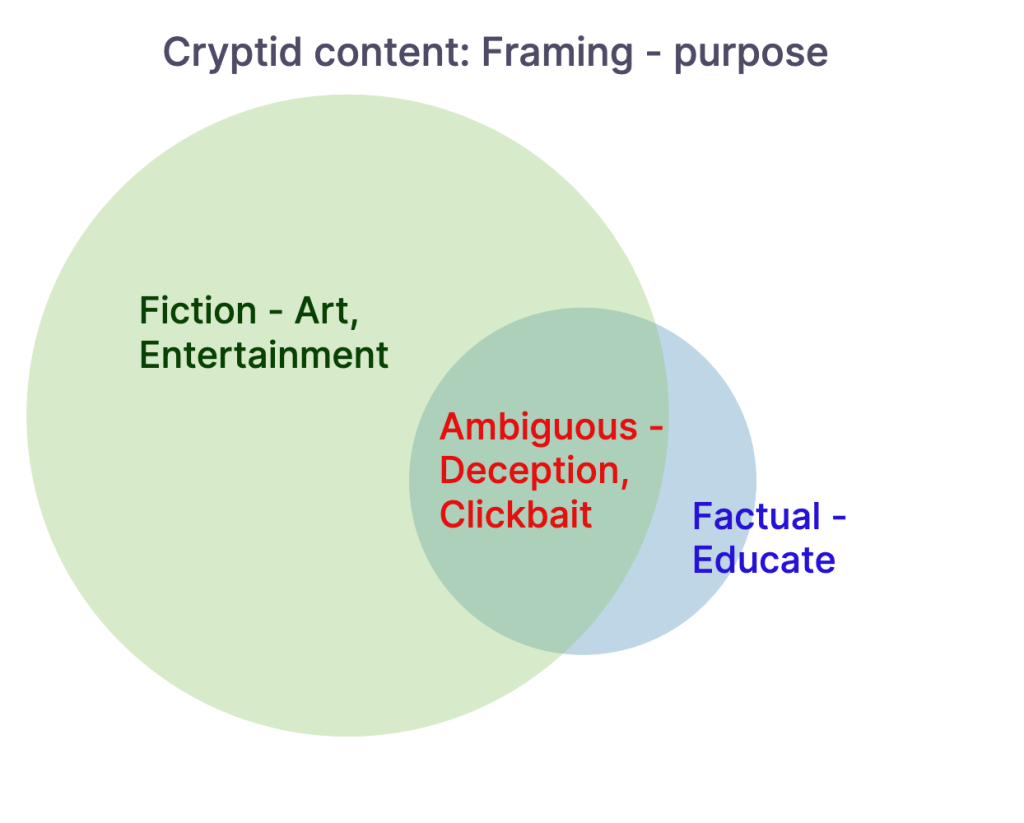
Digitally manufactured cryptid content falls into two general baskets: 1. fictional/fantasy art and entertainment content, and 2. factual info intended for education. The problem is the very ambiguous and liminal area in between, where you might not be able to tell fact from fiction.

Faking evidence

Early in the flood of content generated by Artificial Intelligence (AI), blatantly fake images showing “historical” evidence of Bigfoot and Yeti were making the rounds on social media. One image was so popular that Snopes.com had to debunk it. Soon after, the image was being circulated on video platforms as evidence of the Yeti. While for some, they can immediately recognize that the AI-generated images are a rather uncreative form of modern art/commentary, there will always be the gullible who think it’s real.

Nothing about this looks reasonable/real.

In Fortean Times 452 (2024), Dr. Karl Shuker pointed out the growing problem of AI generated videos and images circulated as real cryptids. Correspondents sent him images that were said to depict real animals. Any semi-expert eye could spot the flaws in these “too good to be true” images. But, remember that people thought mermaids were real when fooled by a deceptive “documentary” in 2012. Never underestimate public gullibility.

Other images and videos are designed to be vague so you cannot immediately spot a “too good to be true” cryptid. Replicating the ambiguous and far away versions that have always been available as controversial cryptid evidence, these examples are often shared just for the public to argue about them. Controversial topics, particularly with visuals, will generate more sharing, clicks, and audience participation, as commenters feel compelled to add their positive or negative opinions.

The typical excuse of “why would people lie/hoax” is pointless now – they will do it simple because they can. The Loch Ness Centre, that tracks sightings, has to consider that every photo they get purportedly of Nessie might be AI generated. The Centre announced in 2025 that they were employing a team of consultants to examine the visual evidence for hoaxing. Actually, the direct route is to not accept this kind of evidence at all. The odds are overwhelming that any image is not going to show anything worthwhile. Evidence needs to be far better than that. However, supposed sightings, no matter how blurry, are good for tourism.

By default, if the visual is clear, we should assume it is hoaxed, manipulated, or created outright, as that is so simple to do. While people are still using costumes and makeup to fake sightings, now you don’t even need that. You simply put a description in a prompt and it’s done.

Short form video platforms were flooded with AI generated content as the software and apps become easier to use. You can quickly find many YouTube videos that purport to have collected “Real cryptids caught on video – NOT AI” that are, indeed, all AI. These often feature pale crawlers, dogmen, “skinwalkers”, goatmen, or generally giant creepy monstrous things.

Some of the AI footage (like the “Yeti” photo) are made to look old in order to hide the flaws. These are sometimes dubbed “lost media” possibly hearkening back to the TV series The Lost Tapes (2008) that introduced fictional storylines and fake visuals of cryptids and paranormal events. Viewers, usually young people, often assumed it was real content.

Besides images and video, people posting AI generated fake news is on the rise. The news consumer has to be ultra-diligent and cross check information. A blatant example of fake cryptid news was about a coelacanth was found off the coast of California. On April 23, 2025, the website “Animals Around the Globe” published an article by “Esther Evangeline” claiming an “extraordinary find” by researchers in a remote-operated vehicle probing the deep areas 80 miles offshore of San Diego, California. They found a coelacanth! This was easily fact-checked as complete fiction. After trying to contact the author and website, this article still is up on the web site that identifies itself as educational.

Lifelike and imaginary

Far less harmful, and falling into the art/entertainment category are lifelike but imaginary AI content. In June 2025, video blog shorts (vlogs) materialized that featured cryptids rendered with amazing realism. These cryptid vlogs were stunning and humorous, with the cryptids pointing the video cam at themselves and their friends, making jokes, and showing the viewer what it’s like to be them being their best selves. They talk, sing, demonstrate life skills, discover cool things, and even interact with people. The first channel that kicked it off was @bigfootvlogs on TikTok on May 28, 2025. Driven by the availability of Google’s video generator Veo 3 AI software, the scene exploded with additional Bigfoot vlogs, Yeti, Mothman, Yowie, Rougarou, Nessie, Wendigo, etc. However, the novelty seems to be wearing off quickly.

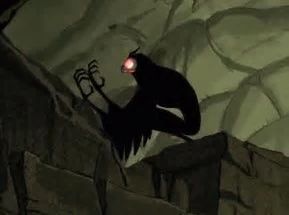
The AI generated creatures are rendered from a giant database of what the collective culture has decided it looks like. While Bigfoot’s depiction was usually consistent, the Mothman creature looks different in each clip because Mothman is not as well-defined as Bigfoot. Therefore, the face, physique and wing descriptions can be more flexible.

Another type of content is made by horror creators who use cryptid themes to produce warped and extreme versions of bizarre creatures. They exaggerate features of real animals or humans – giant size and terrifying teeth are typical examples. Assuming the viewer doesn’t take this seriously, these function as an entertaining creepy short. Mostly, the commenters play along with silly jokes about it. They get it.

Reality-adjacent vids

Videos that look more real might grab a lot more people’s attention outside of the “Nightmarefuel” crowd. Many of these videos appear to come from Central and South America and feature what is said to depict a local folklore creature come to life. You can find the most popular of these videos being promoted by paranormal sites, like Coast to Coast AM. Such sites sometimes include an entirely uncritical summary about the location and background of the stated creatures which serves to prime, reinforce, and share the legend to a wider audience. These shorts almost never have appropriate details for investigation. That’s not their purpose. They are meant to be consumed and shared, not researched.

In March 2025, a short video of what is called a Chaneque, a goblin creature of Veracruz, Mexico, was promoted as real by a local TV network. It was a manipulated real video of a rock hyrax. The reveal was never widely publicized.

Inevitably, some English-speaking commenters are either childishly gullible (or actually are children) or they are playing along with alternative reality-shifting where it’s fun to believe these creatures exist. The popularity of these creature videos, and the willingness of paranormal sites to feature them show that cryptid content now cannot be taken seriously. Cryptids are becoming even more associated with fakes.

Digital-original cryptids

An entirely new phenomena arose from text to image software: all new cryptids. There were two labeled as the “first AI cryptid”, both appeared in 2022.

Loab

Loab was created by a text to image software in April 2022 where the command was to “create the opposite” of “Brando”. Wikipedia commentary lumped Loab in with the other “terrible risks” of AI but it was simply an innocuous thing people found scary. A few over-dramatic observers went overboard, referring to Loab as an AI demon or suggesting that the images are cursed. Essentially, Loab was Creepypasta – a fictional creation that the audience played along with as “real”.

Crungus

Crungus was also called the first digital cryptid but it was probably the second, with its origin in June 2022. The grumpy goatman-orc-like being was likely derived using words that sounded like “crungus”. It was created by comedian Guy Kelly using the nonsense word prompt in DALL-E app. The more probable derivation of Crungus is via a previously named character in online games.

Erosion bird/Opium bird

Erosion bird was created by user drevfx in 2023. The creature was striking and became a popular meme, also called the Opium bird. The created backstory indicated that the creature represented the god of decay, and could be found in Antarctica. A current meme pushes the warning that 2027 will be the year of the Erosion Opium bird.

Hellkite digital fake

The Hellkite was a digital art hoax with the same template as the infamous Thunderbird photo. On November 22, 2021 the Cryptid Creation Project indicated that the creature was “created by the community.” But there were no details on how it was created. It was an unreasonable blend of a pterosaur and bird. The descriptions as “a lost avian ancestor” made no sense. It was said to have the ability to camouflage and change color. The post include manipulated photos of game cam shots, an egg, a carcass, and descriptive artwork. A site exists for people to manufacture their own evidence of the Hellkite.

Will AI ruin cryptozoology?

This is already a long post but there are two more items to address: First, there are a slew of AI written books on cryptids now. They are awful. The general quality of cryptid-themed books is low, with only 1 or 2 scholarly books on the subject each year (if we’re lucky). The second problem is AI algorithms that are intended to amplify cultural trends. With the trends for cryptids already leaning heavily towards the paranormal and away from the serious zoological aspects, this will continue and get worse. There is no stopping it. The world will turn away from zoo-cryptids and towards the controversial para-cryptids. The boundaries of the word “cryptid” will continue to weaken and include more non-animals.

Circling back to the field itself, the effort to prove cryptids real is already a heavily tainted subject. After decades of looking for infamous cryptids – that are often seen but never captured – the evidence has gotten no better, even though the technology has. This is telling. Belief is propped up by a swing towards paranormal explanations, but also by hoaxes and ambiguous images.

AI is another tool to play with belief, imagination, and reality. A philosophical take is that AI itself is revealing creatures that were hidden. Where they came from is unknown, but what if they always existed in the digital ether and now we have the tools to discover them. If you declare your imagery is a cryptid, no one can prove you wrong, right? If enough people believe in it, the creature can manifest in our world, can’t it? (That’s the view of some over-enthusiastic cryptid fans.)

These manufactured creatures are products of our collective cultural views all mashed together to reveal something new. Audiences ponder over their realness or their possibility. The creatures acquire backstories that sound plausible. They feel real in our imagination and they certainly exist and proliferate online.

Fact or fiction, real or imaginary – cryptids have always existed in liminal spaces. AI is the latest tool used to spread ideas of mysterious creatures to everyone. It is on track to entirely ruin the serious efforts of cryptozoologists, but it has greatly expanded and spread the concepts of modern popular cryptids.

This is part 10 of the 12 Days of Cryptids.

#12DaysOfCryptids #AI #AICryptids #Crungus #cryptid #ErosionBird #Hellkite #Loab

Fearsome cryptid creatures

In the era of reality TV and social media, the 21st-century version of cryptids evolved rapidly, fueled by a society-wide search for fun weird stuff, enchantment, and a connection to something bigger than oneself. “Cryptids” generally became more well-known and popular. They were readily fictionalized, exaggerated, and artistically distributed worldwide, beyond their original scope. The loosely defined concept of the cryptid as an unknown animal to be discovered (to replace “monster”, as coined in 1983) broadened in popular culture to include all kinds of mysterious creatures. While this expansion created consternation for the old school cryptozoology scene (and does TO THIS DAY for prickly Redditors), it is what it is. Language evolves. Time and context changes our views about mysterious creatures.

The “sharp line” fallacy of cryptids

Contrary to several outspoken cryptozoologists, there is no “sharp line” between mythical creatures, fantastical beasts, folklore creatures, and modern cryptids. They blend into one another through time and across the globe. At one time, even to today, some folks believed that various fantastical creatures, like unicorns, mermaids and dragons, are real animals that did once or still do exist. If witnesses say they see them, aren’t they potential “cryptids” (as ‘ethnoknown’ creatures)? If the cryptozoologist argues that they don’t represent real animals, how do they know? What if a real animal was the basis for the tale? The definitions in cryptozoology are “squishy” and imprecise for many reasons. The “sharp line” defining proper cryptids is a fallacy.

There are the critters that are very obviously supernatural or fiction: most cultures have legends of the undead, shapeshifters, spirit creatures, giants, or witches. We also have tall tales and stories that are meant to serve a social purpose, where the story about someone encountering strange things are held as “true” usually for a brief time (as a child, on a dark night, or as a warning or joke) before we recognize them as fiction. Here’s where we come to Fearsome Creatures.

William Cox’s Fearsome Creatures of the Lumberwoods (1910) is a collection of tales told by lumber workers or hunter-trappers in the northern woods (“with a few desert and mountain beasts”) of the US and Canada. In the same vein, Henry Tryon’s Fearsome Critters (1939) has some overlap with Cox’s but includes a few new entries. These volumes gave us the Hodag, Squonk, Snallygaster, Slide-Rock Bolter, Hidebehind, Wampus Cat, Hoop Snake, and many more outrageous creations meant to be viewed as entertainment, not real beings.

From Cox’s Fearsome Creatures

If we go by Wall’s proposed definition of cryptid of 1983, which was “a living thing having the quality of being hidden or unknown” – then Fearsome Creatures qualify. (In order to have an operational definition that everyone can clearly understand and follow, you had better be precise, or else.)

Thanks to the re-popularization of Fearsome Creatures/Critters in the Internet/Pop Cryptid age, you will find people saying that one of these is their “favorite cryptid”. The line has been crossed. There is no going back.

Proponents of zoo-cryptids (i.e., belief that the cryptid represents a real, undiscovered animal) reject (most) fearsome or mythological creature tales for obvious reasons – they do not represent real animals. However, this relies on the “sharp line” fallacy mentioned above. If a “cryptid” is believed by some people to be real but rejected by most others, how many people need to believe it real before we count it? Who is the judge?

Zoo-cryptids vs fearsome creatures

Ok, I hear you argue that everyone knows Fearsome Creatures were not intended to be taken as factual. Fair enough. But cultural interpretations are complex things. There are countless native stories of spirit creatures, like Japanese Yokai and Oni, and religious-based beings (angels, demons, etc.), that are respected as culturally “real” and valuable. Some people see hairy wildmen (like Bigfoot) and lake monsters this way, while others accept them as genuine hidden animals. The interpretation is subjective and variable. Part of the goal for early cryptozoologists was to demythify the tales of mystery creatures for zoological sake (zoo-cryptids). By in the 2000s, however, the myths clearly became more important than the zoology in mainstream culture. We now have para-cryptids (that have predominantly paranormal characteristics, also can be considered “zoo-form phenomena” if they appear superficially as animals), and folklore-cryptids (based on myths or folklore, like black dogs, unicorns, mermaids and fearsome creatures).

If we consider all the sub-categories of cryptids, this would allow for unrestricted study into the entire history of each creature, fiction and nonfiction, which is important for understanding. Maybe they represent real animals, spiritual beliefs, cultural fears, or all of them together. Those who are well-versed in cryptozoology should consider how indigenous lore about Cannibal giants, water cats, and little people have been used to justify the possibility of real cryptids. Are the antecedents of today’s purported zoo-cryptids cryptids themselves? It’s complex. Recognizing that complexity opens up new areas of research and understanding.

A modern bestiary

The presentation of Fearsome Creatures is not far removed from what was in the medieval bestiaries. These collections of marvelous creatures were popular in the 14th to 16th century, when we had little credible knowledge of what existed in other lands. The creatures described were absurd. We know that now – but to one who is ignorant of the natural world, how would they have known? Honestly, we see stunning levels of ignorance of nature now. People are prone to believe outrageous things.

Alexander encounters the headless people (Blemmyes), 1445. By Master of Lord Hoo’s Book of Hours – Royal MS 15 E VI, Public Domain

Audiences have loved accounts of the strange throughout history. Marvelous creatures were part of the storytelling and art in each time period, often including humor along with reverence, and maybe an underlying ethical lesson or warning.

The proliferation of cryptid tales, and the resurgence of old ones back into the mainstream are evidence that we adore these creature tales and don’t care if they are real or not – it’s fun to just imagine.

Accepting fearsome creatures as cryptids

I’ve been following the growth of cryptid town festivals for several years now. In many instances, the creatures that are celebrated as the mascot or icon is not considered a legitimately real creature, but is still respected as a story that embodies the town history, even if often not in the most respectable light. Here are some infamous examples:

Hodag – Rhinelander, Wisconsin’s infamous legend is commemorated by a statue at the Chamber of Commerce. It’s been the official town mascot since 1918. Modernly depicted as a stocky, aggressive, green-black, feline-frog-dinosaur mash-up with red eyes, huge claws, a spiny-ridged back, and fearsome saber-teeth, the Hodag’s origin is obscure. But it was part of Cox’s original Fearsome Creatures book. The Hodag legend was reimagined, and solidified, by storyteller and jokester Gene Shepard in the closing decade of the 1800s. Shepard brought various bits together from tall tales and Ojibwa legends, and, using wood, ox hide, and some accomplices, created a wondrous hoax. Everyone played along. It has its own town festival, but the Hodag traveling store can be found as a vendor at other cryptid town festivals. For more, see Wisconsin’s Homegrown and Beloved Monster.

Squonk – It’s the hideous Pennsylvania critter that is so ugly, it disintegrates into a puddle of its own tears. The Squonk was in both Cox’s and Tryon’s books. This ridiculous tale is so popular, the Squonk has its own Squonkapalooza in Johnstown, PA – a town which, like Point Pleasant, had its share of disasters. You can find the squonk regularly labeled as a “favorite cryptid” by many who take pity on its dreadful existence.

Snallygaster – A creature from Maryland described as a one-eyed flying reptile with both a beak and teeth, as well as face tentacles, it rocketed to popularity in association with the Jersey Devil appearances in 1909. Some colorful local characters reported that the creature was back on the hunt. The local newspaper played along, warning that it might swoop down to carry off its victims, usually children, and drain their blood. The accepted origin story is that the creature derived from tales from German immigrants to South Mountain, around Frederick, MD. This creature, also from Cox’s tales, has a scandalous history featuring political slanders and violent racism. Yet, it’s got a museum, and is considered a cryptid favorite lately. For more, see this Pop Cryptid Spectator piece.

The Snallygaster

Conclusion

If someone says a fantastic creature is a cryptid, we can’t stop them. It is not possible to gatekeep popular language. There are many reasons why the term cryptid no longer applies in a narrow zoo-cryptid sense.

I’m inclined to accept an umbrella term of cryptids as encompassing zoo-cryptids, para-cryptids, and fearsome, folklore, fantastical and legendary creatures. In other words, to include anything people claim exists that isn’t officially recognized as genuine. As I explained, it’s too difficult to draw the line about what isn’t and isn’t a cryptid because people say they see or believe in all sorts of weird creatures for all kinds of reasons. Cryptids can be really weird, no one is suitable to judge what is too weird. I don’t, however, accept that the cryptid label is useful to describe mystery animals with the end goal of scientifically identifying them because you cannot know what they are until you find them.

The point I’m trying to make with the controversial inclusion of Fearsome Creatures in a cryptid framing is to recognize the importance of imagination, creativity, changeability, and ultimate cultural value of mysterious creatures (no matter what the explanation is). Technically, with none of the established/infamous cryptids discovered and “realized” in the 21st century, cryptids ONLY value has been cultural – in our stories, our art, as local symbols, commercial icons, or as social themes. In the cultural framing, the impact has been huge. We have a lot to gain to accept and study all cryptids, no matter your definition, in a cultural frame. No one is preventing research and opinions on how these creatures translate to zoological interests, or historic, or social, or psychological, etc. And it’s fine to keep referring to Fearsome Creatures as tall tales. The cultural evolution, and their increasing popularity, is out of our control.

This is part 9 of the 12 Days of Cryptids.

#12DaysOfCryptids #cryptids #fearsomeCreatures #fearsomeCritters #Hodag #snallygaster #Squonk #tallTales

The Tragedy of the Cryptids

Why are many cryptid tales associated with tragedy? Or, why are certain tragedies linked to cryptids? Some might say a cryptid is a curse, but it more likely is a symbol of the things we fear or about which we are anxious or guilty. There are plenty of examples.

Blaming the cryptid

It was Christmas, 2024. Two Oregon men “failed to return from a trip to look for Sasquatch” in the Gifford Pinchot Forest in Washington, authorities said. Rescuers spent Christmas facing dangerous conditions during the search until the men were found deceased. From the news reports, the two apparently were not equipped for the cold and wet weather.

It was never made clear if they were on a Bigfoot hunting excursion or just out for a short Holiday hike. The Bigfoot connection may have just been a flippant comment they made regarding their trip, or perhaps they were cryptid enthusiasts who hoped to glimpse the creature in an area with reported encounters. The unfortunate outcome was subsequently linked with the cryptid, often in headlines, which seemed to be out of proportion, as if belief in Bigfoot was the cause of death. Several commenters on the news stories, unsurprisingly, were cruel, mocking the men based on speculation about their behavior. Worse than that, some people took the tragedy even farther by saying that the men didn’t die from exposure, but from some other cause that officials are covering up. This is one of several examples of cryptids connected to tragedy.

There are various examples of cryptids associated with curses, death or destruction. This is unsurprising considering that cryptids are legends, and legends often have morbid twists as part of the drama. But the more surprising cryptid connections occur when the creature is celebrated in spite of or as part of the tragedy. The primary examples of these are stark: Mothman and the Pope Lick Monster. As noted in previous posts in this series, Mothman is the enigmatic, winged humanoid and the Pope Lick Monster is a Goatman. Let’s start with the cursed, evil, but maybe useful, highly-celebrated, harbinger of doom: Mothman.

AI art screengrabbed from a bad TikTok. (Not sorry.)

Mothman and the Silver Bridge

On December 15, 1967, the Silver Bridge across the Ohio River, connecting Point Pleasant, WV to Gallipolis, OH collapsed. Most people know this terrible story: rush hour, forty-six people perished as their cars plunged into the icy water. The official investigation pegged the eye-bar failure. Lack of engineering redundancy meant the structure failed with it. However, the legend evolved to either blame the Mothman or its curse, or credit the creature as a warning of approaching doom.

Many people also know that the Mothman Festival is a big deal, drawing over 10,000 vistors to the small town every year to celebrate the big bird-moth-like being. How did we get from such heart-breaking tragedy to a giant town party with cosplayers and a shiny fantastical statue in the center square?

In 2008, Joseph Laycock, a scholar of religious studies, and sometimes of monsters, wrote about the weird acceptance by Point Pleasant of a legend that caused the town such pain and gave it a dark reputation. (Cite: Fieldwork in Religion, 3.1, 2008) To start, we must consider the context of the town of Point Pleasant.

So frequently, cryptid tales are backdated to the time when white settlers encountered the indigenous peoples. (That’s it’s own tragic tale – the lands haunted by Mothman and many other cryptids belonged to indigenous people who often were misappropriated by a manufactured legend, or erased entirely.) During the Revolutionary War times, a battle between the Virginians and the natives resulted in the death of the Shawnee Chief Cornstalk, who was murdered as a result of a diplomatic mission to Fort Randolph. Legend is that he cursed the land. Eventually, Cornstalk and Mothman legends were associated.

Prior to the bridge tragedy, the town suffered an economic downturn, flooding events, and a nearby mining disaster.

In the “Year of the Garuda” as labeled by The Mothman Prophecies author John Keel, the town was plagued by not only the monster, but by UFO sightings and the appearance of strangers, dubbed Men In Black by Keel. The MIB reportedly intimidated, threatened, robbed and assaulted the locals. If you lived in Point Pleasant at this time, you may have been threatened more by the UFO reports than the “monster”. Newspaper reporting leans much less on the “Big Bird” and more on the rash of UFO claims during this time. Keel’s book, from 1972, reframed the Mothman-UFO flap as a time and place of “high strangeness” with the Mothman as the star. (Cite: Dr. Jeb Card, personal comm.) [Addition: Corroborated by Richard Estep who said locals did not connect the bridge disaster to the “Big Black Bird” at the time, either. See MonsterTalk.]

With the collapse of the Bridge, the Mothman essentially disappeared from sight. The community, left in shock, tried to make sense of the disaster. Laycock notes that Mothman would have remained “a local demon” if the bridge collapse didn’t happen. But the association propelled Mothman from a mysterious menace to a supernatural death messenger – like that of the Irish Banshee. Mothman perhaps helped to fill in the vacuum of meaning felt by the residents as they struggled to move past the disaster.

In later decades, Mothman moved from being a threat to being a symbol of the town’s identity – its “monstrous patron”. While the Mothman now has a gleaming anthropomorphic statue in a prominent location in town, and its own museum, festival, and traditions, the people who died at the Silver Bridge are less commemorated. The bridge event was situated in service to the Mothman, who became the spirit of the town. With a boost from the 2002 film that rejuvenated the tale, and the growing embrace of Pop Cryptids nationwide, Point Pleasant treated the winged monster much like a religious icon that was viewed with sacred meaning. Mothman symbolized events that shook their town beyond their control.

I would gladly become a monstrous patron of a capable scholar who could write the definitive bio of Mothman and his impact – it’s crazy stuff.

Pope Lick Monster

The Fisherville area of Louisville, Kentucky, location of the train trestle associated with the Pope Lick monster, has a love/hate relationship with the infamous goatman. Legend tripping teens and tourists bypass the fences and warnings in an attempting to traverse the active train trestle bridge (which is 90 feet high and 772 long) to have their own experience. I could not get an accurate count of the dead, but, since 1968, it appears that at least 10 people have been killed by trains crossing the bridge or falling from the bridge to avoid a train. Several more were injured or nearly killed.

As with Mothman, a film boosted the legend. The 1988 short film The Legend of the Pope Lick Monster by local Ron Schildknecht put it into an easily relatable package, introducing the idea that the goatman can hypnotize you, and suggesting that you can hang from the bridge while the train passed (few people have the strength to do this). Thanks to worldwide connectivity networks, the legend spread beyond the town, becoming an attraction for thrill seekers.

Some sources say that Schildknecht regrets that the film added to the lore and that he didn’t intend to make dangerous trespassing a fad. But I’m getting mixed messages. In what seems like a brazen affront to those that have been hurt or killed, the filmmaker’s website features quotes by the Norfolk Southern Railroad about the film,

“It undermines our efforts on behalf of safety when movies like this are made.”
— spokesman for Norfolk Southern Corp.

The festival to celebrate the Pope Lick Monster legend is fairly new. There is also a Halloween attraction (that mentions the Schildknecht name associated with the sensationalized origin story). This all feels disrespectful to the memory of those who died and perhaps increases the odds that more people visit and venture into harm’s way. Supporters of the events say they don’t celebrate the darkness. I’m not sold. Imagine if you were part of an affected family witnessing a yearly entertainment event centered on the legend and location where your child met their demise. This controversy seems to be dividing the community. Sadly, cryptid capitalism will likely win out.

Because of its location, the area around the creek is said to be cursed land because of the bloodshed that occurred from removal of the native people. Do these communities still struggle with the guilt of history, past and current? Does the heavy weight of industrialism and depression help create the “monster” that haunts the town? By using monstrous symbols, communities try to find a way to compartmentalize, process, and move on.

The Pope Lick Monster appears to be the cryptid with the highest death count. Of course, no one was really killed by the goatman. It is a choice to make the effort to put oneself in harms way.

I recommend checking out Episode 3 of Out There: Crimes of the Paranormal, a recent series that covered the despair of those left to deal with the Pope Lick reputation.

Linking cryptids

Cryptid legends, when examined in depth, can reveal tragic connections that the casually interested person would not typically notice. I’ve collected more examples.

  • People who disappear in rugged areas, particularly in National Parks of the US have been exploited by Bigfoot writer David Paulides under the umbrella of his book series “Missing 411”. Paulides doesn’t explicitly say that the people may have been taken by Bigfoot, serial killers, aliens, or something even more outrageous. He misleads the reader and lets your imagination fill in the gaps by mystery mongering, playing fast and loose with facts, and framing the incidents as cover-ups. It’s non-credible, mean-spirited, and ghoulish, and should be dismissed as such.
  • It’s not uncommon to see news stories about people who do heinous things linked to their seemingly outlandish beliefs about aliens, conspiracies, demons, or their interest in cryptids. Sometimes the media makes spurious connections that the audience latches onto. The Christmas 2020 suicide bomber of Nashville, Tennessee supposedly believed that “Reptilians” or “Lizard People” were in charge of the government – an idea made popular by David Icke. I’d recommend, again, the Out There: Crimes of the Paranormal episode that linked the paranoid idea of Reptilians to the legend of Lizard Man of Bishopville/Scape Ore Swamp.
  • The Not Deer legend of Appalachia is the relatively recent tale of deer that behave weirdly with the speculation that they are not actually normal deer but shapeshifters trying to lure you into the woods. The legend has been influenced by the spread of a prion disease or other typical deer illnesses that cause the animal to suffer and eventually die. The supernatural explanation is far more popular than than natural one.
  • Ol’ Greeneyes, while a debatable “cryptid”, has its own festival now in the town where the Battle of Chickamauga took place. The creature is said to be a ghoul or a ghost of a dead soldier who haunts the battlefield. It seems a strange mascot for a cryptid celebration but the event has been successful. As with other cryptid festivals – the cryptid is the excuse to gather round the town center and re-experience the historical past.
  • The legend of Zana, the wildwoman, has been completely misconstrued by those who believe that she was not a modern human but possibly an Almas (a cryptid hominid) captured in the late 1800s. It is far more likely that she was of African decent, captured, kept in slavery in Abkhazia. White male cryptozoologists treated this story of her life as a mystery for them to solve and show that relict races existed.
  • The Beast of the Land Between the Lakes is a story based on fiction. But the truth of the project that formed the park lands was tragic to many families. Starting in 1964, the Tennessee Valley Authority (TVA) began to condemn the 170,000 acres that would later be flooded. Some 800 families were forcibly removed by eminent domain. They sacrificed their land and livelihoods, their communities were ruined, and their ancestors’ graves abandoned. The consequences of that destruction still reverberates. Is the “beast” a manifestation of revenge for this callous treatment?
  • The eruption of Mt. St Helens in 1980 is one of the first national disasters I recall as a child watching the news. It resulted in the death of a USGS geologist, Harry Truman, a resident to refused to leave his homestead, and 55 others who perished from the mudflows, hot ash and gas. Tales were told of Bigfoot around the mountain. After the eruption, someone started the story that the Bigfoot population had been decimated, an entirely baseless story. In the late 90s, the story of the Batsquatch encounter apparently prompted another piece of creative fiction – that the Batsquatches were let loose from their underground abodes via the volcanic eruption.
  • The tale of the Wendigo (and its many variations) from Algonquin-speaking first nations in Canada and US, has been heavily appropriated in fiction, films, and as a cryptid. The brutal association with murder and cannibalism has been changed drastically for use in various media and commercial purposes. I’m not qualified to speak about its traditional use but the Wendigo wasn’t a Bigfoot, it didn’t have antlers, it doesn’t imitate human voices or shapeshift and it’s not part of Appalachian folklore. It is a spirit creature that embodies the threat of starvation for northern peoples who faced this circumstance. Yet, the creatures has become so popularized and commodified, an offensive stench rises from the fictionalized garbage content of awful fan art, horror flicks, and AI generated TikTok shorts.
The traditional vs new version of Wendigo.

Capitalizing on tragedy

There are not unreasonable arguments on both sides of the debate regarding capitalizing on past tragedies via cryptid festivals. Are cryptid festivals like those in Point Pleasant, WV and Fisherville, KY capitalizing on the deaths of others? Or are they serving as complex social means of moving beyond the haunted town histories? There likely are some instances where the intent was positive, to memorialize the tragedy in a respectful way, that later got out of control. And I have inklings that this conflict also occurs in other cultures, where monsters represent real tragedies.

The list above certainly has additional examples. Ghost stories are frequently a means of remembering a death or an unresolved tragedy or crime. Another example of banking on dark history is the commercialization of the town of Salem, where 25 people suffered and died in the witch trials that became the basis of a tourism branding as the tasteless and tacky “witch city”.

It’s difficult and often entirely inappropriate to police or suppress art (including books, films, etc.) and social responses to trauma. People will attempt to rationalize a disaster even via seemingly irrational scapegoats.

It can be difficult to reject participating in an interesting modern event because it is tainted by the events of the past. Culture evolves where we recreate or reenvision the past with a new framing. I don’t know that there is a right answer here – each person will have their own response. It’s imperative, however, that we not let the history of the tragedies be ignored, forgotten, or overtaken entirely by cryptid legends.

This is post 8 of the 12 Days of Cryptids.

#12DaysOfCryptids #Bigfoot #cryptidFestival #LandBetweenTheLakesBeast #Missing411 #mothman #PopeLickMonster #tragicCryptids #wendigo

We need to talk about Dogman

Dogman, a hairy humanoid, bipedal creature with a canid-type head, started its upward climb in cryptid popularity in the early 2000s. It was relatively invisible in cryptid literature prior to the work of one person: Linda Godfrey. Today, the dogman is one of the hottest mysterious animals on social media and podcasting where hundreds of stories have materialized from people who claim to have experienced this creature. Why did the dogman cryptid rise to prominence in the last 20 years? And why is modern cryptid investigation enamored with this highly paranormal creature?

We need to talk about the dogman and what it has done to modern cryptozoology.

Dogman as a para-cryptid

Starting in the 1990s, the cryptid scene was been overrun by the dogman/werewolf/canid-humanoid theme. The stories originated in the American Midwest, first in Wisconsin – thanks to Linda Godfrey’s coverage of the Beast of Bray Road. Then the Michigan Dogman legend rose to prominence across the Great Lakes area. Godfrey’s subsequent books expanded to include stories of “American Werewolves” and “Real Wolfmen”, encompassing the ancient ideas of the Egyptian god Anubis, the Rougarou legend of the southern states, and any mention of an anomalous wolf creature. Now, accounts of the “dogman” or equivalent creatures, can be found nearly nationwide.

Let’s take a step back and look at this big picture. There is nothing about the dogman descriptions or accounts that suggests it is an unknown animal that can be captured and scientifically identified. Nothing about it is biologically plausible. Consider that Bigfoot (if it was discovered to be an actual unclassified hominin) would not break the boundaries of biology as we know it; but the dogman would.

Canids (dogs or wolves, in this context) did not evolve robust bodies, human-like torsos, become bipedal, and change the functionality and morphology of their forelimbs to become arms with elbows, with long fingers and claws. This cannot naturally occur in a few years time, or may never occur if the genetic setup is not there to begin with.

An alternative would be that the animal described is not dog-like, but a baboon or kangaroo. (No one, however, is running with those latter suggestions). Therefore, the only option that one must accept in order to believe in a literal dogman, is that it is a non-natural creature, not a zoological one. Here is where the conversation leaps from the realm of “scientific” cryptozoology (if that ever existed) and lands entirely in the para-cryptid zone.

America’s werewolves

Godfrey’s coverage of the Bray Road Beast and other associated creature sightings and anomalies was commendable and in good faith. She talked to witnesses, taking their details at face value. She believed their accounts and tried very hard to lend a credible framing to the very strange body of dogman anecdotes. Her documentation, however, does not make the creature a reality. It remains unresolved what some people experienced when they described a dogman encounter.

Even with Godfrey’s documentation, we have nothing but stories. We can’t tell how truly reliable any of that information is. Many of the experiences of dogman were recounted from decades ago. Some of the tales are clearly exaggerated, as the level of detail reported was hardly possible in the dark or from far away as described.

Until Godfrey published the accounts, there were no well-documented examples that sounded credible or verifiable. Why would that be unless the animal suddenly appeared in the cultural setting?

As with Bigfoot, misidentification is always a possibility. Mangy bears, in particular, look surprisingly dog-like. Normal canids – large dogs, coyotes, wolves – are also likely to be involved. It is hard to convince people, however, that they may have been mistaken about what they think they saw.

A black bear suffering from mange.

Hoaxes

The next necessary consideration is hoaxing. Unfortunately, influential hoaxes have tainted the stories of dogmen throughout their history.

The Defiance werewolf created a local panic in the Ohio town when, in 1972, Ted Davis reported to the police that he had been attacked by a “werewolf” wielding a wooden board. The creature was seen a few times, which, in turn, sparked many other residents to also say they saw it. But then it disappeared without a trace, leading to the most obvious conclusion that it was a person in a mask. When dogman tales ramped up online, this old story was resurrected and attached as further evidence of similar creatures, regardless of how weak it was.

The Gable film was uploaded to YouTube in 2007. It was made by filmmaker Mike Agrusa to look like it was taken in the 1970s. The “found footage” showed the camera person observing and being attacked by a large canid with the backstory that he was killed. For years, people argued about its authenticity as a real depiction of a cryptid, until it was revealed to be a hoax in 2010. Some newer fans of the subject never got the memo, or refused to believe it was faked.

The Michigan Dogman began its life as a song called “The Legend” released in 1987 by disc jockey Steve Cook at WTCM-FM in Traverse City, Michigan. It was intended as an April Fool’s joke, based on some legends in Michigan – an 1887 tale from Wexford County, MI where two lumberjacks claimed to see a man-dog creature, and a 1937 story from Paris, MI, where Robert Fortney said he was was attacked by wild dogs, one of which walked on two legs. A few additional accounts of strange creatures were mentioned from the intervening years but none were authenticated. Cook was astonished at the outpouring of stories that were triggered by his re-invigoration of the legend. Cook eventually collaborated with Agrusa for the Gable film.

The basis of much of the dogman lore is dubious or outright bogus. But the current hot spot for dogman tales comes from a wildlife area that has a dark history of its own.

LBL Beast

The lore of the beast in the Land Between the Lakes National Park (Kentucky-Tennessee) is a metaphorical “dog’s breakfast” – this was a term one of my former bosses used to describe a situation that was a complete mess. The LBL and its “beast” tales have served at the focus of dogman stories since about 2018. The stories now even attribute multiple deaths to the beast. Because park officials deny that these deaths have anything to do with attacks by unknown animals (or that they even happened at all), a stench of conspiracy-mongering permeates the tales.

Only one actual murder is associated with the park: Carla Atkins and Vickie Stout’s bodies were found in LBL in October of 1980. They were killed with a shotgun. Their killer was never found.

There are other famously retold stories: a family massacred in 1982, a hunter pulled from his tent and mauled, a camping family terrorized by huge creatures. The details are unclear or outright manufactured. The locals got annoyed. According to those that have lived there for decades, there is no actual folklore of a beast. It’s been manufactured – more like “fakelore”.

In 2004, a fictional story, written by “Jan Thompson” on a website that collected other stories, called Jan’s Tales, featured the tale of “The Beast of LBL”. This short story manufactured a folkloric history of a wolf-like bipedal beast and the bloody massacre of a family of three at their RV camping site (with the extra detail that the remaining child was missing). Various officers and the coroner were involved in the gruesome scene. Then the twist:

All types of samples were placed in plastic bags, marked as evidence, and carefully stowed away.  As they were packaging up what appeared to be one of the fathers [sic] arms, one of the doctors noticed  something wrapped between the dead fingers.  Some tweezers slowly untangled a clump of long, gray and brown hairs.  This too was placed in a bag, marked and put away to be analyzed at a lab later.    

This story is fiction, yet it was repeated as fact. Horror filmmakers got wind of the legends and planned a movie called The Beast of LBL. I can’t find that the film was ever released but no one had anything positive to say about the parties involved in it.

[Producer] Vervoort said community reaction to the project has mostly been positive. He said he’s producing the movie because he saw a business opportunity and jumped on it. “I think it’s a case of jealousy because they’re not the ones doing it. And I saw an opportunity to create a story and I’m going with it,” Vervoort said.

Capitalizing on a fictional story promoted as real? Sounds familiar.

Fake images of Dogman are everywhere online. Even if absurdly obviously fraudulent, people click on them to comment that they believe it is real.

Dogman expands to be everywhere and everything

Linda Godfrey’s efforts to collect dogman tales, unfortunately, turned her into an advocate for its reality. Her books were overly credulous. For example, she referenced Jan Thompson’s fictional tale as if it was factual. (Others did the same.) Eventually, she entertained supernatural explanations because the stories were so weird and were multiplying that it all was too much to consider dismissing them. The supernatural slide became more appealing as natural explanations didn’t add up. She was convinced that something was going on.

There was something going on: the dogman creature had resonated with popular culture about mysterious creatures and propagated. Even though the infamous TV show Monster Quest ended its run in 2010 with the reveal of the Gable film hoax, people loved the dogman story too much to give it up. The MQ end was just the beginning for the run of the dogman.

Small Town Monsters (the primary, serious producers of cryptid documentary content) jumped on the dogman train, producing multiple media pieces exaggerating and repeating the tales from the Midwest, LBL, Texas, and New Mexico. (Some programming consisted solely of witness reports filmed for the other features, loosely tied together). Unmentioned in their films is an explanation for expansion of accounts of dogman/werewolf creatures throughout the 2000s. It simply didn’t exist before this. In an attempt to account for this sudden appearance, Ron Murphy, a prolific paranormal writer, said that he thinks earlier accounts might previously been categorized as Bigfoot encounters but could have been dogman because we didn’t have a “frame of reference” then. This hypothesis fails because it ignores the facts that dogman descriptions, while often highly varied, usually include mention of a long muzzle and ears, as well as digitigrade legs. Bigfoot has small, usually unmentioned, ears, a distinctly flat face, and a human-like footprint.

That lack of prior dogmen sightings is far more likely cultural – because it was invented and promoted in the late 90s into the 2000s. We see social contagion at play -when people are hearing the associated stories and then interpreting their experiences in that framing. Another interviewee (from STM’s The Dogman Triangle) remarks that he heard of accounts from podcasts, which got him interested in the subject. This reveals how influential cryptid podcasts and social media (particularly YouTube) are in spreading the word and pulling new people into the topic.

America’s new werewolves

The trajectory of the dogman’s popularity exemplifies the move of the field of cryptozoology away from zoological cryptids towards the culturally-derived cryptid. If there are no zoological rules to be applied, then anything goes. The dogman, in its various forms, was open to addition of fun and dramatic embellishments of its story. Much was made of the creatures’ association with burial mounds and cemeteries (like Anubis), its demonic characteristics, association with Satanism and the occult and Christian references. The idea of the shapeshifter was an obvious tie-in considering its extraordinary behaviors (such as running alongside cars) and ability to not be captured. Even the fantastical story of the Hexham heads, so-called magical artifacts from the UK, were tied to the lore. Considering that LBL is a US National park, the dogman existence became a conspiracy where officials must be barred from speaking about the sightings, missing persons, and unexplained deaths.

Eventually, people described the dogman in terms of movie monsters from An American Werewolf in London, Silver Bullet and Dog Soldiers. There is significant crossover with tales of Bigfoot, Goatman, and Rougarou. Even modern chupacabra depictions are converging on the Dogman type.

Social media reveals countless AI renderings of dogman videos. Ambiguous photos are said to be of dogman.

A screengrab from a (manufactured) video of the “Black Walker”, reportedly taken in Vermont in 2009. Many people consider this evidence. In reality, such a creature would be biologically impossible.

Dogman now has a reputation as a violent predator. In the LBL area particularly, believers suggest that the Dogman territory is in the North while Bigfoot’s is in the South. Sometimes they fight. Alternatively, some suggest Bigfoot protects the area and people from the dogmen. Or, maybe they work together. Or the dogman manifests via human energy. Or it travels through portals to an alternative dimension. The absurdity knows no bounds.

I find the cultural aspects of dogman, as a contemporary legend, fascinating and deserving of research and discussion. However, whenever I talk of cryptozoology as having almost entirely cultural value, I am told that it aims to be a scientific endeavor to explore possible unknown animals. We have various investigation teams searching for a prowling, predatory, magical, grave-guarding, biological impossibility, with no legitimate scientific evidence for its existence. This is, in no way, scientific.

With the Dogman as one of the most popular cryptids right now, those calling themselves cryptozoologists have some explaining to do. Those attempting to hold the line of cryptozoology as a serious “science-based” effort must address the Dogman problem. The evidence consists of unverified stories based on fictional foundations to describe a biological impossible creature. Yet, they aren’t addressing it. Instead, they continue to commodify it with media and merch, but no rational investigation. I can’t take that seriously.

Suggested reading: The Tale of the Dogman at Tetrapod Zoology

This is post 7 of the 12 Days of Cryptids.

#12DaysOfCryptids #BeastOfBrayRoad #dogman #LandBetweenTheLakesBeast #LindaGodfrey #werewolf

Loup-Garou Ballyhoo

Werewolves are having a new moment. Variations on legends of man-wolf-like creatures are also ubiquitous in modern cryptid discourse. The array of similar sounding names and related beasts indicate that we are dealing with folklore and fantastical creatures that evolve with social needs. They might be based on real animals but more often have necessary supernatural qualities.

To preface this discussion, we should ground what follows in the fact that the idea of a shapeshifting human-wolf is an old and widely known idea in European and Native American cultures. In the following discussion, we follow the French influence into the Americas.

Loup-Garou

France (actually starting in Switzerland) experienced a moral panic between 1520 and 1630 when people were executed for practicing witchcraft or being a werewolf. France also had a problem with real wolves that fueled the fears.

The loup-garou was brought to us by the French when they came to southeastern Canada, Louisiana, and the Caribbean. Colonists brought their werewolf legends and these mingled with local legends. Loup garou is Middle French, derived from the Old French leu garoul, from leu wolf + garoul werewolf. Or wolf-werewolf.

In French Canada, the loup-garou was a cursed person, considered to be lacking in religious qualities. According to the Canadian Encyclopedia, modern depictions of werewolves from popular movies were not consistent with traditional French Canadian tales. This tale was already forging its own path.

In the loup-garou, we can see how this werewolf’s origin is deeply connected to religious beliefs. The werewolf is entirely a folklore-cryptid creature, born of rumors and morality tales.

Rougarou

The Rougarou, Rugaru, Roux-Ga-Roux, and rugaroo are all various spellings that represent the pronunciation and spelling of the original French loup-garou in “Cajun” cultures. Cajuns (les Cadiens) were descendants of the Acadians (a French-speaking region in the Maritime provinces of Canada) who were persecuted by the British. They fled Canada to Louisiana. The term Cajun is now used as a broad term for the culture of this southern US area.

The Rougarou was used as a bogeyman figure to scare children from roaming the swamplands, or to warn people of the dangers of not following Catholic rules for Lent.

The rougarou has been prominently featured in media over the last few decades, with the Internet helping to propel and enhance the myth. In 2000, The Audubon Zoo installed a rougarou exhibit, creating some dissonance about whether a folklore creature should be promoted by a science-based establishment. But taking a look at this guy, we can guess that most people see as a folklore creature. Its legend has been commodified – the rougarou center apparently being in Slidell, Louisiana.

Rougarou at the zoo, New Orleans, La.

The link to the werewolf tradition was weakened at some point during its migration south. The rougarou modern usage often has no relation to werewolf tradition. In a 2003 thesis on the Honey Island Swamp Monster, Leary notes that the term is used interchangeably with Bigfoot or swamp monster. It has eyes that glow red and is often referred to as the “Cajun bigfoot”. The creature is also seen around burial mounds where it is thought of as the protector of artifacts and of the swamp itself.

The Honey Island swamp monster (HISM) is a worthwhile tangent to take. It is described as a humanoid primate, like Bigfoot, that lives in the protected wildlife areas on the border of Louisiana and Mississippi. Leary’s research shows just how convoluted the lore about “swamp monsters” is. Original ideas about the HISM was that of a swamp ape creature. But the term “rugaru” has been mapped onto the same concepts. The use of rugaru is said to be sometimes, but often not, associated with the werewolf tradition.

Also included in rougarou lore is the sighting of lights in the swamp.

All these different characteristics suggests the original context of the “werewolf” has been lost or is no longer relevant in lieu of the more general ideas about haunted places, “hairy creatures”, or magical shapeshifters.

In modern cryptid discourse, this could drift toward the Bigfoot concept or the super popular “Dogman” concept. Additionally, you can pick up mentions of the devil, the occult, or areas of “high strangeness”, ultimately making the southern swamp lands a mixed stew of various beliefs.

We can see this ambiguity when comparing modern media takes. Here is the amorphous idea of the rougarou as a “cryptid” laid out in a promo for Cajun Justice:

https://www.youtube.com/watch?v=Z6Nd77YVT7A

Lougawou

The French influence of the loup-garou also reached to Haiti where it became the Loogaroo, Ligaroo, Lougarou, or Lougawou. Also used to scare children into not going out at night, the Lougawou is described more like a vampire than a werewolf. This appears to be an integration of ideas about the soucouyant, a witch who shapeshifts at night and travels as a ball of light in search of blood. Local lore says every neighborhood might have a lougawou, often an unsuspecting elderly person. Haiti has more than its share of “monsters”. The misunderstanding of voodoo rituals was used to support colonialist ideas that the Caribbean people needed to be saved from the devil. Interest in zombies grew, especially as the repressive regime of Duvalier held such power over the population that it was associated with use of vodou magic.

In Trinidad and Tobago, there is the Lagahoo or Lugarhou, which is associated with shapeshifting into animals, giants, or a human with no head who drags around a coffin. Various other Caribbean islands have similar versions of loup-garou derivatives with a particular local twist.

AI generated Lougawou content on TikTok.

Holy Associations

All the shapeshifting derivatives of the werewolf carry an association with the religious beliefs of the source area. Again, this indicates creatures that are more akin to demons, vampires and ghouls than cryptids (as originally defined).

Yet, rougarous and their lesser canid cousin, the dogman (which has similar associations), are grouped with modern cryptids. Where do we draw the line? Is there even a line to draw when dealing with folklore creatures and native beliefs?

Coming up, we need to talk about the dogman.

This is part 6 of the 12 Days of Cryptids.

#12DaysOfCryptids #dogman #HoneyIslandSwampMonster #ligaroo #loogaroo #lougawou #LoupGarou #rougarou #rouxGaRoux #rugaru #shapeshifters #werewolf #witchcraft

Chud, Chuchunaa, and Hidden Others

I am not a fan of modern monster horror. But even I have heard of C.H.U.D. – Cannibalistic Humanoid Underground Dweller, a 1984 movie. In modern slang, ‘chud’ has become a derisive insult for persons with less than redeemable qualities, such as incels and online extremist groups. Why is this topic included in this cryptid context? Because the term “chud” is part of a collection of words that has a long history and refers to the idea of “the other”. Tales circulate that these secret people still appear on occasion. Partly because of the lack of written records, the real mystery of the chud has not been unravelled.

Those who have seen the horror movie likely have no idea that this was a real term referring to an “underground” people of the Russian Arctic. I didn’t dig into the origin of that film, but I would bet the writers knew this term.

I came across the term while looking up legends of legendary creatures of the mines (Kobolds, Knockers, etc.). I found a chapter in the Darnell and Gleach (editors) volume Recovering ancestors in Anthropological Traditions called “Rooting in the Subterranean” by Dmitry V. Arzyutov. I was shocked that I hadn’t heard of the connection between C.H.U.D. and “chud” before. But, clearly, there is a language barrier, and the context gets very complicated fast.

Cultural barriers are a known hazard for researching folklore topics. Not only do we miss or misunderstand the translations, we lack the important context to make sense out of why the stories arose and how they were used. Context is critical. Many a cryptid has been appropriated and in media in ways that are misleading and insulting to the original peoples. Actually, I’m a bit hesitant to attempt to present information from a foreign culture because I know I can’t do it justice. So I’m doing this one with a disclaimer that this is a difficult subject to distill into a general info post – a lot gets left out. Apologies if I mess up or overstep.

Hidden people

I have always struggled with the term “hidden” as applied to cryptozoology. To be hidden implies that the hiding is deliberate and for a reason. It suggests purpose (as opposed to “unknown”, which implies blameless ignorance). Animals may be hiding because they are afraid; they are not hiding because they don’t want to be identified as new species. Adrian Shine, famed Loch Ness research, once noted that “hidden” animals require “hidden” worlds. (Monster Talk podcast S04E26). People have the intelligence to deliberately hide because others DO know about them and intend for their existence to remain secret.

The chud story, in this context, takes two forms. The first refers to an enigmatic tribe of people that was listed as an ethnic group in early Russian historical documents (11th century). The consensus seems to be that these people were historical Finnic people of the Baltic area. The term may have been applied to many different tribes, representing “the others”, all who weren’t those of the dominant culture. Linguists suggest the word was derived from a Proto-Germanic word meaning people. Over time, it developed connotations of the other. It’s a short step between “othering” and mythologizing the other.

The second discussion of chud is about the cultural legends about mystery underground dwellers common to peoples of the Arctic islands and circumpolar regions. This is where things get weird.

Legendary Underground People

These tales of underground people evolved to depict them as a mythic and magical race that vanished into the earth. Remnants of past activities were attributed to the chud. Earthworks and mine shafts discovered by explorers were seen as evidence of the chud. Siberian metal ore mines were known among the Russian colonizers as chudski kopi – mines of the chud. The mounds they found were said to be “graves of the chud”.

Arzyutov’s work, mentioned above, describes the shared idea among the Russian Arctic indigenous peoples of a lost underground nation, with similar legends but different names.

The Nenets, a Samoyedic indigenous group, who are shorter in stature, have a legend that their arrival in the Russian Arctic drove the preceding dwarf people underground, where they still reside. Occasionally, this lost tribe, known as siirtja (I cannot reproduce the proper Cyrillic lettering) make their presence known with above ground traces or encounters. The people joke that some in the community have similar physical features as these dwarfs.

These legends tell of the tribe as afraid of sunlight, who produced and wore knives and other metal items. In the ancient past, they harnessed mammoths.

Anthropologists realized the similarity between the siirtja and chud, and similar legends from different peoples, and concluded that such legends must be deeply rooted in the human history of the circumpolar regions, but there was no written evidence to find a common origin.

The Komi people of northeastern Russia tell of chud as short and white-eyed with an uncanny appearance. They were miners that lived primitively but hoarded great wealth. In this version of their disappearance, they hid to avoid being taxed.

In other areas of Russian, the chud either buried themselves alive or entombed themselves underground to avoid being overtaken by Slavic invaders and converted to Christianity.

I’ve seen a more modern mention of the rumors that the treasures of the chud still remain hidden underground, possibly behind a secret gate. This version has a very dubious “Mines of Moria” Tolkien vibe. Modern ideas of the chud seemed to blend with concepts of nefarious forest spirits, where the hidden people became more like ghosts that people claimed to encounter.

“Chud Went Underground” (1928) by N. K. Roerich

Trying to unravel and explain the varieties of myths in this category is best left to experts. The most important thing I’ve learned in this attempt to find out more is that seeking to understand the nuanced and highly complex history of legends and how they have been translated to modern times, is not for the amateur.

Chuchunaa – the Siberian Wildman Legend

Chuchunaa of modern cryptid lore is a version of the wildman from northeastern Siberia. The word, from the Yakut dialect, means “outcast” or “fugitive” and is related to “chud”. Russian researchers who took cryptozoology seriously were inspired by stories of the chuchunaa from ethnographers. Some of these researchers speculated that the chuchunaa is a relict human, possibly Neanderthal.

Encounters with the chuchunaa clearly described them as humans, as they are noted as using fire, wearing clothes, and interacting with people. But their reputation is typically negative; they are seen as dangerous “man-eaters”. Often considered one of the collection of worldwide “hairy hominids”, they connect to this idea of a hidden tribe of “others”. Perhaps cryptid writers should be more careful in presenting the idea that the chuchunaa represents a Bigfoot-like cryptid.

To conclude, cryptids are frequently linked to folklore or indigenous legends, with amateur “cryptozoologists” making leaps of logic and using facts too loosely to push their own preferred narrative. When fact and fiction mesh and evolve into something new, relevant complexities get overlooked. The result is often a hopelessly messed up interpretation of a modern cryptid with a weak basis in reality. This piece was my small effort to illuminate some of the those problems and discourage them.

This was post 5 of the 12 Days of Cryptids.

#12DaysOfCryptids #chuchunaa #Chud #cryptid #UndergroundPeople

Winged Humanoids

It’s hard to see details of an object that is flying in the sky. It is difficult to determine if it is a typical crow-sized bird close by or a monstrously large thing far away. Yet, there exist many claims of winged humanoids. They are not birds, witnesses say, but man-birds, or man-bats. In this piece, I’m skimming the surface of the several infamous reports of large humanoid figures with wings.

In terms of zoological cryptids, there aren’t many options we can consider as explanations. Flying things can only get so big. Flying mammals get no larger than flying foxes, which are not close to human size. It takes an incredible amount of energy to get a body airborne, especially a muscular human form, as some have described these “winged weirdos”. Birds, and ancient pterosaurs which were the largest flying creatures ever, have a lighter skeletal structure, and used wind to give them lift.

The logical associated categories to this topic is that of giant birds or claims of prehistoric survivors. But I’m sticking to the human-like winged figures because it challenges the boundaries of zoology-based cryptozoology, and it has become incredibly popular in terms of culturally-relevant cryptids.

Mothman

What hasn’t been said about Mothman? Probably nothing new. But all of it hasn’t been distilled into one place. (Mothman could sure use a comprehensive biography!)

Mothman is an enigma that frightened the first witnesses in 1966. Disputed as a proper “cryptid” because it is so deeply associated with paranormal and “high strangeness” themes, only in the early days was it potentially explained as a crane or owl.

John Keel, the Fortean writer, transformed the Mothman of Point Pleasant, WV into the spooky superstar it eventually became, by publishing The Mothman Prophecies. The story woven around the emblematic winged humanoid included UFOs, otherworldly beings, unusual physical and mental phenomena, and eventually a tragedy in the collapse of the Silver bridge in Point Pleasant, West Virginia at the end of 1967.

Note: The Mothman was not originally described by witnesses as having moth features, but was clearly said to be bird-like.

The movie from 2002, loosely based on Keel’s book, not only re-popularized the legend, but also added manufactured pieces to it that people now accept as genuine. The Internet culture, particularly the LGBTQ and cosplay communities, have embraced Mothman as an icon. The town of Point Pleasant itself hosts a popular statue of a muscular, man-like, insectoid creature at a prominent place in town, a local museum for Mothman memorabilia, and an extremely popular town festival. The outrageous success of the festival was the impetus for dozens of other cryptid town festivals worldwide.

These photos appeared in local WV news in November 2016, close to the day of the 50th anniversary of the first Mothman witnesses coming forward. They appear to show a bird-sized creature possibly carrying something with its feet. But the media wanted to believe that it was the Mothman returning for a visit.

In 2011, another Mothman flap, fueled by the media (and astoundingly uncritical paranormal websites), took off in the Chicago area. The incidents failed to carry the spooky seriousness of the original.

Mothman became the poster cryptid for the commodification of a town monster (no matter the associated tragedy). Its popularity translated to online forums, art/craft sites, and merchandise sales, making it the perfect Pop Cryptid. The question of what the Mothman phenomenon was is now secondary to its commercialization. No one currently seems to focus on a naturalistic explanation because the character of Mothman and the lore has blown past the bounds of mystery solving. The mystery is the sole point.

Owlman

In Cornwall, England, the Mawnan churchyard was the location for two sightings of an Owlman. In April 1976, two young sisters described a feathered birdman hovering around the church steeple. Three months later, a different pair of young girls, camping nearby, also saw a bird man, the size of a full-grown human. Similar to the Mothman accounts, the creature was said to rise “straight up”. These encounters were reported to the local press. Two years later, two other incidents were reported of bird-men around the Mawnan churchyard.

Janet and Colin Bord actively collected and wrote about these kinds of strange events, mostly in the UK. Their angle was to portray the incidents as related to earth energies or ancient sacred sites that somehow allowed the manifestation of strange creatures and happenings. They were helped along by others who injected ideas of magic and supernatural ideas into the tales.

When we are dealing with human-bird hybrid creatures, it’s difficult to continue serious discussion in a zoological sense. Thus, the winged humanoid themes have veered into the category of “zooform” phenomenon – supernatural entities in a superficially animal form.

A more folkloric version of a giant owl man comes from Canada, related over a century before that of Cornwall. The first written account of a winged man with tiny features, but huge luminous eyes appeared in Sault St. Marie, 1811. Newspapers reported farmers and girls encountering the creature. The stories of an owl man in Canada may have been influenced by Native tales of giant owls, or shamans that could change into owls.

Batsquatch

“While there are many tales of Batsquatch, they are all a bit hazy on the details,” says the website for Rogue’s Batsquatch Hazy IPA (beer). The Batsquatch is a hairy flying humanoid from the Pacific Northwest typically described as big and muscular with yellow eyes, sharp teeth, tufted ears, clawed feet and bright blue fur. So, yeah, we’ve definitely taken an extreme left turn out of zoology with this one that sounds more like a comic villain or cartoon character than anything else.

As many of these tales go, we begin with a teen driving at night in an isolated area. Brian Canfield, 18, had an encounter near Tacoma, Washington, in 1994. Reported in the News Tribune, it kicked off the Batsquatch legend. The engine in his pickup truck failed while driving around 9:30 PM. Illuminated in the headlights, he saw a monstrous figure land on the dusty road ahead. It didn’t approach and ultimately flapped away. Then the engine miraculously restarted. Upon reaching home and telling his parents, they could see he was upset. They drove back to the location but found nothing. According to researcher Linda Godfrey (American Monsters), Canfield said he coined the name Batsquatch, a drawing of which accompanied his initial newspaper interview.

After this, other people claimed they saw a similar or smaller creature in the west and even in the Midwestern US. I’ve seen it mentioned as showing up at Mt Shasta and Mt Rainier. These stories, however, aren’t coming from sources I can readily find. They seem to be showing up on monster TV shows, or websites without attribution. A particularly retro take seems entirely manufactured – that of the bat creatures being ejected from their home around Mt St Helens when the volcano erupted in 1980. From the Pacific Sentinel:

…with ash clouds still drifting through the air, stories began to emerge of a strange winged beast seen flying around the eruption site. Witnesses described an apelike body with large, leathery wings and a pair of glowing red eyes.

The above is an unsourced claim. And non-credible. I cannot find any document that tells of this legend. It appears to have been manufactured after Canfield’s incident. (If anyone has a source that exists prior to the 1994 coining of the term, please let me know.) Later reports claimed Batsquatch looked like winged vampires from modern movies. Batsquatch is now a darling of the Pop Cryptid world – right where he belongs.

Conclusion

Flying humanoid stories exist around the world. I can’t even begin to describe the numerous terrifying and gruesome ones that are known from Asia. So I’ll leave to your own research if so inclined.

Janet and Colin Bord logged some episodes that predated Mothman:

  • 1877, Brooklyn and 1880 Long Island, New York
  • A man with wings in Vladivostok, Russia, 1908
  • A pair of human-like birds in Pelotas, Brazil in the early 1950s.
  • A man with bat wings flying around Houston, Texas in 1953, called the Houston Batman
  • A man-shaped thing sprouted wings and flew off after being sighted in West Virginia in 1960 or 1961.

And, one that postdated: Three US Marines saw a glowing, flying bird-woman in the summer of 1969 while stationed in Vietnam. There have since been many more. I doubt we will ever be free of them in some form. The idea of a flying magical human or animal hybrid seems innate to human cultures.

George Eberhart, cryptid librarian extraordinaire, deliberately excluded angels from his Mysterious Creatures double volume encyclopedia, so I didn’t include them here either. Yet, if some people are considering flying humanoids as demons, how can we exclude the angels? However, people who report winged humanoids are doing so in, at least, a semi-objective context. That is, in terms of weird encounters, not religious ones. But, really, we can’t know anything for sure about what people really saw.

Flying humanoids don’t make any sense. So, for believers, the only logically illogical turn is towards a non-natural explanation.

This post is part 4 of the 12 days of Cryptids.

#12DaysOfCryptids #Batsquatch #flyingHumanoids #mothman #mysteriousCreatures #owlman

Goatman – Tripping on a Legend

Believe it, or not, the idea of a “goat man” is very widespread, even though it has just emerged from folklore and myth to become a Popular Cryptid. In this short orientation on the goatman as a cryptid, I’ll touch upon several better known goatman legends, and other up-and-coming ones.

Let’s first dispatch with the mention of satyrs, fauns, Pan, images of the devil/Baphomet, and even Krampus. I didn’t delve too deep into why the poor goat had a reputation for sexuality because I’m not sure I want to know that much. In Biblical lore, the goats represent the “damned”, while the sheep are the “saved” – quite the unfortunate association.

The various goatmen that follow are unrelated to each other in time, space and origin. Many began as contemporary legends or folklore.

In the Internet age, the definition of “cryptid” became squishy, and all sorts of legendary creatures and supernatural figures were labled as cryptids by those who found the word useful to encompass any weird thing people claimed to encounter. For most of what follows (but not quite all), the creatures in question are not assumed to be a real animal in need of scientific classification. In some examples, the goatman is more associated with the murderous monster spawned from a curse. But, like I said, other than the upright stance, the ungulate legs (walking on toes or tips of toes/hoofs – the extended metatarsals and a “hock” make the leg look like it is bent backwards), the horns, and the hairiness, each of the goatman (or sheepman) creatures of contemporary lore are very much their own being.

The Goatman of Prince George’s County, Maryland

Maryland’s version of the Goatman was made of the same spooky ingredients as the infamous Lover’s Lane legends of The Hookman and the Boyfriend’s Death. The story of the “goat man” has countless variations to which I can’t possibly do justice here. But this goatman was a popular contemporary (“urban”) legend of Prince George’s County, east of Washington, D.C.

According to The Washingtonian, the first media mention of the Goatman was around Halloween time, 1971 , in a county newspaper. The folklore of the area included the legend of the hideous creature threatening people around Fletchertown Road. The local teens would do what we now call “legend tripping” – seeking out places and facing their fears. The earliest Fortean writer on the Maryland goatman was Mark Opsasnick, who claimed he and his friends would “go Goatman hunting” for fun. In 1984, Opsasnick wrote up his Goatman research in Strange Magazine. (If anyone has this saved, please send me a copy!) The Goatman’s popularity rose.

Folklorist David Puglia has done modern work on the legend. He admits that the “earliest formation of the legend is beyond scholarly reach”, but the oral tradition was extended and enhanced by the media interest, especially newspapers. Thus, the legend “flourish[ed] in a way it could not with just oral telling.” And then came the internet – it made the Goatman even more than a legend. It became a potentially real cryptid.

An image showing a humanoid-goat monster with a carcass became the iconic image of the PG Goatman in 2011.

Created by “Viergacht” using “Photoshop Elements, stock photos, and a lot of free time”, they state that it was made for the ‘fake cryptid’ contest for the website io9. As with countless other manufactured images, there remain some gullible people who accept it as real without asking the obvious questions.

This well-used image put the idea of the Goatman into the weird mainstream. Now, the Maryland Goatman is associated with Beltsville, University of Maryland research facility and a nearby bridge called the Goatman bridge that draws people for a test of courage. The bridge idea has become essential to many other goatman stories, with the tales heavily promoted on social media.

The Pope Lick Monster

The most famous Goatman bridge is a railroad trestle in Kentucky, just outside of Louisville over Pope Lick (Floyd’s Fork) Creek. This is supposedly the domain of a monster – half man, half goat (or sheep). Ultimately, like the Maryland/Prince George’s Goatman, this one is also steeped in urban legend lore of the killer in the dark, and its origins (sometime in the 1930s) are in oral traditions that were not documented. The usual tropes are applied: the travelling circus freak show escapee, the insane hermit, the experiment gone wrong, the violent farmer seeking revenge, the native protector of the forest, or the manifestation of Satan himself. The truth is that the Pope Lick Monster is a manifestation of the danger of the train trestle that claimed the lives of so many over decades. The active train bridge is so high that a fall from it is fatal. The scary legends tell of the goatman luring or chasing people onto the bridge, blocking their escape or hypnotizing the victims. Then the train comes.

A 1988 film The Legend of the Pope Lick Monster promoted the legend and, unfortunately, brought new visitors to the site seeking an experience with the monster. The Norfolk Southern company who owns the tracks, struggles to keep people away but the lure is strong for people to test their bravery and have an experience. The legend continues to grow and encourages these potentially deadly efforts.

The Pope Lick monster is a dubious cryptid – no one has ever actually seen it though some claim they heard it or suspected they saw it. However, it is regularly included in “cryptid” content despite its improbability. There is also a festival that ghoulishly celebrates the infamous location and creature. I’ll circle back to the tragic consequences of this legend and the celebration related to tragedies in an upcoming post.

Lake Worth Monster

The Summer of ’69 was notable for the appearance of a goatman around Greer Island in Texas. Said to be huge, bipedal, hairy, and white, the monster reportedly scared teenagers who wanted some alone time near Lake Worth. The creature jumped on a car, attempted to assault a woman, and damaged the paint. The next night, as law enforcement and enthusiastic townsfolk looked for the beast, it threw a tire at them.

The beast was also characterized as Bigfoot-like, though the original report described it as a “fishy man goat”, having horns, thus the goat- or sheep- man association. And, there was eventually a photo.

The photo generates additional questions and no answers. Other than more eyewitness claims, no additional evidence came to light. Of course, there is also a festival that keeps the story from disappearing into the dark past. Check out this recent video on the topic from Lyle Blackburn.

https://www.youtube.com/watch?v=mEb4dhLEGvA

Huay Chivo

Described as having a hairy body, red eyes, and an unmistakable stench, in Mexico’s Yucatecan territory, stories of the Huay Chivo are common. People say they hear it breathing nearby as it stalks the fields, and makes the dogs howl. More often, claims of sightings of the Huay Chivo are shared online and reported in the local press. The creature is said to be a sorcerer that transforms into a goat, dog or deer, in order to prey upon livestock. While it has become associated with the chupacabra, the literal meaning is sorcerer-goat, and represents a local variation of the Mesoamerican Nahual – a human that uses magic to shapeshift into a spirit-animal form.

Of folkloric origin, once again, we see legend crossing into reality as people claim to actually see the creatures. As with the chupacabra, the creature may represent concern about dead livestock or unusual circumstances or bad luck. According to a recent article on El Huay Chivo, the stories have been passed down from generation to generation to “keep alive the connection between people and the ancestral mysticism of the Yucatecan territory.” Of note, guess what image is used to represent Huay Chivo in that article? It’s Viergacht’s Goatman image.

Commodification? Check! Huay Chivo is now part of the tourist draw as it appears in festivals and cultural events that celebrate the Maya.

Sheepsquatch and Others

There are several other goat/sheep monsters that deserve mention. And some I probably don’t even know about.

The Sheepsquatch from West Virginia was also known as the “White Thing,” for its pale fur or “wool”. A later edition to the cryptid compendium, the 9′ tall, woolly, horned beast made its appearance in the mid-1990s. With sharp teeth and a musky odor, some speculated witnesses may have encountered a strange bear. The Sheepsquatch attained fame by association, being lumped in with other WV cryptids to emphasize the theme of Spooky Appalachia (the ancient mountains having their own genii loci, spirits of the land). The claims were featured on monster TV shows such as Monsters and Mysteries in America (the first episode) and Mountain Monsters. The Sheepsquatch appears in the infamous monster-laden Fallout 76 game. With the successful social spreading of the creature, it acquired a history that appropriated the past and was blamed for animal deaths and attacks. Acting in the local role of a Bigfoot-character, the Sheepsquatch is responsible for the growls and screams that people hear in the forest.

The Denton goatman is the story of Oscar Washburn, a successful farmer in Texas who was murdered by the KKK. He haunts the bridge, near where his body was dumped, in the form of a man-like goat. The bridge-goat tales harken to the famous fairy tale of Three Billy Goats Gruff where goats must outsmart a troll that lives under the bridge they must cross to reach fresh grass. The goatman is now the troll.

Ollie Asser, dressed in a Goatman costume in front of the Old Alton Bridge. From Texas Standard, 2023.

The Waterford Sheepman (also called a goatman, thanks to that cryptid label coming out in popularity ahead of “sheep”) is a legend from rural Waterford, Pennsylvania. Sticking with the same tropes, it also originated as a contemporary legend in the late 60s and early 70s, influenced by car culture, and it lives under a bridge and encourages teens to plan a legend trip to find it. Some online sources report the the Sheepman, fitting the usual description of tall, hairy, horned, and gruesome, killed livestock and even people, but there is no evidence of the latter. If there were any livestock deaths, they were eventually exaggerated into a taller tale. But facts hardly matter if the story is good.

Conclusion

Collectively looking at the goatman examples in this growing genre of cryptid creatures, we can make a few conclusions about why the goatman tales are so widespread and popular. Context is key. Many of the infamous goatman encounters were related to teens testing their boundaries and crossing a bridge (both physically and metaphorically). We can also suppose that the goat creatures perhaps reflect the connection to sexuality and the Satanic symbolism of the goat.

It seems obvious that the legends are spreading to other areas, shaping and boosting similar local lore. The story tellers are taking the common tropes from goatman stories and adding them to their tales with popular results. The media and, later, the Internet did wonders in propelling contemporary legends. Creation and propigation of images and ideas have been key in shaping and expanding the goatman stories. Some real tragedies and social forces also inspired and boosted the goatman legends. However, manufactured cryptid and monster tales are ubiquitous. These are provided to Internet forums or paranormal web sites as “true” stories when they are really more like creative writing exercises where others in the audience play along. Occasionally, the fictional boundaries are lost and the imaginary bogeyman intrudes into reality.

People “see” cryptids regardless if they make zoological sense or not. Contemporary legends, like those of mysterious creatures, are reflective of cultural trends. The expansion of the general ideas of “cryptids” now includes all kinds of mysterious creatures, even ones that are biological impossible (like man-animal hybrids). As a potential unclassified creature, goatmen simply do not work. Unless they really are supernatural.

This post is part 3 of the 12 days of Cryptids.

#12DaysOfCryptids #cryptid #DentonGoatman #LakeWorthMonster #MarylandGoatman #PopeLickMonster #sheepman #sheepsquatch #WaterfordSheepman

Black Panthers – Rare and Everywhere

Tales of black panthers are widespread and repeated from the US and Canada to Europe. A cryptid conundrum arises from the fact that there are no documented populations of these melanistic cats in those places. Yet people see them, report them, and insist that they are around. The black panther phenomenon is so entrenched in cryptid content that many suggest they are not regular animals but zooform phenomenon – paranormal beings in animal shape, unable to be tracked and caught.

Real big black cats

Melanistic variants of large cats include the jaguar and leopard, both of which produce a genetic combination that result in a black coat color. In both cases, the typical coat color is tan with spots or “rosettes”. The excess of dark pigment overwhelms the spotted pattern, even though the spots are visible on the black background in certain lighting up close.

Jaguar coat colors

A common assertion from witnesses or those repeating local accounts is that the animal seen was a black mountain lion/puma. Melanistic mountain lions are not recognized as biological possibilities. Hunted for centuries and rendered extinct in the northeastern states, there has never been an example of a black puma. A logical conclusion is that the species Puma concolor does not carry the mutation to account for melanism, so it cannot naturally appear. Therefore, it’s not reasonable to accept this explanation for a big black cat. Even if, one day, a black puma is found (or close to it), it will not be reasonable to conclude that this one-off individual could account for the extensive sightings. So what can account for sightings?

This recent video does a fine job of presenting all the possible explanations for reports. However, EVERY media post about the mystery inevitably includes comments cluttered with unverified (and unverifiable) stories from people who claim to have seen them, regardless of the impossible odds that such a creature exists, particularly in that area.

Black jaguars are a possibility in the southern US. While still a rare variation, individual jaguars can cross into Arizona and may range far enough for people to occasionally spot them. With the rarity of individuals and the additional rarity of the black coat color, the odds just don’t favor black jaguars.

With black leopards only native to Africa (Edit: and tropical Asia), the next reasonable guess is that imported, kept cats have escaped. Escaped kept cats are also a low-odds, but not impossible, option. However, missing animals usually are recovered fairly quickly or end up dead.

In the UK, where the idea of “alien big cats” has a long and exciting history from the early 1900s, certain areas were said to be home to their own named large cat, often described as black. These include the Beast of Exmoor, Surrey Puma, Beast of Bodmin, Norfolk Panther, Cotwolds Big Cat, Beast of Dartmoor, Galloway Puma, and Beast of Buchan. In 2020, Spain was the center of a black panther flap. Like in the U.S., there is a serious problem with no known animals upon which to pin the sightings. But the option of released or escaped animals remains a commonly suggested, though infrequently confirmed, solution.

Photos and hoaxes

Several photographic examples exist from people claiming to have encountered black panthers. The photos often lack scale, or a follow-up to determine scale isn’t done. The black coloration obscures details that allow us to accurately judge size and characteristics. Wildlife experts can tell if the animal is proportioned like a big cat or a regular house cat. In most cases, it’s obvious that the animal is Felis catus (domestic cat), which can get pretty hefty.

Black jaguars have been caught on game cameras in Panama. Even in remote areas, rare snow leopards have been caught on camera in Northern Pakistan. Yet, with the multitude of game cameras everywhere in the US, no black panthers have been discovered. The negative evidence suggests they really aren’t there.

Hoaxed photos abound. Every so often, a real photo of a black leopard or jaguar will be promoted as taken from a local camera. Or, as is more frequent, a photo has been manipulated or created. Some examples are used so often, reappearing every few years, commenters joke about how the same cat really gets around.

My favorite “hoaxes” are those involving stuffed animal toys that people mistake as real animals.

The Epping Forest cat (UK) of 2013 – a stuffed toy.

The black panther mascots

A curious observation I have made is the multitude of school and sports mascots that are black panthers. A big fearsome cat is a common icon to use, and often it is depicted as black even though the location can’t claim any large representative native cats. Pop culture images of black panthers are now so well-known that people have a frame of reference and may assume that the presence of a “black mountain lion” isn’t as far-fetched as it actually is.

The repeated imagery and stories of black panthers are influential in interpreting sightings. Witnesses may have no idea that such large cats are not plausible in their area. If they see a glimpse of a large, sleek dog in low light, or a bulky tom cat in the distance, they can easily jump to the wrong conclusions.

We are primed to see what our culture suggests we could see. The black panther image is ubiquitous. We will always fear the large, dangerous predator that might be in the forest, no matter how rare (or impossible) scientists say they are.

This post is part 2 of the 12 days of Cryptids.

#12DaysOfCryptids #alienBigCats #bigCats #BlackPanthers #blackPumas #cryptid #mysteryCats

Chupacabra Rises and Evolves

Cryptids don’t become popular without important context and cultural influences that lift them up for all to see, and hold them there. The chupacabra (first known as El Chupacabras) is a complex mystery creature that has evolved and expanding in scope in response to social needs and cultural feedback. It has an amazing history that is still being written today.

The rise of El Chupacabras

Officially, the first cryptid that evolved on the Internet, the stories of El Chupacabras began in Puerto Rico in March 1995, when farmers noticed dead livestock, particularly chickens and goats. The prey was dead, apparently via neck bites, but were not consumed, leading to the idea that some vampiric beast had drained their blood. A previous vampire legend, known as the Moca Vampire, was prevalent in 1975. The same idea was applied to the new crisis, as blood sucking fiends were a cultural touchstone that people understood.

From the San Juan (Puerto Rico) Star (1996)

A couple of decade ago, the Moca monster was sucking blood of assorted animals around that small mountain town, while the garadiablo was a devilish looking creepy crawly from the lagoon seen in local swamplands. “This seems to be a very Caribbean phenomenon, especially of the Spanish-speaking islands,” said [Marvette Perez, curator of Hispanic history at the Smithsonian Institution’s American History Museum]. “It’s part of our folklore. It’s interesting that the chupacabras has not been found on the English-speaking islands, but has migrated only in places where people speak Spanish.

As with the Moca vampire, the subsequent El Chupacabras (or goat-sucker) beast was associated with alleged UFO sightings. The early speculation on the origins of the creature was not zoological, but supernatural, conspiratorial, cultural, and media-driven. The less dramatic and more likely explanation (that was put forward at the time, but ignored) was that the livestock was killed by feral dogs. The blood coagulates and pools inside the carcasses, leading people to think it was drained of blood. No mammal can suck blood. But the facts didn’t stand in the way of the evolution of a great story.

Things REALLY ramped up in Puerto Rico in August of 1995 when witness, Madelyne Tolentino said she saw a bizarre, reptilian, bipedal animal with spiky protrusions on its back, and big eyes. The account was linked to the livestock deaths and the “chupacabras” label, resulting in local panic and an explosion in media coverage. In January 1996, the story of the sightings was covered in the New York Times, kicking off chupa-mania.

Toletino’s original description of the creature.

The beast jumps to the mainland and changes form

Reports of strange animals surfaced in Mexico, Texas, and Florida – areas with Latino populations that had knowledge of the modern legend. Some cattle deaths that were previously linked to UFOs shifted to being ascribed to the mystery killer. But the move of the chupacabra (now with the shortened name) into the US also came with a change in its description. The original demonic, kangaroo-like, hopping, two legged monster (Type 1) transformed into “any weird strange looking animal”, most often a hairless quadruped (dog, coyote, raccoon, etc.) (Type 2). Over the next several years in the Fortean-zoology community, Type 2 creatures became known as the Texas Blue Dogs based on speculation that these animals may represent a hybrid or new species of canid.

It’s fitting that the original livestock deaths were attributed to dogs, and then the alien-like El Chupacabras description morphed into a strange-looking dog. Shortly, the Type 2 chupa provided something extremely rare in cryptozoology – actual specimens. Ranchers were able to spot and/or kill several of these animals, providing evidence as to what they actually were. The following are some of the most famous incidents:

  • 2004. Elmendorf Beast. Caught in Elmendorf Texas by D. McAnally, the skin of the animal was bluish gray, hairless, and it had a severe overbite. Conclusion: a canid with mange, either a dog or coyote – the DNA was too degraded to be conclusive.
  • 2006. Blanco Chupacabra. The unusual-looking animal shot in Blanco, Texas was taxidermied. It also had hairless dark gray skin. The mount later was displayed in oddities museums, including a Creationist museum for a while. DNA test results were not revealed, suggesting it likely came back as coyote, as expected.
  • 2007. Cuero beast. Phyllis Canion had seen the live animal that later turned up dead near her property. She had it taxidermied and the DNA tested, twice. The first results showed it was a coyote but she did not agree. The second test also returned “coyote” but with a possible trace of Mexican red wolf. Focusing on that hybridity, she still calls it a “chupacabras” and points out its strange tail glands and other odd features.
  • 2008. The Sheriff in Dewitt County, Texas shot a dashcam video of a hairless, gray canid running on road. The animal has a severe overbite and it didn’t look like a usual coyote. This led to news media promoting the animal in terms of the chupacabras legend.
  • 2015. The Rockdale, Texas creature was killed by Philip Oliveira’s dogs. The verdict was mangey coyote. The pattern was now well established.

The non-controversial zoological explanation is that these animals are coyotes or coy-dog hybrids, maybe some are Mexican hairless dogs. The hairlessness in many cases is caused by mange. Note the overbite mentioned frequently. This is a genetic defect of the jaw, making the snout look abnormal and resulting in the unfortunate animals having a harder time killing and consuming prey. Ultimately, this would lead to its weakened state, with the animal more susceptible to disease (mange), and perhaps a penchant to go for livestock as an easier meal.

Canion’s Cuero beast.

Pop culture chupacabra

There is complex cultural context to the rise and evolution of the chupacabra. The definitive book on the subject is Benjamin Radford’s Tracking the Chupacabra (2010). But since that book was written, the cryptid has increased in popularity to a greater degree and their form and description continues to transform and expand.

The horror movies began in 1996 and have continued, depicting the creature mostly as a bloodthirsty monster. But not always. More importantly, the word “chupacabra” became the top catch-all cryptid. Any weird creature that wasn’t immediately identifiable was labeled “chupacabra” no matter what animal family it resembled. The media reporting was credulous, not investigative, and simply repeated the tropes.

Meanwhile, the original outbreak in Puerto Rico was its own study in the effects of cultural influences. Wild explanations circulated about the Type 1 hairless hopping demon version.

  • A biomedical lab experiment that escaped
  • Alien, alien hybrid, or alien pet (recall the UFO associations)
  • Created by the FBI or CIA as a hybrid human-dog or human-monkey
    (Rhesus monkeys did escape from US bio-med labs from the 1950s)
  • A metaphor for US capitalistic policies sucking their “blood”
  • A reflection of the HIV/AIDS problem, that the cynical believed was created to kill minorities.

However, the first visual of the monster, from Tolentino, whose sighting set off the local panic, was discredited. Radford’s field work in the country and, particularly, his interview with Tolentino, conclusively showed that she was heavily influenced by the movie Species in describing what she said she saw prowling her street. The image and stories that circulated were so novel and interesting that people remembered it and it stuck. But it was imaginary.

Many people connected the legend of the Moca vampire to the chupacabra 20 years later. The difference in names strongly suggests this is not the same phenomenon, though it has some similarities. There is no mention of “El Chupacabras” prior to 1995 so we can consider it its own cultural phenomenon. Perhaps the two incidents had the same source – feral dogs killing the livestock combined with cultural priming.

The term “goat sucker” was associated in medieval times to the myth of nightjars (whip-poor-will) that described the birds’ behavior of flying into goat pens at night to suck milk from goats, leaving them dry and blind. This was untrue, but still a fun fact of etymological history.

The move from “El Chupacabras” as the cryptid label to “chupacabra” annoyed some early cryptid commentators as incorrect grammar. Attempts to gatekeep language most often fails in cryptozoology, as words and creature labels develop and change in response to a social need. When a creature is never found but still “seen”, the descriptions and meaning will drift with each telling. When the stories of the Puerto Rican monster went international, the label transitioned into a word that everyone adopted and ultimately understood.

The chupa was “cutified” and sanitized for a young audience.

As with other cryptids, the chupacabra was used to cast doubt on the scientific community and their credibility. John Adolfi exhibited the Blanco beast as an example of the fallibility of science. His Lost World Museum featured exhibits that aimed to show what he believed is proof that scientists don’t have all the answers. Adolfi is a Young Earth Creationist who irrationally thinks that by showing that scientists haven’t figured out the chupacabra, they could also be wrong about evolution and the age of the Earth. This simply doesn’t logically follow, but the same idea turns up with other cryptid themes.

Spirit of Halloween chupacabra

We have our answer

Many still wish to believe that the chupacabra is something more mysterious than a social panic from Puerto Rico, or diseased canids in North America, even though we have strong evidence to explain most incidents. Weird animals were seen, identified, killed and tested. We have our answer. But the answer is not really what the audience wanted. The legendary themes hint at an underlying and more tricky sociocultural problem – loss of livestock and economic hardships, cultural fear of vampires, a precarious sense of the future, and distrust in authority that leads to conspiracy ideas.

In conclusion, the chupacabra has a fascinating history that is only mildly zoological and heavily cultural. The legend was super-charged by the rising World Wide Web, our ever-decreasing familiarity with nature, sensationalist media coverage, and a need for dramatic story-telling in a frightening world. Yet, there still remains some scientific questions as to why we are seeing “blue dogs”. And, there is a recent discovery of the genetic history of the “weird looking” Galveston coyotes. In these ways and more, the chupacabra chronicles lead us out of the mysterious and towards discovery.

This post is part 1 of the 12 days of Cryptids.

#12DaysOfCryptids #chupacabra #cryptid #Cryptozoology #elChupacabras #MocaVampire #paraCryptid #TexasBlueDogs

The 12 Days of Cryptids

Happy Holidays!

Join me in a special blog event to explore a cryptid theme every day for 12 days. Follow along at Modern Cryptozoology or Substack as I present info from my notes, files, and opinions that perhaps you haven’t heard before. Please subscribe to one of these sources so you get the links or content straight to your email inbox.

The traditional twelve days of Christmas begins on December 25 and ends on January 5. That’s quite a marathon to produce a cryptid-themed post every day. It’s possible that life will get in the way, and I’ll not meet the schedule, but I’ll complete the series for sure.

Each day will be a surprise theme that I will gather in the list below as they are published. Sharing the post to your own favorite social media site or reblogging is much appreciated.

Cryptid are more popular than ever before thanks to the Internet web pages, groups, forums, email groups, and social media platforms. Cryptid lore can tell us about our relationship with nature, our fears, and our cultural influences. Modern cryptid interest is still zoological for some, but for most, it is cultural – we hear the stories, see the depictions, and find value in ideas about mysterious creatures. I think you will see in my examples exactly what I mean by Pop Cryptids. For more on cryptids in popular culture, check out Pop Goes the Cryptid.

Here’s to a new year of contemporary legends and mystery animals!

  1. Chupacabra Rises and Evolves
  2. Black Panthers – Rare and Everywhere
  3. Goatman – Tripping on a Legend
  4. Winged Humanoids
  5. Chud, Chuchunaa, and Hidden Others
  6. Loup-Garou Ballyhoo
  7. We need to talk about Dogman
  8. The Tragedy of the Cryptids
  9. Fearsome cryptid creatures
  10. Effects of AI on cryptozoology
  11. Catch-all cryptids
  12. 21st Century Cryptozoology
From DecemberPetsFrom Design ToscanoFrom Ascendant Fire DesignsFrom LookHuman

#12DaysOfCryptids #cryptid #Cryptozoology #mysteriousCreatures #popCryptids

Client Info

Server: https://mastodon.social
Version: 2025.07
Repository: https://github.com/cyevgeniy/lmst