#SpecialIssue

Radical A Journal of PhonologyRadical_A_Journal_of_Phonology
2026-01-06

📄 ! Jolin, Armel. 2025. “Tonal features in Shilluk”. Radical: A Journal of Phonology, 8, 165-191.

🌍 From our on .

☎ On tones, subtonal features and tone underspecification


radical.cnrs.fr/jolin-tonal-fe

Radical A Journal of PhonologyRadical_A_Journal_of_Phonology
2026-01-06

📄 ! Faust, Noam & Bien Dobui. 2025. “A report on definite and indefinite relativizers in Nuer”. Radical: A Journal of Phonology, 8, 151-164.

🌍 From our on .

Ⓜ On definite markers on Nuer nouns


radical.cnrs.fr/faustdohui-a-r

Radical A Journal of PhonologyRadical_A_Journal_of_Phonology
2025-12-16

📄 ! Payne, Doris L. 2025. “Final consonants in Maa”. Radical: A Journal of Phonology, 8, 135-150.

🌍 From our on .

On , , , and challenges to native speaker intuition đŸ€Ż


radical.cnrs.fr/payne-final-co

Radical A Journal of PhonologyRadical_A_Journal_of_Phonology
2025-12-16

📄 ! RodrĂ­guez-VĂĄzquez, R. & S. de la Ossa. 2025. Accentual text-setting in a syllabic tradition: the case of Muiñeira Nova. Radical: A Journal of Phonology, 9, 1-38.

đŸŽ” In the ongoing on text-setting đŸŽ

radical.cnrs.fr/rodriguez-vazq

Tommi đŸ€Żtommi@pan.rent
2025-12-12

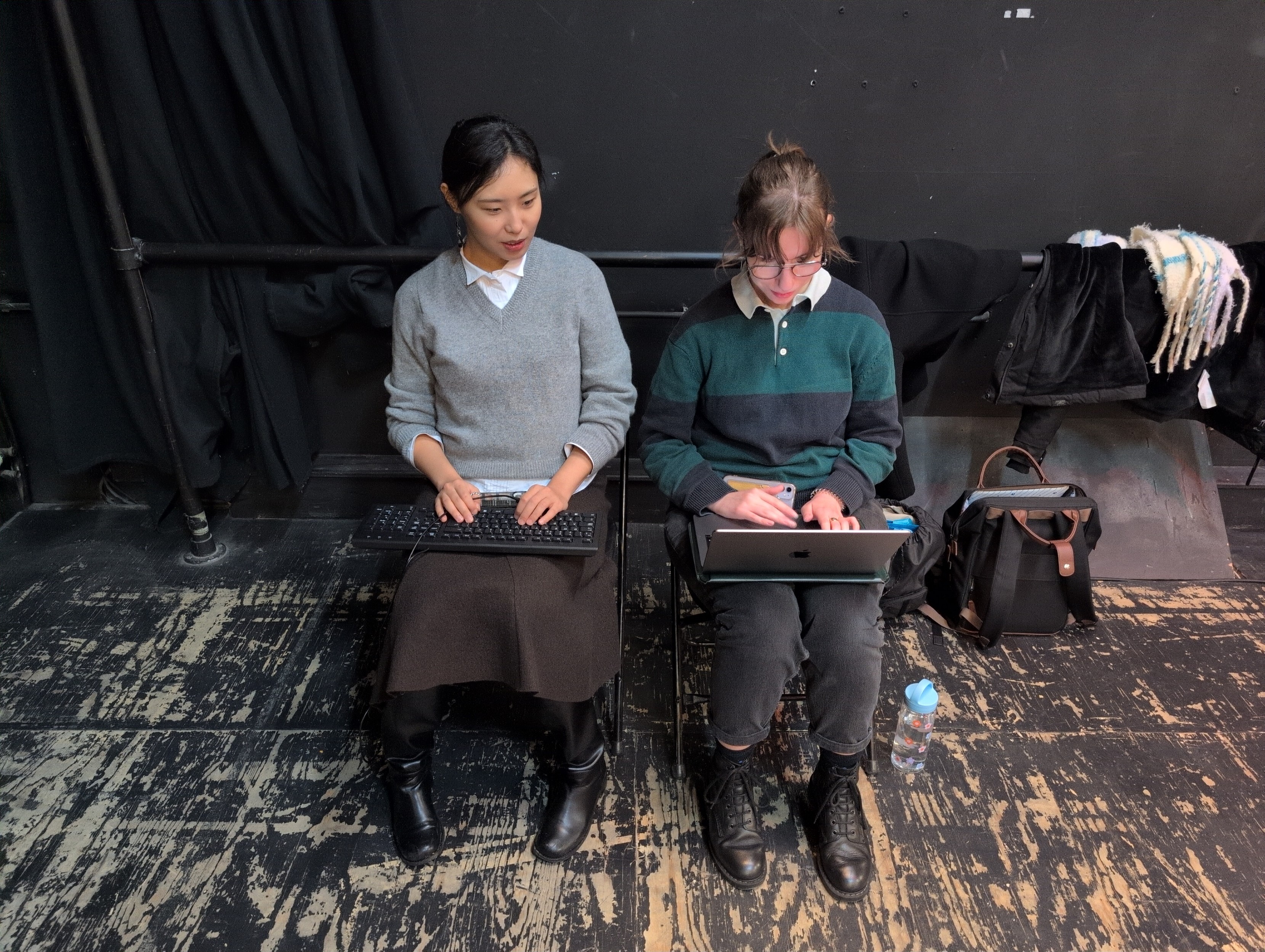
Last Wednesday, my fellow XPUB1 classmates and me wrapped up the trimester with a collective folding, binding, and paginating party to make A_Mazing Machine[s]: Wordscapes to Liberate Language, the printed publication of our Special Issue 28!

My first few months at @xpub have been incredible. I am so proud of my classmates, the work we did together, and what we learned. I am also very grateful to our tutors, who have been super kind and inspiring!

All information, plus a PDF of the printed version, made with WeasyPrint is available on this Eleventy website we created to share all the things that we explored. It mirrors our incredible, legendary wiki. It was very interesting and insightful, so I published my notes about Using MediaWiki as a CMS for Eleventy.

#WeasyPrint #WebToPrint #Web2print #SI28 #SpecialIssue28 #SpecialIssue #XPUB #ExperimentalPublishing #publishing #WritingMachines #Eleventy #builtWithEleventy #11ty #MediaWiki #wiki

Photo of the booklet: a black cover with the title, and a grey subcover.Sewing machine being used to bind the fold.Inserting a thread in the sewing machine, together with a part of the booklet.Ema, Lea, and Robin planning the work to be done.
drbgrpublicationsdrbgrpublications
2025-11-25

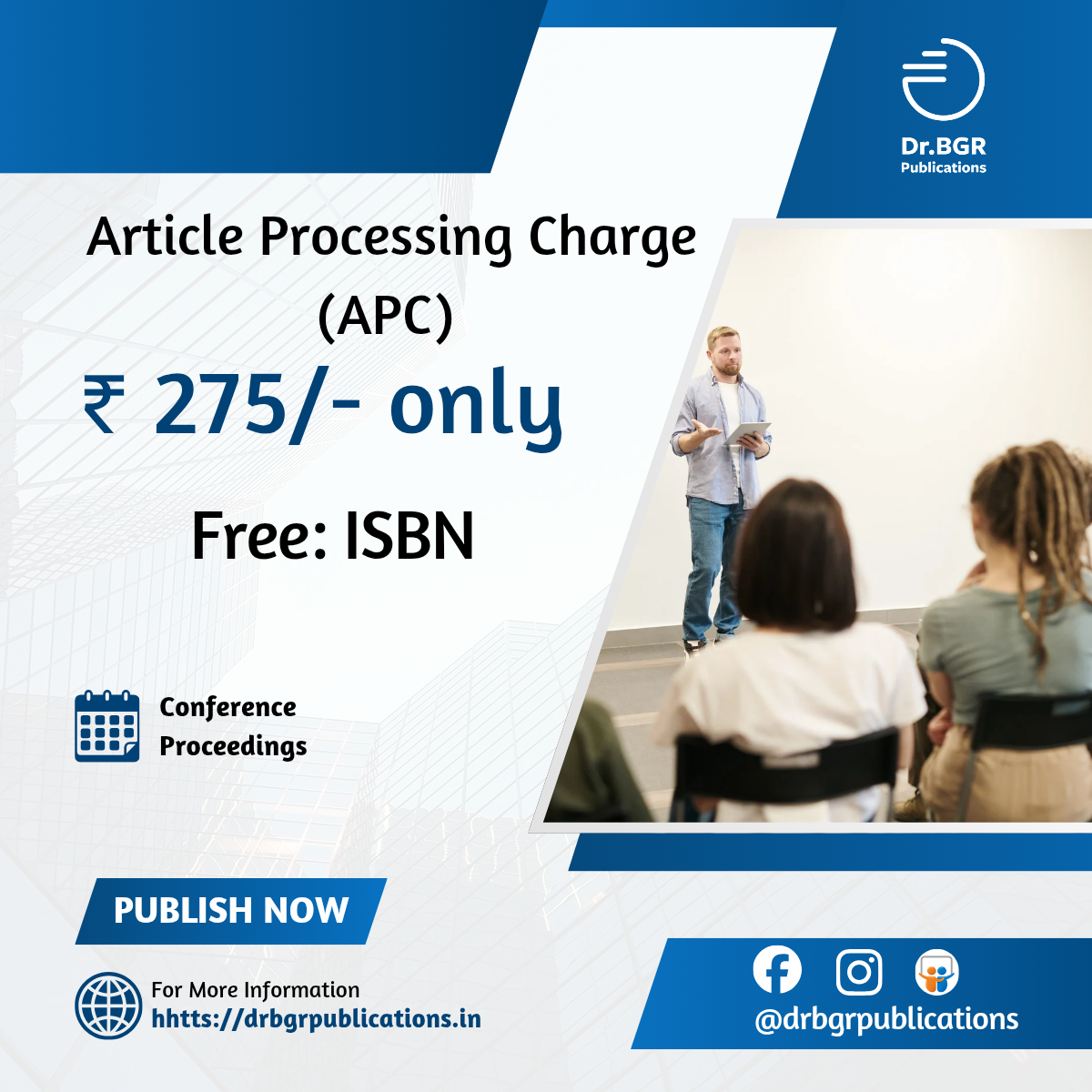
Welcome to the team

🟩 Why Choose Us?
✔ Free ISBN
✔ APC: â‚č 275/- only per paper
✔ Open Access Link
✔ International Indexing
✔ Indexed in International ISBN Portal

Note: Minimum 50 papers.

📧 drbgrpublications@gmail.com
🌎 drbgrpublications.in

2025-11-19

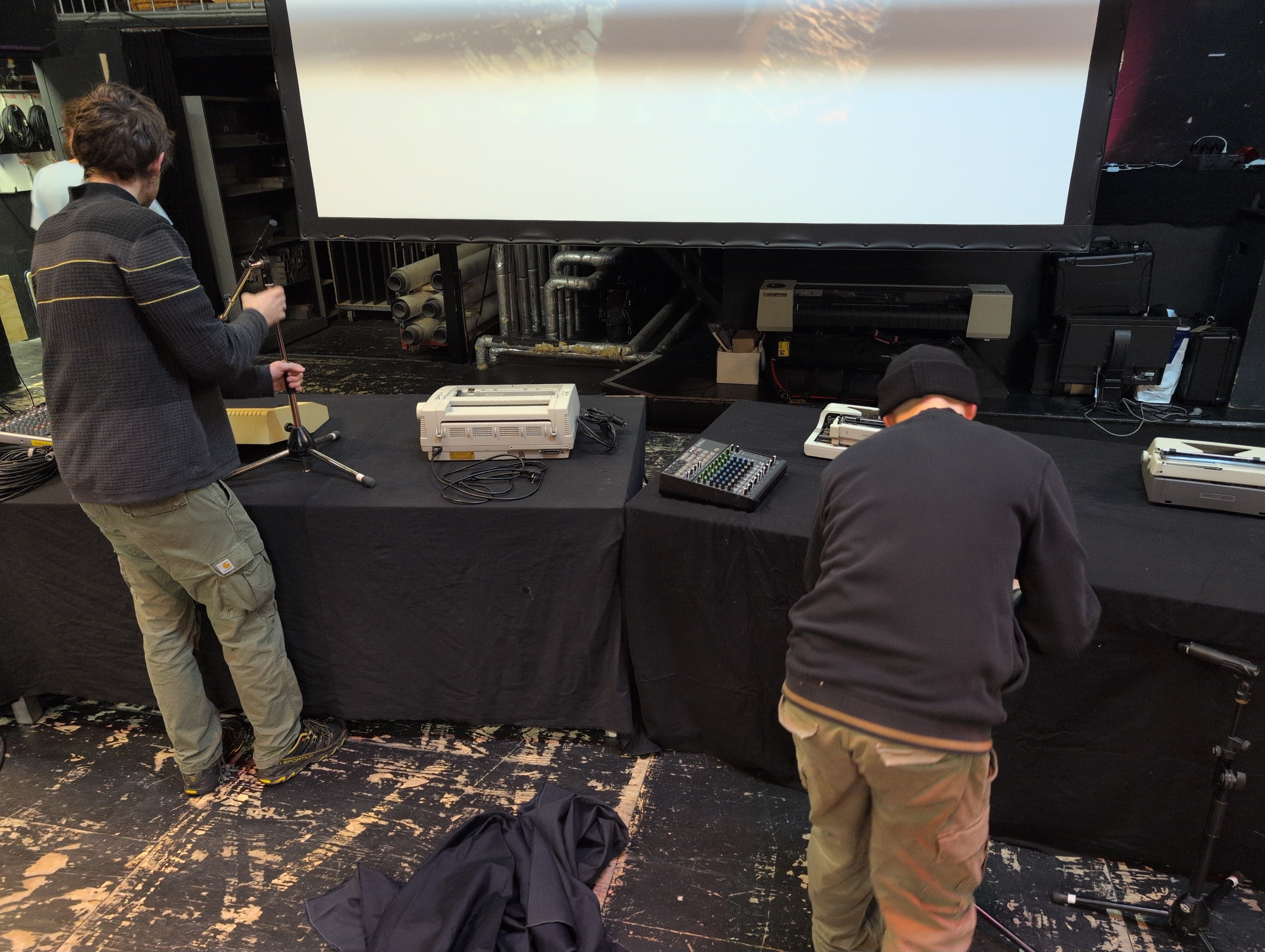
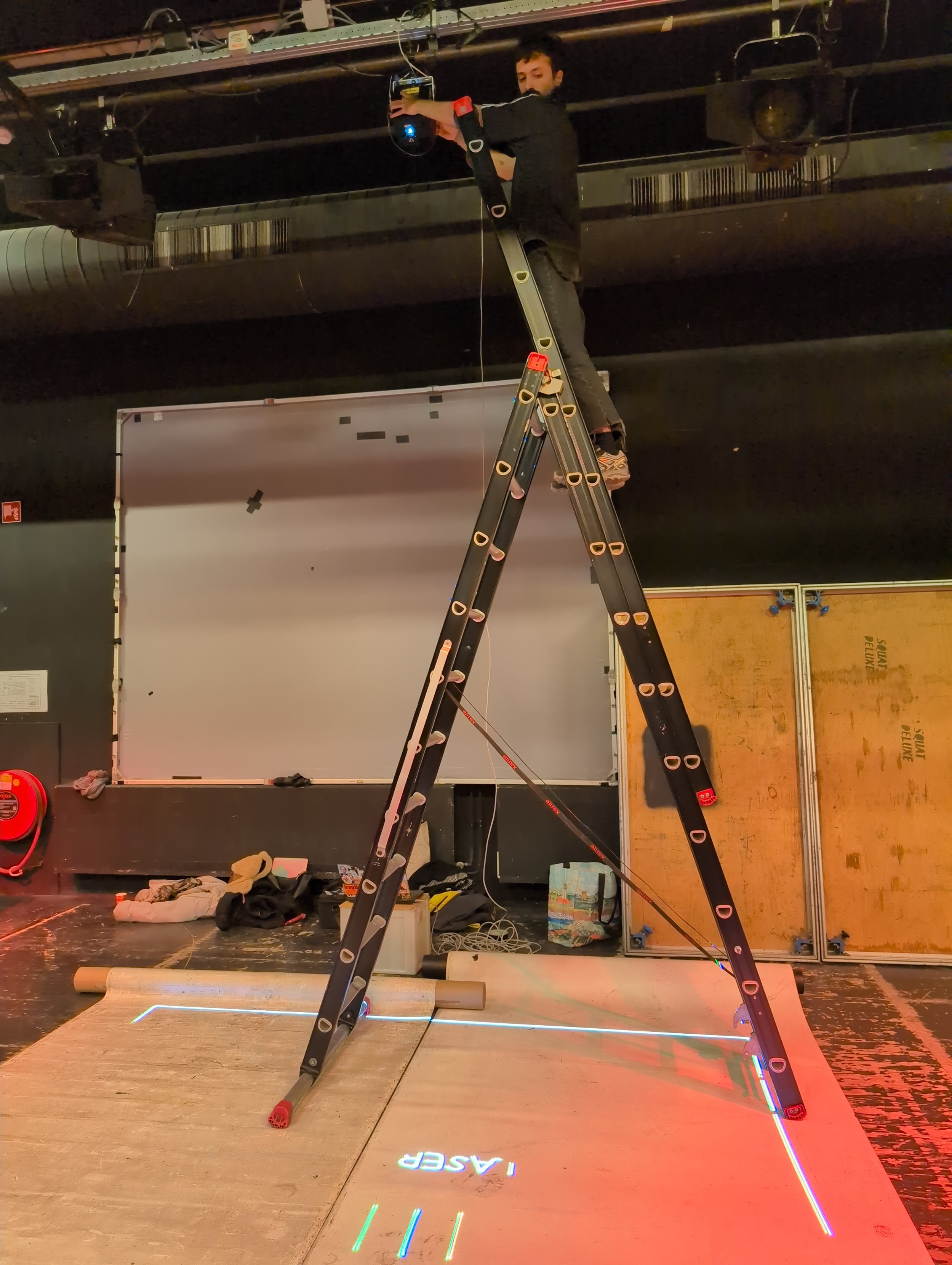
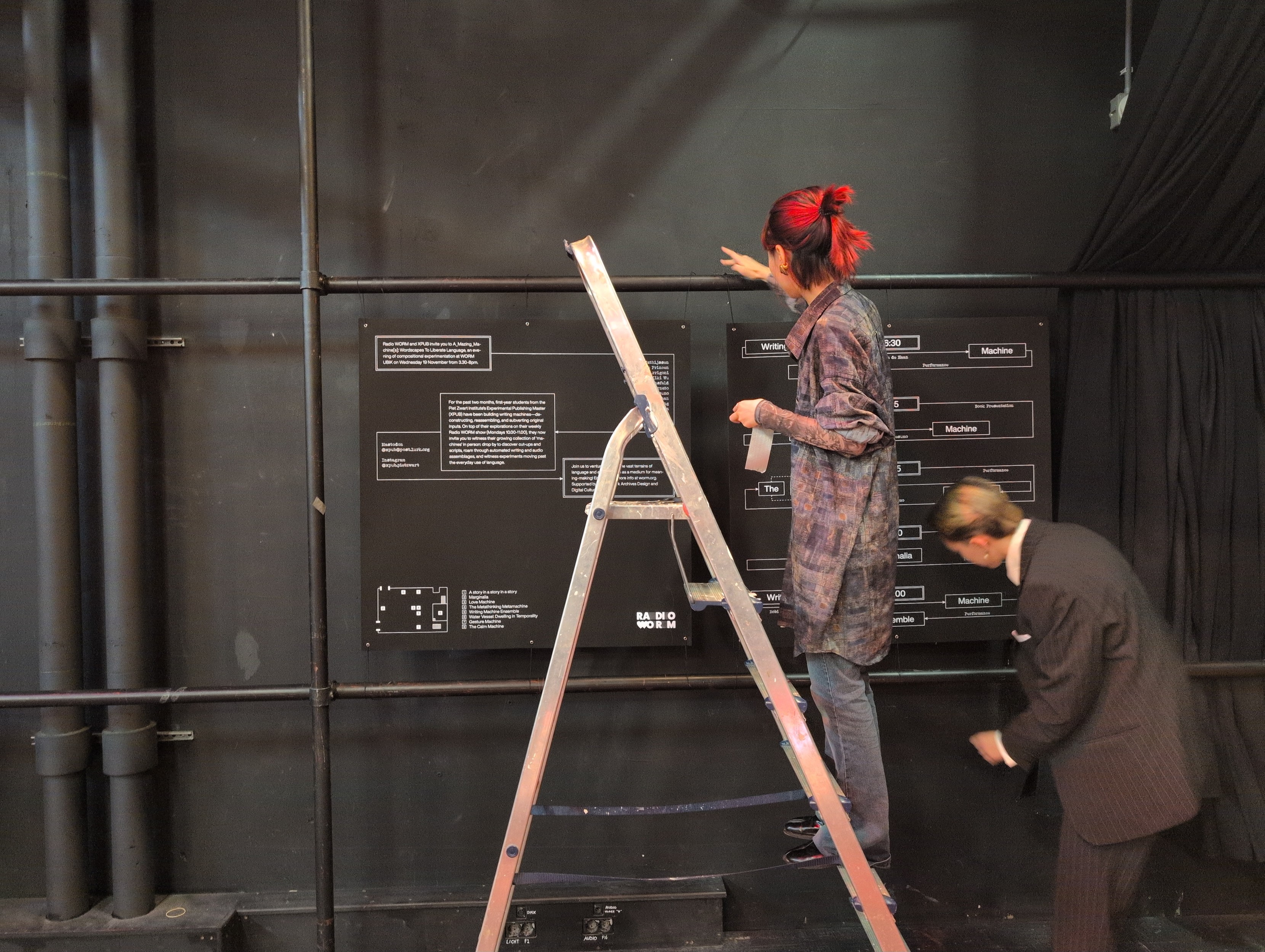
We are setting up some A_Mazing Machines!

See you at Ubik, Boomgaardsstraat 69, from 15:30 until 20:00!

#SI28 #SpecialIssue28 #SpecialIssue #XPUB #ExperimentalPublishing #AmazingMachines #RadioWorm #WORM #NADD

Ema and Daan setting up the microph
2025-11-03

Radio WORM and XPUB invite you to A_Mazing_Machine[s] : Wordscapes To Liberate Language, an evening of compositional experimentation at WORM UBIK on Wednesday 19 November 3:30-8pm.

For the past two months, first-year students from the Piet Zwart Institute's Experimental Publishing Master (XPUB) have been building writing machines—deconstructing, reassembling, and subverting original inputs.

As well as documenting their explorations on their weekly Radio WORM show (Mondays 10:00-11:00), they now invite you to witness their growing collection of ‘machines’ in person: drop by to discover cut-ups and scripts, roam through automated writing and audio assemblages, and witness experiments moving past the everyday use of language.

Join us to venture through the ambiguous nature of language and explore it as a medium for meaning-making! Entry is free, more info at worm.org

Supported by nadd.network, Network Archives Design and Digital Culture.

#WritingMachines #XPUB #SI28 #SpecialIssue #SpecialIssue28 #WORM #RadioWorm #Rotterdam #ExperimentalPublishing #art

A graphic on black background, with the following text:

“XPUB_SPECIAL_ISSUE_#28. A_Mazing Machine_s – Wordscapes to Liberate Language. November 19th 2025, 3:30pm – 8:00pm. WORM UBIK, Boomgaardstraat 71”
2025-10-23

Disease Models & Mechanism's new special issue on infectious diseases is now closed!

tinyurl.com/4zea2dc5

On the cover: 3D-volume render of tuberculosis granulomas in mice infected with E2Crimson-expressing Mycobacterium tuberculosis. Granuloma boundary in turquoise and infecting bacteria in red.

#Biology #SpecialIssue #NewResearch #Research #Academia

Volume 18 (9) September 2025
Logo: Disease Models & Mechanisms
Special Issue: Infectious Disease: Evolution, Mechanism and Global Health
2025-10-17

Dear all,
may I draw your attention on our Call for Papers...Special Issue "Qualitative Evidence Syntheses in the Educational Field".
Please submit abstract first to show your interest. noredreviews.org/index.php/NJS
Looking forward to many amazing papers đŸ„ł
#systamaticreview #review #method #specialissue #CFP

ICalzadaICalzada
2025-10-12

Citation:
Calzada, I. (2025). Generative AI and the Urban AI Policy Challenges Ahead: Trustworthy for Whom? Transforming Government: People, Process and Policy. Accepted 12 Oct 2025. DOI: 10.1108/TG-08-2025-0240

This editorial introduction forms part of the on Generative & Urban AI Policy Challenges — still open for submissions until 31 December 2025.

Submit here 👉 emeraldgrouppublishing.com/cal

Urban Research & Practicejournalurp.bsky.social@bsky.brid.gy
2025-09-29

📱 Call for Papers! Submit to our Special Issue on #DataCentre Urbanism Deadline for abstracts: 30.11.2025 Notification of acceptance: 15.12.2025 Deadline for full contribution: 15.06.2026 Details: think.taylorandfrancis.com/special_issu... #CallForPapers #SpecialIssue

How to (en)code #care in a careless world? I am very proud to be able to present our Special Issue "Refusal and the Computational City - From (De)Coding the Machine to (En)Coding Care", co-edited with the wonderful @NiloufarVadiati, and published with Digital Geography and Society!

From tracing fibre optic cables to critically #mapping #platforms, it is a wonderful collection filled with fierce and collaborative #refusal practices, strategies, and collectives against #bigtech. If you're looking for some hope in these dark times, all the articles are shining a light on and celebrating forms of (digital) care and collectivity!

Please share widely!!

sciencedirect.com/special-issu

#digitalgeography #unplugtrump #geography #SpecialIssue #urbanism

Screenshot of the Special Issue Homepage with title, editors, and short description, saying "In these often tech-euphoric times, grassroots and cyberfeminist approaches to ‘hack’ the urban have become important and critical voices. Be it as activists, educators, hackers, tinkerers, artists, practitioners, and/ or academics: their organizing based on the principles of commoning, sovereignty, and feminist positionality refuse looming tech-solutions to multiple crises. Centering digital joy, community-building, and survival strategies, the collectives’ practices of refusing the computational city – and caring for drafts of an (urban) otherwise – constitute a new relational geography of transformation and prefiguration among urban... (Read more button)"
UniversidadxClimaUniversidadxClima
2025-08-10

đŸŒ±Annals of invites submissions to the new Special Issue "Exploring seed development, structure and physiology", edited by AoB editors Gabriela Auge and Chunhui Zhang
This call for papers is associated with a concurrent session at the International Conference on Research 2025 and the 4th Argentinian Meeting in

â€Ș@gabyplantbio.bsky.social‬
bsky.app/profile/annbot.bsky.s

Call for Papers: Special Issue in Business & Society on »Collective actorhood and organizationality: Recalibrating responsibility in business-society relations«

Ten years after Dennis Schoeneborn and I had introduced the idea of ‘organizationality’ to conceptualize organization as a matter of degree in our joint article “Fluidity, Identity and Organizationality”, we have teamed up with HĂ©loĂŻse Berkowitz, Frank de Bakker and Consuelo VĂĄsquez for a special issue on “Collective actorhood and organizationality: Recalibrating responsibility in business-society relations” to be published in Business & Society. We will be supported in the editorial work by consulting editor Devi Vijay as well as Business & Society editor Colin Higgins. Deadline for submissions is September 30, 2026. Please check out the full call for papers below:

Background and context

Over the past decades, the relations between business and society have fundamentally changed. According to Mulgan (2019), we are entering an age of “digital futures” (e.g., AI taking over more and more human tasks at rapid speed) as well as “broken futures” (e.g., accelerating dynamics of climate change), in which the survival of humankind will depend on our ability to organize in collective ways and imagine alternatives to tackle such complex social problems, amidst growing inequalities and ecological destruction on a planetary scale (see also Ferraro et al., 2015; Mercier-Roy & Mailhot, 2024; Varman & Vijay, 2022; Whyte, 2020). Collective actorhood, defined as the capacity of a social group to act on a supra-individual level and to become considered as an agent in its own right (List & Pettit, 2011; Knight, 2022), in turn, has been argued to be the main criterion that distinguishes organizations from other social phenomena (King et al., 2010). However, the current ‘crisis of civilization’ (Escobar, 2021), i.e. a crisis of climate, energy, poverty, inequality, food, and meaning, can only be addressed if we consider that collective actorhood often requires to reach beyond the boundaries of single organizations and involve a much broader spectrum of organizational phenomena. Examples like cross-sector partnerships (Koschmann et al., 2012), meta-organizations (i.e. organizations that have other organizations as their members; Ahrne & Brunsson, 2008), or open organizing phenomena that resemble social movements (Dobusch & Schoeneborn, 2015; Puranam et al., 2014) all tend to have in common that their status as collective actor is far less clear-cut or that collective agency may be accomplished in different ways.

In this Special Issue, we thus call for research that reconsiders the business-society relationship by giving up the clear-cut separation between “the” organization as a distinct entity and society that surrounds it. Instead, we invite scholarship that explores the dynamics of collective actorhood of a much wider spectrum of organizational phenomena, how they shape and are shaped by social and ecological transformations, and whether and how these dynamics address or reinforce complex social problems (Ferraro et al., 2015; GĂŒmĂŒsay et al., 2022; Berkowitz et al., 2024; Mercier-Roy & Mailhot, 2024; Wenzel et al., 2025).

For studying such recalibrations of business-society relations, organization and management scholarship lately has started to draw on gradual understandings of organization. Prominent examples of this view are the notions of partial organization (Ahrne & Brunsson, 2011; 2019) or organizationality (Dobusch & Schoeneborn, 2015; Schoeneborn et al., 2019). With the concept of partial organization, Ahrne and Brunsson (2011) have widened the spectrum of social phenomena that can be considered organizational, incl. those that abstain from using typical elements of organization (such as hierarchy or membership). Similarly, with the notion of organizationality, Dobusch and Schoeneborn (2015) have suggested conceiving organization as a matter of degree. As the authors demonstrate based on an analysis of the hacktivist network Anonymous, even loose and fluid social collectives can situationally mobilize features of a quasi-organization. Taken together, gradual theories of organization (Ahrne & Brunsson, 2011; Dobusch & Schoeneborn, 2015; Biancani et al., 2014; Wilhoit & Kisselburgh, 2015) hold much promise for rethinking collective actorhood beyond the boundaries of formal organizations. In a similar vein), indigenous, feminist, and decolonial approaches further invite us to question the Global North’s conceptualizations of organizations (Cruz & Sodeke, 2022; Rosiek et al., 2020) and to consider also how organizing happens at the margins (Pal et al., 2023). As Cruz and Sodeke (2022) have pointed out, thus far most of the research on organizationality tends to take the starting point in situations of privilege where actors deliberately choose to organize themselves in loose and fluid ways. Adopting such alternative ontologies (Daher, 2024) invite to better account for situations in which marginalized actors are forced into fluid and precarious ways of organizing.

If we relate such gradual understandings of organization to matters of collective actorhood, we can observe that actorhood can vary by degree, as well (Knight, 2022). On the one hand, research has shown that corporations increasingly portray themselves as collective actors in their own right (Bromley & Sharkey, 2017; Halgin et al., 2018). They do so, for instance, by positioning themselves as “corporate citizens” (Matten & Crane, 2005), thus strongly emphasizing their responsibility as collective actors vis-à-vis society. However, the question arises whether trends of an over-organization of the business-society relations fosters or rather dilutes the responsibility of the collective actors involved (Berkowitz et al., 2022; Brunsson et al., 2022; Jungmann, 2024; Whyte, 2020). On the other hand, we see trends of less pronounced collective actorhood. For instance, digital platform organizations (such as Meta/Facebook, Twitter/X, etc.) have been shown to strategically downplay their status as collective actors to diminish their collective responsibility for the (malicious) content that is shared on their platforms (Vergne & Wry, 2014), while profiteering from such sharing, at the same time. Furthermore, while attempts are being made to recognize ecocide as an international crime (see Minkova, 2023), multinational corporations strategize to escape actorhood and avoid taking responsibility for the destruction of people and nature (Baldi et al., 2024; Whyte, 2020).

In this Special Issue, we invite scholarship to further explore both these empirical trends and the new theoretical approaches that shed a different light on the changing relations between business and society with regard to more or less pronounced forms of collective actorhood. As part of this, we are interested in strategic as well as emergent processes that allow for different degrees of collective actorhood over time and the respective implications for business-society relations. We also encourage critical reflections on the very notion of collective actorhood, along with alternative conceptualizations that may deepen our understanding of how organizations can be made more responsive and accountable in the face of contemporary societal crises. We invite conceptual and empirical inquiries into the dynamics of collective actorhood from a broad variety of theoretical perspectives, including gradual understandings of organization, as well as a broad set of methodological approaches.

Potential themes

The nature of collective actorhood

  • How is collective actorhood performed and organized?
  • Is a legal status/legal person needed to accomplish collective actorhood?
  • Why and how do actors strategically downplay or amplify collective actorhood? How doe these strategic efforts affect responsibility attributions?
  • What are the implications and limitations of collective actorhood for reenvisioning the business-society relationship and offer alternative solutions in crises of civilization?

Dynamics over different contexts, space and time

  • Where and how does actorhood emerge? How do institutional contexts affect actorhood? How does actorhood evolve over time or space, and how do organizations transition between different degrees of organizationality?
  • Can social collectives be perpetuated and maintained even with a low degree of organizationality – or do they feel pressures either to be dissolved or evolve toward higher degrees of organizationality eventually? How does that affect relations with society?
  • How to explain asymmetric dynamics between the organized (e.g., established formal organizations; high degree of organizationality) and the (rather) unorganized as their counterparts (e.g., social media firestorm; low degree of organizationality)?
  • What can we learn from alternative forms of organizing, including those in marginalized settings?
  • How is collective actorhood conceptualized in the various geographies, including the Global South? How does this translate, circulate, and adapt across geographies?
  • What are the contributions of other collective notions stemming from indigenous cosmovisions and decolonial approaches?

Symmetries and asymmetries in relations between different spheres/domains of society

  • How does actorhood affect the interactions between organizations from different domains (for profit and non-profit, scientific organizations, public actors, etc.)?
  • When does collective actorhood create relations of domination and exploitation? At what point does collective actorhood become constitutive of societal problems and crises (incl. fascism, techno-feudalism, etc.) – rather than a solution for addressing them?
  • How does actorhood (or the lack of) affect the relationship between privileged and marginal communities?
  • Can living (forests, rivers, soils) and non-living (algorithms, technologies) entities be attributed actorhood and be held accountable? How does it differ from ‘human’ organizing? How can alternative ontologies (e.g., Daher, 2024) help inform this analysis?

Collective actorhood and organizationality

  • How can a gradual understanding of organization help us to understand variations in the degree of organizational actorhood and responsibility attributions in the relations between businesses and society?
  • What are the parameters of organizationality required for a responsible collective actorhood? How can alternative ontologies, cosmovisions, and organizing experiences inform this critical reflection?
  • How to better account for situations in which marginalized actors are forced into fluid and precarious ways of organizing and/or have no choice to lessen the degree of organizationality to cope or survive?

Submission process

Submissions must fit with the aim and scope of Business & Society. To understand the fit with the journal’s scope, vision and expectations related to rigor and contribution, we strongly encourage authors to refer to editorial insights published in Business & Society. All manuscripts must be uploaded via the journal’s online submission system between August 1 and September 30, 2026. Please specify in the cover letter that the manuscript is for the special issue on “Collective actorhood and organizationality”. All submissions will be double-blind peer-reviewed by multiple reviewers. Interested scholars are welcome to contact the corresponding guest editor, Dennis Schoeneborn (ds.msc@cbs.dk).

#BusinessSociety #CallForPapers #CfP #collectiveActorhood #gradualUnderstandingOfOrganization #organizationality #SpecialIssue

Logo of the journal "Business & Society"

Call for Papers: Special Issue on »Creativity and copyright in the shadow of GenAI«

Call for Papers for a Special Issue in Innovation: Organization & Management

Konstantin Hondros (HSU Hamburg), Astrid Mager (Austrian Academy of Sciences), Patricia Aufderheide (American University Washington), Patrick Cohedent (HEC MontrĂ©al) and myself are happy to announce a Call for Paper for a special issue on “Creativity and copyright in the shadow of GenAI: Managing and organizing creative content in the digitalization frenzy” to be published in “Innovation: Organization & Management”. Deadline for submission of full papers is September 30, 2026. Please do not hesitate to contact me or one of the other editors to discuss paper ideas.

In addition, we are planning an online paper development workshop to provide feedback on early-stage submissions on February 27, 2026. We encourage potential authors to submit an abstract of approximately 1,000 words describing their planned contribution, empirical material, and methodological approach (if applicable) by January 25, 2026, to konstantin.hondros@hsu-hh.de. Participation in the workshop is optional, and authors who do not attend are welcome to submit papers to the Special Issue.

Please find the full Call for Papers below:

Creativity refers to the generation of novel and valuable ideas and artifacts (Amabile, 1983) and is central to the management and organization of innovation (CaniĂ«ls & Rietzschel, 2015; Anderson, Potočnik, & Zhou, 2014). Mimicking creativity, generative artificial intelligence (GenAI) technology rapidly generates potentially novel and valuable content such as text, images, music, or video. The multiple implications of GenAI for the management and organization of creativity and innovation (Amabile, 2020) are exemplified in the burgeoning literature on creative problem solving (Boussioux et al., 2024), the organization of creative and knowledge-based work (Bechky & Davies, 2024; Sultana et al., 2023), employee creativity (Jia et al., 2024), or human-nonhuman interaction in creative processes (Grodal et al., 2024).

Running through organizational discussions of GenAI and creativity, but often not made explicit, are copyright issues, such as rights management of training data or ownership of generated content. Copyright refers to the legal framework that protects but also delineates ownership of creative content (Carruthers & Ariovich, 2004; Lennartz & Kraetzig, 2024). GenAI, and digitization more broadly, is moving copyright from the legal niches of the creative industries to the center of practices and routines in organizations and everyday digital life (Aufderheide & Jaszi, 2018; Greenstein, Lerner, Scott, 2013), for example in GenAI-enabled fan remixing (Galuszka, 2024). Any activity related to GenAI, any text generated by ChatGPT, any image generated by Midjourney, requires the management of copyright within and across organizations. Yet an in-depth discussion of the interrelation between creativity and copyright in the context of GenAI is missing from management and organization studies, as well as social science at large.

This Call for Papers suggests that the accelerating developments of digitization and GenAI call for more attention to the interrelation between creativity and copyright in organizations. At the same time, this provides a unique opportunity to study how organizations deal with regulatory uncertainty due to rapid technological developments (Dobusch et al., 2021), as GenAI-based technologies and markets emerge and change much faster than any regulatory framework could possibly do. Such a mismatch between technology and regulation opens up all kinds of opportunities and challenges for creative organizing and organizing creativity alike (Jiang et al., 2023).

For this reason, we particularly encourage studies that use empirical methods to explore everyday practices of dealing with GenAI and copyright within and beyond organizational contexts, but also conceptual submissions are very welcome. Empirically, we invite contributions from all kinds of fields potentially affected by GenAI and its relationship to copyright – from the creative industries and journalism to online platforms and services, to research and science itself. We welcome contributions from different disciplines interested in the empirical analysis of technology and innovation – ranging from organization and management studies, media and communication studies, cultural studies, information studies, sociology, political science, history, science and technology studies, musicology, to activist research and practice-based approaches.

We are open to a broad range of research questions that link to the Special Issue’s topic of creativity and copyright in the context of GenAI. At the same time, we have identified several research areas and related questions that are of interest for the proposed Special Issue.

  • Creativity in the shadow of GenAI: GenAI crucially transforms creative practices and knowledge production that we only start to understand, particularly regarding the interrelation between creativity and copyright. How does GenAI affect the creation and management of creative content? How do creative, artistic practices change through the use of GenAI? What role does copyright play in creative transformations and organizational changes co-produced with GenAI?
  • Doing copyright: A practice lens of ‘living copyright’ is missing in much of the organization and management literature in the context of creativity, but also in other contexts and fields. How does GenAI foster practices related to copyright within and across organizations? Who are the actors and actants doing copyright in the context of GenAI? How are these new practices shaping the organization of creativity? How is emerging regulation of GenAI affecting organizations and organizational creativity?
  • Conflicts over copyright: Organizations are involved in many conflicts over copyright that touch upon creativity in multiple ways, but we know little about them. How do conflicts over copyright foster or impede with creativity and the generation of creative content? What is the role of digitization in these conflicts, and how are these conflicts evolving with GenAI? How do these conflicts affect creativity in organizations? How do conflicts over copyright and AI relate to managing technological innovation?
  • Inequality and copyright: Copyright plays an important role in distributing access to creative content and to knowledge in global economies more broadly. How does GenAI affect access to knowledge within and across organizations? Who actually owns copyright and how does GenAI influence ownership structures? What are the conventions and managerial practices for allocating copyright among actors and agents in organizations? What are the consequences of copyright inequality for creativity?
  • Alternatives to copyright: Commons-based creation and knowledge-sharing approaches have proven invaluable for creativity in many organizations, especially in the context of digitization. What are the alternatives to exclusive copyright regimes in the context of GenAI? How do alternatives to copyright provide counter-imaginaries in digital environments? How do such approaches challenge or facilitate the management and organization of creativity in the context of GenAI?
  • Researching copyright: Copyright is ubiquitous, yet highly abstract and complex, both in its legal structure and in its real-world impact on creativity. Making copyright-sensitive creativity and innovation research more accessible to the discourses of management and organization is also a methodological issue. What are methodologically promising ways to investigate the interrelation between copyright and creativity in organization and management? What are the specific obstacles in the context of GenAI?

The aim of this Special Issue is to provide fundamental insights in the management and organization of the interrelation between copyright and creativity in the context of GenAI. We will achieve this by showcasing how this interrelation unfolds in various creative and innovative arenas, such as creative industries, journalism, digital platforms, and (open) science. We expect contributions to make copyright a more accessible research topic across disciplines and contexts by fostering an interdisciplinary and transdisciplinary community around the topic of copyright and creativity in organization and management. Through this special issue, we aim to occupy a central position in the discourse about organizing and managing creativity in the context of GenAI and emerging digitalization.

References

Amabile, T. M. (2020). Creativity, artificial intelligence, and a world of surprises. Academy of Management Discoveries, 6(3), 351-354.

Amabile, T. M. (1983). The social psychology of creativity: A componential conceptualization. Journal of Personality and Social Psychology, 45(2), 357-376.

Anderson, N., Potočnik, K., & Zhou, J. (2014). Innovation and creativity in organizations: A state-of-the-science review, prospective commentary, and guiding framework. Journal of Management, 40(5), 1297–1333.

Aufderheide, P., & Jaszi, P. (2018). Reclaiming fair use: How to put balance back in copyright. Chicago: University of Chicago Press.

Bechky, B. A., & Davis, G. F. (2024). Resisting the Algorithmic Management of Science: Craft and Community After Generative AI. Administrative Science Quarterly, 00018392241304403.

Boussioux, L., Lane, J. N., Zhang, M., Jacimovic, V., & Lakhani, K. R. (2024). The crowdless future? Generative AI and creative problem-solving. Organization Science35(5), 1589–1607.

CaniĂ«ls, M. C. J., & Rietzschel, E. F. (2015). Organizing creativity: Creativity and innovation under constraints. Creativity and Innovation Management, 24(2), 184-196.

Carruthers, B. G., & Ariovich, L. (2004). The sociology of property rights. Annual Review of Sociology, 30, 23-46.

Dobusch, L., & HeimstĂ€dt, M. (2024). The structural transformation of the scientific public sphere: Constitution and consequences of the path towards open access. Philosophy & Social Criticism, 50(1), 216-238.

Dobusch, L., Hondros, K., Quack, S., & Zangerle, K. (2021). Between anxiety and hope? How actors experience regulatory uncertainty in creative processes in music and pharma. Research in the Sociology of Organization, 75, 137-160.

Fagerjord, A. (2009). After convergence: YouTube and remix culture. In: Hunsinger, J., Klastrup, L., & Allen, M. (Eds.), International Handbook of Internet Research. Springer: Dordrecht, 187-200.

Fisher III, W. W., & Oberholzer-Gee, F. (2013). Strategic management of intellectual property: an integrated approach. California Management Review, 55(4), 157-183.

Galuszka, P. (2024). The influence of generative AI on popular music: Fan productions and the reimagination of iconic voices. Media, Culture & Society, 01634437241282382.

Greenstein, S., Lerner, J., & Stern, S. (2013). Digitization, innovation, and copyright: What is the agenda? Strategic Organization, 11(1), 110-121.

Grodal, S., Ha, J., Hood, E., & Rajunov, M. (2024). Between Humans and Machines: The social construction of the generative AI category. Organization Theory, 5(3), 26317877241275125.

Jia, N., Luo, X., Fang, Z., & Liao, C. (2024). When and how artificial intelligence augments employee creativity. Academy of Management Journal67(1), 5–32.

Jiang, H. H., Brown, L., Cheng, J., Khan, M., Gupta, A., Workman, D., . . . Gebru, T. (2023). AI Art and its Impact on Artists. Proceedings of the 2023 AAAI/ACM Conference on AI, Ethics, and Society, Montreal, QC, Canada. https://doi.org/10.1145/3600211.3604681.

Lennartz, J., & Kraetzig, V. (2024). Forbidden Fruits? Artistic Creation in the AI Copyright War. IIC-International Review of Intellectual Property and Competition Law, 1-5.

Sultana, N., Turkina, E., & Cohendet, P. (2023). The mechanisms underlying the emergence of innovation ecosystems: The case of the AI ecosystem in Montreal. European Planning Studies31(7), 1443–1465.

#CfP #copyright #GenAI #InnovationOrganizationManagement #IOM #SpecialIssue
Picture of the Webpage promoting the call for paper for the special issue on Creativity and copyright in the shadow of GenAI
Jan R. Boehnkejrboehnke
2025-06-24

I was very happy to support my esteemed colleagues Ueli Kramer & Giovanna Esposito editing the

"Therapist responsiveness in psychotherapy"

The 6 papers were published
tandfonline.com/toc/tpsr20/35/1
and we have a structured discussion at 👇

Therapist responsiveness:
Moving our research designs into the complexity of psychotherapy

Structured Discussion

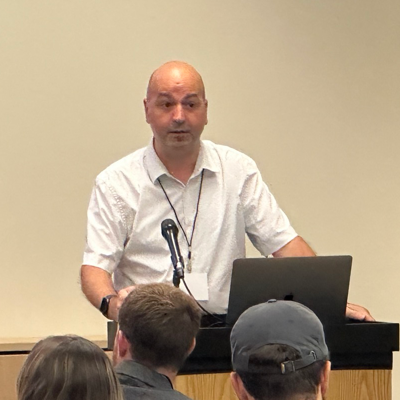
Organizers & Moderators: Ueli Kramer, University of Lausanne, Switzerland, and Jan R. Boehnke, University of Dundee, UK

Discussants
Franz Caspar, University of Bern, Switzerland
Alice Coyne, American University, USA
William B. Stiles, Miami University, Oxford, USA
Orya Tishby, Hebrew University, Jerusalem, Israel


This structured discussion is organised around papers of a “Psychotherapy Research” special issue, from the original call text:
Therapists’ decisions and actions depend on client expressions and behaviors. Adaptations of the therapeutic process in response to client expression and behavior have been summarized under the term "therapist responsiveness", and this term can describe either the act of adapting or the degree to which a therapist (or a setting) is inclined to make such adaptations. Such therapist responsiveness may operate within the therapeutic relationship, as adaptation of a specific therapeutic technique or as an explicit orientation towards client characteristics (including their minority status), or any other instance in the psychotherapy process. Such therapist responsiveness poses challenges in psychotherapy research on clinical outcome and mechanisms of change. However, therapist responsiveness may also offer opportunities for developing new assessments and designs for the future of psychotherapy research.
2025-06-23

đŸ“ąđŸ„ł#SpecialIssue announcement!
Quantum #Algorithms and Relative Problems #CallforPaper

đŸ‘„Edited by: Prof. Junde Wu
⏳Deadline: May 1, 2026

👉Contributions are welcome at sciendo.com/journal/QIC

Jan R. Boehnkejrboehnke
2025-06-17

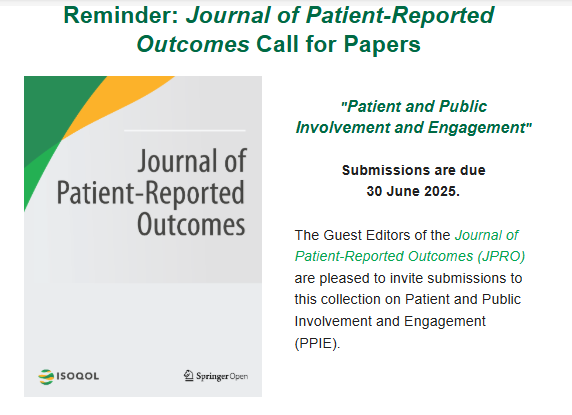
Roughly 2 weeks left to submit to JPRO's
"Patient and Public Involvement and Engagement"
springeropen.com/collections/P

The aim is to capture the use of Patient and Public Involvement and Engagement () in Patient-Reported Outcome-related research, such as the development of PRO measures and electronic PRO (ePRO) systems, as well as the implementation of PRO measures for healthcare research and clinical practice.

Screenshot of a web announcement:

Reminder: Journal of Patient-Reported Outcomes Call for Papers
"Patient and Public Involvement and Engagement"

Submissions are due
30 June 2025.

The Guest Editors of the Journal of Patient-Reported Outcomes (JPRO) are pleased to invite submissions to this collection on Patient and Public Involvement and Engagement (PPIE).

Client Info

Server: https://mastodon.social
Version: 2025.07
Repository: https://github.com/cyevgeniy/lmst