38 years ago
'Field Day', is an Album of American punk rock band Dag Nasty, released February 1988 includes the Ruts classic 'Staring at the Rude Boys'
#punk #punks #punkrock #dagnasty #fieldday #history #punkrockhistory
38 years ago
'Field Day', is an Album of American punk rock band Dag Nasty, released February 1988 includes the Ruts classic 'Staring at the Rude Boys'
#punk #punks #punkrock #dagnasty #fieldday #history #punkrockhistory


It's February. It's only five months until ARRL/RAC Field Day!
Last year, I modified Morse Walker to support practicing running CW FD.
I've since done a couple other modifications; sadly I haven't heard back from the author on PRs, so if you are thinking you'd like to brush off your Morse code to participate in Field Day, my fork is still your best option:
https://johnsonm.github.io/morsewalker/
I'm saying this now because I got that work done shortly before FD last year and was absolutely not ready to run, but was able to do S&P based on having learned in the fork. But there's enough time left that running POTA and practicing in my fork of Morse Walker might be enough for you to run CW FD. Double points for CW QSOs! ☺
I've thought about what it would take to make it have a mode for simulating S&P / hunting (Morse Pouncer?), but it's a lot more work for much less value, so I can't imagine I'll make that investment this year. Practice running with only one responding caller configured, and keep your sending speed to speed you can copy, and you'll learn the pattern well enough anyway.
Winter Field Day 2026 Reflections: Is Ham Radio Relevant For Emergency Communications And Prepping?
❄️ Survived Winter Field Day 2026!
I headed out to a field near Bonn for the annual cold-weather stress test. The elements definitely showed up: -2°C, icy rain, and pitch blackness during setup. It was a true shakedown - my telescopic mast even froze shut! 🥶
I started fully focused on CW, but realized that Winter Field Day feels distinctly more SSB biased (given the event's focus on emergency communications, where voice is often the primary mode). So I eventually plugged in the mic and logged my first-ever portable SSB contacts. Lesson learned: Next time, I’m bringing the mic into the game much earlier! 🎤
A massive thanks to the organizers for their efforts in making this event happen. It’s a great way to find the breaking points in your kit.
📝 Read the full report on my site: https://dg5cw.darc.de/portable/2026-01-25-wfd/
73 de DG5CW
#HamRadio #WinterFieldDay #WFD2026 #AmateurRadio #EmComm #PortableRadio #CW #SSB #OutdoorRadio #MorseCode #FieldDay

On days like today, I'm glad that I've had a few years of #FieldDay practice and the equipment to at least charge my phone, run some lights, and power some devices completely from battery if the power goes out. It's no genset, but it'll do in a pinch. Hopefully we're not pinched.

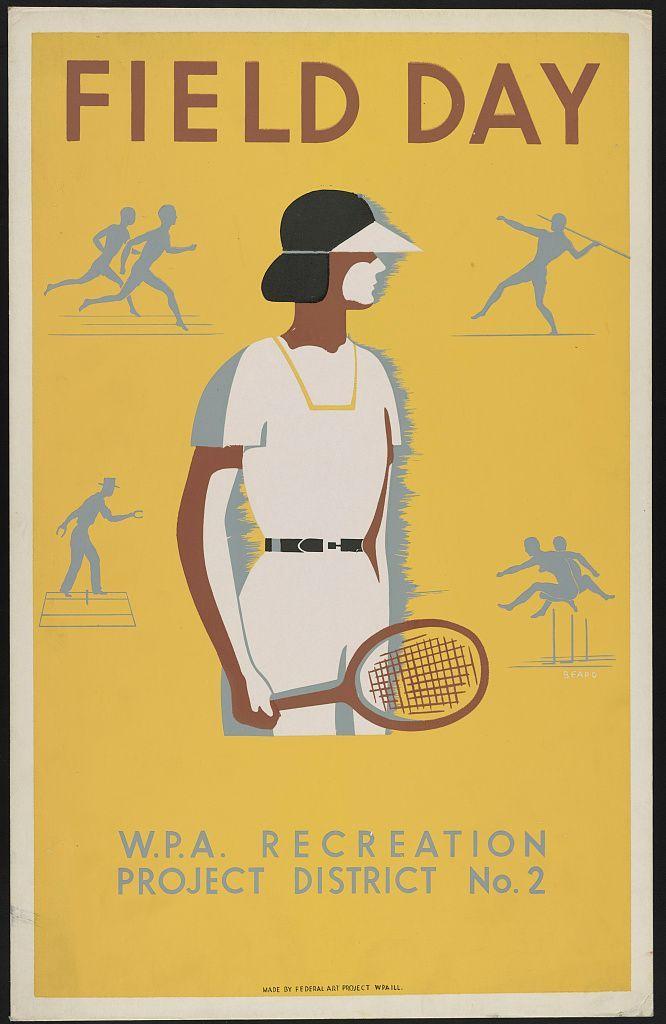
Field day--WPA recreation project, Dist. No. 2 [1939]
1 print on board (poster) : silkscreen, color. | Poster showing woman holding tennis racket, with silhouettes of other games and events in background.
#FieldDay #LosAngelesCounty #California #sports #posters #recreation #screenprints #color #illinois #tennisplayers #photopgraphy #LibraryOfCongress
Field Day 2026 lineup news! 🚨
The first wave is here for the return to Brockwell Park on May 23rd. Floating Points, Andy C, Honey Dijon, Joy Orbison and more announced.
Full details: https://thefestivals.uk/field-day-2026-confirms-first-artists-for-brockwell-park-return/
#FieldDay #London #ElectronicMusic #Festivals #FieldDay2026 #AndyC #FloatingPoints

Disaster Stories: When Ham Radio Was the Only Line Out
979 words, 5 minutes read time.
In the face of disaster, when power grids fail, cell towers collapse, and the world falls silent, a group of dedicated individuals remains steadfast—amateur radio operators, or “hams.” These men and women, often working quietly behind the scenes, have been the lifeline for countless communities during emergencies. Their stories are not just about radios and frequencies; they’re about courage, community, and the unyielding spirit of service.
The Genesis of Amateur Radio in Emergency Communications
The roots of amateur radio’s involvement in emergency communications trace back to the early 20th century. In 1914, the American Radio Relay League (ARRL) was established, marking a significant step in organizing amateur radio operators. By the 1920s and 1930s, hams were actively engaging in disaster response, providing crucial communication links during floods and ice storms in New Mexico and Minnesota.
The need for organized emergency communication became even more apparent during World War II. In 1942, the Federal Communications Commission (FCC) formed the War Emergency Radio Service (WERS) to ensure that amateur radio could be quickly mobilized in times of national crisis. This laid the groundwork for future emergency services.
The Rise of ARES and RACES
In 1935, the ARRL introduced the Amateur Radio Emergency Service (ARES), aiming to provide organized communication support during emergencies. This initiative was further strengthened in 1952 with the establishment of the Radio Amateur Civil Emergency Service (RACES), a service authorized by the FCC to assist government agencies during civil emergencies.
These organizations have been instrumental in numerous disaster responses. For instance, during the 2003 North America blackout, amateur radio operators played a pivotal role in relaying information and coordinating efforts when traditional communication systems were overwhelmed.
Real-Life Heroes: Ham Radio in Action
The true measure of amateur radio’s impact is best understood through the stories of those who have experienced its benefits firsthand.
During Hurricane Katrina in 2005, over a thousand ARES volunteers provided essential communication services. Hancock County, Mississippi, had lost all contact with the outside world, except through ARES operators who served as 911 dispatchers and message relayers.
Hurricane Michael in 2018 left many areas without power and communication. Amateur radio operators were among the first to establish communication links, coordinating rescue and relief efforts when other systems were down.
During Hurricane Helene in 2024, in Asheville, North Carolina, ham radio operators played a significant role in keeping residents informed during this deadly tropical storm. They provided updates and coordinated emergency responses when electrical grids and telephone communications were disrupted.
The Mechanics of Ham Radio in Emergencies
Amateur radio’s effectiveness in emergencies lies in its unique capabilities. Unlike commercial communication systems that rely on infrastructure vulnerable to damage, ham radios can operate independently. Operators use battery-powered equipment, solar panels, and portable antennas to establish communication links, often without the need for external power sources.
One of the key tools in emergency communications is the use of repeaters. These devices amplify radio signals, extending the communication range, especially in mountainous or obstructed areas. Additionally, digital modes like Winlink allow for the transmission of emails and messages over long distances, even when traditional internet services are unavailable.
Training and Preparedness: The Backbone of Emergency Response
The readiness of amateur radio operators is a result of continuous training and preparation. Events like Field Day, held annually, simulate emergency conditions, allowing operators to practice setting up equipment and establishing communication links without relying on commercial power sources. These exercises ensure that when real disasters strike, operators are prepared to respond swiftly and effectively.
Organizations such as ARES and RACES provide structured training programs, ensuring that volunteers are equipped with the necessary skills and knowledge to handle various emergency scenarios. Their involvement is crucial in maintaining a state of preparedness within communities.
The Future of Ham Radio in Disaster Response
As technology advances, so does the role of amateur radio in emergency communications. The integration of digital modes, satellite communications, and software-defined radios enhances the capabilities of ham operators, allowing for more efficient and reliable communication during disasters.
Legislative support also plays a vital role in ensuring the continued effectiveness of amateur radio. Initiatives like the Amateur Radio Emergency Preparedness Act aim to prevent homeowner associations from banning amateur radio antennas, ensuring that operators can maintain their equipment and remain ready to assist during emergencies.
Conclusion: A Call to Action
The stories of amateur radio operators during disasters are a testament to the power of community, preparedness, and resilience. Their unwavering commitment ensures that when all else fails, communication remains possible.
For those interested in becoming part of this vital network, obtaining an amateur radio license is the first step. By doing so, you not only gain the skills to operate radio equipment but also become a crucial link in a chain that can make all the difference during emergencies.
To learn more about amateur radio and how you can get involved, consider subscribing to our newsletter at https://wordpress.com/reader/site/subscription/61236952 or joining the conversation by leaving a comment, or contact me using the contact form at https://bdking71.wordpress.com/contact/.
D. Bryan King
Sources
Disclaimer:
The views and opinions expressed in this post are solely those of the author. The information provided is based on personal research, experience, and understanding of the subject matter at the time of writing. Readers should consult relevant experts or authorities for specific guidance related to their unique situations.
Related Posts
Rate this:
#AmateurRadio #amateurRadioCallToAction #amateurRadioClubs #amateurRadioCommunicationMethods #amateurRadioDisasterHistory #amateurRadioEmergencyCases #amateurRadioEmergencyTips #amateurRadioHistory #amateurRadioLicense #amateurRadioLifeSaving #amateurRadioNetwork #amateurRadioNetworking #amateurRadioNews #amateurRadioOutreach #amateurRadioPreparation #amateurRadioPreparedness #amateurRadioRescue #amateurRadioRescueStories #amateurRadioSatelliteCommunication #amateurRadioService #amateurRadioTraining #amateurRadioVolunteerStories #antennaSetup #ARES #batteryPoweredRadio #communicationLifeline #communicationsDuringBlackout #communityRadioService #digitalRadioModes #disasterCommunication #disasterCommunicationExamples #disasterCommunicationTips #disasterRelief #DisasterResponse #disasterStorytelling #earthquakeCommunication #EmergencyCommunication #emergencyCommunicationStrategies #emergencyCommunicationSystems #emergencyCommunicationsNetwork #emergencyMessaging #emergencyOperator #emergencyOperatorTraining #EmergencyPreparedness #emergencyPreparednessTraining #emergencyRadio #emergencyRadioTraining #emergencyResponse #emergencyVolunteer #fieldDay #floodCommunication #hamRadio #hamRadioAntennaTips #hamRadioBenefits #hamRadioCommunity #hamRadioCommunitySupport #hamRadioDigitalModes #hamRadioEmergencyExercises #hamRadioEmergencyService #hamRadioEquipment #hamRadioFieldDayTips #hamRadioFieldOperations #hamRadioHero #hamRadioHeroStories #hamRadioHistoryTimeline #hamRadioInAction #hamRadioInspiration #hamRadioLicense #hamRadioNewsCoverage #hamRadioRealStories #HamRadioSafety #hamRadioStories #hamRadioSurvivalSkills #hamRadioTechnicalGuide #hamRadioTechnology #HamRadioTraining #hamRadioVolunteer #HFRadio #hurricaneCommunication #portableRadio #RACES #radioDisasterExamples #radioEmergencyPreparedness #radioEmergencySupport #radioForEmergencies #radioInCrisis #radioOperator #radioOperatorSkills #radioSkills #repeaters #solarPoweredRadio #SurvivalCommunication #UHFRadio #VHFRadio #volunteerRadioOperator #Winlink

A collection of what I've already come across in the meantime:
- World Lighthouses On The Air (#WLOTA)
- (Wind)Mills On The Air (#MOTA)
- Random Metal Objects On The Air (#RMOOTA)
- Boats on the air (I guess the same as Beaches On The Air in the end, even the same acronym #BOTA)
- Walmart Parking Lots on the Air (#WMPLOTA).
- Porta Potties On The Air (#PPOTA)
- Jamboree On The Air (#JOTA)
- Graveyards On The Air (seems to be a joke, #GOTA is already used for #FieldDay anyways)
Gee, that was a nice Region 1 #fieldday. Two local #DARC groups managed everything for our QTH. Although the band conditions were challenging we had lots of fun during day and night.
#hamradio #amateurradio


Slow morning.
80m dipole can't be matched. Too low? Ends to close to gnd?
So back to 40m it is. With coffee. More coffee than QSO 😱
#fieldday #amateurradio

After a #fieldday night like this mango tea is a real friend.
#hamradio #amateurradio

I logged 105 #fieldday QSO on 40m with a delta loop.
It seems to work fine. Fed middle of the bottom leg with ATU.
No match on 80m let alone 160m.
I'll be back there in the morning for 80m with a dipole.
LiFePo batteries are a life changer compared to a 2kVA generator!
Viva #hamradio

Good luck to all #AmateurRadio #FieldDay stations from DL0MZ/p.

I have done tons of stuff over the last months.
Sadly #hamradio has not been a major part of it. Not even a footnote.
I'm trying to motivate myself to scramble an improvised #pota style participation in the IARU Region 1 SSB #fieldday.
I hope I can stop thinking of all the 'cons' to keep me here and get my act together.
Please give me call if you hear ON5ZO/P.