#socAnalyst

The Brutal Truth About “Trusted” Phishing: Why Even Apple Emails Are Burning Your SOC

1,158 words, 6 minutes read time.

I’ve been in this field long enough to recognize a pattern that keeps repeating, no matter how much tooling we buy or how many frameworks we cite. Every major incident, every ugly postmortem, every late-night bridge call starts the same way: someone trusted something they were conditioned to trust. Not a zero-day, not a nation-state exploit chain, not some mythical hacker genius—just a moment where a human followed a path that looked legitimate because the system trained them to do exactly that. We like to frame cybersecurity as a technical discipline because that makes it feel controllable, but the truth is that most real-world compromises are social engineering campaigns wearing technical clothing. The Apple phishing scam circulating right now is a perfect example, and if you dismiss it as “just another phishing email,” you’re missing the point entirely.

Here’s what makes this particular scam dangerous, and frankly impressive from an adversarial perspective. The victim receives a text message warning that someone is trying to access their Apple account. Immediately, the attacker injects urgency, because urgency shuts down analysis faster than any exploit ever could. Then comes a phone call from someone claiming to be Apple Support, speaking confidently, calmly, and procedurally. They explain that a support ticket has been opened to protect the account, and shortly afterward, the victim receives a real, legitimate email from Apple with an actual case number. No spoofed domain, no broken English, no obvious red flags. At that moment, every instinct we’ve trained users to rely on fires in the wrong direction. The email is real. The ticket is real. The process is real. The only thing that isn’t real is the person on the other end of the line. When the attacker asks for a one-time security code to “close the ticket,” the victim believes they’re completing a security process, not destroying it. That single moment hands the attacker the keys to the account, cleanly and quietly, with no malware and almost no telemetry.

What makes this work so consistently is that attackers have finally accepted what many defenders still resist admitting: humans are the primary attack surface, and trust is the most valuable credential in the environment. This isn’t phishing in the classic sense of fake emails and bad links. This is confidence exploitation, the same psychological technique that underpins MFA fatigue attacks, helpdesk impersonation, OAuth consent abuse, and supply-chain compromise. The attacker doesn’t need to bypass controls when they can persuade the user to carry them around those controls and hold the door open. In that sense, this scam isn’t new at all. It’s the same strategy that enabled SolarWinds to unfold quietly over months, the same abuse of implicit trust that allowed NotPetya to detonate across global networks, and the same manipulation of expected behavior that made Stuxnet possible. Different scale, different impact, same foundational weakness.

From a framework perspective, this attack maps cleanly to MITRE ATT&CK, and that matters because frameworks are how we translate gut instinct into organizational understanding. Initial access occurs through phishing, but the real win for the attacker comes from harvesting authentication material and abusing valid accounts. Once they’re in, everything they do looks legitimate because it is legitimate. Logs show successful authentication, not intrusion. Alerts don’t fire because controls are doing exactly what they were designed to do. This is where Defense in Depth quietly collapses, not because the layers are weak, but because they are aligned around assumptions that no longer hold. We assume that legitimate communications can be trusted, that MFA equals security, that awareness training creates resilience. In reality, these assumptions create predictable paths that adversaries now exploit deliberately.

If you’ve ever worked in a SOC, you already know why this type of attack gets missed. Analysts are buried in alerts, understaffed, and measured on response time rather than depth of understanding. A real Apple email doesn’t trip a phishing filter. A user handing over a code doesn’t generate an endpoint alert. There’s no malicious attachment, no beaconing traffic, no exploit chain to reconstruct. By the time anything unusual appears in the logs, the attacker is already authenticated and blending into normal activity. At that point, the investigation starts from a place of disadvantage, because you’re hunting something that looks like business as usual. This is how attackers win without ever making noise.

The uncomfortable truth is that most organizations are still defending against yesterday’s threats with yesterday’s mental models. We talk about Zero Trust, but we still trust brands, processes, and authority figures implicitly. We talk about resilience, but we train users to comply rather than to challenge. We talk about human risk, but we treat training as a checkbox instead of a behavioral discipline. If you’re a practitioner, the takeaway here isn’t to panic or to blame users. It’s to recognize that trust itself must be treated as a controlled resource. Verification cannot stop at the domain name or the sender address. Processes that allow external actors to initiate internal trust workflows must be scrutinized just as aggressively as exposed services. And security teams need to start modeling social engineering as an adversarial tradecraft, not an awareness problem.

For SOC analysts, that means learning to question “legitimate” activity when context doesn’t line up, even if the artifacts themselves are clean. For incident responders, it means expanding investigations beyond malware and into identity, access patterns, and user interaction timelines. For architects, it means designing systems that minimize the blast radius of human error rather than assuming it won’t happen. And for CISOs, it means being honest with boards about where real risk lives, even when that conversation is uncomfortable. The enemy is no longer just outside the walls. Sometimes, the gate opens because we taught it how.

I’ve said this before, and I’ll keep saying it until it sinks in: trust is not a security control. It’s a vulnerability that must be managed deliberately. Attackers understand this now better than we do, and until we catch up, they’ll keep walking through doors we swear are locked.

Call to Action

If this breakdown helped you think a little clearer about the threats out there, don’t just click away. Subscribe for more no-nonsense security insights, drop a comment with your thoughts or questions, or reach out if there’s a topic you want me to tackle next. Stay sharp out there.

D. Bryan King

Sources

MITRE ATT&CK Framework
NIST Cybersecurity Framework
CISA – Avoiding Social Engineering and Phishing Attacks
Verizon Data Breach Investigations Report
Mandiant Threat Intelligence Reports
CrowdStrike Global Threat Report
Krebs on Security
Schneier on Security
Black Hat Conference Whitepapers
DEF CON Conference Archives
Microsoft Security Blog
Apple Platform Security

Disclaimer:

The views and opinions expressed in this post are solely those of the author. The information provided is based on personal research, experience, and understanding of the subject matter at the time of writing. Readers should consult relevant experts or authorities for specific guidance related to their unique situations.

#accountTakeover #adversaryTradecraft #ApplePhishingScam #attackSurfaceManagement #authenticationSecurity #breachAnalysis #breachPrevention #businessEmailCompromise #CISOStrategy #cloudSecurityRisks #credentialHarvesting #cyberDefenseStrategy #cyberIncidentAnalysis #cyberResilience #cyberRiskManagement #cybercrimeTactics #cybersecurityAwareness #defenseInDepth #digitalIdentityRisk #digitalTrustExploitation #enterpriseRisk #enterpriseSecurity #humanAttackSurface #identityAndAccessManagement #identitySecurity #incidentResponse #informationSecurity #MFAFatigue #MITREATTCK #modernPhishing #NISTFramework #phishingAttacks #phishingPrevention #securityArchitecture #SecurityAwarenessTraining #securityCulture #securityLeadership #securityOperationsCenter #securityTrainingFailures #SOCAnalyst #socialEngineering #threatActorPsychology #threatHunting #trustedBrandAbuse #trustedPhishing #userBehaviorRisk #zeroTrustSecurity

A cybersecurity analyst in a dark command center analyzing deceptive trusted phishing attacks symbolized by a chessboard and security dashboards.

How Quantum Computing Could Change Cybersecurity

1,043 words, 6 minutes read time.

Quantum computing is no longer a distant dream scribbled on whiteboards at research labs; it is a looming reality that promises to disrupt every corner of the digital landscape. For cybersecurity professionals, from the analysts sifting through logs at 2 a.m. to CISOs defending multimillion-dollar digital fortresses, the quantum revolution is both a threat and an opportunity. The very encryption schemes that secure our communications, financial transactions, and sensitive corporate data could be rendered obsolete by the computational power of qubits. This isn’t science fiction—it’s an urgent wake-up call. In this article, I’ll explore how quantum computing could break traditional cryptography, force the adoption of post-quantum defenses, and transform the way we model and respond to cyber threats. Understanding these shifts isn’t optional for security professionals anymore; it’s survival.

Breaking Encryption: The Quantum Threat to Current Security

The first and most immediate concern for anyone in cybersecurity is that quantum computers can render our existing cryptographic systems ineffective. Traditional encryption methods, such as RSA and ECC, rely on mathematical problems that classical computers cannot solve efficiently. RSA, for example, depends on the difficulty of factoring large prime numbers, while ECC leverages complex elliptic curve relationships. These are the foundations of secure communications, e-commerce, and cloud storage, and for decades, they have kept adversaries at bay. Enter quantum computing, armed with Shor’s algorithm—a method capable of factoring these massive numbers exponentially faster than any classical machine. In practical terms, a sufficiently powerful quantum computer could crack RSA-2048 in a matter of hours or even minutes, exposing sensitive data once thought safe. Grover’s algorithm further threatens symmetric encryption by effectively halving key lengths, making AES-128 more vulnerable than security architects might realize. In my years monitoring security incidents, I’ve seen teams underestimate risk, assuming that encryption is invulnerable as long as key lengths are long enough. Quantum computing demolishes that assumption, creating a paradigm where legacy systems and outdated protocols are no longer just inconvenient—they are liabilities waiting to be exploited.

Post-Quantum Cryptography: Building the Defenses of Tomorrow

As frightening as the threat is, the cybersecurity industry isn’t standing still. Post-quantum cryptography (PQC) is already taking shape, spearheaded by NIST’s multi-year standardization process. This isn’t just theoretical work; these cryptosystems are designed to withstand attacks from both classical and quantum computers. Lattice-based cryptography, for example, leverages complex mathematical structures that quantum algorithms struggle to break, while hash-based and code-based schemes offer alternative layers of protection for digital signatures and authentication. Transitioning to post-quantum algorithms is far from trivial, especially for large enterprises with sprawling IT infrastructures, legacy systems, and regulatory compliance requirements. Yet the work begins today, not tomorrow. From a practical standpoint, I’ve advised organizations to start by mapping cryptographic inventories, identifying where RSA or ECC keys are in use, and simulating migrations to PQC algorithms in controlled environments. The key takeaway is that the shift to quantum-resistant cryptography isn’t an optional upgrade—it’s a strategic imperative. Companies that delay this transition risk catastrophic exposure, particularly as nation-state actors and well-funded cybercriminal groups begin experimenting with quantum technologies in secret labs.

Quantum Computing and Threat Modeling: A Strategic Shift

Beyond encryption, quantum computing will fundamentally alter threat modeling and incident response. Current cybersecurity frameworks and MITRE ATT&CK mappings are built around adversaries constrained by classical computing limits. Quantum technology changes the playing field, allowing attackers to solve previously intractable problems, reverse-engineer cryptographic keys, and potentially breach systems thought secure for decades. From a SOC analyst’s perspective, this requires a mindset shift: monitoring, detection, and response strategies must anticipate capabilities that don’t yet exist outside of labs. For CISOs, the challenge is even greater—aligning board-level risk discussions with the abstract, probabilistic threats posed by quantum computing. I’ve observed that many security leaders struggle to communicate emerging threats without causing panic, but quantum computing isn’t hypothetical anymore. It demands proactive investment in R&D, participation in standardization efforts, and real-world testing of quantum-safe protocols. In the trenches, threat hunters will need to refine anomaly detection models, factoring in the possibility of attackers leveraging quantum-powered cryptanalysis or accelerating attacks that once required months of computation. The long-term winners in cybersecurity will be those who can integrate quantum risk into their operational and strategic planning today.

Conclusion: Preparing for the Quantum Era

Quantum computing promises to be the most disruptive force in cybersecurity since the advent of the internet itself. The risks are tangible: encryption once considered unbreakable may crumble, exposing sensitive data; organizations that ignore post-quantum cryptography will face immense vulnerabilities; and threat modeling will require a fundamental reevaluation of attacker capabilities. But this is not a reason for despair—it is a call to action. Security professionals who begin preparing now, by inventorying cryptographic assets, adopting post-quantum strategies, and updating threat models, will turn the quantum challenge into a competitive advantage. In my years in the field, I’ve learned that the edge in cybersecurity always belongs to those who anticipate the next wave rather than react to it. Quantum computing is that next wave, and the time to surf it—or be crushed—is now. For analysts, architects, and CISOs alike, embracing this reality is the only way to ensure our digital fortresses remain unbreachable in a world that quantum computing is poised to redefine.

Call to Action

If this breakdown helped you think a little clearer about the threats out there, don’t just click away. Subscribe for more no-nonsense security insights, drop a comment with your thoughts or questions, or reach out if there’s a topic you want me to tackle next. Stay sharp out there.

D. Bryan King

Sources

NIST: Post-Quantum Cryptography Standardization
NISTIR 8105: Report on Post-Quantum Cryptography
CISA Cybersecurity Advisories
Mandiant Annual Threat Report
MITRE ATT&CK Framework
Schneier on Security Blog
KrebsOnSecurity
Verizon Data Breach Investigations Report
Shor, Peter W. (1994) Algorithms for Quantum Computation: Discrete Logarithms and Factoring
Grover, Lov K. (1996) A Fast Quantum Mechanical Algorithm for Database Search
Black Hat Conference Materials
DEF CON Conference Archives

Disclaimer:

The views and opinions expressed in this post are solely those of the author. The information provided is based on personal research, experience, and understanding of the subject matter at the time of writing. Readers should consult relevant experts or authorities for specific guidance related to their unique situations.

#advancedPersistentThreat #AES #boardLevelCybersecurity #CISO #cloudSecurity #codeBasedCryptography #cryptanalysis #cryptographyMigration #cyberAwareness #cyberDefense #cyberDefenseStrategy #cyberInnovation #cyberPreparedness #cyberResilience #cyberRisk #cyberStrategy #cyberattack #cybersecurity #cybersecurityChallenges #cybersecurityFrameworks #cybersecurityTrends #dataProtection #digitalFortresses #digitalSecurity #ECC #emergingThreats #encryption #encryptionKeys #futureProofSecurity #GroverSAlgorithm #hashingAlgorithms #incidentResponse #ITSecurityLeadership #latticeBasedCryptography #legacySystems #MITREATTCK #nationStateThreat #networkSecurity #NISTPQC #postQuantumCryptography #quantumComputing #quantumComputingImpact #quantumEraSecurity #quantumReadiness #quantumRevolution #quantumThreat #quantumResistantCryptography #quantumSafeAlgorithms #quantumSafeProtocols #RSA #secureCommunications #securityBestPractices #securityPlanning #ShorSAlgorithm #SOCAnalyst #threatHunting #threatIntelligence #ThreatModeling #zeroTrust

Futuristic quantum computer inside a high-tech security operations center with digital encryption codes and holographic displays, illustrating the impact of quantum computing on cybersecurity.

What Is a Supply Chain Attack? Lessons from Recent Incidents

924 words, 5 minutes read time.

I’ve been in computer programming with a vested interest in Cybersecurity long enough to know that your most dangerous threats rarely come through the obvious channels. It’s not always a hacker pounding at your firewall or a phishing email landing in an inbox. Sometimes, the breach comes quietly through the vendors, service providers, and software updates you rely on every day. That’s the harsh reality of supply chain attacks. These incidents exploit trust, infiltrating organizations by targeting upstream partners or seemingly benign components. They’re not theoretical—they’re real, costly, and increasingly sophisticated. In this article, I’m going to break down what supply chain attacks are, examine lessons from high-profile incidents, and share actionable insights for SOC analysts, CISOs, and anyone responsible for protecting enterprise assets.

Understanding Supply Chain Attacks: How Trusted Vendors Can Be Threat Vectors

A supply chain attack occurs when a threat actor compromises an organization through a third party, whether that’s a software vendor, cloud provider, managed service provider, or even a hardware supplier. The key distinction from conventional attacks is that the adversary leverages trust relationships. Your defenses often treat trusted partners as safe zones, which makes these attacks particularly insidious. The infamous SolarWinds breach in 2020 is a perfect example. Hackers injected malicious code into an update of the Orion platform, and thousands of organizations unknowingly installed the compromised software. From the perspective of a SOC analyst, it’s a nightmare scenario: alerts may look normal, endpoints behave according to expectation, and yet an attacker has already bypassed perimeter defenses. Supply chain compromises come in many forms: software updates carrying hidden malware, tampered firmware or hardware, and cloud or SaaS services used as stepping stones for broader attacks. The lesson here is brutal but simple: every external dependency is a potential attack vector, and assuming trust without verification is a vulnerability in itself.

Lessons from Real-World Supply Chain Attacks

History has provided some of the most instructive lessons in this area, and the pain was often widespread. The NotPetya attack in 2017 masqueraded as a routine software update for a Ukrainian accounting package but quickly spread globally, leaving a trail of destruction across multiple sectors. It was not a random incident—it was a strategic strike exploiting the implicit trust organizations placed in a single provider. Then came Kaseya in 2021, where attackers leveraged a managed service provider to distribute ransomware to hundreds of businesses in a single stroke. The compromise of one MSP cascaded through client systems, illustrating that upstream vulnerabilities can multiply downstream consequences exponentially. Even smaller incidents, such as a compromised open-source library or a misconfigured cloud service, can serve as a launchpad for attackers. What these incidents have in common is efficiency, stealth, and scale. Attackers increasingly prefer the supply chain route because it requires fewer direct compromises while yielding enormous operational impact. For anyone working in a SOC, these cases underscore the need to monitor not just your environment but the upstream components that support it, as blind trust can be fatal.

Mitigating Supply Chain Risk: Visibility, Zero Trust, and Preparedness

Mitigating supply chain risk requires a proactive, multifaceted approach. The first step is visibility—knowing exactly what software, services, and hardware your organization depends on. You cannot defend what you cannot see. Mapping these dependencies allows you to understand which systems are critical and which could serve as entry points for attackers. Second, you need to enforce Zero Trust principles. Even trusted vendors should have segmented access and stringent authentication. Multi-factor authentication, network segmentation, and least-privilege policies reduce the potential blast radius if a compromise occurs. Threat hunting also becomes crucial, as anomalies from trusted sources are often the first signs of a breach. Beyond technical controls, preparation is equally important. Tabletop exercises, updated incident response plans, and comprehensive logging equip teams to react swiftly when compromise is detected. For CISOs, it also means communicating supply chain risk clearly to executives and boards. Stakeholders must understand that absolute prevention is impossible, and resilience—rapid detection, containment, and recovery—is the only realistic safeguard.

The Strategic Imperative: Assume Breach and Build Resilience

The reality of supply chain attacks is unavoidable: organizations are connected in complex webs, and attackers exploit these dependencies with increasing sophistication. The lessons are clear: maintain visibility over your entire ecosystem, enforce Zero Trust rigorously, hunt for subtle anomalies, and prepare incident response plans that include upstream components. These attacks are not hypothetical scenarios—they are the evolving face of cybersecurity threats, capable of causing widespread disruption. Supply chain security is not a checkbox or a one-time audit; it is a mindset that prioritizes vigilance, resilience, and strategic thinking. By assuming breach, questioning trust, and actively monitoring both internal and upstream environments, security teams can turn potential vulnerabilities into manageable risks. The stakes are high, but so are the rewards for those who approach supply chain security with discipline, foresight, and a relentless commitment to defense.

Call to Action

If this breakdown helped you think a little clearer about the threats out there, don’t just click away. Subscribe for more no-nonsense security insights, drop a comment with your thoughts or questions, or reach out if there’s a topic you want me to tackle next. Stay sharp out there.

D. Bryan King

Sources

Disclaimer:

The views and opinions expressed in this post are solely those of the author. The information provided is based on personal research, experience, and understanding of the subject matter at the time of writing. Readers should consult relevant experts or authorities for specific guidance related to their unique situations.

#anomalyDetection #attackVector #breachDetection #breachResponse #CISO #cloudSecurity #cyberattackLessons #cybersecurity #cybersecurityGovernance #cybersecurityIncident #cybersecurityMindset #cybersecurityPreparedness #cybersecurityResilience #cybersecurityStrategy #EndpointSecurity #enterpriseRiskManagement #enterpriseSecurity #hardwareCompromise #hardwareSecurity #incidentResponse #incidentResponsePlan #ITRiskManagement #ITSecurityPosture #ITSecurityStrategy #Kaseya #maliciousUpdate #MFASecurity #MSPSecurity #networkSegmentation #NotPetya #organizationalSecurity #perimeterBypass #ransomware #riskAssessment #SaaSRisk #securityAudit #securityControls #SOCAnalyst #SOCBestPractices #SOCOperations #softwareSecurity #softwareSupplyChain #softwareUpdateThreat #SolarWinds #supplyChainAttack #supplyChainMitigation #supplyChainRisk #supplyChainSecurityFramework #supplyChainVulnerabilities #thirdPartyCompromise #threatHunting #threatLandscape #trustedVendorAttack #upstreamCompromise #upstreamMonitoring #vendorDependency #vendorRiskManagement #vendorSecurity #vendorTrust #zeroTrust

Illustration of a digital network under attack, highlighting compromised vendors and software updates, titled “What Is a Supply Chain Attack? Lessons from Recent Incidents.”
Code Labs Academycodelabsacademyupdates
2025-12-09

On helpdesk, but dreaming of a SOC analyst job?
Our latest Code Labs Academy guide shows how to break into cybersecurity in 2026 with focused skills, a homelab project, and a realistic 6–12 month roadmap from IT support to SOC.

Read the full article:
codelabsacademy.com/en/blog/br

Zero Trust Security Model Explained: Is It Right for Your Organization?

1,135 words, 6 minutes read time.

When I first walked into a SOC that proudly claimed it had “implemented Zero Trust,” I expected to see a modern, frictionless security environment. What I found instead was a network still anchored to perimeter defenses, VPNs, and a false sense of invincibility. That’s the brutal truth about Zero Trust: it isn’t a single product or an off-the-shelf solution. It’s a philosophy, a mindset, a commitment to questioning every assumption about trust in your organization. For those of us in the trenches—SOC analysts, incident responders, and CISOs alike—the question isn’t whether Zero Trust is a buzzword. The real question is whether your organization has the discipline, visibility, and operational maturity to adopt it effectively.

Zero Trust starts with a principle that sounds simple but is often the hardest to implement: never trust, always verify. Every access request, every data transaction, and every network connection is treated as untrusted until explicitly validated. Identity is the new perimeter, and every user, device, and service must prove its legitimacy continuously. This approach is grounded in lessons learned from incidents like the SolarWinds supply chain compromise, where attackers leveraged trusted internal credentials to breach multiple organizations, or the Colonial Pipeline attack, which exploited a single VPN credential. In a Zero Trust environment, those scenarios would have been mitigated by enforcing strict access policies, continuous monitoring, and segmented network architecture. Zero Trust is less about walls and more about a web of checks and validations that constantly challenge assumptions about trust.

Identity and Access Management: The First Line of Defense

Identity and access management (IAM) is where Zero Trust begins its work, and it’s arguably the most important pillar for any organization. Multi-factor authentication, adaptive access controls, and strict adherence to least-privilege principles aren’t optional—they’re foundational. I’ve spent countless nights in incident response chasing lateral movement across networks where MFA was inconsistently applied, watching attackers move as if the organization had handed them the keys. Beyond authentication, modern IAM frameworks incorporate behavioral analytics to detect anomalies in real time, flagging suspicious logins, unusual access patterns, or attempts to elevate privileges. In practice, this means treating every login attempt as a potential threat, continuously evaluating risk, and denying implicit trust even to high-ranking executives. Identity management in Zero Trust isn’t just about logging in securely; it’s about embedding vigilance into the culture of your organization.

Implementing IAM effectively goes beyond deploying technology—it requires integrating identity controls with real operational processes. Automated workflows, incident triggers, and granular policy enforcement are all part of the ecosystem. I’ve advised organizations that initially underestimated the complexity of this pillar, only to discover months later that a single misconfigured policy left sensitive systems exposed. Zero Trust forces organizations to reimagine how users and machines interact with critical assets. It’s not convenient, and it’s certainly not fast, but it’s the difference between containing a breach at the door or chasing it across the network like a shadowy game of cat and mouse.

Device Security: Closing the Endpoint Gap

The next pillar, device security, is where Zero Trust really earns its reputation as a relentless defender. In a world where employees connect from laptops, mobile devices, and IoT sensors, every endpoint is a potential vector for compromise. I’ve seen attackers exploit a single unmanaged device to pivot through an entire network, bypassing perimeter defenses entirely. Zero Trust counters this by continuously evaluating device posture, enforcing compliance checks, and integrating endpoint detection and response (EDR) solutions into the access chain. A device that fails a health check is denied access, and its behavior is logged for forensic analysis.

Device security in a Zero Trust model isn’t just reactive—it’s proactive. Threat intelligence feeds, real-time monitoring, and automated responses allow organizations to identify compromised endpoints before they become a gateway for further exploitation. In my experience, organizations that ignore endpoint rigor often suffer from lateral movement and data exfiltration that could have been prevented. Zero Trust doesn’t assume that being inside the network makes a device safe; it enforces continuous verification and ensures that trust is earned and maintained at every stage. This approach dramatically reduces the likelihood of stealthy intrusions and gives security teams actionable intelligence to respond quickly.

Micro-Segmentation and Continuous Monitoring: Containing Threats Before They Spread

Finally, Zero Trust relies on micro-segmentation and continuous monitoring to limit the blast radius of any potential compromise. Networks can no longer be treated as monolithic entities where attackers move laterally with ease. By segmenting traffic into isolated zones and applying strict access policies between them, organizations create friction that slows or stops attackers in their tracks. I’ve seen environments where a single compromised credential could have spread malware across the network, but segmentation contained the incident to a single zone, giving the SOC time to respond without a full-scale outage.

Continuous monitoring complements segmentation by providing visibility into every action and transaction. Behavioral analytics, SIEM integration, and proactive threat hunting are essential for detecting anomalies that might indicate a breach. In practice, this means SOC teams aren’t just reacting to alerts—they’re anticipating threats, understanding patterns, and applying context-driven controls. Micro-segmentation and monitoring together transform Zero Trust from a static set of rules into a living, adaptive security posture. Organizations that master this pillar not only protect themselves from known threats but gain resilience against unknown attacks, effectively turning uncertainty into an operational advantage.

Conclusion: Zero Trust as a Philosophy, Not a Product

Zero Trust is not a checkbox, a software package, or a single deployment. It is a security philosophy that forces organizations to challenge assumptions, scrutinize trust, and adopt a mindset of continuous verification. Identity, devices, and network behavior form the pillars of this approach, each demanding diligence, integration, and cultural buy-in. For organizations willing to embrace these principles, the rewards are tangible: reduced attack surface, limited lateral movement, and a proactive, anticipatory security posture. For those unwilling or unprepared to change, claiming “Zero Trust” is little more than window dressing, a label that offers the illusion of safety while leaving vulnerabilities unchecked. The choice is stark: treat trust as a vulnerability and defend accordingly, or risk becoming the next cautionary tale in an increasingly hostile digital landscape.

Call to Action

If this breakdown helped you think a little clearer about the threats out there, don’t just click away. Subscribe for more no-nonsense security insights, drop a comment with your thoughts or questions, or reach out if there’s a topic you want me to tackle next. Stay sharp out there.

D. Bryan King

Sources

Disclaimer:

The views and opinions expressed in this post are solely those of the author. The information provided is based on personal research, experience, and understanding of the subject matter at the time of writing. Readers should consult relevant experts or authorities for specific guidance related to their unique situations.

#accessManagement #adaptiveSecurity #attackSurfaceReduction #behavioralAnalytics #breachPrevention #byodSecurity #ciso #cloudSecurity #cloudFirstSecurity #colonialPipeline #complianceEnforcement #continuousMonitoring #cyberResilience #cybersecurityAwareness #cybersecurityCulture #cybersecurityReadiness #cybersecurityStrategy #deviceSecurity #digitalDefense #edr #endpointSecurity #enterpriseSecurity #iam #identityVerification #incidentResponse #internalThreats #iotSecurity #lateralMovement #leastPrivilege #mfa #microSegmentation #mitreAttck #multiFactorAuthentication #networkSecurity #networkSegmentation #networkVisibility #nistSp800207 #perimeterSecurity #privilegedAccessManagement #proactiveMonitoring #proactiveSecurity #ransomwarePrevention #riskManagement #secureAccess #securityAutomation #securityBestPractices2 #securityFramework #securityMindset #securityOperations #securityPhilosophy #siem #socAnalyst #solarwindsBreach #threatDetection #threatHunting #threatIntelligence #zeroTrust #zeroTrustArchitecture #zeroTrustImplementation #zeroTrustModel #zeroTrustSecurity

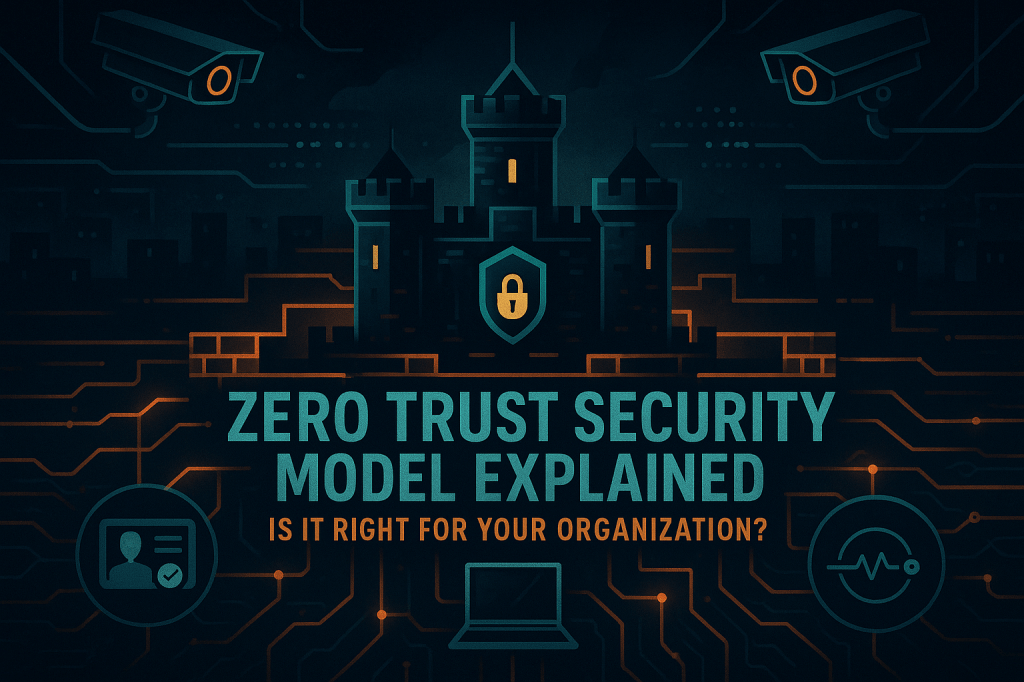
Digital fortress representing Zero Trust security with layered network defenses, identity verification, and endpoint monitoring, symbolizing proactive cybersecurity.
2025-10-09

The daily SOC dilemma: investigate every alert or risk missing the real one.

Alert fatigue continues to be one of the biggest challenges for cybersecurity teams.

Effective triage, tuned detection, and contextual threat intelligence make all the difference.

#CyberSecurity #SOCAnalyst #BlueTeam #InfoSec

cybersecurity
2025-10-03

🔍 Web Malware Scan Results

Website: www.hertford.ox.ac.uk
Security Verdict: LOW RISK

Full analysis & details:
scanmalware.com/scan/ea3c12be-

#Exploit #AIForGood #AICybersecurity #SOCAnalyst #SOC

2025-10-03

🔍 Web Malware Scan Results

Website: www.comune.roccacanavese.to.it
Security Verdict: LOW RISK

Full analysis & details:
scanmalware.com/scan/d6970d44-

#SOCAnalyst #CloudSecurity #VulnerabilityManagement

2025-10-03

🔍 Web Malware Scan Results

Website: casamiatv.com
Security Verdict: MEDIUM RISK

Full analysis & details:
scanmalware.com/scan/204d2db3-

#CyberResilience #SOCAnalyst #GenerativeAI

2025-10-03

🔍 Web Malware Scan Results

Website: richmondca.gov
Security Verdict: LOW RISK

Full analysis & details:
scanmalware.com/scan/fa5ecd26-

#CISO #SOCAnalyst #Hackers #OnlineSafety #CyberThreat

2025-10-03

🔍 Web Malware Scan Results

Website: www.owatonna.gov
Security Verdict: MEDIUM RISK

Full analysis & details:
scanmalware.com/scan/8b97c7ff-

#ISO27001 #SOCAnalyst #DigitalSecurity #EmailSecurity #Phishing

It’s here! 🎉 Ryan Fetterman, D.Eng. and I coauthored The Threat Hunter’s Cookbook and we’re thrilled to finally share it.

Built for defenders at every level with hunting methods from simple filtering to advanced clustering, all to help you dig deeper into your data.

👉 Get the eBook: splunk.com/en_us/form/threat-h

#threathunting #cybersecurity #infosec #socanalyst #SURGe #splunk @splunk

2025-08-02

Hello tout le monde ! J'ai pu mettre à jour mon repository SOC-Ressources avec pas mal de nouvelles choses 🥳

Cela fait 2 ans que je tente petit à petit de créer une "tour de controle" de l'analyste SOC, avec une liste gratuite, ou n'importe qui pourra trouver des ressources pour investiguer, qualifier et monter en compétence sur ce genre de poste.

github.com/DXC-0/SOC-Ressources

Cela s'addresse autant aux nouveaux, qu'à des plus confirmés. N'hésitez pas à partager en masse, c'est le but et à me faire des retours, c'est toujours avec plaisir que j'écouterai les améliorations possibles. 😁

Si vous avez des outils que vous souhaitez lister dedans, pareil, je suis preneur.

Sur ce, bon week-end 🎩

------------------------------------------------------------------------

Hello, everybody! I have been able to update my SOC-Resources repository with a lot of new things.

I am gradually trying to create a "Control Tower" of the SOC analyst, with a free list, or anyone will be able to find resources to investigate, qualify and improve Skills

This applies as much to the new, as to the more confirmed. Don't hesitate to share in mass, that's the goal and to make feedback, it's always with pleasure that I will listen to the possible improvements.

#Github #SOC #SOCAnalyst #BlueTeam #Ressources #Free #Ressources #Cybersécurity #Tools #Courses #Malwares #Reverse #Engineer #IT #SIEM #EDR #AQL #SPL #KQL #Hunting #ThreatHunting #IOC #CTI #intelligence

Nearshore Cybernearshorecyber
2025-05-03

I´m interviewing candidates for this remote L2 SOC Analyst role (Mexico-based) this weekend.

recruiterflow.com/nsc/jobs/40

2025-05-03

I´m interviewing candidates for this remote L2 SOC Analyst role (Mexico-based) this weekend.

recruiterflow.com/nsc/jobs/40

#Mexico #HiringNow #SocAnalyst #MicrosoftSentinel #MicrosoftDefender #Remote #WFH

Stats on Stats Podcaststatsonstatspodcast
2025-01-27

🚨 Giveaway Alert: 3 LetsDefend VIP+ Vouchers for 1 Month Access! 🚨

We’re giving away 3 LetsDefend VIP+ vouchers for a free 1-month subscription on 02/01.

What You Need to Do:

1️⃣ Join our Discord Community (buff.ly/3Cfy9rT).

2024-08-25

While learning about SOC Analyst 1 roles, I've came across this great SIEM tool:

splunk.com/

Client Info

Server: https://mastodon.social
Version: 2025.07
Repository: https://github.com/cyevgeniy/lmst