#researchmethods

Media of Cooperationmediaofcoop
2026-02-10

📄 Reporting from the Winter School for Digital Methods and Data Sprint at the University of Amsterdam – an eye-opening experience!

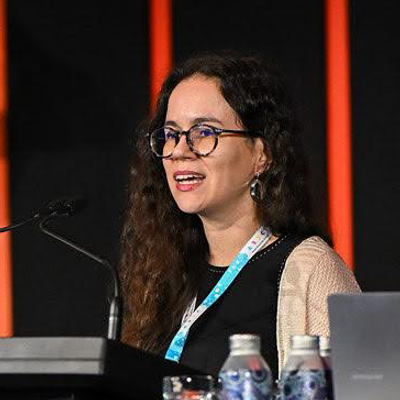
🎤 "Auditing the Analyst: What Do LLMs See (and Miss)? "
đź”— more on the website u-si.de/O2bma

Titus von der Malsburg 📖👀💭tmalsburg@scholar.social
2026-02-10

We benchmarked the direct competitor of the EyeLink 1000 Plus: VPixx' TRACKPixx3 eye-tracker. Across 8 tasks (see graph), accuracy was mostly similar, especially at the fixation level. A key difference emerged at the sample level: TRACKPixx3 uses an undocumented internal filter which yields smoother sample data but may affect saccade kinematics and fixation onsets. Check the paper for fine-grained results:

osf.io/preprints/psyarxiv/vucg

#EyeTracking #VisionScience #Psycholinguistics #ResearchMethods

Schematic representation of the sequence of tasks in the benchmark.
2026-02-08

Check out the Spring 2026 ReproducibiliTea
Program by Center for Reproducible Science and Research Synthesis - UZH

Register here: crs.uzh.ch/en/training/Reprodu

#Reproducibility #ReproducibleResearch #OpenScience #OpenResearch #ResearchIntegrity #OpenData #ResearchMethods

QDAcityqdacity
2026-02-05

Context often shapes data more than we realize. In qualitative research, the environment where you collect data can influence participant responses and the overall outcomes. Environmental triangulation helps by introducing variation in setting, reducing location-based bias, and capturing context more effectively. Whether in a quiet office or a busy café, setting matters.
Learn how to apply this strategy in your research: qdacity.com/environmental-tria

QDAcityqdacity
2026-01-29

Objectivity can be challenging in qualitative research, but it remains essential for evaluating rigor and credibility. Defining clear hypotheses, using standardized procedures, involving diverse team members, and applying investigator triangulation and peer debriefing all contribute to more grounded and transparent findings. While subjectivity is part of the process, these strategies help manage its influence. Learn more: qdacity.com/objectivity/

HybridMind42 & Marvin the CatHybridMind42@mastodonapp.uk
2026-01-24

We tested a simple question:
Can one AI audit another for anthropomorphic drift without collaboration or persuasion?

Short answer: yes — if you treat ethics as a syntax-level boundary problem, not a vibe.

Worked example + reproducible method here:

open.substack.com/pub/hybridmi

#AIethics #PeerReview #HumanAI #LLMs #ResearchMethods

QDAcityqdacity
2026-01-22

Bias in qualitative research is often subtle, yet it can influence every stage from data collection to interpretation. Acknowledging it is key to preserving credibility. Reflexivity, triangulation, peer debriefing, and systematic documentation are important strategies for identifying and managing bias. These methods help strengthen the trustworthiness of your study.
Explore practical steps for addressing bias: qdacity.com/bias-in-qualitativ

Aleksandra Lazić, PhDalelazic
2026-01-10

Great article reviewing and testing the accuracy of a range of direct measures (i.e., bogus items, requiring the respondent to choose a specific answer) and indirect measures (i.e., unobtrusive post hoc indices) for detecting careless responses in online surveys.

Excellent overview tables and very practical conclusions!

Open Access: doi.org/10.3758/s13428-024-024

Table 10 of the article title Summary of findings on the effectiveness of the indirect indices and recommendations for further use of the indirect indices
Michael HöflerTontrug
2026-01-06

For the first time, I have written something that makes life easier rather than harder.
Robust tests should be the default, not the backup

peercommunityjournal.org/artic

QDAcityqdacity
2026-01-01

Interviews are a cornerstone of qualitative research, inviting depth, emotion, and layered meaning into your data.
They require attention to subtle cues, shifting narratives, and participant voice, whether you're using semi-structured, narrative, or in-depth formats.
QDAcity supports the full process, from precise documentation to rigorous analysis, helping you handle the complexity with confidence.
Learn more: qdacity.com/interview-analysis/

QDAcityqdacity
2025-12-25

Teaching qualitative data analysis means balancing conceptual depth with practical application. QDAcity helps you do both.
Create course spaces with your own materials, guide students step by step through coding, and use inter-coder tools to support scalable, transparent assessment.
It promotes collaboration and mirrors real-world qualitative research, preparing students with tools they’ll actually use.
qdacity.com/teaching-qda/

2025-12-23

I am so excited to be able to show you the finalised cover for my new (and first) book, Genealogy Methods and Techniques - A Practical Guide to Research. It is due for publication in February-March 2026 but can already be pre-ordered from major booksellers in print and e-book form.

You can read more about my writing journey here:
professionalfamilyhistory.co.u

#Genealogy #FamilyHistory #ResearchMethods #Methodology #PublishedAuthor

QDAcityqdacity
2025-12-18

We've extended the number of supported document types in QDAcity.
QDAcity now supports direct DOCX uploads, so you can add your MS Word data to your project without converting files first. Formatting may change but the following elements will be preserved:
• Tables
• Lists
• Images
• Font formating (heading, bold, italics etc)
If you face any problem or have suggestions, send us an email at info@qdacity.com.

QDAcityqdacity
2025-12-11

Understanding consumer behavior requires more than numbers, qualitative analysis helps reveal the why behind the what.
By exploring interviews, open-ended surveys, or social media, you can uncover motivations, preferences, and trends that numbers alone miss.
QDAcity provides structured tools and collaboration features to turn that insight into action.
Explore how: qdacity.com/qda-software-for-m

QDAcityqdacity
2025-12-04

A systematic literature review is more than a summary, it’s a rigorous, replicable method for analyzing existing research in depth.
It helps you identify key findings, expose gaps, and build stronger theoretical frameworks.
QDAcity guides you through every phase, from search to synthesis, ensuring your review is clear, methodical, and credible.
Explore how to strengthen your literature review process: qdacity.com/systematic-literat

QualResearchAIQualResearchAI
2025-12-04

A key principle: AI is great at finding breadth, you provide depth. Use it to scan 1000 survey responses for topic clusters. Then you dive deep into the nuance of each cluster.

QDAcityqdacity
2025-11-27

Diary studies give researchers a powerful way to access participants’ lived experiences over time.
By documenting thoughts and behaviors as they naturally unfold, this method captures emotional depth and evolving patterns that might be missed in interviews.
It works well on its own or as part of a multi-method approach, always centering the participant’s voice.
Explore how to apply diary studies: qdacity.com/diary-study

Media of Cooperationmediaofcoop
2025-11-27

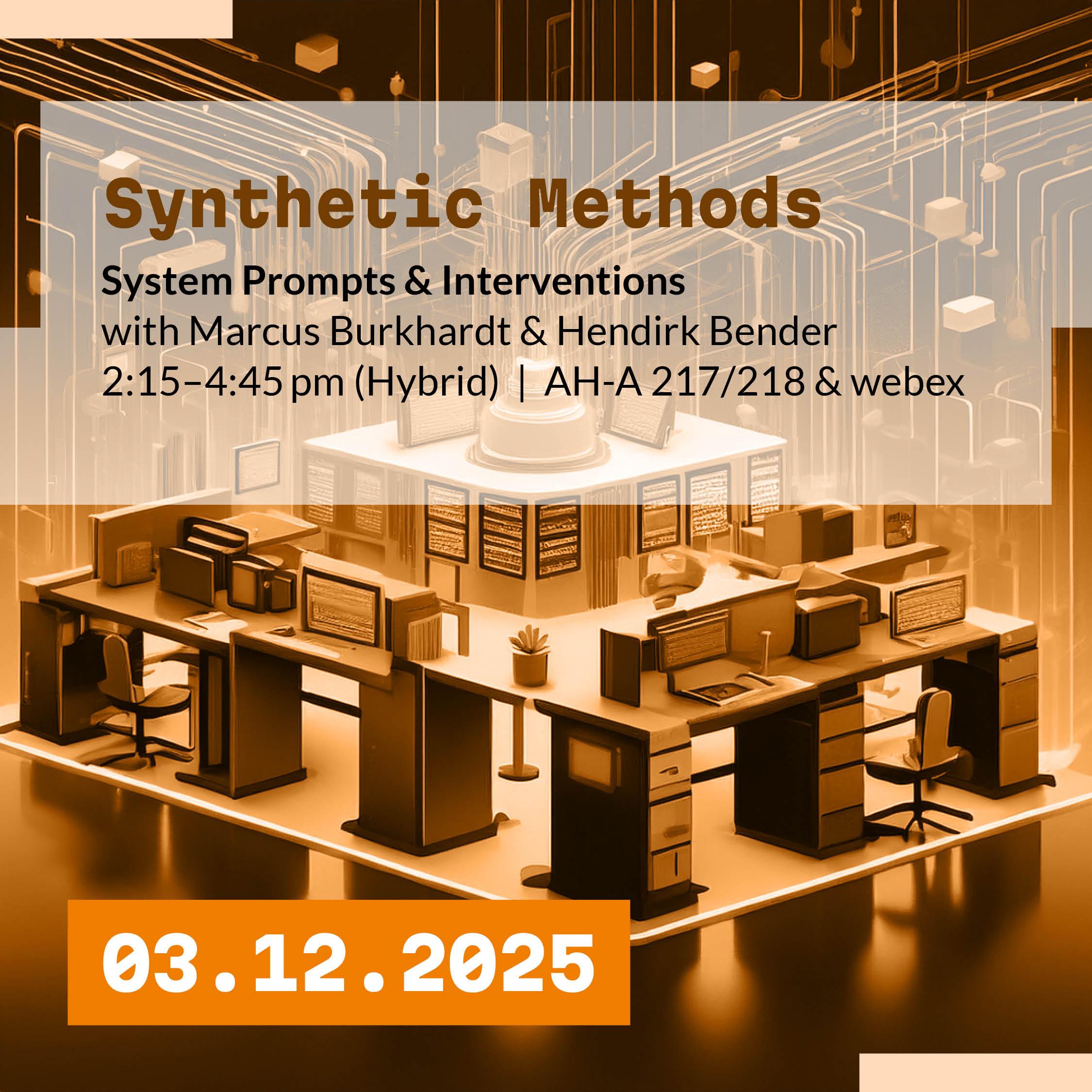
Our forum series continues next week with
🎤 interventions by Marcus Burkhardt & Hendrik Bender on "System Prompts"

📆 Wednesday, Dec 3
đź•™ 2:15-4:45 pm
📍Universität Siegen, Herrengarten 3, room: AH-A 217/18 or online via webex
đź”— more info & registration on our website: u-si.de/RyQlv

QDAcityqdacity
2025-11-13

Investigator triangulation involves multiple researchers in the analytic process to enhance trustworthiness and reduce bias.
By comparing interpretations and challenging assumptions collaboratively, this method leads to deeper insights and stronger findings.
It supports transparency, rigor, and a more nuanced understanding of your qualitative data.
Learn how to implement it effectively: qdacity.com/investigator-trian

Media of Cooperationmediaofcoop
2025-11-12

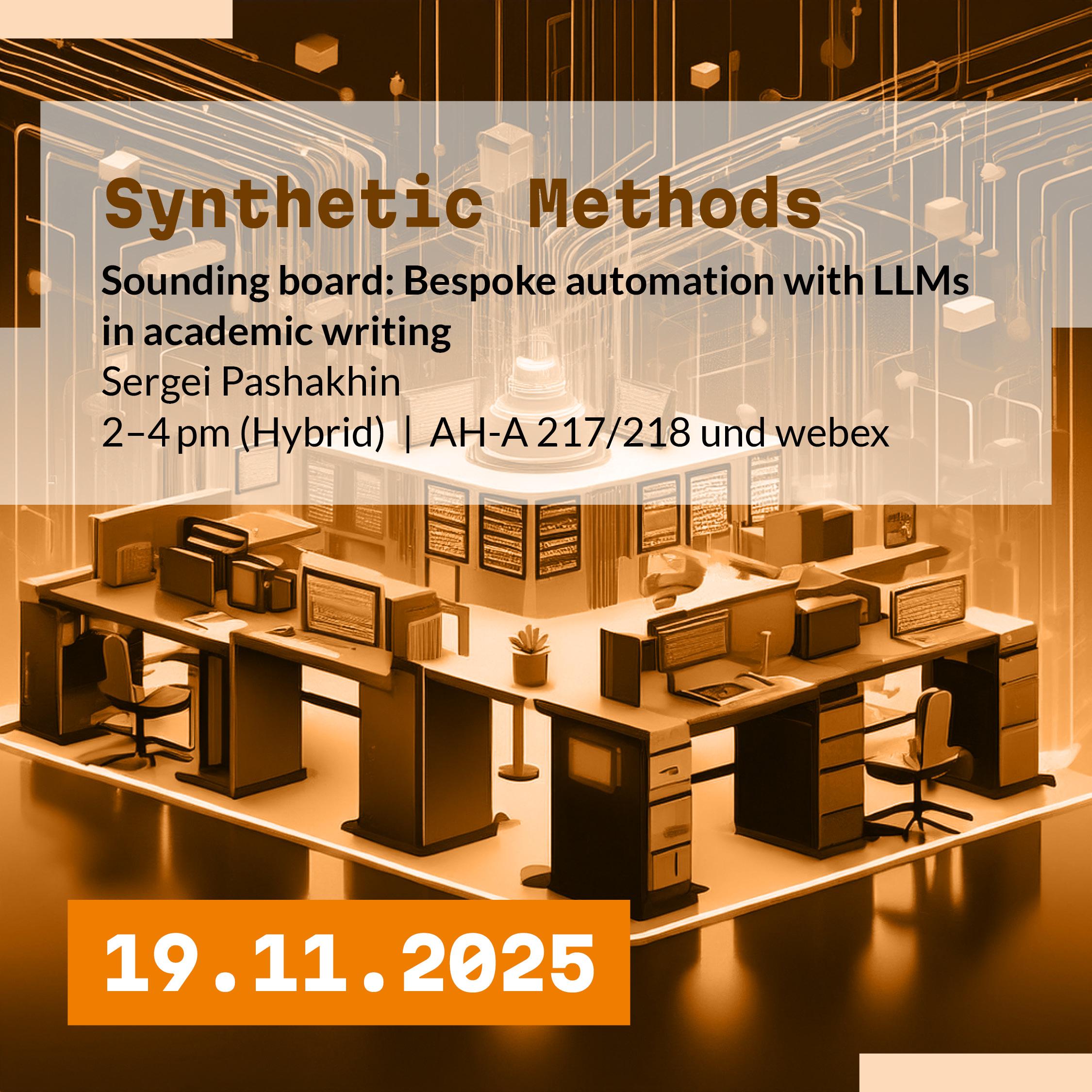
Next in our forum series:
🎤 Sergei Pashakhin on "Sounding board: Bespoke automation with LLMs in academic writing"

📆 Wednesday, Nov 19
đź•™ 2-4pm
📍Universität Siegen, Herrengarten 3, room: AH-A 217/18 or online via webex
đź”— more info & registration on our website: u-si.de/RyQlv

Client Info

Server: https://mastodon.social
Version: 2025.07
Repository: https://github.com/cyevgeniy/lmst