La Reina Roja (s. VII d.C.) de Palenque adquirió su apelativo por el cinabrio que cubría sus restos. Podría ser Tz'akbu Ajaw (610-672 d.C.), esposa de K'inich Janaab' Pakal el Grande, ahau o ajaw de Palenque. 📷Javier Hinojosa #maya
#maya


Spirituality & Religious Studiesspiritualityreligiousstudies.wordpress.com@spiritualityreligiousstudies.wordpress.com
2026-02-10Upanishads
Written primarily between 800-200 BCE. This is Sanskrit texts of the late Vedic & post-Vedic periods that “document the transition from the archaic ritualism of the Veda into new religious ideas & institutions” & the emergence of the central religious concepts of Hinduism.
The word Upanishad comes from the Sanskrit roots upa (near), ni (down), & shad (to sit). It literally describes a student sitting at the feet of a guru to receive “secret” or “higher” knowledge.
The central concern of all Upanishads is to discover the relations between ritual, cosmic realities (including gods), & the human body/person, postulating Atman & Brahman as the “summit of the hierarchically arranged & interconnected universe.” But various ideas about the relation between Atman & Brahman can be found.
The Upanishads isn’t a single book but a collection of over 200 texts (with 13 “Principal” Upanishads). Despite their diversity, they all converge on 1 revolutionary equation that changed religious thought: Atman=Brahman. Atman – the individual soul or the “true self” that resides deep within a person, beyond the ego & the body. Brahman – the ultimate, infinite, & formless reality that underlies the entire universe.
108 Upanishads are known, of which the 1st dozen or so are the oldest & most important & are referred to as the principal, or main (mukhya), Upanishads. The mukhya Upanishads predate the Common Era.
Of the remainder, 95 Upanishads are part of the Muktika canon, composed from about the last centuries of 1st-millennium BCE through about the 15th century CE.
The Upanishads argue that our suffering (Samsara) comes from the illusion (Maya) that we are separate from the universe. Liberation (Moksha) occurs the moment a person realizes that their inner self is identical to the cosmic reality.
Translation of the Upanishads in the early century started to attract attention from a Western audience.
The Upanishads gave the vocabulary for the next 2,500 years of Eastern spirituality:
- Karma:
- The law of cause & effect. While mentioned earlier, the Upanishads tied it to the moral quality of one’s actions & the cycle of rebirth.
- Samsara:
- The “wandering” or the cycle of birth, death, & rebirth.
- Moksha:
- The release from Samsara; the ultimate goal of human life.
- Om (Aum):
- Described in the Mandukya Upanishad as the primordial sound of the universe, representing the 4 states of consciousness (waking, dreaming, deep sleep, & the “4th states” of pure consciousness).
One of the oldest, & largest, it contains the famous dialogue between the sage Yajnavalkya, & his wife, Maitrey. When Yajnavalkya offers her his worldly wealth before retiring to the forest, she asks: “If this whole earth filled with wealth were mine, would I become immortal through it?” (Wise girl, we like that around here!)
His answer (which was a “Um, no ma’am. That’s not how that works around here, partner.”) leads into a profound discourse on how the Self is the only thing truly dear to us.
The Chandogya Upanishad (The “Song” Teaching) is famous for the phrase “Tat Tvam Asi” (Thou Art That). It tells of a dad teaching his son, Shvetaketu, using metaphors (parables if you’re from that world) from nature. He asks his son to dissolve salt in water. Even though the salt cannot be seen, its essence is everywhere in the water. This explains how Brahman permeates everything.
The Katha Upanishad (The Dialogue with Death) is perhaps the most “US culture”-friendly Upanishad. A young boy, named Nachiketa, finds himself at the gates of the underworld & waits for Yama (the God of Death). Yama is impressed by Nachiketa’s persistence & offers Nachiketa 3 boons/blessings/gifts (vara).
The 1st boon was Peace. Nachiketa asks that his dad’s anger be appeased & that Nachiketa would be welcomed home lovingly. This represents family harmony & emotional peace.
The 2nd boon was Knowledge of the Fire Sacrifice. Nachiketa asks for knowledge of the sacred fire sacrifice ritual (Agni Vidya) that leads to the Heavenly Realms. This represents righteous action(s) & spiritual discipline.
The 3rd boon was Self-Realization. Nachiketa asks for the mystery of what happens after death & the nature of the soul, seeking true knowledge of the Atman. Yama grants Nachiketa this request only after testing his dedication. For this last boon, Nachiketa asked: “What happens after death?” Yama’s teachings on the nature of the soul & the “chariot” of the body is a cornerstone of Vedantic thought.
One-Time Monthly YearlyMake a one-time donation
Make a monthly donation
Make a yearly donation
Choose an amount
$1.00 $5.00 $10.00 $1.00 $1.00 $10.00 $1.00 $1.00 $10.00Or enter a custom amount
$Your contribution is appreciated.
Your contribution is appreciated.
Your contribution is appreciated.
DonateDonate monthlyDonate yearly #15thCenturyCE #1stMillenniumBCE #800BCE #Atman #Aum #Brahman #ChandogyaUpanishad #Chariot #CommonEra #GodOfDeath #Hinduism #Karma #KathaUpanishad #LateVedicPeriod #Maitrey #MandukyaUpanishad #Maya #Moksha #Mukhya #MuktikaCanon #Nachiketa #Om #PostVedicPeriod #Reincarnation #Samsara #Sanskrit #Shvetaketu #SongTeaching #TheDialogueWithDeath #Upanishads #Vedas #Yajnavalkya #Yama

Xunantunich is an ancient Maya archaeological site in Belize's Cayo District, near the Guatemala border. Name means "Stone Woman." Peak during Late/Terminal Classic (700-900 AD). Features El Castillo pyramid, 130 ft tall
#ancientruins #maya #mystery #heritage
#ancientruins #maya #mystery #heritage


Xunantunich is an ancient Maya archaeological site in Belize's Cayo District, near the Guatemala border. Name means "Stone Woman." Peak during Late/Terminal Classic (700-900 AD). Features El Castillo pyramid, 130 ft tall
#ancientruins #maya #mystery #heritage


Assistant Professor, Interdisciplinary Artist/Designer (T/TE) at University of Arizona / Tucson, AZ, USA #Jobs

"In Ungarn wurde nun zum 14. Februar der Gegenprotest zum SS-Gedenken „Tag der Ehre“, wo eine Holocaustüberlebende sprechen sollte, verboten – die Nazis dürfen laufen."
Und in Germany demonstrieren mal wieder nur Linke für Maya. Der Prozess gegen Maya ist aber keine linke Angelegenheit. Er geht uns alle an, von der illegalen Auslieferung bis zum Schauprozess.

Le condanne a Maya e agli altri antifa nel processo-farsa in Ungheria: la mobilitazione solidale https://www.radiocittafujiko.it/le-condanne-a-maya-e-agli-altri-antifa-nel-processo-farsa-in-ungheria-la-mobilitazione-solidale/ #ATTUALITA'EPOLITICA #Processo-farsa #antifascisti #Featured #ungheria #ESTERI #Latest #Maya

In the wake of horrific #wildfires in #Belize and #Mexico caused by #climatechange, #indigenous #Maya are rebuilding using the notion of se’ komonil: reciprocity #community and solidarity. #indigenousrights #landrights #BoycottPalmOil @palmoildetect.bsky.social https://wp.me/pcFhgU-924?utm_source=mastodon&utm_medium=Palm+Oil+Detectives&utm_campaign=publer
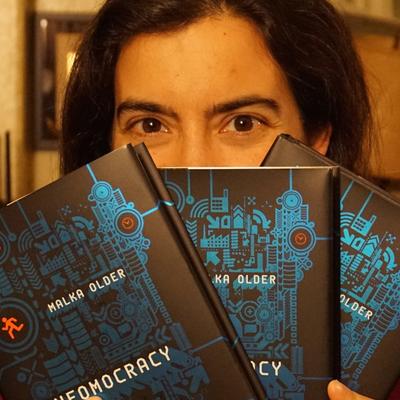
We have just published the first translation in #Yucatec #Maya on @globalvoices.org@bsky.brid.gy @globalvoiceslingua.bsky.social@bsky.brid.gy!!! A story from Eastern Europe originally written in English and already translated to Español, বাংলা, Français, русский, Ελληνικά, عربي, Malagasy, 繁體中文, 简体中文, 日本語:
Cha'ane’ ku ye'esik u kuxtal x...


🇺🇸: You can listen to the video in English through the video settings panel. With Create Polygon, we can generate polygons from scratch in Maya. I'll explain the steps to follow to model these geometries.
https://youtu.be/kFFf0oEaIbg?si=ZUKGJDwNr3R3AQyw
#3dmodeling
#maya
#maya3d
#mayamodeling
#mazhuka
#mayatutorial
#cursomaya
#modelado3d
#israelcantillo

Kʼinich Yoʼnal Ahk I, who died OTD in 639, was an ajaw of Piedras Negras, an ancient #Maya city in today's Guatemala; he left behind several monuments, including stelae at Piedras Negras and a large mortuary temple https://toilet-guru.com/blog/20.html?s=mb #travel #history
Sihyaj Chan Kʼawiil II, who died OTD in 456, was an ajaw of the #Maya city of Tikal, he was also known as Story Sky and Manikin Cleft Sky https://toilet-guru.com/blog/56.html?s=mb #travel #history
Kʼinich Yoʼnal Ahk I, who died OTD in 639, was an ajaw of Piedras Negras, an ancient #Maya city in today's Guatemala; he left behind several monuments, including stelae at Piedras Negras and a large mortuary temple https://toilet-guru.com/blog/56.html?s=mb #travel #history
Sihyaj Chan Kʼawiil II, who died OTD in 456, was an ajaw of the #Maya city of Tikal, he was also known as Story Sky and Manikin Cleft Sky https://toilet-guru.com/blog/20.html?s=mb #travel #history

"Fiery Liver Death"
Fiery Liver Death is Mayan mythological being, part of a series of supernatural creatures kown as "wahyis" who are personifications of illnesses and death.
Fiery Liver Death seems to have been a personification of a mortal illness of the liver


?? FASCINATING DISCOVERY: The Music of the Maya: Mysterious whistles Confound Experts
?? Trending with 100K+ readers! Prepare to be amazed! ??
https://www.ancient-origins.net/artifacts-other-artifacts/music-maya-mysterious-whistles-confound-experts-002723
#AncientOrigins #History #Archaeology #Maya #Mayan #Artifacts #Archaeological #HumanOrigins #Evolution #Educational

Little animation I did a while back, inspired by Mesoamerican aesthetics
#animation #art #mastoart #digitalArt #frog #mesoamerica #aztec #maya #water #artist

Rotating Revolutions: #Iran on #Maya 's Wheel
Revolutions always promise change, and they usually deliver something that merely looks like change. Regimes collapse, flags are replaced, slogans change, but something remains untouched. The question we refuse to ask is simple: when the wheel turns again, what will have changed?
https://dailypioneer.com/news/rotating-revolutions-iran-on-maya---s-wheel

🇪🇸: Con la herramienta Insert Edge Loop podremos gestionar en Maya la creación de loops de aristas en nuestras geometrías.
https://youtu.be/zNe-7qe0-Xo?si=YH4rjty55KRcitUP
#3dmodeling
#maya
#maya3d
#mayamodeling
#mazhuka
#mayatutorial
#cursomaya
#modelado3d
#israelcantillo
Client Info
Server: https://mastodon.social
Version: 2025.07
Repository: https://github.com/cyevgeniy/lmst