#jsonid

#Digital ⚓️ #Vagabond 🦈beet_keeper@digipres.club
2025-08-18

JSONL now supported by JSONID and the first two JSONL rulesets making 80 strong in the registry. JSON, YAML, TOML, fully enabled. Check it out here:

github.com/ffdev-info/jsonid

ffdev-info.github.io/jsonid/re

#JSONID #FileFormatIdentification #FileFormats #JSONL #digipres

Declarative programming for Digital Preservationists @ NTTW8


by @beet_keeper

Just released on the No Time to Wait (NTTW) YouTube channel is my presentation from NTTW8 in Karlsruhe, Germany. (Slides also available here).

The presentation follows up on my proposal for iPRES 2024 and allowed me to present parts of what was, in the end, a pretty significant paper (in terms of word count).

Some of my reflections on the presentation are below.

Continue reading “Declarative programming for Digital Preservationists @ NTTW8”

#Code #Coding #Conferences #declarative #declarativeLanguages #declarativeProgramming #jsonid #KVAL #kvalAccessLanguage #NoTimeToWait #NTTW #NTTW8 #NTTW9 #Programming #programmingParadigms #software #SoftwareDevelopment #talks

An slide excerpt from my presentation Declarative Programming for Digital Preservationists showing how network effect can be embraced and side-effects are reduced in the declarative paradigm.

File format building blocks: primitives in digital preservation


by @beet_keeper

A primitive in software development can be described as:

a fundamental data type or code that can be used to build more complex software programs or interfaces.

– via https://www.capterra.com/glossary/primitive/ (also Wiki: language primitives)

Like bricks and mortar in the building industry, or oil and acrylic for a painter, a primitive helps a software developer to create increasingly more complex software, from your shell scripts, to entire digital preservation systems.

Primitives also help us to create file formats, as we’ve seen with the Eyeglass example I have presented previously, the file format is at its most fundamental level a representation of a data structure as a binary stream, that can be read out of the data structure onto disk, and likewise from disk to a data structure from code.

For the file format developer we have at our disposal all of the primitives that the software developer has, and like them, we also have “file formats” (as we tend to understand them in digital preservation terms) that serve as our primitives as well. 

Continue reading “File format building blocks: primitives in digital preservation”

#archives #digipres #digitalPreservation #digitalPreservationEssentialism #diplomatics #eyeglass #eygl #fileFormats #informationRecordsManagement #irm #json #jsonid #openData #openSource #rdm #researchData #researchDataManagement #xml


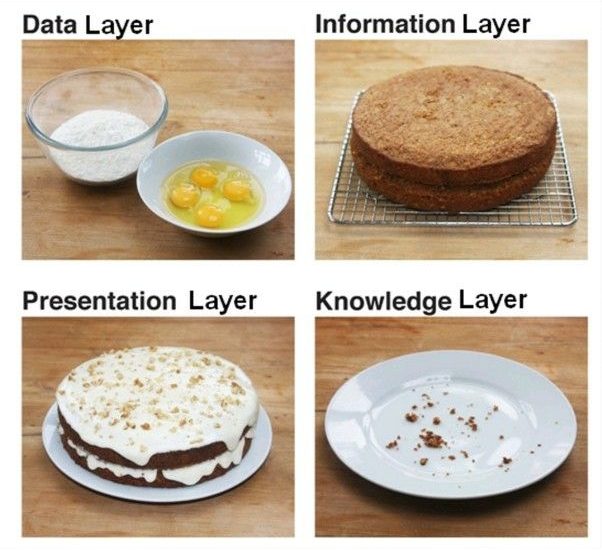
Image of the foundations of a new building being erected in Wellington New Zealand, circa 2017.Image shows a diagram of a simplistic view of the technology stack that goes into the creation of XML as a document (record)Image shows four panels, each representing a stage in the making of a cake related back to data versus records. The data layer being the eggs and flour, the information layer the freshly made cake, the presentation layer the cake with icing on top, and the knowledge layer the cake has been eaten and can be fully understood and appreciated by its consumer.

Client Info

Server: https://mastodon.social
Version: 2025.07
Repository: https://github.com/cyevgeniy/lmst