
#herons

Bryan πŸ³οΈβ€πŸŒˆ PixelfedRiversideBryan@pixelfed.social
2026-02-14
This image features a detailed close-up of a Great Blue Heron (Ardea herodias), a large and majestic wading bird. 
Physical Characteristics
Head and Crest: The heron has a white face with a distinct black "eyebrow" or stripe extending from its yellow eye. You can also see long, black, thread-like feathers known as occipital plumes trailing from the back of its head.
Beak: It possesses a long, sharp, dagger-like yellow-orange beak, which it uses as a precision tool for hunting.
Neck and Plumage: The bird’s long, slender neck is covered in soft, brownish-grey feathers. 
Habitat and Behavior
Feeding: These birds are expert hunters, often seen standing motionless in shallow water before striking prey like fish, frogs, or even snakes with lightning speed.
Adaptations: Their eyes are highly specialized, offering vision about three times more detailed than a human's and the ability to see through water's reflective surface. 
The background shows deep blue water with a few floating autumn leav
earthlingappassionato
2026-02-13

Great blue heron chicks huddle together in their nest in Delray Beach, Florida, US. The juveniles usually fledge about 10 weeks after hatching, remaining dependent on their parents for food and protection for several weeks beyond that.

Photograph: Ronen Tivony/NurPhoto/Shutterstock
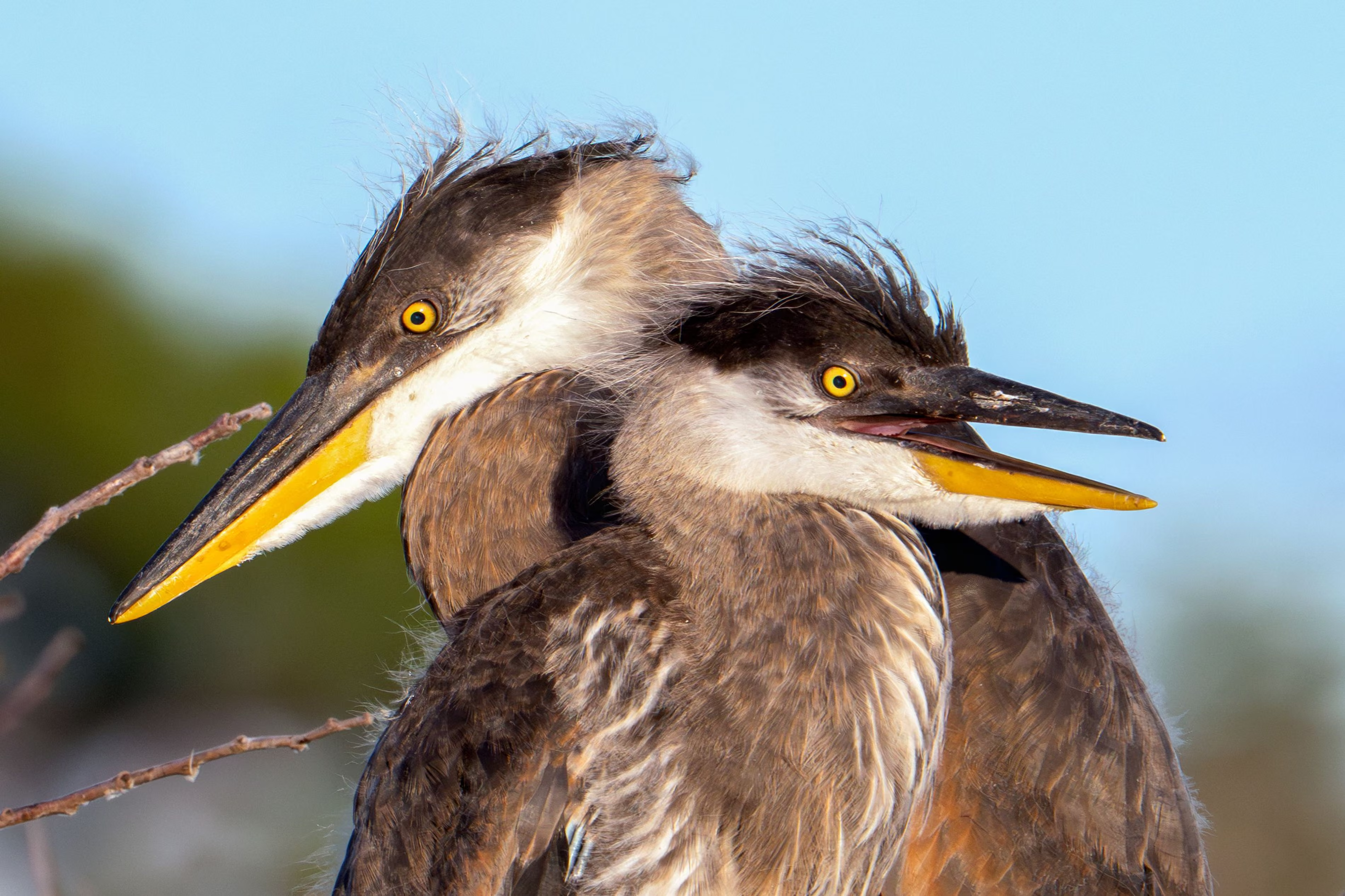


Great blue heron chicks huddle together in their nest.
2026-02-12

@mitch The cockatiel sitting on my shoulder agrees. Birds are dinosaurs.
#birds
#herons
#cockatiels
2026-02-10

Herons nesting in the trees at the heronry by Trentabank Reservoir in Macclesfield Forest.
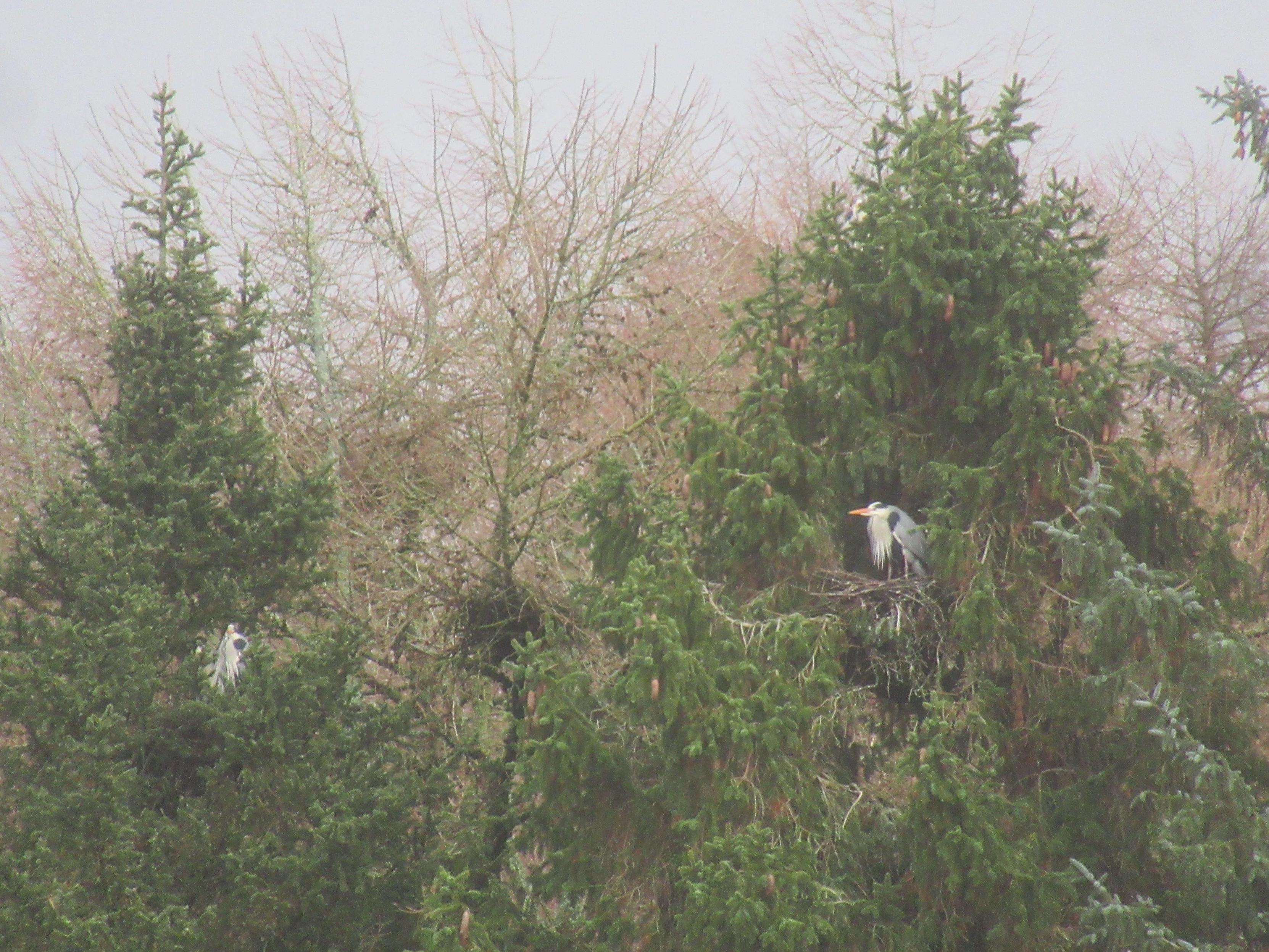
#thicktrunktuesday #herons #heronry #MacclesfieldForest

Two herons nesting in pine trees
Mathias PanzenbΓΆckbloody_albatross@chaos.social
2026-02-08

A heron in the park yesterday. #herons #park

A white heron standing on the other side of the canal.
Bryan πŸ³οΈβ€πŸŒˆ PixelfedRiversideBryan@pixelfed.social
2026-02-07
This image features a Tricolored Heron (Egretta tricolor), a slender, medium-sized wading bird common in coastal habitats of the Americas. Formerly known as the Louisiana heron, it is easily identified by its unique mix of blue-gray, lavender, and white plumage. 
Appearance and Characteristics
Plumage: The bird has a predominantly blue-gray body, with dark purple or lavender feathering on its neck and shoulders. A defining field mark is its bright white belly, which contrasts sharply with its darker upper parts.
Physical Features: It possesses long, yellowish legs and a long, pointed bill that often appears orange or yellow with a dark tip. In full breeding plumage, the bill's base and the skin around its eyes can turn a brilliant turquoise.
Behavior: Known as a "frenetic feeder," this heron often dashes about in shallow water to chase prey, though it can also stand perfectly motionless while waiting for fish. 
Habitat and Range
Location: The Tricolored Heron is a resident breeder alon
Bryan πŸ³οΈβ€πŸŒˆ PixelfedRiversideBryan@pixelfed.social
2026-02-05
#Birds #Wildlife #Herons #Egrets #Storks πŸ¦–πŸ¦€πŸ¦…πŸ•ŠπŸ¦πŸ¦©πŸ¦œπŸͺΏπŸ‰πŸ¦β€πŸ”₯πŸ¦†πŸ¦–
This image captures a group of four different types of wading birds foraging together in a shallow, muddy pool, likely in a Florida wetland. The species present are a Great Blue Heron, a Great Egret, a Wood Stork, and a Snowy Egret. 
Details of the Birds
Great Blue Heron On the left side of the image, the large, blue-gray heron stands prominently with a long, S-curved neck and a thick, pointed bill.
Great Egret In the upper middle background, a large, all-white egret is visible, distinguished by its yellow bill and black legs and feet.
Wood Stork Positioned in the center, this large white bird is bent over to feed, identifiable by its dark, featherless, scaly head and long, downward-curved bill.
Snowy Egret On the right side, the smallest of the four is a snowy egret, which is all white with a black bill and bright yellow feet (often called "golden slippers"). 
The birds are all actively engaged in hunting for food, using the shallow water to find fish, amphibians, or insects. The surf
Bryan πŸ³οΈβ€πŸŒˆ PixelfedRiversideBryan@pixelfed.social
2026-02-05
:goose_honk:

"you're probably wondering why I've called you here this day ..."

#Wildlife #Birds #Herons #Egrets #Storks 🦀πŸͺΏπŸ¦…πŸ•ŠπŸ¦πŸ¦©πŸ¦œπŸͺΏπŸ‰πŸ¦β€πŸ”₯
This image captures a moment of herons and egrets foraging in the shallow water of a wetland area. The scene includes a large grey bird and two distinct types of white birds, all known for their long legs and necks used for wading. 
Bird Identification
Great Blue Heron (left): The large, slate-grey bird on the left is a Great Blue Heron, the largest heron in North America. It is identifiable by its size, blue-grey plumage, and long yellowish bill.
Great Egret (top right): The taller white bird on the top right is a Great Egret, distinguished by its large size, all-white feathers, yellow bill, and black legs.
Snowy Egret (center and bottom right): The two smaller, more active white birds are Snowy Egrets. They are identifiable by their black bills and legs with bright yellow feet, which are visible on the bird with its wings spread. Snowy Egrets often use their bright yellow feet to stir up the water to startle prey. 
Scene Description
The birds are hunting in murky, shallow water near
Bryan πŸ³οΈβ€πŸŒˆ PixelfedRiversideBryan@pixelfed.social
2026-02-02
This image is a close-up photograph of a Great Blue Heron (Ardea herodias) standing in shallow, rippled blue water. The bird's long neck is angled, and its sharp, orange-colored beak is slightly open, near the water's surface, as if it is hunting or has just caught a fish. 
The heron's plumage is a mix of gray and blue, with darker gray or black markings around the eye and head. Bright sunlight illuminates the scene, catching the white crown of the bird's head and creating strong highlights and shadows on the water and the bird's neck. Text overlaid on the bottom right of the image indicates the photographer's handle "@RiversideBryan" and a timestamp of "February 02, 2026 10:13 AM".
Bryan πŸ³οΈβ€πŸŒˆ PixelfedRiversideBryan@pixelfed.social
2026-02-02
This image features a Great Blue Heron (Ardea herodias), a large, long-legged wading bird common across North and Central America. The bird is standing in shallow water, likely a marsh, riverbank, or pond, which is its typical habitat when hunting for fish or other small prey. 
Key features visible in the image include:
Plumage The bird has overall blue-gray feathers, with some shaggier plumes visible on its chest and back.
Head and Bill It has a pale head with a distinctive black stripe that extends from the eye and forms plumes at the back of its neck. It has a long, pointed, yellowish bill.
Stance The heron is standing near a concrete edge with its long legs, which are a reddish-brown color, partially submerged in the water.
Environment The natural setting includes green mossy bank to the left and a concrete structure to the right, which casts a dark shadow on the water's surface.
Bryan πŸ³οΈβ€πŸŒˆ PixelfedRiversideBryan@pixelfed.social
2026-01-29
This image features a Great Blue Heron (Ardea herodias), the largest heron species in North America. The bird is captured standing in shallow water, likely in a pond or wetland, a common habitat for these wading birds. 
Here's a description of the scene and the bird:
Appearance: The heron has characteristic blue-gray plumage, a long, sinuous neck often held in an S-shape, and a long, dagger-like yellow bill. Adult herons like the one pictured have a white head with a black stripe that extends from the eye into a slender plume at the back of the head.
Behavior: The bird is standing perfectly still, a typical hunting method where it patiently waits for fish or other prey to come within striking distance before plunging its bill into the water with lightning speed.
Environment: The water surface is highly reflective and rippled, creating a striking, abstract mirror image of the bird's legs and the green and blue reflections of the surrounding vegetation and sky. The reflections give the w
Bryan πŸ³οΈβ€πŸŒˆ PixelfedRiversideBryan@pixelfed.social
2026-01-29
This image is a photograph of a Tricolored Heron (Egretta tricolor) wading in shallow water. The bird, formerly known as the Louisiana Heron, is a slender, medium-sized water bird that is common in coastal wetlands. 
Key features in the image include:
Plumage The heron displays dark, slate-blue or blue-gray feathers on its head, neck, back, and wings, which contrast sharply with its white belly and a thin white stripe running up the front of its neck.
Beak and Eyes It has a long, pointed, yellowish bill with a dark tip. Its eye has a distinctive red iris. The bare skin around its face (lores) and its long legs are yellow. These colors indicate it is in non-breeding plumage, as these areas would be bright blue and pink during the breeding season.
Habitat The heron is wading in a natural aquatic environment with murky water, vegetation, and reflections, typical of its preferred habitats like marshes, estuaries, and mangrove swamps.
Text Overlay The bottom right corner of the image contai
Bryan πŸ³οΈβ€πŸŒˆ PixelfedRiversideBryan@pixelfed.social
2026-01-28
This image is a photograph of a Tricolored Heron (Egretta tricolor) standing in shallow water or a marshy area. The bird is a medium-sized wading bird characterized by its slate-blue or gray upper body and a contrasting white stripe running down its foreneck to its white belly. 
Key features visible in the image include its long, slender, pointed bill, which appears yellowish at the base with a black tip (indicating non-breeding plumage), and a patch of yellow skin around its eye. The feathers on its back have a shaggy appearance and a slight purplish or maroon tinge. The bird has long, thin, gray-yellow legs and feet, which are mostly submerged in the dark, rippled water near some grass. 
The image also contains a watermark in the bottom right corner reading "@RiversideBryan January 28, 2026 11:21 AM".
Bryan πŸ³οΈβ€πŸŒˆ PixelfedRiversideBryan@pixelfed.social
2026-01-27
This image features a Great Blue Heron (Ardea herodias), a large wading bird. The bird is standing in shallow water, likely hunting for fish, and its reflection is visible on the surface of the water. 
Key Features
Size and Color: The heron is a tall, stately bird with blue-gray plumage, a white head, and a long, dagger-like yellow bill.
Posture: It has a long, S-shaped neck, which is characteristic of herons, allowing them to strike at prey with incredible speed.
Habitat: Great Blue Herons are commonly found near the shores of open water and wetlands, where they are known for their patient, motionless hunting technique.
Markings: The adult bird in the image shows the distinct black stripe above the eye that extends into slender plumes at the back of the head. 
The image also contains a watermark with the name "@RiversideBryan" and a date and time stamp for "January 27, 2026 9:31 AM" in the bottom right corner.
Bryan πŸ³οΈβ€πŸŒˆ PixelfedRiversideBryan@pixelfed.social
2026-01-27
This image features a Great Blue Heron (Ardea herodias), a large wading bird. The bird is standing in shallow water, likely hunting for fish, and its reflection is visible on the surface of the water. 
Key Features
Size and Color: The heron is a tall, stately bird with blue-gray plumage, a white head, and a long, dagger-like yellow bill.
Posture: It has a long, S-shaped neck, which is characteristic of herons, allowing them to strike at prey with incredible speed.
Habitat: Great Blue Herons are commonly found near the shores of open water and wetlands, where they are known for their patient, motionless hunting technique.
Markings: The adult bird in the image shows the distinct black stripe above the eye that extends into slender plumes at the back of the head. 
The image also contains a watermark with the name "@RiversideBryan" and a date and time stamp for "January 27, 2026 9:31 AM" in the bottom right corner.
Bryan πŸ³οΈβ€πŸŒˆ PixelfedRiversideBryan@pixelfed.social
2026-01-26
This image features two different species of wading birds standing near the water's edge. 
The bird on the left is an Anhinga (also known as a snakebird or water turkey). It has mostly black plumage with distinctive silvery-white streaks on its back and wings, a long, S-shaped neck, and a sharp, dagger-like bill used for spearing fish underwater. Anhingas often dry their non-waterproof feathers by perching with their wings spread.
The bird on the right is a Tricolored Heron (formerly Louisiana heron). It is a slender, medium-sized heron with a blue-gray head, neck, and upper body that contrasts with its white underparts and a white line running down the front of its neck. It has a long, thin, yellowish bill with a black tip and yellowish legs. 
The birds are positioned on some grass and stumps along the edge of a body of water, possibly in a Florida wetland habitat, which is a common location for both species.

Client Info

Server: https://mastodon.social
Version: 2025.07
Repository: https://github.com/cyevgeniy/lmst