
@unusnemo #factoid
Some my believe that your genetics comes from members of nomadic shepherd tribes, feeding mostly on their herds (meat & blood & milk) having plants only if they found them (partly digested) in herbiovres' stomachs.
Makes certain (common) sense to me, which usually means it's untrue.
#factoid

Did You Know
Starting with the 1965 racing season, Indy 500 racing cars began using pure methanol fuel instead of gasoline, but in 2007, the cars transitioned to using an ethanol formula (98 percent ethanol/2 percent gasoline), then in 2012, shifted to the current E85 formula (85 percent ethanol/15 percent gasoline).
#factoid

I been thinking about the right word for: " #delusional or actively #malicious " I been going with: #CloseMinded for people choosing a self inflicted echo chamber full of #unsourced claims. They have shut off access to verifiable facts, in large numbers, instead passing around #factoid , #memes.

It looks like the best connected station in Britain is Clapham Junction, followed by Manchester Piccadilly. For a given value of "best connected".
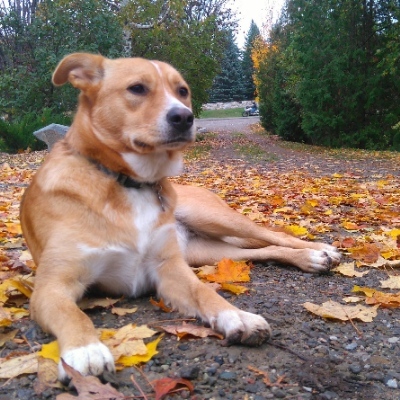
A Beaver's tail is flat, leathery, and sparsely haired. Beavers use it as a rudder for steering while swimming and as a prop to balance when standing or sitting on land. They will slap their tail on the water's surface to warn other Beavers of danger. Beavers store fat in their tails, especially before winter, to help them survive periods with limited food.
A Beavertail is also a famous Canadian pastry that was introduced in the winter of 1978 to skaters on the Rideau Canal. It's a great way to eat Beaver without harming any animals.
Beaver teeth are unique due to their iron-rich orange enamel, which makes them exceptionally strong and resistant to wear. These teeth continuously grow throughout the beaver's life, requiring constant chewing to maintain a manageable size and sharpness. The iron content in the enamel is what gives them their distinctive orange color and provides added strength.
A Beaver can cut down a 5” thick tree in about three minutes and, on average, will cut down more than 200 trees a year.
To waterproof themselves, Beavers rub castor oil, produced from a gland near their tail, through their fur using their split toenail (their grooming claw).
European beavers are, on average, slightly larger and heavier than North American beavers, although both species have significant size variation within their populations. While North American beavers (Castor canadensis) typically weigh between 16 and 32 kg (35 and 70 pounds), Eurasian beavers (Castor fiber) can weigh between 18 and 38 kg (40 and 84 pounds). Not judging...
Beavers are monogamous, forming lifelong pair bonds. Their offspring will typically live with their parents for two or three years before going off to start their own colony. Remember, once you find a Beaver you like, you should hang onto it.
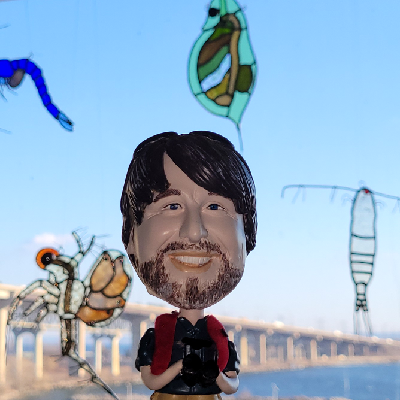
Weekend #Plankton #Factoid 🦠🦐
I've always been impressed by this video from New Scientist about #copepods, the planet's most abundant multicellular organism, with interviews from several UK universities, including Exeter and Southampton. Prof Daniel Mayer & others give a lovely explaination on why these #zooplankton, and their poo, are so important to the #ocean ecosystem and #carbon cycling, and why #ClimateChange size shrinkage could have such an impact. #Science 🎥
https://youtu.be/60DRMH9QdV4

Weekend #Plankton #Factoid 🦠🦐
Zooplankton are often described as "food food" for good reasons. They are often the primary pathway to #fishes from algae. This is true on #coral reefs with fishes like Fusiliers having fast streamlined bodies and forked tail, large eyes for spotting small prey, and extendable jaw for suction-feeding. But it turns out planktivorous fishes are much more diverse in body form, which is driven more by the habitat they live in.
https://theconversation.com/we-study-planktivores-and-found-an-amazing-diversity-of-shapes-among-plankton-feeding-fishes-254296
#Science #evolution
Weekend #Plankton #Factoid 🦠🦐
It would be a cool superpower to just take a bite out of another organism and absorb its special power 🦸♂️. Some microbial plankton have been doing this for a long time, engulfing entire algal cells (photosymbiosis), or selectively stealing algal chloroplasts for photosynthesis (kleptoplastidy). An Antarctic dinoflagellate has now been shown to steal plastids from Phaocystis algae to amp up their own photosynthesis. 🌞
https://www.sciencedirect.com/science/article/pii/S0960982225003926
#Science #ecology
Weekend #Plankton #Factoid 🦠🦐
The early phytoplankton fossil record is spotty, and often difficult to interpret being tiny and delicate. Recently, colonial algae fossils were identified from Canadian deposits with geometrically connected cells referred to as coenobia from the Cambrian period (~500 MA). Previously, these were thought to be resting cysts of a group called acritarchs. Instead, this colonial form is similar to existing green algae such as Pediastrum.
https://royalsocietypublishing.org/doi/10.1098/rspb.2023.1882
#Science
Weekend #Plankton #Factoid 🦠🦐
When a species has no close relatives, with only a single unique species within a genus, we refer to it as a monospecies or monotypic genus. Well-known, often strange examples include the aardvark and platapus. Zooplankton also have these, some being quite contentious because they are often phenotypically plastic (variable features) but are genetically similar. Bythotrephes longimanus, a Great Lakes invader is one of these.
https://www.nature.com/articles/s41598-021-02648-7
#Science #genetics
Weekend #Plankton #Factoid 🦠🦐
With spring 🌱 upon us in the northern hemisphere, it is the time for the spring bloom in many lakes and oceans. To grow, #phytoplankton require #nutrients and #light, so start reproducing rapidly due to an abundance of nutrients mixed in the water column and increased light intensity 🌞. Zooplankton grazers have yet to increase, and warming conditions help to retain algae near the surface euphotic zone via stratification.
https://serc.carleton.edu/eet/phytoplankton/primer.html
#Science #climate
Weekend #Plankton #Factoid 🦠🦐
Autotrophs are organisms which use pigments for photosynthesis by absorbing light at specific wavelengths. The dominant chlorophyll-a absorbs #light in the violet-blue (430nm) and red (660nm) wavelengths, but not green, which is why #algae is green. Phycocyanin, an accessory #pigment in #cyanobacteria, absorbs in those green wavelengths, so is blue in colour. This is why we can determine algae types from space.
https://scitechdaily.com/new-research-suggests-earths-first-oceans-werent-blue-they-were-green/
#Science #satellites #oceans
Weekend #Plankton #Factoid 🦠🦐
The study of #phytoplankton is difficult because of their small size. For this we thank Antonie van Leeuwenhoek (1632-1722), the "father of microbiology". This Dutch draper was self-taught in creating high-quality #microscope lenses to examine thread. He then viewed tooth scrapings and water, coined the term "animalcules" for #protozoa, and first described Spirogyra (👍 genus name from JHF Link) as “spirally wound serpent-wise earthy particles”. A #science was born.


Scientists love acronyms. This week's is UZELA, Underwater Zooplankton Enhancement Light Array. Corals worldwide are stressed by bleeching events due to #ClimateChange. This system uses phototactic behaviour (swim toward light) of #zooplankton to concentrate them up to 4x over reefs. #Coral polyps use their tentacles to immobilize and capture prey, which is vital when they lose their zooxanthellae algae symbionts during bleeching. #Science
https://aslopubs.onlinelibrary.wiley.com/doi/full/10.1002/lom3.10669
Client Info
Server: https://mastodon.social
Version: 2025.07
Repository: https://github.com/cyevgeniy/lmst