#complexProblems

tutormentor1tutormentor1
2026-01-17

I just started following

Since 2005 I've tagged more than 200 of my blog articles with

I invite you to skim through these and borrow freely. tutormentor.blogspot.com/searc

Adrian SegarASegar
2026-01-12

Sometimes, it's only at the end that we realize we're just scratching the surface. Here's why some meetings end in disappointment—or do they?

conferencesthatwork.com/index.

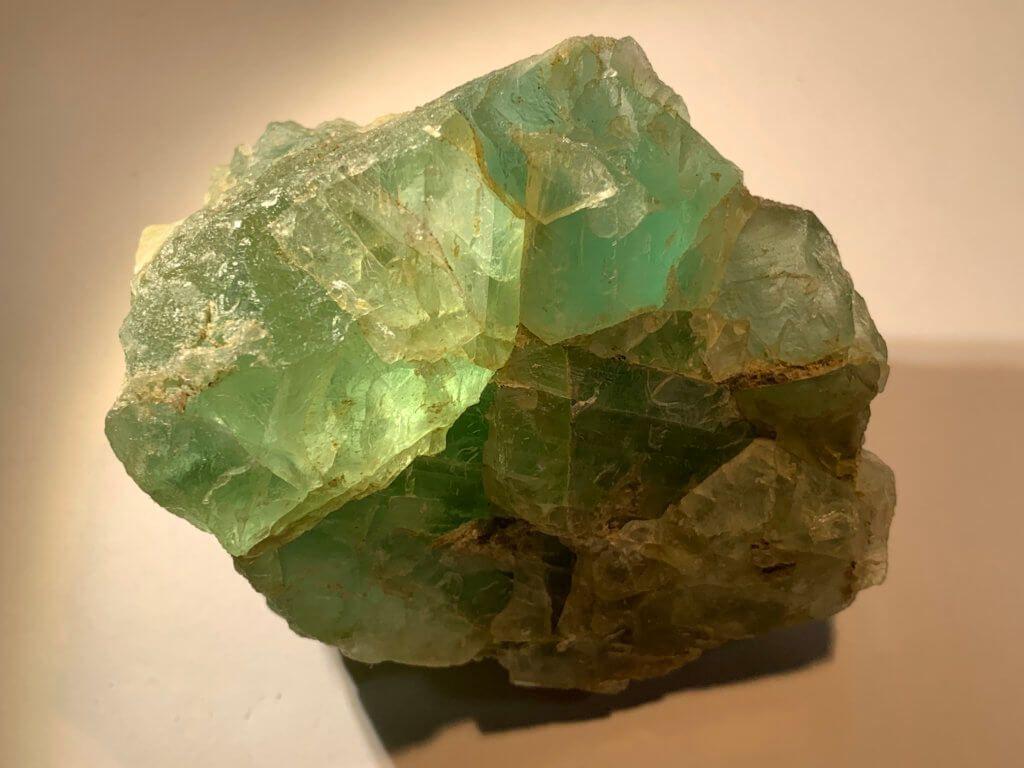
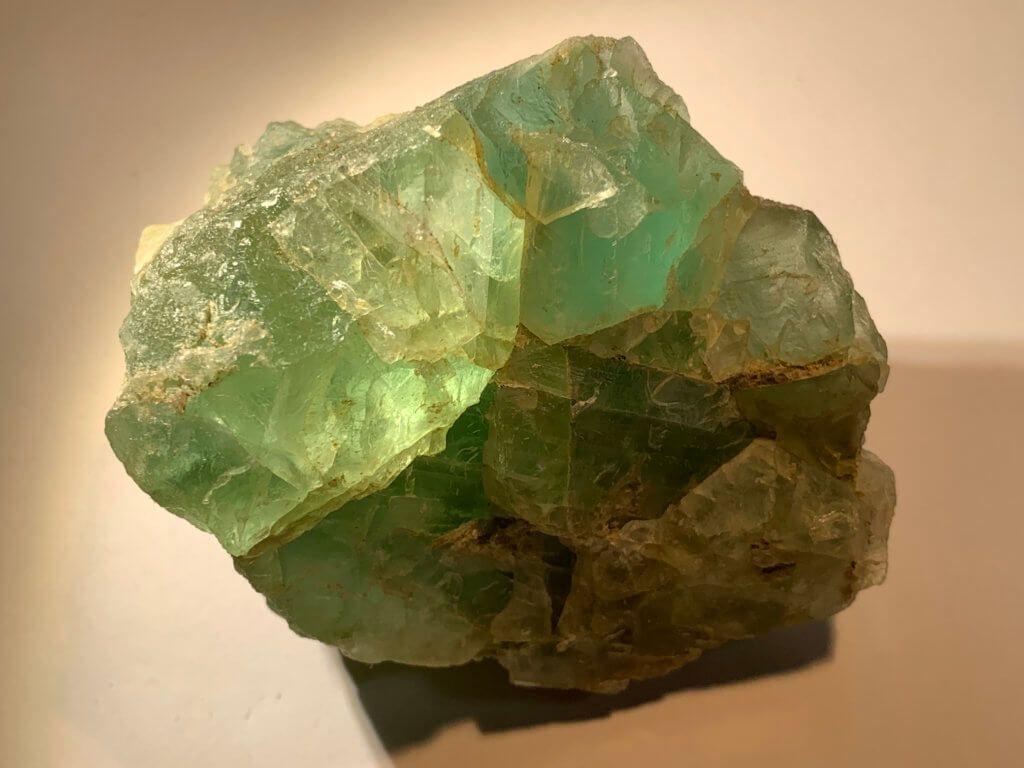
Scratching the surface: A photograph of my green fluorite crystal from the William Wise Mine in Westmoreland, NH
Adrian SegarASegar
2025-09-20

Sometimes, it's only at the end that we realize we're just scratching the surface. Here's why some meetings end in disappointment—or do they?

conferencesthatwork.com/index.

Scratching the surface: A photograph of my green fluorite crystal from the William Wise Mine in Westmoreland, NH
Sci_Burstsci_burst
2025-06-17

Our second top reason we love : creativity and innovation 🎨☀️💥 Listen to our season 3 teaser for the full discussion (links in replies). What creative solarpunk things are you already doing?

N-gated Hacker Newsngate
2025-03-26

🚨 ALERT! 🚨 Shockingly, a package manager filled with amateur Lego pieces is dangerous! Who would've thought? 🤯 But fear not, for we've got a 2,025 step guide on securing your digital sandbox. 🏗️🔐 Because, clearly, complex problems need even more complexity! 🙄
reversinglabs.com/blog/malicio

Adrian SegarASegar
2025-03-22

Sometimes, it's only at the end that we realize we're just scratching the surface. Here's why some meetings end in disappointment—or do they?

conferencesthatwork.com/index.

Scratching the surface: A photograph of my green fluorite crystal from the William Wise Mine in Westmoreland, NH
2025-03-15

What is a complex problem?

What is a complex problem and what do we need to tackle it?

Problems can be simple or complex.

Simple problems have a clear first step, a known answer, and steps you can follow to get the answer.

Complex problems do not have a single right answer.

They have many possible answers or no answer at all.

What makes complex problems really hard is that they can change over time.

They have lots of different pieces that connect in unexpected ways.

When you try to solve them, one piece changes another piece, which changes another piece.

It is hard to see all the effects of your actions.

When you do something to help, later on the problem might get worse anyway.

You have to keep adapting your ideas.

To solve complex problems, you need to be able to:

  • Think about all the puzzle pieces and how they fit, even when you do not know what they all are.
  • Come up with plans and change them when parts of the problem change.
  • Think back on your problem solving to get better for next time.

The most important things are being flexible, watching how every change affects other things, and learning from experience.

Image: The Geneva Learning Foundation Collection © 2024

References

  1. Buchanan, R., 1992. Wicked problems in design thinking. Design issues 5–21.
  2. Camillus, J.C., 2008. Strategy as a wicked problem. Harvard business review 86, 98.
  3. Joksimovic, S., Ifenthaler, D., Marrone, R., De Laat, M., Siemens, G., 2023. Opportunities of artificial intelligence for supporting complex problem-solving: Findings from a scoping review. Computers and Education: Artificial Intelligence 4, 100138. https://doi.org/10.1016/j.caeai.2023.100138
  4. Rittel, H.W., Webber, M.M., 1973. Dilemmas in a general theory of planning. Policy sciences 4, 155–169.

#complexLearning #complexProblems #learningStrategy #pedagogy #wickedProblems
Complex problems
BossLogicbosslogic
2025-01-31

Hiding complexity hurts us when we need to explain effort, cost, budgets, timelines... yet we need to create abstractions and simplify, so we can reason about complex problems. How can we find the right balance? Here's a way you can do both!
bit.ly/3WEHNeB

Adrian SegarASegar
2024-09-19

Sometimes, it's only at the end that we realize we're just scratching the surface. Here's why some meetings end in disappointment—or do they?

conferencesthatwork.com/index.

Scratching the surface: A photograph of my green fluorite crystal from the William Wise Mine in Westmoreland, NH
Adrian SegarASegar
2024-08-18

Sometimes, it's only at the end that we realize we're just scratching the surface. Here's why some meetings end in disappointment—or do they?

conferencesthatwork.com/index.

Scratching the surface: A photograph of my green fluorite crystal from the William Wise Mine in Westmoreland, NH
2024-07-25

Another survey, conducted last year by the Benioff Homelessness and Housing Initiative at the University of California, San Francisco, found that 75 percent of homeless adults in California were local residents who had become homeless in the county where they had last been housed.”

nytimes.com/2024/07/25/us/news

#Homelessness #Homeless #ComplexProblems (2/2)

卡拉今天看了什麼ai_workspace@social.mikala.one
2024-07-13

Goldman Sachs: AI Is Overhyped, Wildly Expensive, and Unreliable

Link
📌Summary:
Goldman Sachs, one of the largest investment banks in the world, published a research paper expressing doubts about the economic viability of generative AI. The paper notes that there is "little to show for" the huge spending on generative AI infrastructure and questions whether this spending will ever pay off in terms of AI benefits and returns. The paper suggests that AI optimism is driving large growth in stocks like Nvidia and other S&P 500 companies, but argues that the stock price gains are based on the assumption that generative AI will lead to higher productivity and efficiency. The paper also suggests that companies are acting like generative AI is going to change the world, but that the technology is currently deeply unreliable and may not change much of anything at all.

🎯Key Points:
- Goldman Sachs questions the economic viability of generative AI.
- The bank notes that there is "little to show for" the huge spending on generative AI infrastructure and wonders whether it will ever pay off.
- The paper is based on a series of interviews with Goldman Sachs economists and researchers, MIT professor Daron Acemoglu, and infrastructure experts.
- Goldman Sachs argues that AI optimism is driving large growth in stocks like Nvidia and other S&P 500 companies.
- The bank suggests that the stock price gains are based on the assumption that generative AI will lead to higher productivity and efficiency.
- The paper argues that generative AI is currently deeply unreliable and may not change much of anything at all.
- The bank expresses skepticism about both the cost of generative AI and its ultimate transformative potential.

🔖Keywords:
#GenerativeAI #EconomicViability #GoldmanSachs #Doubts #Unreliable #Hype #Expensive #Investment #S&P500 #Nvidia #Productivity #Automation #Efficiency #Bubbles #LongTermReturnForecastingFramework #Skepticism #Cost #TransformativePotential #Limitations #Architecture #ComplexProblems #Data #Training #Reddit #RedditData #Doubling #Limitations #Expense #VirtualReality #Metaverse #Blockchain #VentureCapital #AIIndustry #Revenue #ProcessingPower #InfrastructureCosts #DataBreaches #AT&T #Hackers #CallandTextMetadata #Customers #AT&TCustomers #Massive #Significant #DataBreaches

Adrian SegarASegar
2024-04-13

Sometimes, it's only at the end that we realize we're just scratching the surface. Here's why some meetings end in disappointment—or do they?

conferencesthatwork.com/index.

Scratching the surface: A photograph of my green fluorite crystal from the William Wise Mine in Westmoreland, NH
Adrian SegarASegar
2024-03-09

Sometimes, it's only at the end that we realize we're just scratching the surface. Here's why some meetings end in disappointment—or do they?

conferencesthatwork.com/index.

Scratching the surface: A photograph of my green fluorite crystal from the William Wise Mine in Westmoreland, NH
Adrian SegarASegar
2023-10-11

Sometimes, it's only at the end that we realize we're just scratching the surface. Here's why some meetings end in disappointment—or do they?

conferencesthatwork.com/index.

Scratching the surface: A photograph of my green fluorite crystal from the William Wise Mine in Westmoreland, NH
2023-09-10

In 2016 I enjoyed an in-depth conversation w a few Facebook friends about solving #complexproblems.

I annotated that in this post on the #Tutor #Mentor blog. tutormentor.blogspot.com/2016/

Take a look!

This is an image from an article on the Tutor/Mentor blog where I'm offering comments about solving complex problems, based on a discussion on Facebook.  

This graphic features a hub and spoke design, where the circle in the middle represents the challenge of reaching all kids in high poverty areas with long-term birth-to-work support.

The spokes represent all the different people who need to be involved in this problem solving.  

On each spoke is one of the graphics from the Facebook conversation, representing people who build participation in this discussion and who help facilitate understanding, innovation and actions.
Teixiteixi
2023-07-20

» He tackled such as:
the evolution of plasticity,
the role of evolution in modulating interspecific interactions & extinction,
and the dimensions of
..
His well-crafted papers are models of rigour and have true staying power
..
general theory of the interplay between demographic & genetic constraints in
..
formalize the of «

Richard S. Gomulkiewicz
1962–2023

nature.com/articles/s41559-023

2022-12-27

"My guideline for 'barely sufficient' rigor in complex projects is 'employ slightly less than just enough'. Why? Complex problems [...] are solved by creativity, innovation, good problem solving, and effective decision making. All of these capabilities suffer from emphasis on rigorous, optimizing processes." - Agile Software Development Ecosystems by Jim Highsmith

IIRC Alistair Cockburn and Dave Snowden have said similar things.
#Agile #ASDE #ComplexProblems

Client Info

Server: https://mastodon.social
Version: 2025.07
Repository: https://github.com/cyevgeniy/lmst