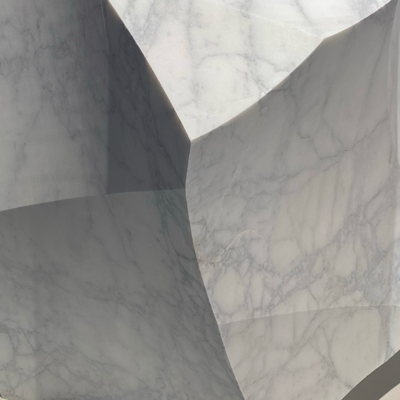
Module 2 of 2.
#combinatorics
Two ways of cutting an infinite 3-periodic heptagonal tiling along higher order modules.
Module 1 of 2.

RE: https://mastoxiv.page/@arXiv_mathCO_bot/115904052353835071
Here is the second manuscript coming out of the "Topics in Ramsey theory" online-only problem-solving session (https://sparse-graphs.mimuw.edu.pl/doku.php?id=sessions:2025sessions:2025session1) of the Sparse (Graphs) Coalition, which took place less than a year ago.
The first manuscript already came out a couple months earlier (https://arxiv.org/abs/2510.17981).
Both have made serious progress in serious Erdős problems.
#combinatorics #remoteconferences #graphtheory #extremalcombinatorics #erdős

“I feel that many women, especially in India, might not know what exactly having a career in maths actually means or even that they can pursue a career in this field. I believe it is important to tell them that this is an option.” - Nishu Kumari


#ThisWeeksFiddler, 20260123
This week the #puzzle is: Bingo! #statistics #probabilities #combinatorics #counting #coding #program #montecarlo A game of bingo typically consists of a 5-by-5 grid with 25 total squares. Each square (except for the center square) contains a number. When a square’s number is called, you place a marker on that square. The goal is to get […]
https://stuff.ommadawn.dk/2026/01/27/thisweeksfiddler-20260123/
And a more solid representation illustrates how the tiles fit together even better.
(4/n)
This 11-gon forms the surface.
4 tiles form a module.
Nicely twisted excerpt of a monohedral 11-gon tiling of a non-compact surface embedded in 𝑅³. (3 11-gons at every vertex)
The surface shows two periodic growth and the labeled dual edges of the tiling form a partial Cayley surface complex of the group:
G = ⟨ f₁, f₂, f₃, t₁, t₂, t₃, t₄ ∣ f₁², f₂², f₃², t₄³, t₁³, t₃⁶, (t₁t₄⁻¹)⁹, f₃t₂, t₁t₃t₂, (f₁t₁)², f₃t₃t₄⁻¹ ⟩

#APLQuest 2014-06: Write a function that takes an integer vector representing the sides of a number of dice and returns a 2 column matrix of the number of ways each possible total of the dice can be rolled (see https://apl.quest/2014/6/ to test your solution and view ours). #APL #Probability #Combinatorics

Riffs and Rotes • Happy New Year 2026
• https://inquiryintoinquiry.com/2026/01/01/riffs-and-rotes-happy-new-year-2026/
There's a deep mathematical significance I see in the following structures, and I'm hoping one day to find a way to explain all the things I see there. Meanwhile, you may take them as an amusing diversion in recreational maths.
\( \text{Let} ~ p_n = \text{the} ~ n^\text{th} ~ \text{prime}. \)
\( \begin{array}{llcl}
\text{Then} & 2026 & = & 2 \cdot 1013
\\
&& = & p_1 p_{170}
\\
&& = & p_1 p_{2 \cdot 5 \cdot 17}
\\
&& = & p_1 p_{p_1 p_3 p_7}
\\
&& = & p_1 p_{p_1 p_{p_2} p_{p_4}}
\\
&& = & p_1 p_{p_1 p_{p_{p_1}} p_{p_{{p_1}^{p_1}}}}
\end{array} \)
No information is lost by dropping the terminal 1s. Thus we may write the following form.
\[ 2026 = p p_{p p_{p_p} p_{p_{p^p}}} \]
The article linked below tells how forms of that order correspond to a family of digraphs called “riffs” and a family of graphs called “rotes”.
The riff and rote for 2026 are shown in the next two Figures.
Riff 2026
• https://inquiryintoinquiry.com/wp-content/uploads/2026/01/riff-2026-card.png
Rote 2026
• https://inquiryintoinquiry.com/wp-content/uploads/2026/01/rote-2026-card.png
Reference —
Riffs and Rotes
• https://oeis.org/wiki/Riffs_and_Rotes
cc: https://www.academia.edu/community/VBA6Qz
cc: https://www.researchgate.net/post/Riffs_and_Rotes_Happy_New_Year_2026
#Arithmetic #Combinatorics #Computation #Factorization #GraphTheory #GroupTheory
#Logic #Mathematics #NumberTheory #Primes #Recursion #Representation #RiffsAndRotes


Monoid representations and partitions (Charlotte Aten at DU Algebra and Logic Seminar 2023)

Bell numbers, the number of ways to partition a set of labeled elements https://janmr.com/posts/bell-numbers/ #math #combinatorics #bell #numbers
\[
\begin{aligned}
&\{\{k_1,k_2,k_3\}\} \\
&\{\{k_1,k_2\}, \{k_3\}\} \\
&\{\{k_1,k_3\}, \{k_2\}\} \\
&\{\{k_2,k_3\}, \{k_1\}\} \\
&\{\{k_1\}, \{k_2\}, \{k_3\}\} \\
\end{aligned}
\]
Advent of Tilings - Day 24
Happy Holidays, and best wishes for a 2026 filled with imagination, curiosity and discovery!
Advent of Tilings - Day 23.2
Another one rule wonder…
f₁t₁f₁t₂t₁⁻¹t₂
#math #geometry #3d #combinatorics #tiling #AdventOfTilings #TilingTuesday

Advent of Tilings - Day 23.1
Almost at the end we see the light through diamond and hexagon shaped tunnels of an infinite surface, again monohedrally tiled.
#math #geometry #3d #combinatorics #tiling #AdventOfTilings #TilingTuesday
Advent of Tilings - Day 22.2
It takes only one rule to get from single tile to cuboid
f₁f₂t₁t₂⁻¹t₁f₁t₁⁻¹

Advent of Tilings - Day 22.1
It is not always easy to find a symmetric tree, but keep it in a pot and you may be surprised by what it grows up to be.
Advent of Tilings - Day 21.2
The looping rules seem to reflect the strictness of the construction:
(f₂t₁t₂)²
(f₁t₁t₁)²

Advent of Tilings - Day 21.1
This tiling grows following a double pyramid shape that would make Djoser proud. Embeddable and monohedral.
Client Info
Server: https://mastodon.social
Version: 2025.07
Repository: https://github.com/cyevgeniy/lmst