
Temporary classrooms arrive in Tumbler Ridge after mass shooting
The first set of temporary classrooms have arrived after last week's mass shooting at Tumbler Ridge Secondary School, and the province says more are on the way.
#shooting #school #classrooms #TumblerRidge
https://www.cbc.ca/news/canada/british-columbia/temporary-classrooms-arrive-in-tumbler-ridge-9.7097719?cmp=rss
#classrooms

One Source, Multiple Versions, Many Perspectives: Teaching Key Documents in U.S. History – Teaching with the Library
Teaching with the Library Primary Sources & Ideas for Educators
ISSN 2691-6916
Share & Subscribe to this blog
- One Source, Multiple Versions, Many Perspectives: Teaching Key Documents in U.S. History
One Source, Multiple Versions, Many Perspectives: Teaching Key Documents in U.S. History
Posted by: Colleen Smith, January 27, 2026
This blog post is by Lee Ann Potter, director of Professional Learning and Outreach Initiatives at the Library of Congress.
At the recent annual meeting of the American Historical Association (AHA) in Chicago, I presented a K-16 teacher workshop titled “Revolutionary History Teaching.” As the title suggested, I engaged participants with primary sources and teaching strategies related to the American Revolution.
To introduce an activity focused on the Declaration of Independence, I asked the participating teachers if they invited their students to read the founding document. They all said yes, doing so was part of their regular approach in both history and civics classes.
“Which version?” I asked, to which I received few responses and many quizzical looks.
I proceeded to divide the teachers into smaller groups and provided each with a facsimile of a different version of the Declaration. The versions I shared included:
- Thomas Jefferson’s “original Rough draught” of the Declaration of Independence, written in June 1776, including all the changes made later by John Adams, Benjamin Franklin and other members of the committee, and by Congress. I included Professor Julian Boyd’s reconstruction of it.
- The Dunlap Broadside, the first printed version of the American Declaration of Independence.
- The Pennsylvania Evening Post, July 6, 1776 (page 1), the first newspaper printing of the Declaration.
- The Goddard Broadside, Printed by Mary Katharine Goddard, in Baltimore, MD, 1777.
- The Journals of the Continental Congress, 1774-1789, Volume 5, pages 509-518 (that focus on July 4, 1776).
I encouraged the teachers to read their versions, to consider their students’ capabilities and background knowledge, as well as their course objectives, and to discuss within their small groups the associated pros and cons of inviting students to read their version rather than simply the document’s text.
Then we engaged in a larger group discussion about each version. The group with The Pennsylvania Evening Post was particularly interested in the advertisements that also ran in the edition and discussed how news was shared and spread in the 1770s; the group with the Dunlap Broadside also discussed the sharing of information and noted that the names of most of the delegates to the Second Continental Congress were missing, but they were present on the Goddard Broadside; the Goddard Broadside also prompted curiosity about Mary Katharine Goddard; those reading the rough draft commented on the value of sharing rough drafts with students and suggested that the section related to slavery, that was not included in the final document, would be of particular interest to their students; and the Journal was described as providing an interesting play-by-play of the document and other events and issues from the perspective of Congress.
Our conclusion after a rich discussion: Sharing multiple versions of the Declaration with students may encourage knowledge of its contents to transform into curiosity about its context.
Have you tried a similar approach with other seminal documents? If so, what have the results been? Please share your experience in the comments!
Do you enjoy these posts? Subscribe! You’ll receive free teaching ideas and primary sources from the Library of Congress.
Categories
Continue/Read Original Article Here: One Source, Multiple Versions, Many Perspectives: Teaching Key Documents in U.S. History | Teaching with the Library
#AmericanHistory #classrooms #democracy #IdeasForEducators #LibraryOfCongress #LibraryOfCongressBlog #ManyPerspectives #MultiplesVersions #OneSource #PrimarySources #Teaching #TeachingWithTheLibrary

"Facing #History and Ourselves has added the #youngadult #novel The Assignment by #author #LizaWiemer to its newly released Teaching #Holocaust #Literature Collection, a set of #classroom resources designed to help educators teach #Holocaustliterature.
The collection, intended for grades seven through 12, is tailored for #English #LanguageArts #classrooms and aims to help teachers plan Holocaust literature units that build literacy and critical thinking skills while fostering empathy. In its 2024 annual report, Facing History said it provides resources to more than 278,000 #educators across the globe."
https://www.jns.org/facing-history-adds-young-adult-book-to-its-holocaust-literature-guide/

About 4 in 10 #teens support #cellphonebans in #classrooms; fewer back all-day restrictions

Capitol Radio Engineering Institute. Student repairing radio part at Capitol Radio Engineering Institute ca. 1920-ca. 1950.
Horydczak, Theodor, approximately 1890-1971
1 negative : nitrate ; 8 x 10 in.
#Horydczak #Theodor #Classrooms #DistrictofColumbia #Radios #UnitedStates #Vocationaleducation #Washington(DC) #photography

Capitol Radio Engineering Institute. Students examining radio at Capitol Radio Engineering Institute ca. 1920-ca. 1950.
Horydczak, Theodor, approximately 1890-1971
1 negative : nitrate ; 8 x 10 in.
#Horydczak #Theodor #second #Classrooms #DistrictofColumbia #Radios #UnitedStates #Vocationaleducation #Washington(DC) #photography

Capitol Radio Engineering Institute. Students at workbench at Capitol Radio Engineering Institute ca. 1920-ca. 1950.
Horydczak, Theodor, approximately 1890-1971
1 negative : nitrate ; 8 x 10 in.
#Horydczak #Theodor #second #TheodorHorydczak #Classrooms #DistrictofColumbia #UnitedStates #Vocationaleducation #Washington(DC) #photography
![The image depicts a vintage black and white photograph of two individuals seated at a workbench, presumably in an engineering or technical workspace. They appear to be engaged with various electronic devices, such as monitors, speakers, and other equipment scattered on the desk.
One person is facing away from the camera and appears to be operating a device that resembles a radio receiver or speaker system, using what looks like a tuning knob or volume control. The second individual is bent over, possibly working on another piece of electronic equipment with their hands, potentially adjusting settings or performing maintenance tasks.
The workspace has an old-fashioned feel, featuring items such as filing cabinets and additional devices mounted on the wall above the workbench. A large lamp hangs from a hook near the ceiling, providing illumination to the room.
Based on context provided in captions:
1. The image is associated with Capitol Radio Engineering Institute.
2. It likely dates back between approximately 1920-1950, suggesting that it captures an era when radio engineering was becoming more advanced and widespread.
3. Horydczak, presumably the photographer or subject of note, had a career spanning roughly from about 1890 to 1971.
The photograph is part of a collection by Theodor Horydczak (the person whose name appears in captions), who was active during this time [...]](https://files.mastodon.social/cache/media_attachments/files/115/843/737/915/231/877/original/87a5abd6df991ef1.jpeg)
Capitol Radio Engineering Institute. Students in classroom at Capitol Radio Engineering Institute ca. 1920-ca. 1950.
Horydczak, Theodor, approximately 1890-1971
1 negative : nitrate ; 8 x 10 in.
#Horydczak #Theodor #Classrooms #DistrictofColumbia #UnitedStates #Vocationaleducation #Washington(DC) #photography
![The image is a black and white photograph depicting an educational setting, possibly from the early to mid-20th century. A teacher stands at the front of a classroom near a chalkboard that appears filled with writing or diagrams. The room has large windows allowing natural light in and additional artificial lighting overhead.
In the foreground are rows of desks occupied by students facing towards the board where their attention is focused on listening to the instructor's explanation, as indicated by their posture and orientation. Each student seems engaged in studying, possibly taking notes during a lecture or lesson being delivered by the teacher at the front.
The class appears composed predominantly of men dressed in suits or coats with hats indicating it was likely from an earlier time period when such attire was more common for males attending school or educational institutions. The absence of any modern technology like computers suggests that this photo is indeed taken several decades ago, perhaps around 1920 to the early part of the 1950s.
The historical context and photographic quality suggest it could be related to an institution such as Capitol Radio Engineering Institute where students were taught subjects pertaining to engineering or technical fields. The caption hints at a connection with Horydczak, potentially indicating that this photograph is from his co [...]](https://files.mastodon.social/cache/media_attachments/files/115/843/229/282/188/728/original/96932627c1d2ad46.jpeg)
Capitol Radio Engineering Institute. Students at table wearing headphones at Capitol Radio Engineering Institute ca. 1920-ca. 1950.
Horydczak, Theodor, approximately 1890-1971
1 negative : nitrate ; 8 x 10 in.
#Horydczak #Theodor #around8x10inches #Classrooms #DistrictofColumbia #UnitedStates #Vocationaleducation #Washington(DC) #photography
![This black and white photograph shows a group of individuals seated around a long table, wearing headphones and using what appears to be early radio communication equipment. The setting is an indoor room with plain walls that have some writing on them, possibly instructions or schedules related to their work. There are several chairs placed along the sides of the table where people sit closely together, each person engaged in tasks involving different pieces of apparatus like microphones and devices resembling early radios or telephones.
The atmosphere suggests a professional learning environment with students likely participating in training sessions for radio engineering at the Capitol Radio Engineering Institute during approximately 1920 to around 1950. The individuals exhibit focused expressions, indicating their concentration on technical tasks associated with communications technology of that era.
Additional information about this image can be found through the source provided: "Capitol Radio Engineering Institute" and it includes details like a name (Horydczak, Theodor) who is approximately 1890-1971 years old. One negative from nitrate material with dimensions of around 8 x 10 inches is also mentioned along with the image URL for further reference.
It's worth noting that this photograph captures an early snapshot in time when radio communication was rapidly dev [...]](https://files.mastodon.social/cache/media_attachments/files/115/842/215/083/517/124/original/37cceb656907ac83.jpeg)
Capitol Radio Engineering Institute. Students at table at Capitol Radio Engineering Institute ca. 1920-ca. 1950.
Horydczak, Theodor, approximately 1890-1971
1 negative : nitrate ; 8 x 10 in.
#Horydczak #Theodor #Classrooms #DistrictofColumbia #UnitedStates #Vocationaleducation #Washington(DC) #photography

Capitol Radio Engineering Institute. Students examining radio parts at Capitol Radio Engineering Institute I ca. 1920-ca. 1950.
Horydczak, Theodor, approximately 1890-1971
1 negative : nitrate ; 8 x 10 in.
#Horydczak #Theodor #American #TheodorHorydczak #Classrooms #DistrictofColumbia #Radios #UnitedStates #Vocationaleducation #Washington(DC) #photography
![This black and white photograph depicts two individuals engaged with vintage radio equipment, indicative of early 20th-century technology. The person on the left sits at a table filled with various components such as knobs, dials, and small cylindrical objects which could be batteries or capacitors; their posture suggests concentration on assembling or repairing these parts.
The individual on the right stands beside an older model radio receiver placed atop another piece of equipment possibly for amplification. This person appears to be operating a device related to audio processing, perhaps adjusting settings given their focused demeanor and outstretched hand toward controls.
Both individuals are dressed in attire typical of mid-20th-century American workwear; the seated individual wears a sweater over a collared shirt while the standing figure dons a short-sleeved button-up with suspenders. The background is sparse, primarily featuring an off-white wall that puts emphasis on the subjects and their task.
The image carries historical significance as it showcases early radio engineering practices in what could be educational or experimental settings during approximately 1920 to 1950s based on available context from external sources like Capitol Radio Engineering Institute. This was a period of rapid technological advancement, particularly with communication technologies [...]](https://files.mastodon.social/cache/media_attachments/files/115/841/176/750/266/159/original/600a908cbae2a8b7.jpeg)
Capitol Radio Engineering Institute. Students examining radio parts at Capitol Radio Engineering Institute II ca. 1920-ca. 1950.
Horydczak, Theodor, approximately 1890-1971
1 negative : nitrate ; 8 x 10 in.
#Horydczak #Theodor #TheodoreHorydczak #Classrooms #DistrictofColumbia #Radios #UnitedStates #Vocationaleducation #Washington(DC) #photography


#Atheist
Why would your all-powerful god need or accept help from the United States of #America #government?
Does your (Christian?) #god need to force the posting of its #10commandments in #classrooms, that even the POTUS doesn't adhere to?
Does your god need financial help in indoctrinating children in supposedly secular schools?
The new #Christian #religion is really confusing. And maybe that entity could publicly and loudly and very clearly simplify it for residents of Planet Earth.
Capitol Radio Engineering Institute. Students attending lecture at Capitol Radio Engineering Institute II ca. 1920-ca. 1950.
Horydczak, Theodor, approximately 1890-1971
1 negative : safety ; 8 x 10 in.
#Horydczak #Theodor #Classrooms #Maryland #SilverSpring #UnitedStates #Vocationaleducation #photography

Capitol Radio Engineering Institute. Students attending lecture at Capitol Radio Engineering Institute I ca. 1920-ca. 1950.
Horydczak, Theodor, approximately 1890-1971
1 negative : safety ; 8 x 10 in.
#Horydczak #Theodor #Classrooms #Maryland #SilverSpring #UnitedStates #Vocationaleducation #photography

Capitol Radio Engineering Institute. Students and teacher around radio equipment at Capitol Radio Engineering Institute ca. 1920-ca. 1950.
Horydczak, Theodor, approximately 1890-1971
1 negative : safety ; 8 x 10 in.
#Horydczak #Theodor #Classrooms #Maryland #Radios #SilverSpring #UnitedStates #Vocationaleducation #photography
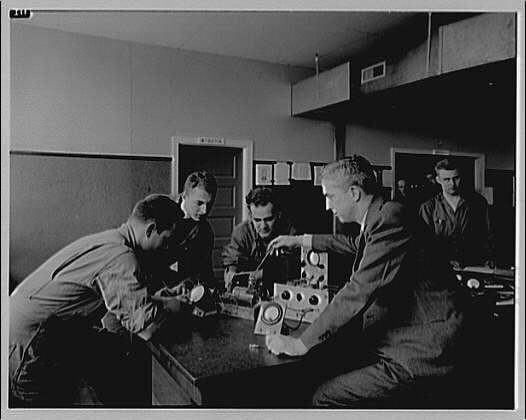
Capitol Radio Engineering Institute. Students at workbenches at Capitol Radio Engineering Institute II ca. 1920-ca. 1950.
Horydczak, Theodor, approximately 1890-1971
1 negative : safety ; 8 x 10 in.
#Horydczak #Theodor #Classrooms #Maryland #SilverSpring #UnitedStates #Vocationaleducation #photography

Capitol Radio Engineering Institute. Students at workbenches at Capitol Radio Engineering Institute I ca. 1920-ca. 1950.
Horydczak, Theodor, approximately 1890-1971
1 negative : safety ; 8 x 10 in.
#Horydczak #Theodor #Classrooms #Maryland #SilverSpring #UnitedStates #Vocationaleducation #photography

Capitol Radio Engineering Institute. Classroom at Capitol Radio Engineering Institute ca. 1920-ca. 1950.
Horydczak, Theodor, approximately 1890-1971
1 negative : safety ; 8 x 10 in.
#Horydczak #Theodor #Classrooms #Maryland #SilverSpring #UnitedStates #Vocationaleducation #photography
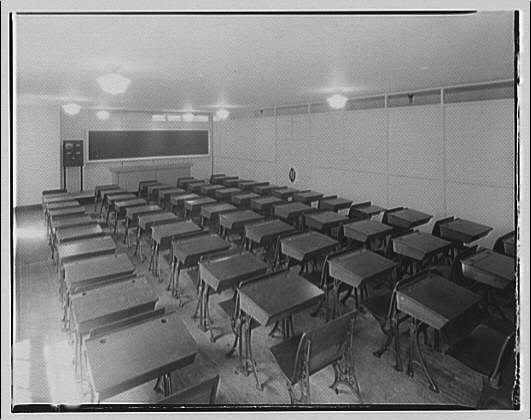
Capitol Radio Engineering Institute. General view of workroom at Capitol Radio Engineering Institute ca. 1920-ca. 1950.
Horydczak, Theodor, approximately 1890-1971
1 negative : safety ; 8 x 10 in.
#Horydczak #Theodor #Classrooms #Maryland #SilverSpring #UnitedStates #Vocationaleducation #photography

Client Info
Server: https://mastodon.social
Version: 2025.07
Repository: https://github.com/cyevgeniy/lmst