
Can researchers detect #AI bots taking paid surveys?
#Prolific tested humans and #LLM agents with various #dataQuality checks.
- The company says they caught 100% of the non-humans.
- My take-away: #reCAPTCHA and #mouseTracking caught 95%
Can researchers detect #AI bots taking paid surveys?
#Prolific tested humans and #LLM agents with various #dataQuality checks.
- The company says they caught 100% of the non-humans.
- My take-away: #reCAPTCHA and #mouseTracking caught 95%


Hey #SurveyMethods and #MedEd folks:
In a workshop for #MedSchool faculty about questionnaire design and survey research methods, what
- objectives should be prioritized?
- materials are out there?
- activities are worth it?
- assessments work?

We've found recruiting people for online #research via #onlineAdvertising yielded good results on overt and covert #dataQuality measures (perhaps because participation incentives aren't financial):
Attention checks passed ≅ 2.6 out of 3
ReCAPTCHA (v3) ≅ 0.94 out of 1.0
Sample size > 5000 (from six continents)
https://doi.org/10.1017/S0034412525000198
#surveyMethods #cogSci #psychology #xPhi #QualityControl #econ #marketing
I forgot to share the #mTurk data quality result that got scooped:
“In late 2020…. Participants from the United States were recruited from Amazon Mechanical Turk, -#CloudResearch, #Prolific, and a #university. One participant source yielded up to 18 times as many low-quality respondents as the other three.”
https://doi.org/10.1093/analys/anaf015
#psychology #philosophy #surveyMethods #quantMethods #dataScience #qualityControl

RE: https://mastodon.acm.org/@neilernst/115607469843033537
😳 The #AI survey taker "rendered [attention quality] checks [ACQs] effectively obsolete. Across 6,000 total trials..., [it] committed only 10 errors, achieving an overall pass rate of 99.8% and scoring perfectly on 18 of the 20 ACQ types."
#surveyMethods #psychometrics #psychology #tech #psychology #philSci #SciComm #dataQuality
Can thinking aloud accurately capture how we decide?
Nisbet & Wilson's 1977 paper famously suggested it can't.
But #NLP and #AI methods may indicate that it can:
- https://escholarship.org/uc/item/4sb936m3
- https://openreview.net/forum?id=1Tny4KgGO2
#cogSci #psychology #philosophy #surveyMethods #thinkAloud #LLM


#ComparativeResearch #EducationMeasurement #SurveyMethods
Measuring education across countries is complex—but crucial for valid, comparable survey data. This study tests 16 coding strategies using ESS data and finds a strong contender for a new international standard.
Read the article:
Schneider S.L. & Urban J. (2025). A myriad of options: Validity and comparability of alternative international education variables. Survey Methods: Insights from the Field: 10.13094/SMIF-2025-00008

@GESIS
Thanks for sharing the talk!
Here is the Question-Link R-Package and an in depth tutorial on using it:
https://matroth.github.io/questionlink/index.html
And please note that we also offer consultations regarding harmonization techniques (and other survey method topics).
https://www.gesis.org/en/consulting/survey-methods-consulting
Given that surveys tend to overestimate belief in #conspiracyTheories (https://osf.io/preprints/psyarxiv/zsncr_v1) and support for #politicalViolence (https://doi.org/10.1073/pnas.2116870119), I wonder how much of the correlation between such variables remains after accounting for such measurement error.
New #surveyMethods paper replicates and extends differences in #dataQuality, attention, naivety, decision style, etc. by
- online #research recruitment platform (#mTurk, #Prolific, #Qualtrics, #Pollfish)
- device (#mobile v. #desktop)
- person's incentive


Matthias Roth (@rothm) and I published a new paper on survey data harmonization.
"One harmonization fits all? – Impact of missing population invariance on harmonization error when harmonizing social science survey questions with equating"
The paper again corroborates that observed score equating outperforms linear stretching on average. However, it also shows that it is better to derive a harmonization solution for single-item measures from a sample that is drawn from a similar population to the population you are interested in researching.

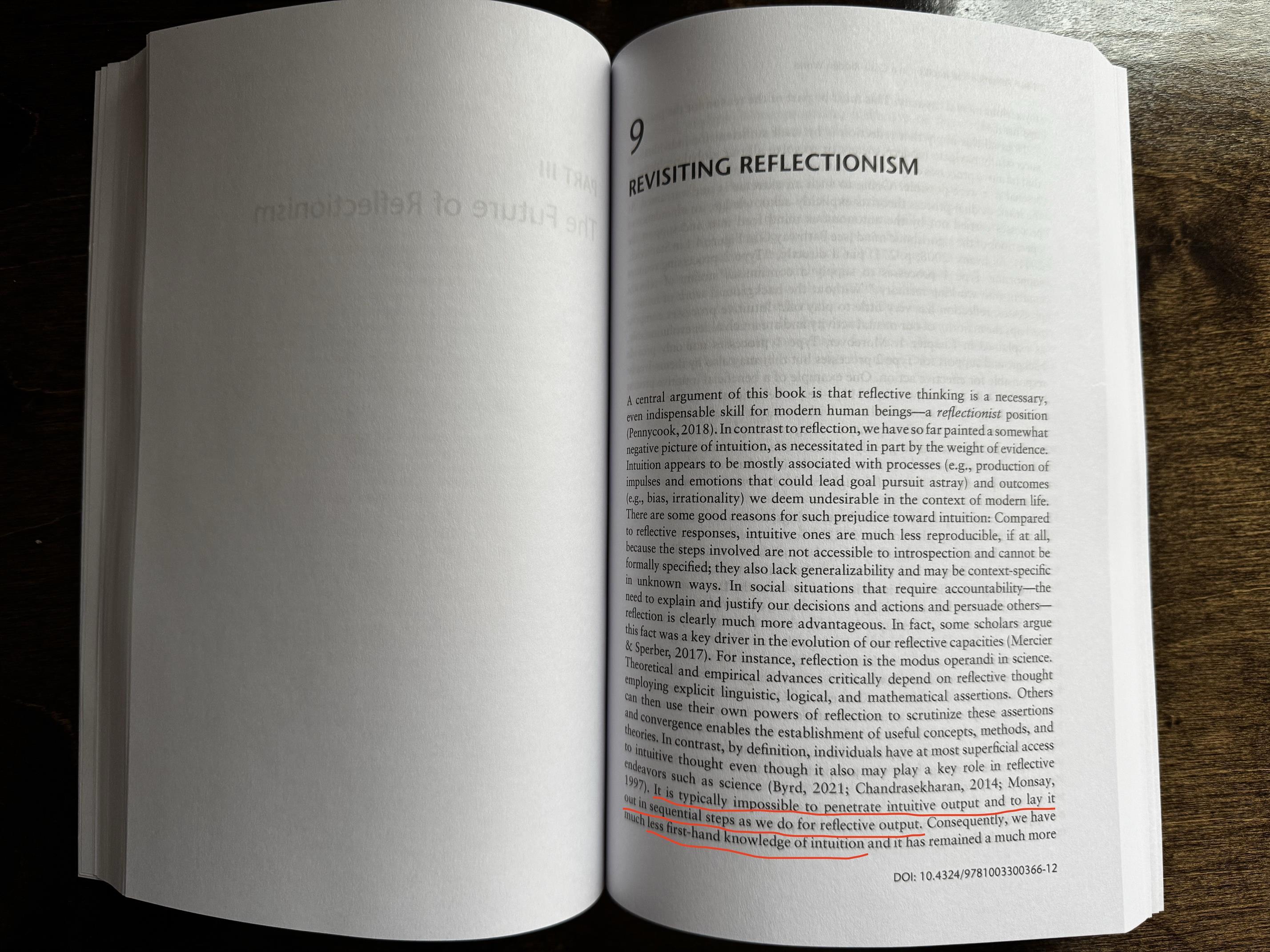
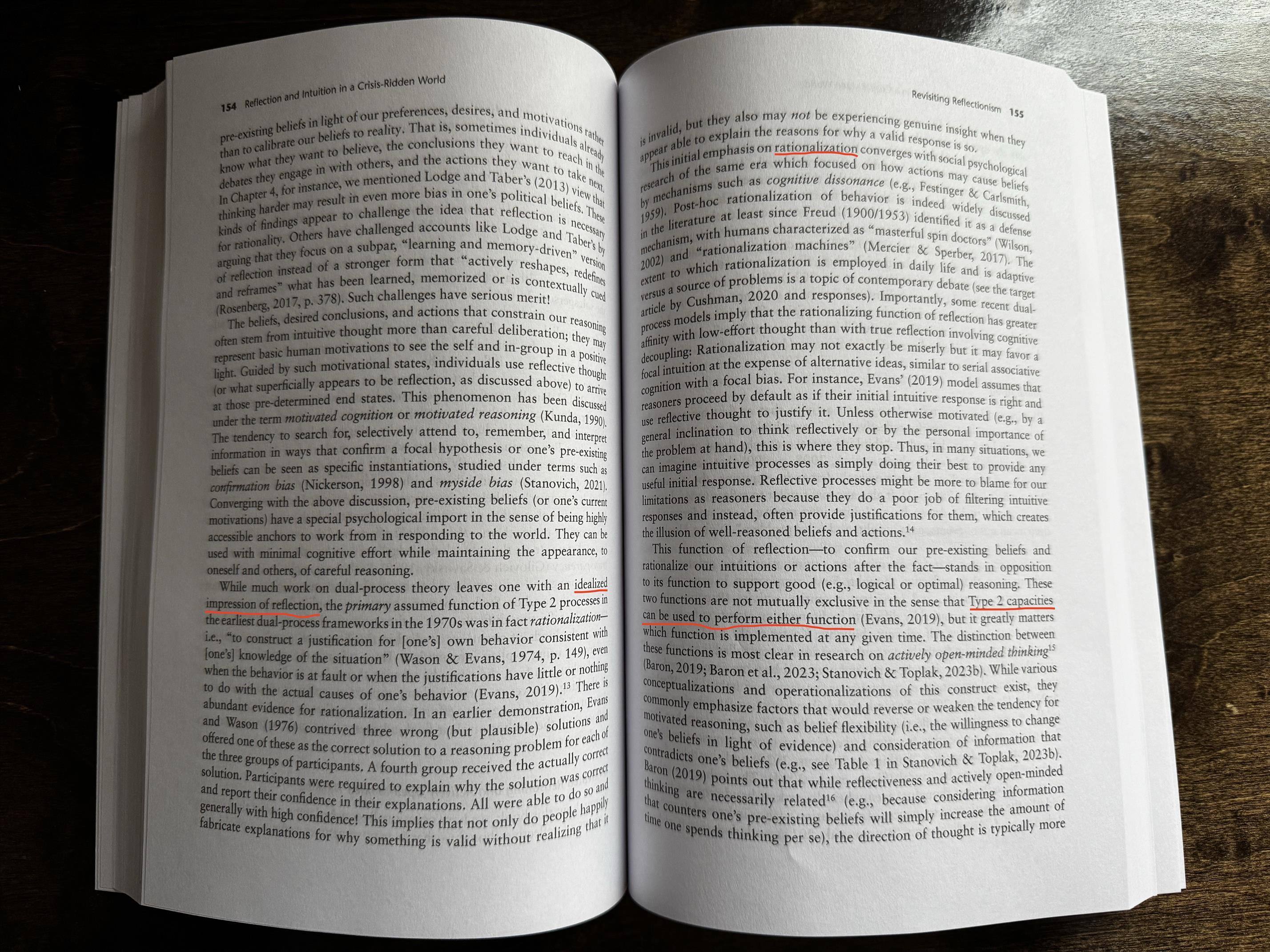
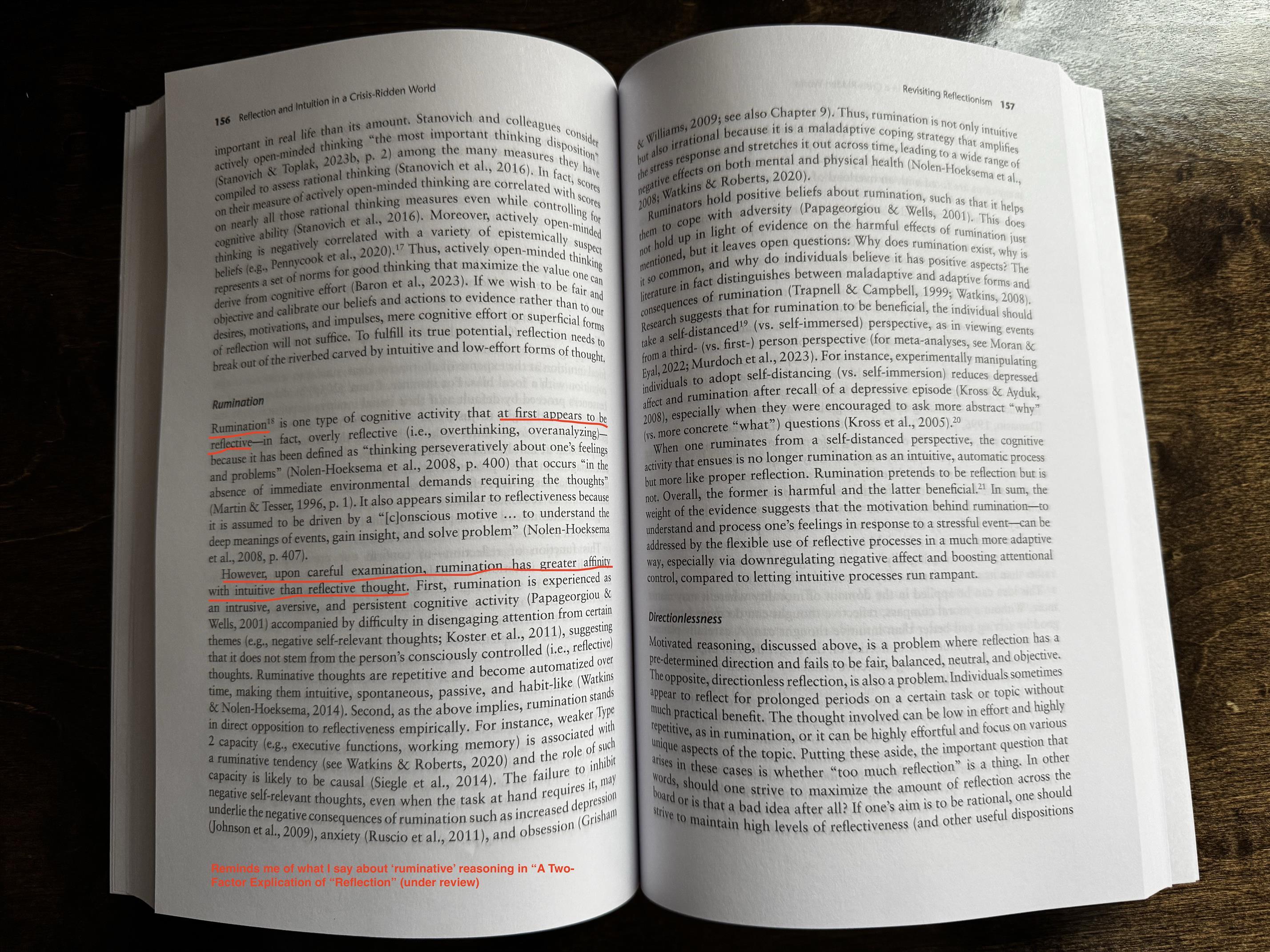
Thankful to get a copy of Reflection and Intuition in A Crisis-Ridden World: https://doi.org/10.4324/978100330036
Hoping for a digital copy to annotate!
Can't access the #book? Some free papers cover similar work:
- https://doi.org/10.1111/meta.12534
- https://doi.org/10.3390/jintelligence11040076
- https://doi.org/10.31234/osf.io/y8sdm
I've only been able to glance at a few sections, but this seems like a book I would want to write:
- broad range of topics that interest more than academics
- situated in the history of ideas
- attention to replicability of results
- anticipation of future directions
Bravo! 👏
#cogSci #psychology #politics #epistemology #ethics #extremism #conspiracyTheory #rationality #logic #surveyMethods #psychometrics

🗓️ Next week on Fri 6 Dec
Explore the challenges and opportunities for #socialsurvey #data collection in #Scotland.
Register online for this free in-person event #SocialResearch #SurveyMethods #ResearchMethods #DataCollection
https://www.eventbrite.co.uk/e/survey-futures-practice-forum-4-tickets-1046687960867
Excited for 2025 presentations in #NYC at the #APA (January 8 to 11): apaonline.org/mpage/2025eastern?utm_source=mastodon&utm_medium=social&utm_campaign=fedica-Text-posts
The talk: https://researchgate.net/publication/370132037?utm_source=mastodon&utm_medium=social&utm_campaign=fedica-Text-posts
The poster: https://researchgate.net/publication/371248872?utm_source=mastodon&utm_medium=social&utm_campaign=fedica-Text-posts
#decisionScience #philosophy #xPhi #epistemology #bioethics #cognitiveScience #surveyMethods #DualProcessTheory


Are you working in the area of adaptive survey design? Submit your abstract to our #ESRA2025 session on "Innovations in Adaptive Survey Designs" and showcase your work. https://www.europeansurveyresearch.org/conf2025/sessions.php?sess=44 The deadline's approaching fast! 🗓️ #SurveyMethods #AdaptiveDesign
Excited to share YEARS of research about how to get people to think reflectively and how reflection impacts philosophical judgments at the 2025 #APA in #NewYorkCity (January 8 to 11): https://www.apaonline.org/mpage/2025eastern
Can't make it?
- More about my talk: https://researchgate.net/publication/370132037
- More about my poster: https://researchgate.net/publication/371248872
Thanks to the #APA, James Beebe, and the Experimental Philosophy Society for the opportunity!
#decisionScience #philosophy #xPhi #epistemology #bioethics #cognitiveScience #mTurk #Prolific #UniversityParticipants #surveyMethods #DualProcessTheory


This latest blog, first featured in the Social Research Association, Research Matters magazine by Gerry Nicolaas, Director of Methods, explores the possibility of producing more inclusive survey data and the ethics of differential incentives.
https://natcen.ac.uk/it-ok-use-differential-incentives-encourage-survey-participation-under-represented-groups #SurveyMethods

In a new paper, I simulate the consequences of combining survey data without proper harmonization techniques.
I demonstrate that there is a plausible risk of biased correlative analyses based on the integrated data, if we do not harmonize measurement units across different survey sources and instruments first.

Moral comparisons of utilitarian tradeoffs depended on the rating protocol?
Participants rated pairs of utilitarian tradeoffs. Relative differences for each pair depended on
- whether participants saw both tradeoffs at the same time or separately.
- whether the rating was comparative or quantitative.
Sometimes (although not most of the time), the average relative difference for one protocol reversed in the other protocol!


Will people reason less reflectively when primed to think about threats to their health or resources?
Multiple pre-registered experiments (N > 3000) didn't detect any such reflection-suppressing effect of threat primes (compared to controls) — and this didn't seem to be a result of a failed manipulation.
https://doi.org/10.3758/s13428-024-02481-6
#decisionScience #surveyMethods #medicine #health #economics #psychology #edu #policy