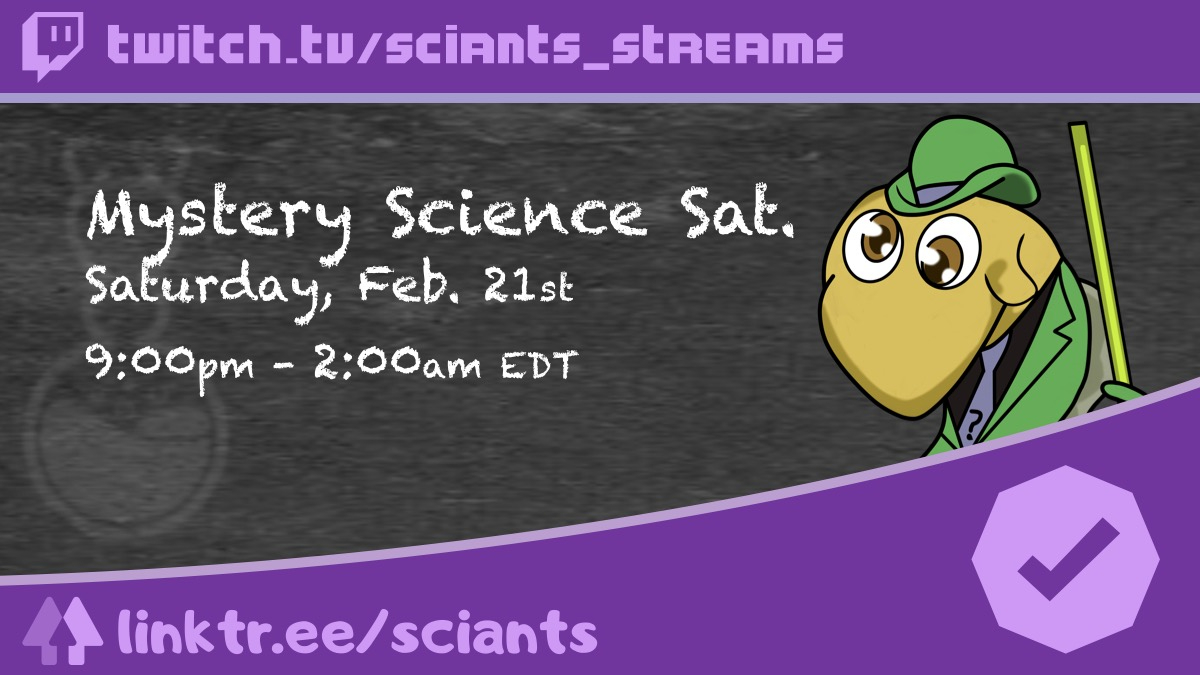
We got a bonus show today! Banana genetics + the first play through of DK Bonanza. Rabbit holes galore, guaranteed. Come join the colony! 9pm EST #science #twitch #TwitchPartner #live #stem #sciants #livestream #scicomm #twitchambassador twitch.tv/sciants_Stre...
#Stem
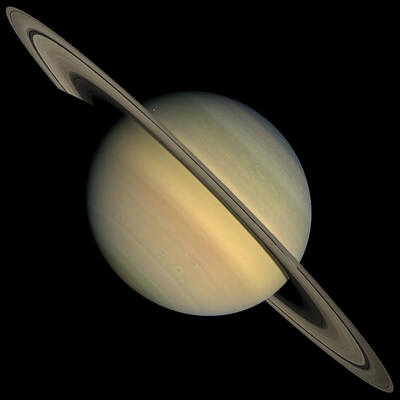
The last star will burn out, the last black hole will decay, and entropy will reach its maximum: a heat death. After all that, can any trace of our existence still persist?
Dramatic changes in upper atmosphere are responsible for recent droughts and bushfires: new research https://theconversation.com/dramatic-changes-in-upper-atmosphere-are-responsible-for-recent-droughts-and-bushfires-new-research-275792 #climatechange #environment #science #STEM
Fish use more energy to stay still than previously thought https://theconversation.com/fish-use-more-energy-to-stay-still-than-previously-thought-266626 #biology #science #STEM
The virus nearly everyone has and its possible role in MS https://theconversation.com/the-virus-nearly-everyone-has-and-its-possible-role-in-ms-268851 #health #science #STEM
This phone survived over a decade in the wilderness. Your phone bricks when you spill coffee on it
The tardigrade is almost indestructible this little guy can survive just about anything, but how does it do it? Check out our latest short to find out! #scicomm #stem #science #sciants #SciencePerspective
"Elastocaloric cooling" has nothing to do with your stretch waistband, everything to do with a new freezer that uses road deicing salt and a series of tubes, but no refrigerant
When your cheerful AI says the weather is great and the nukes land in twenty minutes - what does being the last human actually obligate you to do? https://inkican.com/emergency-reality-shelter-science-fiction-short-stories/world-war-four-scifi-short-story/ #scifi #cyberpunk #STEM


Formation doctorale : trouver et réutiliser des données en Sciences Exactes #RDM #STEM #ARDoISE https://zenodo.org/records/18694268
Many years ago, back in #law school, one of my professors had a refrain: "Be wise; #memorise!".
As a life-long #STEM bloke, I have always derived, not memorised. But when I had to face a #bar exam that comprised 3 full days of 8-hour-long exams, I had no choice but to "wise up".
There are two sides to each coin.
Investigation launched into AI effects on mental health
It's #SciAnts News Friday! New species, frog love, termite love, seed epigenetics, snail love, and more! Come join the #scicomm fun! 9pm EST #twitch #TwitchPartner #live #livestream #stem #science #twitchambassador #twitchtv twitch.tv/sciants_stre...


You’ve heard of the EGOT, right? That’s the accomplishment of the Grand Slam of American show business: winning all four of an Emmy, a Grammy, an Oscar, and a Tony award. Twenty-seven people have achieved an EGOT to date.
I got to wondering whether anyone had ever pulled off a corresponding feat in the sciences: winning, say, a Nobel Prize plus at least one other award from the class of honors sometimes referred to as “the Nobel Prize of {subject}.”
Such as an Abel Prize or a Fields Medal in mathematics, or a Turing Award in computer science.
Turns out: yes.
Possible Study Paths in #QuantumComputing for Undergraduates
—— #EE, #Physics, and #Maths ——
• PROB—"Grinstead and Snell’s Introduction to Probability", Doyle
• LALG—"Introduction to Linear Algebra", Strang
• QM—"The Feynman Lectures on Physics, Volume 3", Feynman
• QC—"Quantum Computation and Quantum Information" (Mike & Ike), Nielsen
—— #CS and #DS ——
• PROB—"Probability: For the Enthusiastic Beginner", Morin
• LALG—"Basic Linear Algebra", Blyth
• QM—"Introduction to Quantum Mechanics", Griffiths
• QC—"Introduction to Quantum Computing: From a Layperson to a Programmer in 30 Steps", Wong
—— Optional reading for all ——
• VISUAL—"3D Computer Graphics", Watt
—— Arguments against QC ——
• https://youtu.be/pDj1QhPOVBo?si=P4h0GaPceLCxSuye, Yoganathan
• https://youtu.be/MukMOZ0J-Ww?si=WOIzDT-b7sdKqvkP, Hossenfelder
—— My Personal View ——
As of 2026, I see QC as just another Wall Street hype. But this technology has come a long way since its 1982 inception, at least on the hardware side. On the software side, though, progress is almost nonexistent over the past thirty years. And forget about generating QC code using ChatGPT, at least for now.🤣
Still, from the perspective of an intellectual pursuit, #QC concepts have much to teach the #STEM undergrads. Moreover, #QM is one of those studies that squashes a young, blobby mind then remoulds it into a mature, structured mind; it is an eminently worthwhile pursuit. But it is a subject universally reviled by STEM undies, except those in EE and Physics. If QC does nothing else but to induce some of those kids to pursue QM, that is good enough for me.

🎶🔢 Ever wonder why a jingle gets stuck in your head?
Researchers used algebraic group theory to show that the catchiest melodies are built on mathematical symmetries. By "flipping" and "mirroring" notes, composers create patterns that our #brains find almost impossible to ignore.
Physicists are slowly turning quantum woo back into math. New work hints the spooky might just be very weird bookkeeping. Does that ruin your magic system or make it better? https://www.quantamagazine.org/are-the-mysteries-of-quantum-mechanics-beginning-to-dissolve-20260213/ #physics #scifi #STEM
🦦🤖 To get a closer look at #seaotter life, filmmakers built a realistic robotic otter equipped with 4K cameras in its eyes.
This "Spy Otter" successfully joined a wild colony in #Alaska, capturing rare views of #otters using tools and holding hands to keep from drifting away while they sleep.
👉 https://www.discoverwildlife.com/tv/sea-otter-spy-camera-bbc
#biology #robotics #nature #ocean #engineering #science #wildlife #stem
Client Info
Server: https://mastodon.social
Version: 2025.07
Repository: https://github.com/cyevgeniy/lmst