#CortisolDeficiency #LymeDisease #MoldExposure #HealthIssues #TreatmentOptions #WellnessJourney #RootCauseAnalysis #PersonalExperience #wellnesslife #wellnesshotel #wellbeingjourney #wellbeingwarrior #wellnes #wellbeingcoach #HealthDiscussion #Sporinox https://mastodon.social/@biohackingpathway/115902152976011059
#RootCauseAnalysis

Awesome! 👌🏽
“How Complex Systems Fail” [1998], Richard Cook (https://how.complexsystems.fail/).
On HN: https://news.ycombinator.com/item?id=25550685
On Lobsters: https://lobste.rs/s/smzguc/how_complex_systems_fail
#Complexity #Failure #Reliability #SRE #RCA #PostMortem #RootCauseAnalysis #Fragility

Ah, the classic "I'm not sure what I'm talking about, but here's a scattered brain dump disguised as an article" 🌀. Our author bravely attempts to dissect root cause analysis with all the #clarity of a fog machine at full blast. Don't worry, though—you're promised better #insights in future episodes of this thrilling saga. 😂📚
https://entropicthoughts.com/root-cause-analysis-youre-doing-it-wrong #rootcauseanalysis #humor #HackerNews #HackerNews #ngated

Root cause analysis? You're doing it wrong
https://entropicthoughts.com/root-cause-analysis-youre-doing-it-wrong
#HackerNews #RootCauseAnalysis #ProblemSolving #TechInsights #EntropicThoughts

🔎 La Root Cause Analysis è la nostra chiave per scoprire e risolvere problemi alla loro radice. Explore cos'è, a cosa serve e i metodi legati all'M.E.S. Scopri di più! #ProblemSolving #RootCauseAnalysis
🔗 https://www.tomshw.it/business/cose-e-a-cosa-serve-la-root-cause-analysis-metodi-e-mes
#CortisolDeficiency #LymeDisease #MoldExposure #HealthIssues #TreatmentOptions #WellnessJourney #RootCauseAnalysis #PersonalExperience #wellnesslife #wellnesshotel #wellbeingjourney #wellbeingwarrior #wellnes #wellbeingcoach #HealthDiscussion #Sporinox https://mastodon.social/@biohackingpathway/115180387257692277

Case Study on Papermill Bearing, Sleeve, and Locknut Failure in Indian Paper plant shutdown led to losses of ₹3.5 crores (~US$ 420,000)by KT
https://zurl.co/Y54qj
#PaperIndustry #PaperMill #PulpAndPaper #PaperManufacturing #ProcessIndustry #PlantMaintenance #RotatingEquipment #BearingFailure #IndustrialBearings #MachineReliability
#FailureAnalysis #PredictiveMaintenance #ConditionMonitoring #RootCauseAnalysis #MaintenanceMatters #IndustrialMaintenance


Stop trimming branches. Start cutting the root. That’s how real change happens. #Leadership #ChangeMakers #ProblemSolving #Impact #RootCause #Courage #TrueChange #LeadershipMindset #RootCauseAnalysis #LongTermThinking #Focus #ThinkDeep #RealImpact #ChangeThatLasts
https://medium.com/@mohindroo.sanjay66/there-are-a-thousand-hacking-at-the-branches-of-evil-to-one-who-is-striking-at-the-root-78982070590c


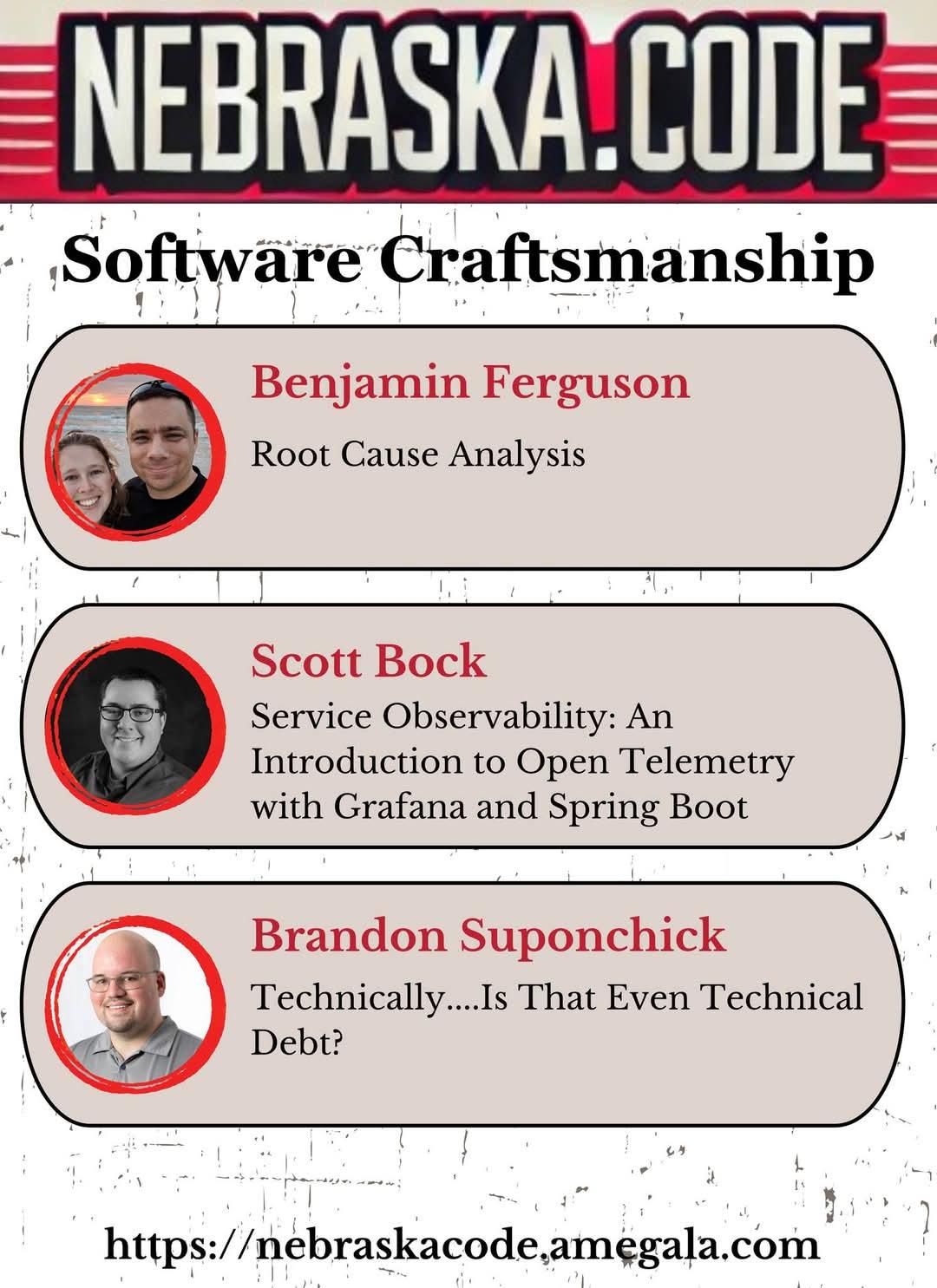
Ben Ferguson, Scott Bock, and Brandon Suponchick present on Software Craftsmanship in July at Nebraska.Code().
https://nebraskacode.amegala.com/
#SoftwareCraftsmanship #Grafana #Nebraska #Tech #RootCauseAnalysis #OpenTelemetry #softwaredevelopment #softwareengineering #software #DeveloperConference #cornhuskermarriott #NetworkingEvent
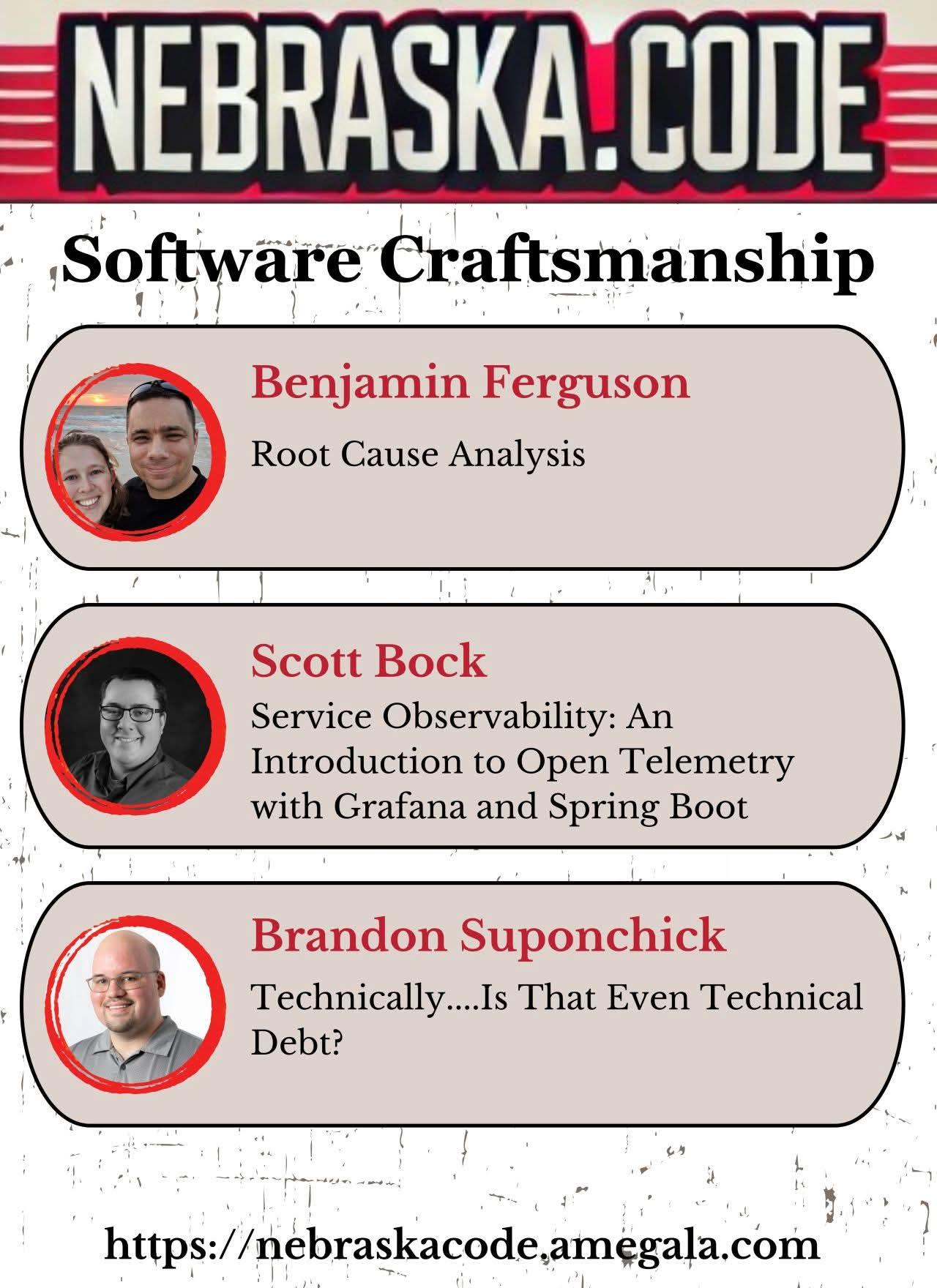
Ben Ferguson presents on 'Root Cause Analysis' July 25th at Nebraska.code().
https://nebraskacode.amegala.com/
#rootcauseanalysis #softwareglitches #datascience #Nebraska #customerservicecomplaints #customerservice #techproblemsolver #TechConference #TechTroubleshooting #DeveloperConference #programmingconference #problemsolving #technologytips
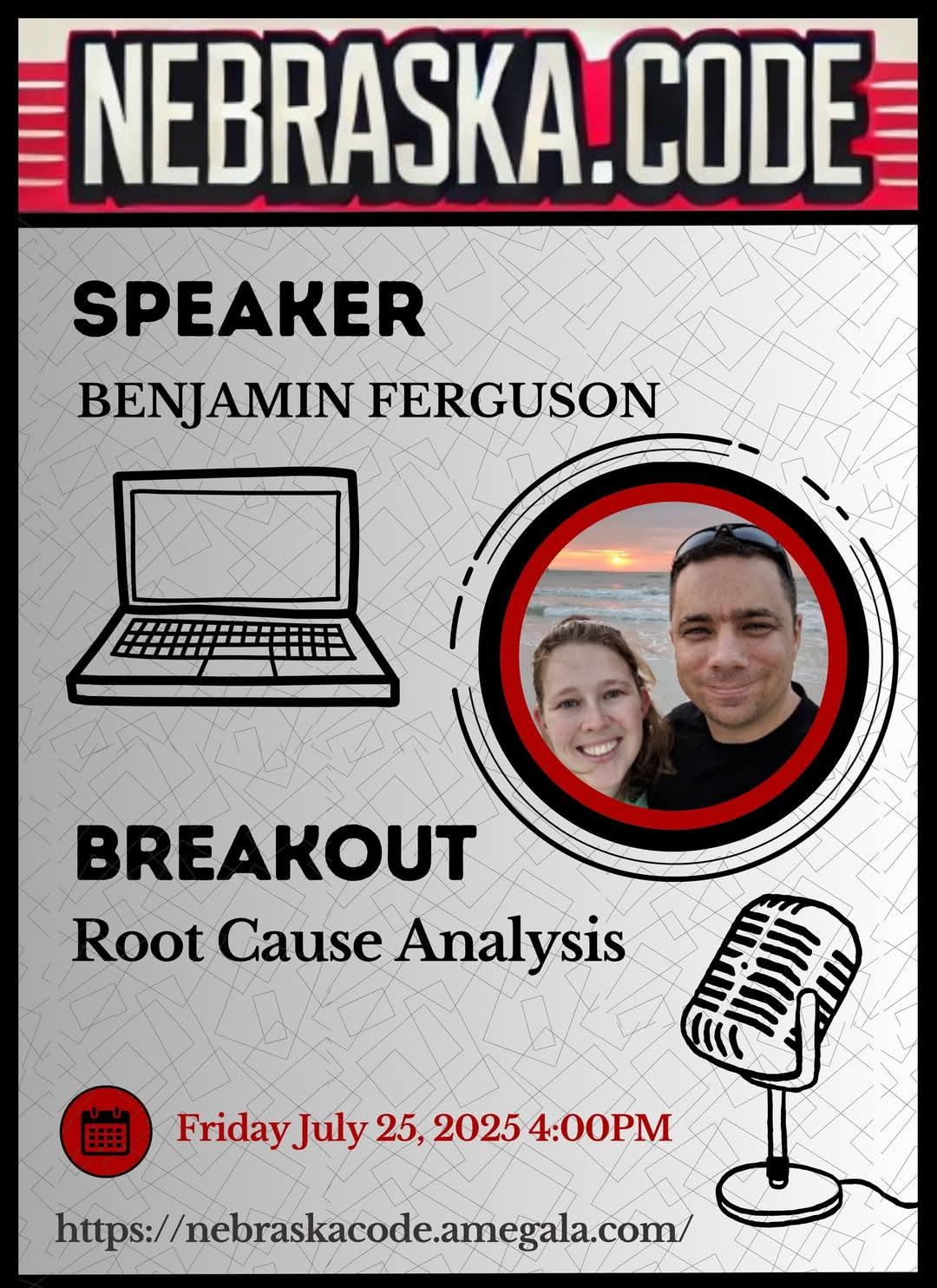
Ben Ferguson, Scott Bock, and Brandon Suponchick present on Software Craftsmanship in July at Nebraska.Code().
https://nebraskacode.amegala.com/
#Nebraska #softwarecraftsmanship #DuncanAviation #heartland #lincolnnebraska #Aviture #TechConference #RootCauseAnalysis #TechTalk #OpenTelemetry #grafana #coding #programming #development #Improving

Experiencing sudden performance drops, unexplained latencies, or timeouts? Your firewall might be misinterpreting HTTP 500 errors, leading to terminated TCP connections. Structured root cause analysis is essential to tackle these issues effectively. #HTTP500 #Firewall #PerformanceIssues #RootCauseAnalysis

Is it out of line to apply #OccamsRazor to the present moment, in America? It could be. But if not, then...
The United States simply ought to have enshrined a process of ranked-choice voting in its Constitution. Ceteris paribus. That would have made its current political landscape much more unlikely.
Part of me believes this criticism of the US deserves priority over almost all other criticisms—even now.

Good to see that RCA the shop contains about as much useful stuff as the average tech/security incident RCA.


“The main thing we know is that it’s never one thing,” said Thomas Anthony, director of the aviation safety program at the University of Southern California.
#Aviation #systemsengineering #Aeronautics #reliability #safety #RootCauseAnalysis #FailureAnalysis #Brazil
https://www.nytimes.com/2024/08/10/world/americas/brazil-plane-crash-investigation.html

In this instance, Falcon expected the update to have 20 input fields, but it had 21 input fields.
This "count mismatch" is what caused the global crash, CrowdStrike said.
"The Content Interpreter expected only 20 values," the RCA report states.
"Therefore, the attempt to access the 21st value produced an out-of-bounds memory read beyond the end of the input data array and resulted in a system crash."
--
https://www.abc.net.au/news/2024-08-07/drt-crowdstrike-root-cause-analysis/104193866

The Nigeria Immunization Collaborative: Early learning from a novel sector-wide approach model for zero-dose challenges
Less than three weeks after its launch, the Nigeria Immunization Collaborative – a partnership between the Geneva Learning Foundation, the National Primary Health Care Development Agency (NPHCDA), and UNICEF – has already connected over 4,000 participants from all 36 states and more than 300 Local Government Areas (LGAs).
The Collaborative is part of the Movement for Immunization Agenda 2030 (IA2030).
In the Collaborative’s first peer learning exercise that concluded on 6 August 2024, over 600 participants conducted root cause analyses of immunization barriers in their communities.
Participants engaged in a two-week intensive process of analyzing immunization challenges, conducting root cause analyses, and developing actionable plans to address these issues.
They did this without having to stop their daily work or travel, a key characteristic of The Geneva Learning Foundation’s model to support work-based learning.
Watch the General Assembly of the Nigeria Immunization Collaborative on 6 August 2024
https://www.youtube.com/watch?v=zicqexzachA
What are health workers saying about the Collaborative?
For Mariam Mustapha, a participant from Kano State, the Collaborative is “multiple individuals that perform a task”, united around a shared purpose.
She highlighted the importance of engaging with community members, noting, “These people from the community, most of them, they don’t have enough knowledge or they are receiving misinformation about immunization and vaccines.”
The peer learning exercise employed a structured approach, asking participants to explain their immunization challenge, conduct a “5 Whys” analysis to identify root causes, and develop actionable plans within their scope of work.
How does the Collaborative help health workers?
This method proved enlightening for many participants.
John Emmanuel, a community health worker from Bauchi State, shared his experience: “I just discovered that over the years, I have been superficial in my approach. I’ve been one sided. I’ve been actually peripheral in my approach. So during the root cause analysis, I was able to identify the broader perspective of identifying the challenge and then fixing it as it affects my job here in the community.”
The Collaborative also fostered connections between health workers across different regions of Nigeria.
Mohammed Nasir Umar, a JSI HPV program associate in Zamfara State, noted the value of this cross-pollination of ideas: “The root cause analysis really widened my horizon on how I think around the challenges. The ‘5 Whys’ techniques approach was really, really helpful.”
Participants identified a range of immunization challenges, including vaccine hesitancy, lack of information and awareness, sociocultural and religious factors, reaching zero-dose children, incomplete immunization, healthcare worker issues, logistical challenges, political interference, poor documentation, and community trust issues.
But then each one started asking ‘why’, stopping only once they found a root cause that they are in a position to do something about.
Esther Sharma, working with NPHCDA in a local government area, identified a critical issue in her facility: “The reason why people turn out low for immunization is because there are no health workers in the facilities to attend to them when they get here.”
Her solution involves ensuring consistent staffing during immunization days, which should encourage more community members to seek vaccination services.
How are new stakeholders participating in the Collaborative?
The Collaborative also welcomed participation from organizations not traditionally involved in immunization services.
Angela Emmanuel, a nurse and founder of the Emmanuel Cancer Foundation in Lagos, found value in the exercise for her work on HPV vaccination and cancer prevention.
She emphasized the need for a more educational approach: “Our motive should be education. Our motive should be the awareness, not just asking them to take this vaccine.”
Chijioke Kaduru, a public health physician who served as a Guide for the Collaborative, reflected: “While some of these challenges are similar in many settings, the local context and the nuances that shape these challenges clearly make them a good opportunity to engage, to interact, to understand them better, and to start to also see the ideas that colleagues have about how to solve those problems.”
By connecting frontline health workers, fostering critical thinking, and encouraging the development of locally-tailored solutions, the Nigeria Immunization Collaborative represents a potentially scalable model for strengthening health systems and improving immunization coverage.
As the exercise concludes, participants are poised to implement their action plans in their respective communities.
How are government workers participating in the Collaborative?
A key focus of the final session was the presentation of root cause analyses by government workers from the Federal and State Primary Health Care Development Agencies.
These presentations provided valuable insights into the challenges faced at various levels of the health system and the innovative solutions being developed.
Maimuna Tata, a deputy in-charge at a health facility in Bunkura local government area of Kano State, presented her analysis of why routine immunization sessions were not being conducted at her facility.
Through her “5 Whys” analysis, she uncovered a systemic issue: “The health facility is newly built and was commissioned after the 2024 micro plan exercise and needs to undergo several processes for provision of routine immunization.”
Tata’s proposed solution demonstrated the kind of innovative thinking the Collaborative aimed to foster: “Instead of them coming for outreach session in the settlement, I think the vaccine should be channeled to the health facility so that the health facility can conduct the sessions. And at the end of the day, we will now be submitting our reports to the health facility, that is the model health facility, pending the time the health facility will be recorded or will be updated in the server.”
Esther Sharma, working with NPHCDA in a local government area, identified a critical staffing issue: “The reason why people turn out low for immunization is because there are no health workers in the facilities to attend to them when they get here. I am the routine immuunization focal person where I currently work and when I went there newly, I asked a lot of people, why don’t they come to the hospital for immunization? And they said when they come, they don’t find anybody to attend to them.”
Her solution involves ensuring consistent staffing during immunization days, which she reported has already encouraged more community members to seek vaccination services.
Image: The Geneva Learning Foundation Collection © 2024
Share this:
#Collaborative #ImmunizationAgenda2030 #learningCulture #Nigeria #NPHCDA #peerLearning #rootCauseAnalysis #socialLearning #TheGenevaLearningFoundation




After some intense introspection I have determined that I just don't like doing things I don't want to do.
Client Info
Server: https://mastodon.social
Version: 2025.07
Repository: https://github.com/cyevgeniy/lmst