#ResurrectionHope

Intentional Faithmhoggin@pastorhogg.net
2025-12-30

When Death Loses Its Voice

On Second Thought

The reality of the Resurrection confronts one of the most universal and unsettling human experiences: the fear of death. Scripture never denies that fear, nor does it shame those who feel its weight. When Martha meets Jesus outside Bethany in John 11, her words carry both faith and ache: “Lord, if you had been here, my brother would not have died” (John 11:21, italics). This is not disbelief; it is wounded trust. She believes in resurrection “at the last day,” yet she stands face-to-face with the immediacy of loss. Jesus does not correct her emotion. Instead, He reframes reality itself: “I am the resurrection and the life. The one who believes in me will live, even though they die” (John 11:25, italics). Resurrection is no longer only an event on the calendar of the end times; it is a Person standing before her.

History is honest about humanity’s struggle with death. The Duke of Wellington, a seasoned military commander acquainted with mortality, observed that anyone who claims never to have feared death must be either a coward or a liar. Likewise, Samuel Johnson, the great British essayist, admitted that no rational person approaches death without unease. Scripture affirms this realism. Death is not natural in the biblical sense; it is an intruder, an enemy. Yet Christianity insists that it is an enemy already defeated. The tension lies here: death still wounds, but it no longer rules. The Resurrection does not deny the pain of separation; it disarms its finality.

The letter to the Hebrews brings theological clarity to this victory. “Inasmuch then as the children have partaken of flesh and blood, He Himself likewise shared in the same” (Hebrews 2:14, italics). The Greek phrase κεκοινώνηκεν αἵματος καὶ σαρκός (kekoinōnēken haimatos kai sarkos) underscores real participation, not appearance. Christ did not hover above mortality; He entered it fully. The purpose of this descent is startling: “that through death He might destroy him who had the power of death, that is, the devil.” The verb καταργήσῃ (katargēsē) does not mean annihilate but render powerless. Death still exists, but its authority has been stripped. It can wound, but it cannot condemn.

John Stott, in The Cross of Christ, captures this freedom when he writes that Christ sets free those who have been held in lifelong slavery by the fear of death. Fear, not death itself, is the true tyrant. When death is forgiven of its sting, fear loses its leverage. The Apostle Paul presses this imagery further in 1 Corinthians 15, likening death to a scorpion whose sting has been removed. “Where, O death, is your victory? Where, O death, is your sting?” (1 Corinthians 15:55, italics). The Greek κέντρον (kentron) refers to the poison-bearing point. Forgiveness in Christ has extracted that poison. Death can still pierce the heart with grief, but it cannot inject despair.

This does not mean Christians face death lightly. Even Jesus wept at Lazarus’s tomb. Resurrection faith does not anesthetize sorrow; it anchors it. Until Christ returns, we still endure the physical decline of the body and the emotional rupture of separation. Yet the Resurrection reframes these experiences. They are no longer endpoints but passages. The early Church did not eliminate funeral tears, but it transformed funerals into testimonies of hope. To believe in the Resurrection is not to deny death’s presence, but to deny its ultimacy.

What steadies the soul is not abstraction but relationship. Jesus does not say, “I will show you resurrection,” but “I am the resurrection.” Faith is not confidence in an outcome alone, but trust in a living Lord who has already crossed death’s threshold and returned. This is why Christian hope is resilient even in hospitals, cemeteries, and quiet rooms of goodbye. Resurrection is not wishful thinking; it is grounded in history, embodied in Christ, and promised to those united with Him.

On Second Thought

On second thought, the paradox of the Resurrection is this: death, which appears to be the greatest interruption of life, becomes in Christ the doorway through which life is finally clarified. We spend much of our lives avoiding death—pushing it to the margins of conversation, distracting ourselves from its certainty—yet Scripture invites us to look at it through the lens of Resurrection. The fear of death often masquerades as a love of life, but in truth it can shrink life, making us cautious where God calls us to trust, and reserved where God calls us to love fully. The Resurrection loosens that grip. When death no longer has the final word, we are freed to live more courageously in the present.

Here is the unexpected insight: the Resurrection is not only about what happens after we die; it reshapes how we live before we die. When fear of death is dethroned, generosity increases, forgiveness deepens, and obedience becomes less calculated. The early Christians did not seek martyrdom, but neither were they ruled by the threat of death. Their hope was not that they would avoid suffering, but that suffering itself had been redefined by Christ’s victory. On second thought, perhaps the greatest evidence that we believe in the Resurrection is not how confidently we face death, but how freely we live in love now—unafraid to give ourselves away because our lives are already secured in Christ.

FEEL FREE TO COMMENT, SUBSCRIBE, AND REPOST, SO OTHERS MAY KNOW


#ChristianEternalLife #fearOfDeath #Hebrews214 #John112126 #resurrectionHope
Intentional Faithmhoggin@pastorhogg.net
2025-12-15

Knots, Threads, and the Promise of Glory

On Second Thought

Advent is the season of waiting, of learning again how to see what God is doing beneath the surface of ordinary days. It trains the Christian heart to look beyond appearances and to trust that God is at work even when fulfillment seems delayed. Few passages speak more gently and more honestly into this posture than Paul’s reflection on resurrection and transformation in 1 Corinthians 15:35–50. Paul is addressing believers who are struggling to imagine how God’s promises could possibly be fulfilled when human weakness, decay, and failure feel so dominant. His answer is not technical speculation but theological reassurance: God’s design is not flawed, incomplete, or improvisational. It is purposeful, patient, and redemptive.

Paul frames the human question plainly: “How are the dead raised? With what kind of body do they come?” (1 Corinthians 15:35). He responds with the imagery of seeds and bodies, earthly and heavenly forms, emphasizing continuity without sameness. What is sown in weakness is raised in power; what bears decay is transformed into glory. At the heart of his argument is the promise declared in verse 49: “As we have borne the image of the man of dust, we shall also bear the image of the heavenly Man.” This is not merely a future hope; it is a lens through which the present life is to be understood. The Greek term Paul uses for “image,” eikōn, speaks not only of resemblance but of representation. Humanity reflects something greater than itself, and in Christ, that reflection is being restored.

The simple illustration of a cross-stitch design captures this truth with pastoral clarity. From the front, the pattern is visible and coherent; from the back, it appears tangled and confused. Life, viewed only from the underside of time and limitation, often looks like that reverse side—knots of regret, threads of disappointment, and colors that do not seem to belong together. Yet Scripture insists that God’s vantage point is different. “For we are his workmanship,” Paul writes elsewhere, “created in Christ Jesus for good works” (Ephesians 2:10). The word translated “workmanship,” poiēma, suggests a crafted work, not a rushed experiment. God is not surprised by human failure; He weaves instruction and transformation into moments that feel wasted to us.

Advent reminds us that God often does His most decisive work quietly and indirectly. The incarnation itself is proof. Christ did not enter the world fully revealed in glory, but as a child, vulnerable and hidden. The heavenly design was present, but not yet fully visible. In the same way, the knots in our lives—the places where we resisted God, misunderstood His timing, or faltered under pressure—are not discarded by Him. From His perspective, they become points of reinforcement, places where wisdom is learned and humility deepened. The Hebrew idea behind divine craftsmanship echoes this truth. The word yatsar, often translated “to form,” carries the sense of shaping with intention, as a potter works patiently with clay. The vessel’s imperfections are not ignored; they are addressed, reshaped, and incorporated.

Paul’s contrast between the “man of dust” and the “heavenly Man” situates every believer between two realities. We live now with the limitations of Adam—mortality, weakness, and struggle—but we are being conformed to Christ, whose resurrection defines the future of humanity. This transformation is not cosmetic. It is ontological, touching the very nature of who we are becoming. As theologian N. T. Wright has observed, resurrection is not an escape from creation but its renewal. The design God is weaving into our lives is not merely about moral improvement; it is about preparing us to bear Christ’s likeness fully and finally.

This perspective reshapes how we interpret failure. Moments of discouragement are not evidence that God has abandoned His design; they are reminders that the design is still in process. Advent trains believers to live faithfully in this tension—to trust that what God has promised, He will complete. As Paul assures the Philippians, “He who began a good work in you will bring it to completion at the day of Jesus Christ” (Philippians 1:6). The front of the tapestry is coming into view, even if today we mostly see the underside.

On Second Thought

On second thought, the paradox at the heart of this reflection is that the very knots we wish God would erase may be the places where His design is most evident. We often pray for smoothness, clarity, and visible progress, assuming that holiness should look orderly from every angle. Yet Scripture repeatedly suggests that God values faithfulness over polish, formation over appearance. The resurrection promise of 1 Corinthians 15 does not deny the reality of weakness; it redeems it. The life of Christ Himself confirms this pattern. The cross appeared to be the ultimate failure, a tangled end to a hopeful mission. Only in hindsight did the Church understand that what looked like defeat was the central stitch holding redemption together.

This challenges a common spiritual assumption: that growth should feel affirming and coherent as it happens. In truth, much of God’s work in us feels disorienting precisely because it is reshaping our assumptions. From our limited vantage point, we judge progress by comfort and clarity. From God’s vantage point, progress is measured by conformity to Christ. The Advent paradox is that waiting is not wasted time. It is formative time. The knots represent resistance overcome, lessons learned slowly, and grace applied repeatedly. They are not evidence of divine frustration but of divine patience.

Seen this way, Advent becomes more than anticipation of Christ’s coming; it becomes trust in Christ’s craftsmanship. We are not asked to admire the underside of our lives, nor to pretend it is beautiful. We are invited to trust the One who sees the whole design. Bearing the image of the heavenly Man means trusting that what God is weaving now will one day make sense in glory. Until then, faith rests not in what we can see, but in who God has revealed Himself to be.

FEEL FREE TO COMMENT, SUBSCRIBE, AND REPOST, SO OTHERS MAY KNOW


#1Corinthians15 #AdventReflection #ChristianTransformation #GodSWorkmanship #ImageOfChrist #resurrectionHope

Intentional Faithmhoggin@pastorhogg.net
2025-12-02

When Doctrine Shapes Duty

Thru the Bible in a Year

As we arrive at the final chapters of Paul’s first letter to the Corinthians, we find ourselves standing on holy ground. Few passages in all of Scripture speak with the same clarity, authority, and comfort as 1 Corinthians 15—the great resurrection chapter. And few chapters speak as plainly about the practical life of the believer as 1 Corinthians 16. In these two chapters, Paul does what he so often does in his letters: he moves from doctrine to duty, from the unshakable truth of God’s saving work to the lived-out response of faithful disciples.

Today’s reading is a reminder that Christianity is not built on ideas but on events—real, historical, bodily events that change the entire course of our existence. Paul insists that the resurrection is not a metaphor, not a symbol, not a spiritual image—but a fact. And because it is a fact, it becomes the foundation for everything we believe and everything we do.


The Resurrection: The Center of Christian Hope

Paul begins 1 Corinthians 15 by laying out the evidence for Christ’s resurrection. He reminds the church that the resurrection is anchored “according to the Scriptures”—meaning it fulfills the Old Testament promises that God would not abandon His Holy One to decay. But Paul doesn’t stop with Scripture; he also points to eyewitness testimony. Jesus appeared to Peter, to the twelve, to more than five hundred believers at once, to James, and finally to Paul himself. These encounters left the early church with a living, breathing certainty: Christ really is risen.

Paul goes further by describing the essential nature of the resurrection. If Christ is not raised, then everything collapses: our faith is empty, our preaching is worthless, our sins remain unforgiven, our hope is false, and our future is bleak. Without the resurrection, Paul says, we would be “the most miserable of all people.” In other words, Christianity without the resurrection is not simply weakened—it is meaningless. But because Christ is raised, everything is reversed. Our faith is alive, our sins are forgiven, our hope is certain, and our future is as secure as the eternal Christ Himself.

The resurrection is also emancipating. Where death once held unbreakable power, Christ has burst the chains forever. The grave no longer has the final word. Paul calls death “the last enemy,” yet it is an enemy already defeated by the One who rose in victory. As one commentator wrote, “The resurrection does not merely give us hope for someday—it gives us strength for today.” Through Christ, death no longer frightens us; instead, it becomes the doorway into everlasting life.

Paul then lifts our eyes to the transformation the resurrection brings. Our earthly bodies—frail, tired, prone to sickness—will one day be raised incorruptible. What is perishable will become imperishable; what is mortal will be clothed with immortality. It is here that Paul bursts into worship, declaring, “O death, where is thy sting? O grave, where is thy victory?” The sting is gone because death has been swallowed up by Christ’s triumph.

And then, as if gathering up every thread of doctrine, Paul ties it into a single command: “Therefore, my beloved brethren, be steadfast, unmovable, always abounding in the work of the Lord, for you know your labor is not in vain in the Lord.” This is the practical impact—the encouragement—of the resurrection. If Jesus is alive, then every act of obedience, every quiet kindness, every prayer offered in faith, every moment of service, every word of witness matters. None of it is wasted. Not one moment is in vain.


Duty for the Saints: Living Resurrection Truth in Daily Life

1 Corinthians 16 shifts from the soaring heights of resurrection doctrine to the everyday realities of church life. It is as if Paul said, “Because the resurrection is real, here is how you must live.”

He begins with the collection for the saints, particularly for those suffering in Jerusalem. Paul’s instructions provide wisdom for giving even today: giving should be intentional, regular, proportional, and motivated by love—not guilt. The resurrection makes us generous because we are people who live with open hands.

Next, Paul encourages the church to care for Timothy. Ministry is not a solitary calling; it is strengthened by community. Paul wants the Corinthians to honor Timothy, treat him with dignity, and support his work. How we treat God’s servants reflects how we honor God Himself.

Paul then calls them to consecration: “Watch, stand fast in the faith, act like men, be strong.” These are words of spiritual courage. They remind us that faithfulness requires alertness, stability, maturity, and spiritual strength. These qualities don’t emerge accidentally; they grow from hearts rooted in the hope of the resurrection.

He goes on to emphasize charity: everything we do must be done in love. This love is not sentimental; it is sacrificial, patient, humble, and resilient. Love becomes the ruling principle of Christian duty because love reflects the character of the risen Christ.

Then Paul highlights cooperation. He calls the church to support those laboring in the ministry alongside him. Gospel work is a shared effort, not a competition. When believers work together, the church flourishes.

Finally, Paul speaks of cordiality—genuine warmth within the body of Christ. The early church practiced holy affection, greeting one another and offering fellowship freely. Nothing strengthens a congregation like sincere, Spirit-filled friendship.

Paul ends with a sober reminder: a curse rests upon those who do not love the Lord Jesus Christ. This is not cruelty—this is clarity. Loving Christ is not optional for the believer; it is the heartbeat of true faith. The church at Ephesus received a similar warning in Revelation 2:4: “You have left your first love.” Paul’s closing exhortation invites us to keep our love for Christ vibrant, central, and strong.


Walking Forward Together

When doctrine and duty come together, the Christian life becomes both anchored and active. Resurrection truth fuels resurrection living. Because Christ is risen, we can give generously, love sacrificially, stand courageously, serve diligently, and hope joyfully. Paul’s message to Corinth is the message we carry into our own lives: Your labor is not in vain.

Thank you for your faithfulness in walking through the Scriptures. God honors the heart that seeks Him, and He promises that His Word will not return void. As you continue this journey through the Bible, may your understanding deepen, your faith grow steady, and your hope remain anchored in the risen Christ.

For further reading on the resurrection, consider this helpful article from Christianity Today:
https://www.christianitytoday.com/ct/2020/april-web-only/why-resurrection-matters.html

FEEL FREE TO COMMENT SHARE SUBSCRIBE


#1Corinthians15Devotional #christianDuty #paulsTeachings #resurrectionDoctrine #resurrectionHope #spiritualDisciplines #thruTheBibleInAYear

Alive in Christaliveinchristaz
2025-11-13

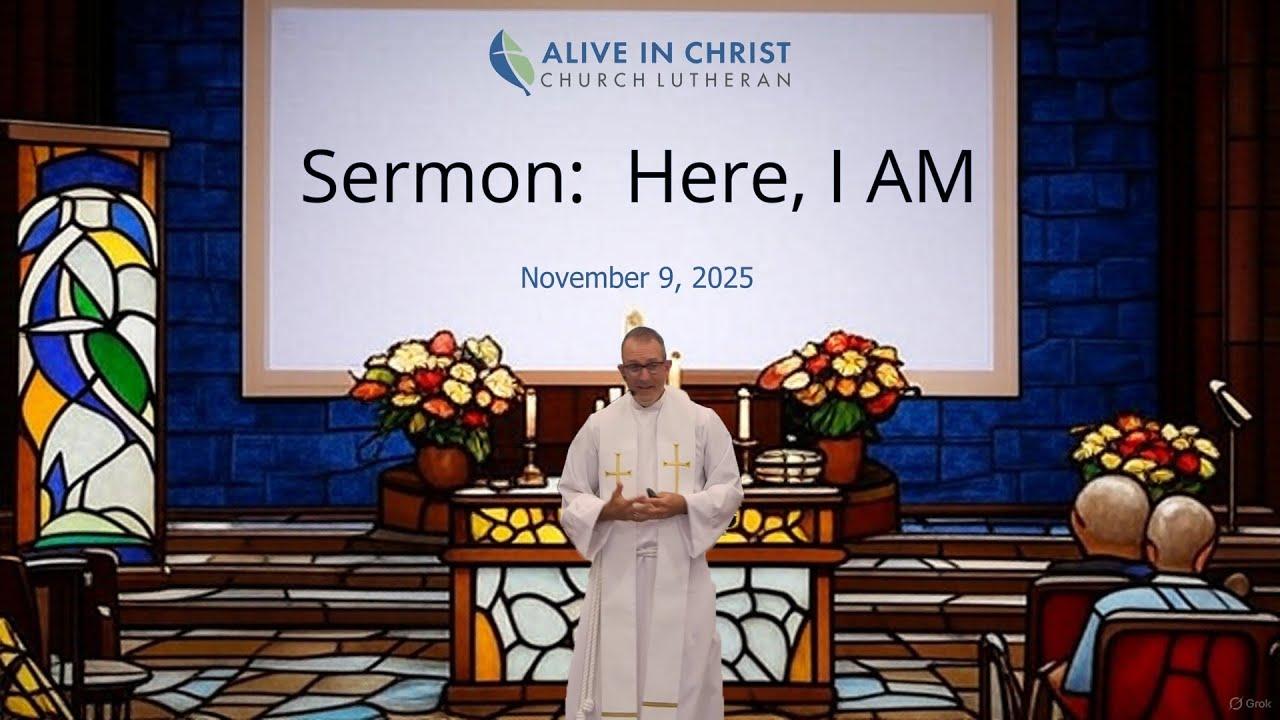
🚨 Roll call in eternity: “Here I am!” 🙋♂️ Pastor Justin drops 🔥 truth in “Here I Am, I AM”—Moses’ doubts, Abraham’s wild faith, & Jesus schooling the Sadducees on resurrection! Every breath whispers Yahweh, and death? Game over. ✝️💀

Watch: zurl.co/3g0uY

Alive in Christaliveinchristaz
2025-11-12

Hop on your bike and join Pastor Justin for this hilarious & heartwarming Children's Message! 🎃 Kids spill the tea on Halloween candy heists, scraped knees, and stress-ball squeezes—while discovering God's ultimate protection: the resurrection promise that turns every tumble into triumph!

Watch now: zurl.co/h4N79

Intentional Faithmhoggin@pastorhogg.net
2025-11-03

From the Cross to the Crown

Thru the Bible in a Year

Scripture Reading: Luke 23–24

 When we open Luke 23 and 24, we stand at the threshold of the most sacred ground in all of Scripture—the death and resurrection of Jesus Christ. The Gospel that began with angels singing in Bethlehem now closes with angels proclaiming an empty tomb. In these final two chapters, Luke paints a portrait of both agony and triumph, of darkness yielding to dawn. As we journey through these passages, we are reminded that the story of Jesus is not one of tragedy but of victory—victory over sin, death, and despair.


The Courts: Sovereign Before Pilate and Silent Before Herod

Jesus stood before Pilate as the sovereign Lord of heaven and earth, though outwardly a prisoner of Rome. The accusations hurled against Him were many and false: sedition, blasphemy, treason. Yet Luke records a remarkable truth—Pilate found no fault in Him. “I have examined Him in your presence and have found no basis for your charges against Him.” (Luke 23:14). Even the Gentile governor recognized His innocence.

Still, Pilate faltered. Knowing the right thing and doing the right thing are often two different matters. Pilate declared Jesus innocent three times, yet yielded to the pressure of the crowd. Fear triumphed over conviction, and history remembers him for washing his hands rather than standing firm.

Sent to Herod, Jesus remained silent. Herod wanted entertainment—a miracle on demand—but Jesus would not play to the crowd. The Son of God stood in quiet strength, fulfilling Isaiah’s prophecy: “He was oppressed and afflicted, yet He opened not His mouth.” (Isaiah 53:7). Warren Wiersbe once noted, “The silence of Christ before Herod was louder than any words He could have spoken.” In that silence, Jesus showed us that dignity in suffering is greater than self-defense.

Eventually, Pilate delivered Him to be crucified, trading the righteous for a rebel. Barabbas went free, an image of substitution—our sin released, our Savior condemned. The innocent was handed over for the guilty. What began as political expedience would become divine exchange.


The Crucifixion: The Path, the Pain, and the Promise

As Jesus was led away, Luke introduces Simon of Cyrene, a man compelled to carry the cross. He stands as a living reminder that discipleship often begins with interruption. Simon didn’t volunteer; he was chosen by circumstance. Yet through this burden, he encountered the Savior. Sometimes God’s appointments come disguised as inconveniences, leading us to moments that change us forever.

Along the path to Calvary, women wept, soldiers mocked, and bystanders watched. Jesus, even in agony, turned to comfort others: “Daughters of Jerusalem, do not weep for Me; weep for yourselves and for your children.” (Luke 23:28). His compassion endured even when His strength waned.

At the cross, the crowd divided His garments and cast lots. The rulers sneered, and the soldiers taunted. But amidst cruelty, mercy was revealed. One of the thieves beside Him recognized what others missed: “Jesus, remember me when You come into Your kingdom.” And Jesus replied, “Today you will be with Me in paradise.” (Luke 23:42–43). Grace was extended in the shadow of death—proof that salvation is never too late for a repentant heart.

Then came darkness. From noon to three, creation itself seemed to mourn. The temple veil tore in two, symbolizing that through His death, access to God was now open to all. As Jesus cried, “Father, into Your hands I commit My Spirit,” the centurion watching whispered, “Surely this was a righteous man.” The cross, once an instrument of shame, became the altar of redemption.

Joseph of Arimathea, a quiet disciple, courageously asked for Jesus’ body and laid it in his own new tomb. Even in death, Jesus inspired courage in those who once stayed silent. The Sabbath drew near, and His followers waited in grief, not realizing that the waiting would give way to wonder.


The Conquering: He Is Not Here—He Is Risen!

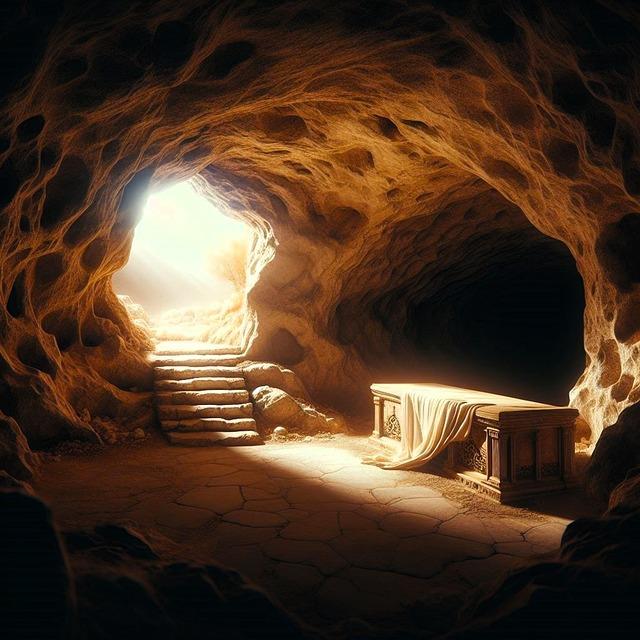
Luke 24 bursts with divine surprise. The women came at dawn with spices, expecting to anoint a corpse but found an empty tomb instead. The angel’s words still echo through the centuries: “Why do you seek the living among the dead? He is not here; He has risen!” (Luke 24:5–6).

At first, confusion reigned. Resurrection had always been part of the promise, but hope can be hard to hold when grief is near. Yet Jesus’ victory was not hidden for long. On the road to Emmaus, He walked beside two disciples who failed to recognize Him. Their hearts were heavy, their dreams shattered. But as He opened the Scriptures to them, their despair began to melt. “Did not our hearts burn within us while He talked to us on the road?” they later said. The risen Christ revealed Himself not in spectacle, but in Scripture—just as He does for us each day.

When Jesus broke bread with them, their eyes were opened. Recognition came through relationship, not argument. The same Lord who died for us still meets us in the breaking of bread, in the quiet moments of communion where faith replaces sight.

That evening, He appeared to the disciples, who trembled with fear. To prove He was no ghost, He ate fish and honeycomb before them—a physical Savior restoring spiritual courage. His resurrection was not symbolic; it was tangible, bodily, and real. Before ascending to heaven, He blessed them in Bethany. The One who entered our world through blessing now returned to the Father leaving the same gift behind: peace.


Living Between the Cross and the Crown

Luke’s final chapters remind us that every believer lives between the cross and the crown. We follow a risen Savior who first bore the weight of our sin, then opened the way to everlasting life. The trials before Pilate show us Christ’s innocence; the crucifixion displays His sacrifice; the resurrection proclaims His victory.

Today, as we continue our journey through the Bible, remember this: the resurrection is not the end of the story—it is the beginning of ours. The same Spirit that raised Jesus from the dead now dwells in us (Romans 8:11). The same hands that were pierced for our transgressions now hold us in grace.

When we feel unjustly treated, look to Jesus before Pilate. When silence feels like weakness, remember His quiet strength before Herod. When pain feels unending, remember His compassion from the cross. And when darkness seems final, remember that Sunday always follows Friday.

The message of Luke 23–24 is not just historical—it is personal. Every tear redeemed, every sin forgiven, every tomb emptied—all point to a Savior who lives.


May the risen Christ walk with you on your journey today.
May the Spirit open the Scriptures to your heart as He did on the Emmaus road.
And may the Father bless your faithfulness in His Word, reminding you that it never returns void but always accomplishes His purpose.

Thank you for walking Thru the Bible in a Year.


Related Reading

For more reflection on the resurrection and hope of Christ, visit
Bible.org – The Resurrection of Jesus: The Heart of the Gospel


FEEL FREE TO COMMENT SHARE SUBSCRIBE


#crucifixionAndResurrection #dailyBibleReading #EmmausRoad #faithJourney #gospelOfLuke #JesusBeforePilate #Luke2324 #resurrectionHope #spiritualReflection #ThruTheBibleInAYear

Equipped Churchequippedchurch
2025-07-31

"But God raised Him from the dead." Three words that changed history forever!
We don't worship a martyr still on a cross or a prophet still in a tomb—we serve a LIVING Savior who defeated death, sin, and secured our eternal future. This is what our faith is all about!

Christic AcademyChristicAcademy
2025-06-14

False Hope: Exposing Modern Christianity’s Deception

We delve into how modern Christianity has been misguided. Millions await a false Jesus, temple, and earthly kingdom. The true hope lies in the resurrection and new creation, not earthly politics. Reject the deception; embrace the true Gospel. from…

christicacademy.wordpress.com/

2025-04-20

CHRIST THE LORD IS RISEN TODAY (HE IS NOT DEAD)
☦⚰🔥
by: NCC Worship

youtube.com/watch?v=xNrV2fX5Qb


🤺🛡

2025-04-20

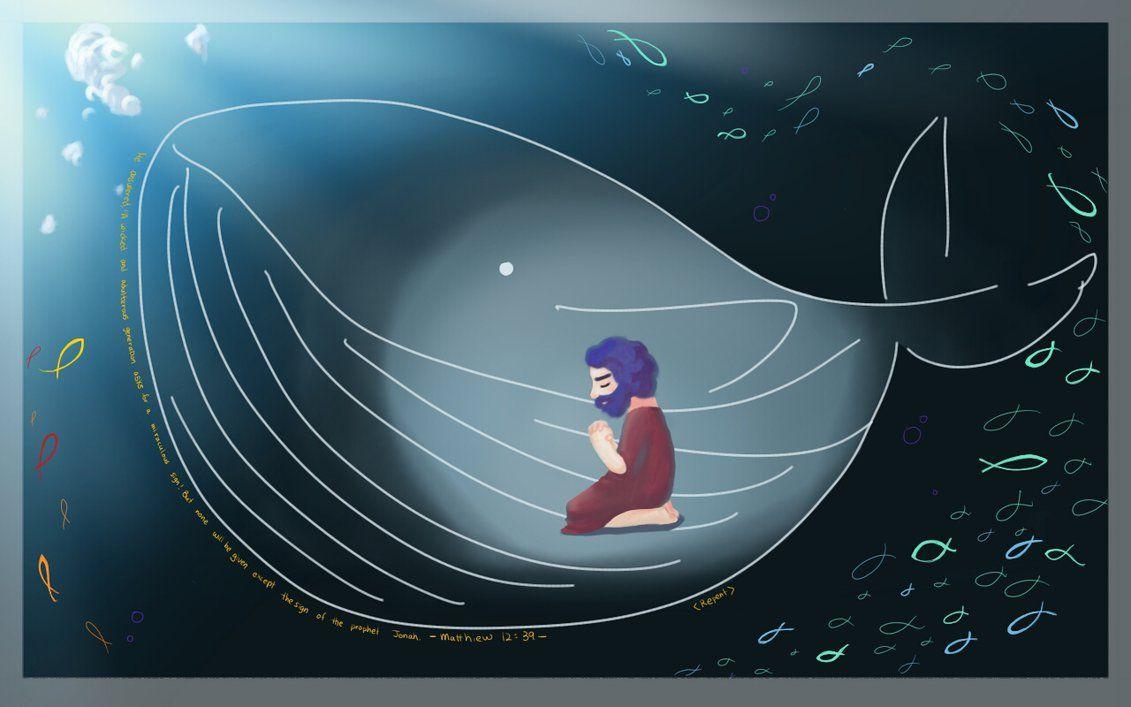
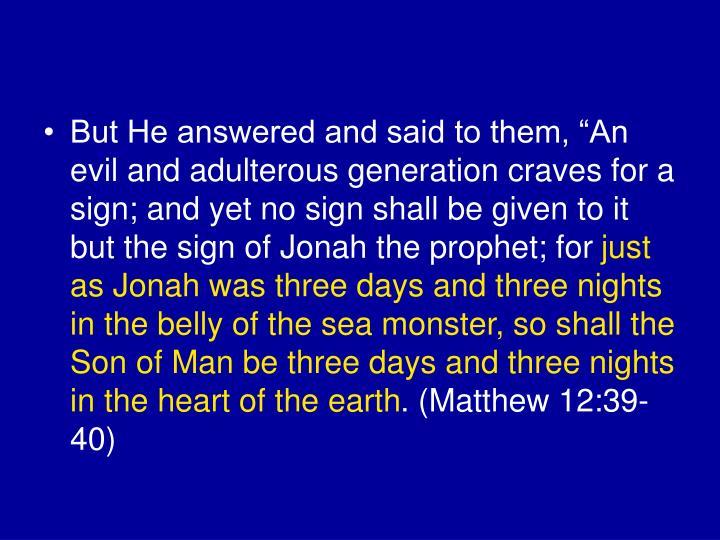
Through the resurrected lord Christ Jesus, the prophetic sign of Jonah has been fulfilled & Death is NO MORE!!!
🙌 H A L L E L U J A H 🙌

🍃🌸🍃🌸🍃🌸🍃🌸🍃🌸🍃🌸🍃

Learn👇 about what is:
crosswalk.com/faith/bible-stud

🍃🌸🍃🌸🍃🌸🍃🌸🍃🌸🍃🌸🍃

☦⚰🔥
🤺🛡

Client Info

Server: https://mastodon.social
Version: 2025.07
Repository: https://github.com/cyevgeniy/lmst