
We get military flyovers a lot on the coast here, I usually try to get pictures. This trainer jet was moving fast but one image I have has a shiny orb looking thing in it. It's not on my lense and it's in no other picture. Looks like the sun is shining on it. Aliens! Who know but I can't explain it.
#UFO #Drone #airforce #aircraft #jet
#Jet


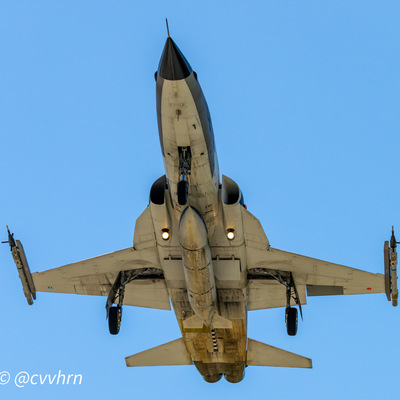
"Toast" is in da house USN F/A-18F 166962 of VFA-2 "Bounty Hunters" (USS Carl Vinson) on final for Moffett Field, February 2026 #milair #AvGeek #nikon #jet #militaryaviation #VFA2 #bountyhunters #Moffett #AvGeek #USN #FA18F #KNUQ #cvvhrn

USN F/A-18F 166962 of VFA-2 "Bounty Hunters" (USS Carl Vinson) on final for Moffett Field, February 2026 #milair #AvGeek #nikon #jet #militaryaviation #VFA2 #bountyhunters #Moffett #AvGeek #USN #FA18F #KNUQ #cvvhrn


No Vaping !
(Details In The AltText) - (Described At Length)
#AltText #NoAi #No2AI #photography #photo #potd #lax #photooftheday #us #travel #street #travelphotography #bnw #losangeles #BlackAndWhite #socal #usa #california #weather #streetphotography #avgeek #blackandwhitephotography #aviation #monochrome #aircraft #airplanes #planespotting #airplane #plane #planes #jet #jets


A United States fighter jet shot down an Iranian drone that “aggressively” flew towards the USS Abraham Lincoln as it was crossing through the Arabian Sea, U.S. Central Command says. Read more from @ABCNews@flipboard.com
I should have spent some time shooting trains rather than planes a few miles to the north
(Details In The Alt Text)
#AltText #NoAI #No2AI #photography #photo #potd #photooftheday #travel #travelphotography #avgeek #aviation #jet #jets #plane #planes #aircraft #california #mojavedesert #usa #us #airplane #airplanes

The Dawn Chorus Commences
(Details In The Alt Text) - (Described At Great Length)
#AltText #NoAI #No2AI #photography #photo #potd #photooftheday #travel #losangeles #travelphotography #la #lax #california #socal #leftcoast #dawn #sunrise #landscape #aviation #avgeek #landscapephotography #aircraft #airplane #airplanes #jet #jets #airport #airports


📢🆕🚨 Using new data from the Event Horizon Telescope @ehtelescope, researchers have uncovered an important clue: they identified the most likely origin of the powerful outflow of matter (the jet) in the galaxy Messier 87 🌀.
🔭 The observations provide fascinating insights into the immediate surroundings of the extremely massive black hole 🕳️ at the center of the galaxy. Differences in the observed radio emission suggest that the jet forms very close to the black hole — in a region that had remained hidden in previous observations. Detailed modeling then allowed the position of the jet base to be narrowed down.
🕳️ Black holes themselves are invisible — but their surroundings reveal their secrets!
@nasa @esa
#BlackHole #EventHorizonTelescope #M87 #Astrophysics #RadioAstronomy #Jet #SpaceScience #Universe #Science #Astronomy #MPIfR
📢🆕🚨 Mit neuen Daten des Event Horizon Telescope @ehtelescope haben Forscherinnen und Forscher einen wichtigen Hinweis gefunden: Sie konnten den wahrscheinlichsten Ursprungsort des gewaltigen Materieausflusses (Jets) in der Galaxie Messier 87 🌀 bestimmen.
🔭 Die Beobachtungen geben spannende Einblicke in die unmittelbare Umgebung des extrem massereichen Schwarzen Lochs 🕳️ im Zentrum der Galaxie. Unterschiede in der gemessenen Radiostrahlung deuten darauf hin, dass sich der Jet sehr nahe am Schwarzen Loch bildet – und zwar in einem Bereich, der bei bisherigen Messungen unentdeckt geblieben war. Mithilfe detaillierter Modelle konnte schließlich die Position der Jet-Basis eingegrenzt werden.
🕳️Schwarze Löcher sind unsichtbar – aber ihre Umgebung verrät ihre Geheimnisse!
🆕 👉 https://www.mpifr-bonn.mpg.de/pressemeldungen/2026/jet-des-schwarzen-lochs-in-m87?c=8727
@nasa @esa
#BlackHole #EventHorizonTelescope #M87 #Astrophysics #RadioAstronomy #Jet #SpaceScience #Universe #Science #Astronomy #MPIfR

8:47am Are You Gonna Be My Girl by Jet from Get Born
#KJAC #TheColoradoSound #Jet


Imagine the next generation of jet fighter defense systems
Adonis Aerospace
#adonis #aerospace #airplane #flight #technology #tech #innovation #jet #jets #fighter #military


Amsterdam interdit la pub pour la viande, les voyages en avion et les énergies fossiles
https://lareleveetlapeste.fr/amsterdam-interdit-la-pub-pour-la-viande-les-voyages-en-avion-et-les-energies-fossiles/
C’est officiel, Amsterdam devient la première capitale au monde à interdire la publicité pour la viande, les voyages en avion et les énergies fossiles. Ce long combat entamé en 2020 devrait prendre effet en mai 2026.
Amsterdam rejoint ainsi huit autres municipalités néerlandaises, telles qu'Utrecht, Haarlem et Zwolle, qui interdisent la publicité pour les énergies fossiles dans l'espace public.
#antipub poke @RAPasso #amsterdam #utrecht #haarlem #zwolle #pub #jet #avion #vegetarien #avf

“A commodity appears at first sight an extremely obvious, trivial thing. But its analysis brings out that it is a very strange thing”*…
Prices are on everyone’s minds these days. Brian Potter looks underneath the costs of the finished products and services that we typically track to examine the costs of the commodities that go into them…
This American Enterprise Institute chart [above], which breaks down price changes for different types of goods and services in the consumer price index, has by now become very widely known. A high-level takeaway from this chart is that labor-intensive services (education, healthcare) get more expensive in inflation-adjusted terms over time, while manufactured goods (TVs, toys, clothing) get less expensive over time.
But there are many types of goods that aren’t shown on this chart. One example is commodities: raw (or near-raw) materials mined or harvested from the earth. Commodities have many similarities with manufactured goods: they’re physical things that are produced (or extracted) using some sort of production technology (mining equipment, oil drilling equipment), and many of them will go through factory-like processing steps (oil refineries, blast furnaces). But commodities also seem distinct from manufactured goods. For one, because they’re often extracted from the earth, commodities can be subject to depletion dynamics: you run out of them at one location, and have to go find more somewhere else. In my book I talk about how iron ore used to be mined from places like Minnesota, but as the best deposits were mined out steel companies increasingly had to source their ore from overseas. And the idea of “Peak Oil” is based on the idea that society will use up the easily accessible oil, and be forced to obtain it from increasingly marginal, expensive-to-access locations.
(Some commodities, particularly agricultural commodities that can be repeatedly grown on a plot of land, don’t have the same sort of depletion dynamics, though bad farming practices can degrade a plot of land over time. Other commodities get naturally replenished over time, but can still get used up if the rate of extraction exceeds the rate of replenishment; non-farmed timber harvesting and non-farmed commercial fishing come to mind as examples.)
Going into this topic, I didn’t have a great sense of what price trends look like for commodities in general. Julian Simon famously won a 1980 bet with Paul Ehrlich that several raw materials — copper, chromium, nickel, tin, and tungsten — would be cheaper (in inflation-adjusted terms) after 10 years, not more expensive. But folks have pointed out that if the bet had been over a different 10-year window, Ehrlich would have won the bet.
To better understand how price tends to change for different commodities and raw materials, I looked at historical prices for over a hundred different commodities. Broadly, agricultural commodities tend to get cheaper over time, while fossil fuels have a slight tendency to get more expensive. Minerals (chemicals, metals, etc.) have a slight tendency towards getting cheaper, with a lot of variation — 15 minerals more than doubled in price over their respective time series. But this has shifted over the last few decades, and recently there’s been a greater tendency for commodities to rise in price…
[Potter offers a thorough– and fascinating– analysis, concluding…]
… historically commodities have generally fallen in price over time, but recently this trend has increasingly shifted towards rising prices. Natural gas and oil got cheaper until the 1950s and the 1970s, respectively, and since then have gotten more expensive. Beef and pork both got cheaper from 1970 until the 1990s, and since then have risen in price. Agricultural products were almost uniformly falling in price until around 2000, and have almost uniformly risen in price since then.
My general sense looking at historical commodity price data is that the more that production of some commodity looks like manufacturing — produced by a repetitive process that can be steadily improved and automated, from a supply that can be scaled up in a relatively straightforward fashion, without being subject to severe depletion dynamics — the more you’ll tend to see prices fall over time. The biggest decline in price of any commodity I looked at is industrial diamonds, which fell in price by 99.9% between 1900 and 2021d ue to advances in lab-grown diamonds production. This effectively replaced mined diamonds with manufactured ones for industrial uses; roughly 99% of industrial diamonds today are synthetic. Many other commodities had major price declines that were the result of production process improvements — aluminum got cheaper thanks to the invention (and subsequent improvements) of the Hall-Heroult smelting process, titanium’s price declined following the introduction of the Kroll process, and so on. (Steel also got much cheaper following the introduction of the Bessemer process, but that predates USGS price data.) And of course agriculture, which has evolved from crops being harvested manually to being harvested with highly automated, continuous process machinery, closely mirrors the sorts of process improvements we see in manufacturing.
Of course, this trend alone can’t explain changes in commodity prices over time, and there are plenty of commodities — steel, cement, silicon — that are produced in a manufacturing-type operation but which haven’t seen substantially declining prices over their history. And even commodities which resemble manufactured goods have risen in price recently. More generally, there are plenty of things that can shift supply and demand curves to the right or left: cartels, national policies, a spike or collapse in demand, and so on. But the question of “how much, over time, does the production of this commodity resemble a manufacturing process?” seems like a useful lens on understanding the dynamics of commodity prices…
“Do Commodities Get Cheaper Over Time?” from @constructionphysics.skystack.xyz.
* Karl Marx
###
As we brush up on the basics, we might recall that this date in the anniversary of two events that spurred commodity consumption.
Alexander Graham Bell spurred a boom on copper consumption when, on this date in 1915, he placed the first transcontinental phone call, from New York to San Francisco, where the Panama–Pacific International Exposition celebrations were underway and his assistant, his assistant Thomas Augustus Watson stood by. Bell repeated his famous first telephonic words, “Mr. Watson, come here. I want you,” to which Watson this time replied “It will take me five days to get there now!” Bell’s call officially initiated AT&T’s transcontinental service.
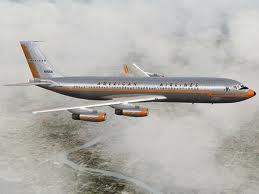
Alexander Graham Bell, about to call San Francisco from New York. (source)And, on this date 45 years later, in 1959, the aluminum market got a boost when the first non-stop transcontinental commercial jet trip was made by an American Airlines Boeing 707, from Los Angeles to New York. The sleek silver plane made the flight in airline official time of 4 hours and 3 minutes, half the usual scheduled time for the prop-driven DC- 7Cs then in regular use on that route.
#AlexanderGrahamBell #aviation #commodities #culture #economics #history #inflation #jet #jetPlane #manufacturing #prices #Technology #telephone #trade


Scopri il testo della canzone “Je t’haine” di PNL
#Pnl #JeT??Haine
https://daletra.online/pnl/testi/je-thaine.html


Why Fighter Jets Ban 90% of C++ Features
Enjoy the videos and music you love, upload original content, and share it all with friends, family, and the world on YouTube.

I made this as a tribute to those who can fly and to those who dream of flight. #thomasblackheart #fly #aviation #pilot #instrumental #music #flight #jet #nasa https://thomasblackheart.bandcamp.com/track/skywatch

#Greenpeace’in analizine göre, #Davos2025 haftasında havalimanlarında 709 ek özel #jet uçuşu gerçekleşti
Bu rakam, #Davos’a katılan yaklaşık her 4 kişi için bir özel jet uçuşu anlamına geliyor #SonDakika #Jet #Uçak #Emisyon

Avrocar: il titubante lancio del disco volante creato per scrutare dietro il fungo dell’ultimo Inverno
https://www.jacoporanieri.com/blog/?p=43714
#aerei #velivoli #dischi #ufo #progetti #canada #statiuniti #volo #aviazione #prototipi #invenzioni #idee #innovazione #forme #motori #jet #ingegneri #personaggi #storia #guerra fredda #intercettori #apocalisse #difesa #guerra #conflitti #armi #vtol



Game: X-Plane 11 (XP11)
Aircraft: Boeing 737 MAX 6 (Fictional)
Airline: Ryanair
Aircraft Registration: EI-HEJ 🇮🇪
Location: USA
Photographer: Pedro Felipe
Photo
3D
Aviation
Year: 2028
Photo Year: 2028
Date: March 31, 2028
#Game #XPlane #xplane11 #xp11 #aircraft #airplane #boeing #boeing737 #Boeing737MAX #Boeing737MAX6 #Fictional #USA #Aviation #Flight #Plane #Livery #3D #Airline #Ryanair #Year2028 #Photo2028 #Jet #Airliner #Airport

Client Info
Server: https://mastodon.social
Version: 2025.07
Repository: https://github.com/cyevgeniy/lmst