#FindsFriday #FerrousFriday: #Celtic #IronAge folding knife
Source: Natural History Museum Vienna
#FindsFriday

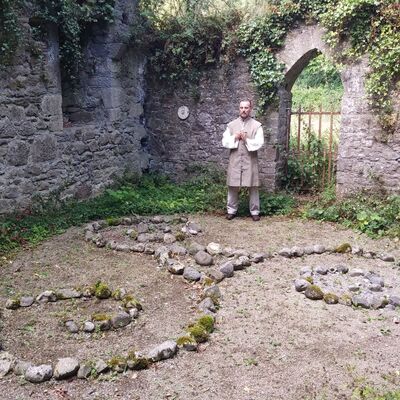
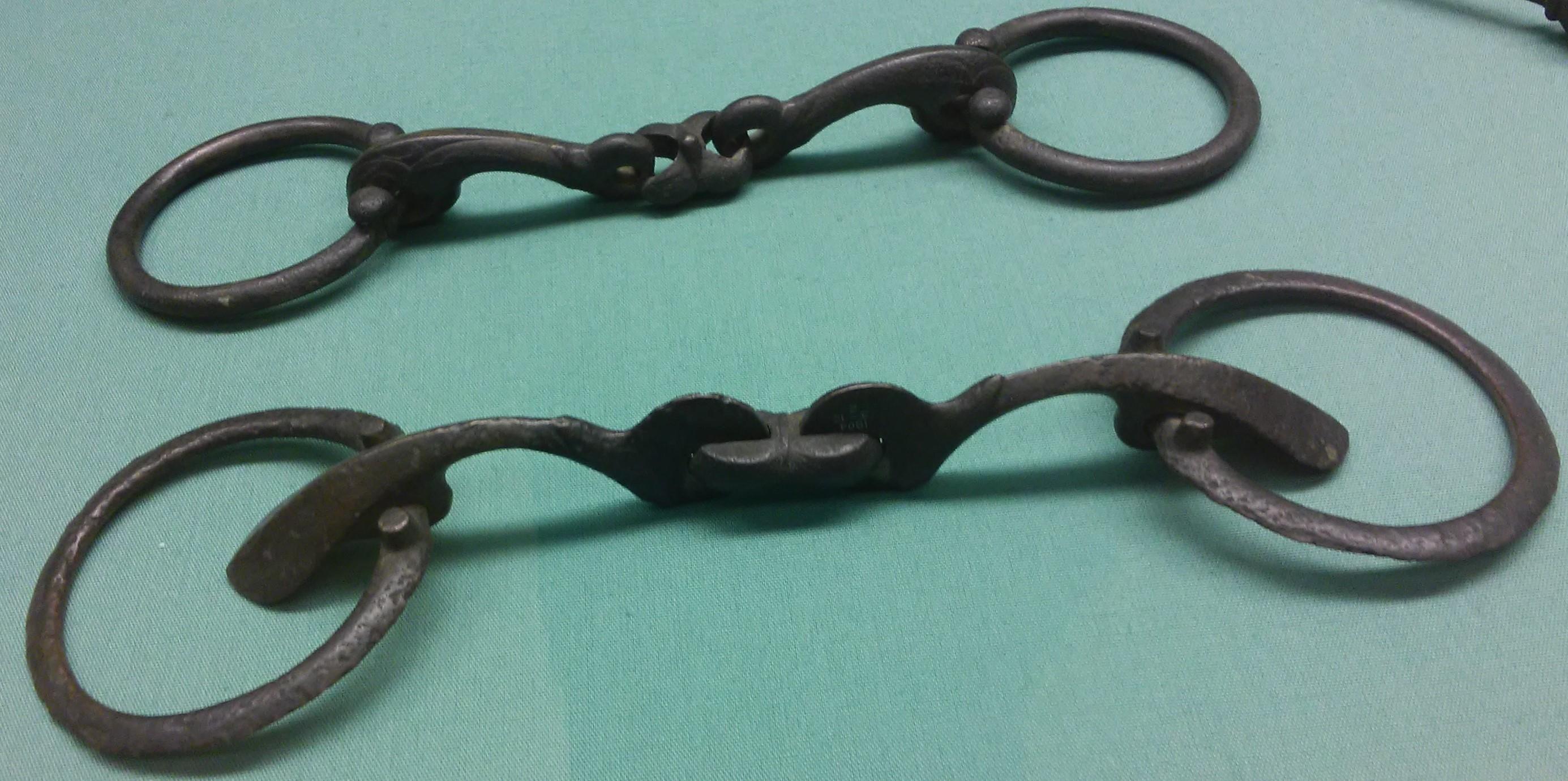
#FindsFriday #FerrousFriday: Recognisably different types of two-link bridle bits were developed in #Celtic #Ireland
Source: British Museum
#FindsFriday #FerrousFriday: #Celtic Bronze bull figurine with iron dorsal stripe and a triangular head ornament from Býčí skála Cave, Czech Republic, 800-400 BC.


Carnelian bead from Egypt carved into the shape of a hyena's head, with that distinctive ridge of fur on its neck. Unprovenanced, sadly, but now in the collection at the Garstang Museum of Archaeology.
Oh, one other thing ... it's literally a centimetre big ... 🤯🔬
This is actually a composite image made from 111 photos, using focus stacking and exposure bracketing. Photographed in 2002 for my #TinyEgypt project. Photo © me.
#FindsFriday #Egyptology #MacroPhotography #MuseumPhotography


Mirror, mirror... in your hand!
For today’s #FindsFriday we peek into daily life in #Roman Fischamend in the 1st c. AD. At a recent excavation, we discovered this 10 cm hand #mirror, likely made of #silver. Both sides are polished - the front is smooth and the back shows a design of concentric grooves 🤩
Imagine the Roman faces this mirror has reflected ✨ Who held it, and what stories it has seen over centuries?
#Archaeology #RomanArchaeology #History #Austria #Museum #RomanEmpire

#FindsFriday #FerrousFriday: #Celtic Iron torc, Marson, British Museum, photocredit 1. Neu-Kelte

One of the Lewis Chessmen - currently on display at the National Museum of Scotland in Edinburgh. Found in 1831 on a beach at Uig on the Isle of Lewis in the Outer Hebrides, the Chessmen dates to the late 12th or early 13th century. 📸 My own. #FindsFriday #LewisChessmen #NMS

This find dates the shrine at Bath being in use in AD 76. This fragment of an inscription gives the 7th consul year of Emperor Vespasian, who ca.e to power in AD 69. #FindsFriday

#FindsFriday #Celtic: `A unique discovery has been a hoard of 70 silver coins found buried in a small clay pot in the middle-bailey courtyard of Devin Castle. The coins imitate the design of the denarii and quinarii of the Roman Republic.
Thirty-six of them are inscribed "RAVIS" or "IRAVISCI", one reads "ANSALI" and 33 coins are without inscription.`
Source: Slovenské národné múzeum, Bratislava

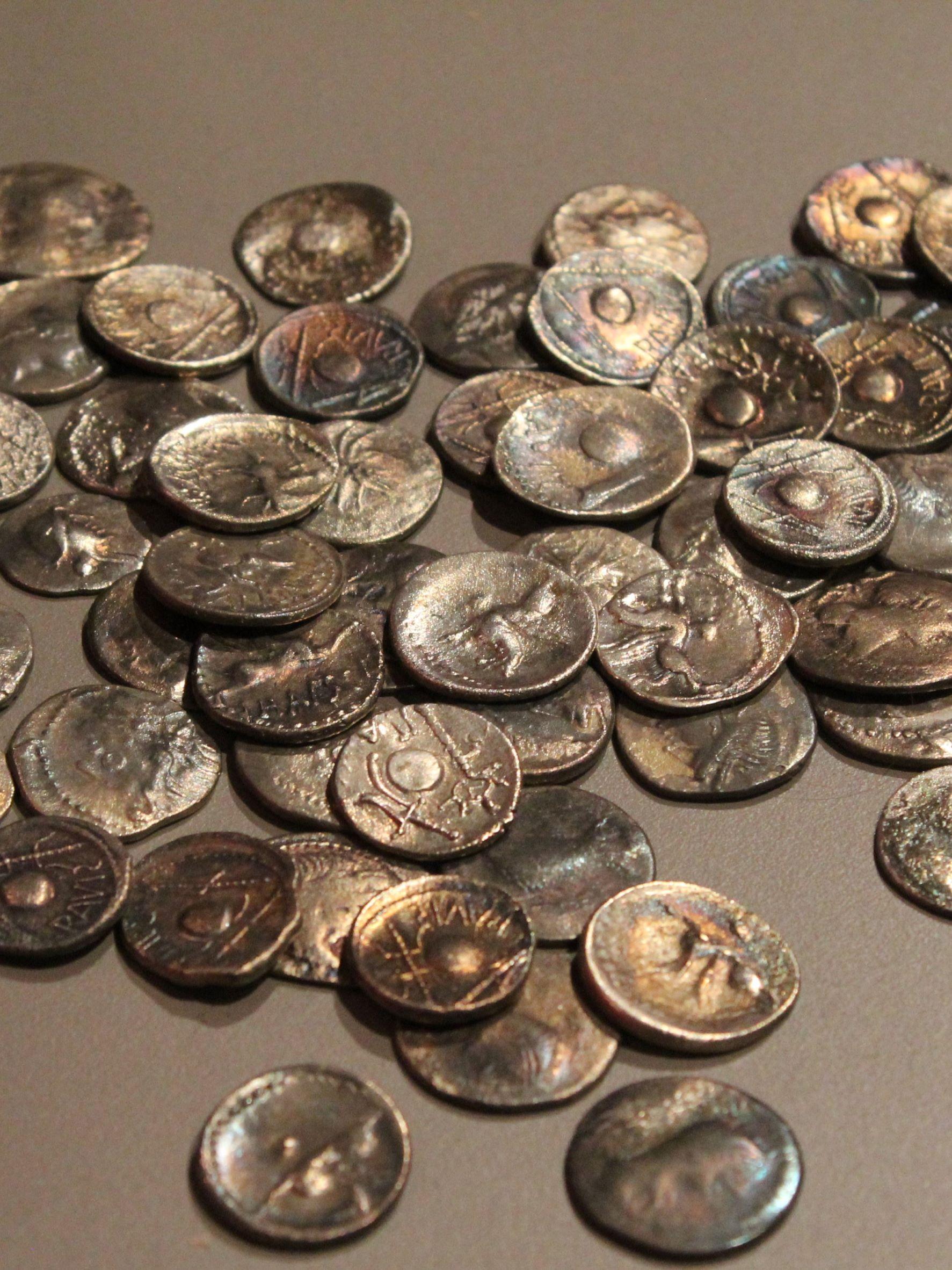
#FindsFriday: `A hallmark of the Bratislava tetradrachmae with their weight of up to 17 g is their lavish iconography and exquisite craftsmanship. The broad range of the image motifs, symbols and decorations, found on the obverse and reverse sides of the coins, is a fine reflection of the spiritual life of the Bratislava Celts. Besides bearing witness to their lifestyle and beliefs, they also give a glimpse of the myths, mythological figures and tales of the period. Creators of the imagery were greatly inspired by the Roman mintage of the Republican Period, especially in the obverse designs of the tetradrachmae. Inspiration for the reverse-side designs came mainly from classical Hellenistic and Oriental artistic sources, with the foreign motifs enriched with indigenous #Celtic artwork. The Celtic coin scripts made in Latin capital letters are the earliest evidence of the use of writing in the territory of present-day Slovakia.`
Source: Slovenské národné múzeum, Bratislava


#FindsFriday #Celtic: `Besides tetradrachmae, the local mints produced drachmae too (the so-called Simmering type); on these, however, just a single name has been found: NONNOS.`
Source: Slovenské národné múzeum, Bratislava
found in present-day Bratislava, SNM, photo credit 1. Neu-Kelte


#FindsFriday 🐲 On an excavation in Fischamend Dorf near St. Stephan Cemetery, #SilverPfennigs from the High & Late #MiddleAges were found!🪙 Some stuck together, making them tricky to separate - though it is possible to make out lively motifs of dragons, panthers, eagles, roosters, winged lions & griffins!🦁
#Coins #Medieval #LateMedieval #Archaeology #HicSuntDracones #MedievalCoins
📸 1–2 ÖAW, IKANT | 3 G. Bajc, Novetus GmbH


What does it feel like to walk in the 80 thousand year-old footprints of our Neanderthal cousins? Amazing!!
Come visit two of only eight sites in the world! 👣❤️🇵🇹
#Neanderthal #AncientHumans #Prehistory #Portugal #archaeology #findsFriday #Paleolithic
#FindsFriday #Celtic: `Many of the Bratislava tetradrachm names have title-related suffixes - either the „-rix“ suffix (meaning „a king“ or „ a commander“): AINORIX; EVOIVRIX; FARIARIX, or the „-marus“ suffix („great“ or „important“): BVSSUMARVS; COBROVOMARVS; COVIOMARVS; IANTVMARVS. Such names testivy that the oppidum leaders were prominent personalities. Other names may also found on the local tetradrachmae: BIATEC, COISA, COVNOS, DEVIL, MACCIVS, NONNOS and TITTO.`
Source: Slovenské národné múzeum, Bratislava


A hunting scene from the 6th century Bromeswell Bucket which was manufactured in the Eastern Mediterranean. The bucket was found at a site near Sutton Hoo in 1986, and is now part of the collections at Sutton Hoo in Suffolk. 📸 My own. #FindsFriday #SuttonHoo #Suffolk

An altar or decorated column fragment from near macellum in the Roman centre of Ratae, the modern Leicester. Depicting a man with a cap. Now in the Jewry Wall Roman experience. #FindsFriday

#FindsFriday #Celtic: `To date, fifteen types of inscriptions have been found on the Celtic coins in Bratislava. The most frequent one is BIATEC, which was also adopted as a generic name for the entire family of local coins - "biatecs". Linguistic analyses and analogies from the neighbouring province of Noricum indicate that the inscriptions were names of persons – the oppidum leaders. Like in Gaul, these chieftains were elected by a council of elders and held a one-year government office in pairs, with divided powers: the official known as vergobret exercised general powers, while the other - arcontodan, was responsible for finances, including coin mintage.`
Source: Slovenské národné múzeum, Bratislava

#FindsFriday #Celtic: `Clear evidence of the minting efforts of the Celts in south-western Slovakia is, in particular, their coinage discovered in Bratislava. The concentration of finds of such coins in Bratislava and its close neighbourhood suggests that their origin was probably associated with the operation of a local mint. Typical examples of coins minted in Bratislava were golden staters with the inscription BIATEC, weighing 6 grams, and their fractional denominations, often with the text abbreviated to BIAT, as well as large silver tetradrachmae (17 g) and their subunits: didrachmae weighing 6 grams, and drachmae of the so called Simmering type (2.5 g).`
Source: Slovenské národné múzeum, Bratislava


#FindsFriday #Celtic: `The cockleshell staters were not the first produced by the Celts in the region. Back in the 3rd century BC, prior to the foundation of the Bratislava oppidum, silver tetradrachmae and small nominals had already been minted by inhabitants of earlier Celtic settlements in the south-west of Slovakia. The obverse side of these coins displayed the head of Apollo, while the reverse bore the image of a lyre (the main attribute of this god) and a horse rider, or in some cases, only a horse. At that time the cockleshell staters began to be struck by the Boii living in the fortified oppidum in neighbouring lands of today's Moravia and Bohemia. With their circulation promoted by the Boii, the convex gold coins eventually spread across the entire Middle Danube region.`
Source: Slovenské národné múzeum, Bratislava

Volunteering again at the university. Classifying glass from Bradgate House. #FindsFriday

Client Info
Server: https://mastodon.social
Version: 2025.07
Repository: https://github.com/cyevgeniy/lmst