Getting Started with Salesforce Data Cloud: Your Roadmap to Unified Customer Insights
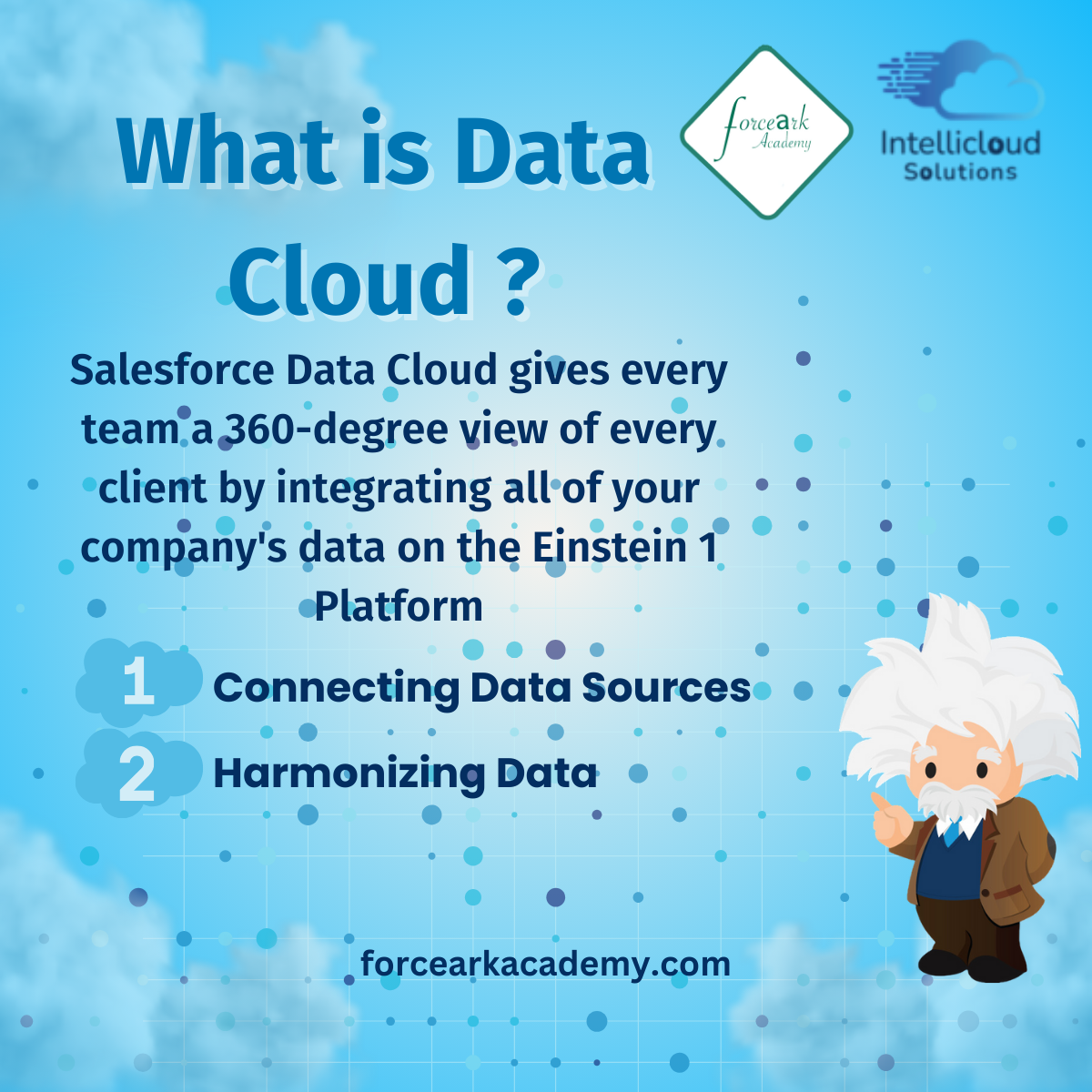
It’s not uncommon for businesses to lose track of their customers when data lives in too many places. Data scattered across various systems, from CRM and marketing automation to e-commerce platforms and mobile apps, creates “data silos” that hinder a complete understanding of customer behavior and preferences. This leads to misleading metrics, redundant communications, and missed opportunities for truly personalized engagement. This is where Salesforce Data Cloud steps in, offering a solution to connect, harmonize, and activate all your customer data, transforming it into actionable insights.
Evolving from Salesforce CDP (Customer Data Platform) and formerly known as Genie, Salesforce Data Cloud is designed to create a unified picture for your customer. It enables you to bring together data from any source, regardless of its format, using low-code tools and advanced architectural foundations like the lakehouse architecture and Hyperforce. The ultimate goal is not just data aggregation, but also to empower every part of your organization, from marketing and sales to service and commerce, with real-time, intelligent actions.
This guide will walk you through the essential phases of getting started with Salesforce Data Cloud.
Why Data Cloud? The Core Problem It Solves
The primary challenge Salesforce Data Cloud addresses is the elimination of data silos. Imagine a customer interacting with your brand through multiple touchpoints: they browse your website, sign up for a newsletter, make a purchase through your e-commerce platform, and contact customer service. Each interaction generates data, but this data often resides in separate systems each managed by different teams or individuals. Without a unified view, you might send generic emails, offer irrelevant products, or even annoy customers with redundant communications because you don’t recognize them as the same individual across all these systems.
Data Cloud provides a unified picture by ingesting data from diverse sources, including Salesforce CRM, Marketing Cloud, Commerce Cloud, Amazon S3, Google Cloud Storage, Azure, Workday, and SAP, using a rich library of pre-built connectors or flexible APIs. This consolidation is crucial for building unified customer profiles that represent a complete, 360-degree view of each individual, avoiding misleading metrics and improving personalization.
Beyond just collection, Data Cloud is built to make data actionable. It enables you to perform transformations and aggregations to generate calculated insights (e.g., Customer Lifetime Value, engagement scores), segment your audience with precision, and trigger real-time actions across various channels. Its architecture, based on a lakehouse model on Hyperforce, supports high-volume data ingestion and processing at the metadata level, ensuring efficiency and scalability.
It’s also important to note Data Cloud’s consumption-based pricing model, where you pay only for the services you use, making efficient data management even more critical. Despite the improvements made over the recent years, the estimation of Data Cloud costs remains to be a challenge.
Phase 1: Planning and Discovery – Laying the Groundwork
Any successful Data Cloud implementation begins with a meticulous planning and discovery phase. This foundational step ensures alignment with business goals and prepares the ground for effective data management. Data Cloud is a platform where most of the time of the implementation needs to be spent on preparation and design. Expediting these phases can be costly causing rework and frustration.
Define Business Objectives and Use Cases
Before diving into technicalities, ask fundamental questions:
- Why are you starting a data platform solution?
- What is the vision for this Data Cloud solution?
- What are your primary use cases, and are they aligned with top business priorities?
- How will you measure the success of the implementation?
For optimal results, start small. Focus on one or two core use cases initially. This iterative approach allows you to:
- Identify platform nuances.
- Understand source systems and their data quality.
- Develop robust data dictionaries.
- Monitor use cases, then expand.
Ultimately, you should catalog the available data and build a prioritized list of use cases based on their tangible business value.
Understanding Roles and Ownership
A Data Cloud implementation necessitates a strong partnership between IT and marketing/business teams. Clearly define who owns what:
- CDP Administrator/Platform Owner: Manages the Data Cloud platform.
- Data Roles: Responsible for creating data pipelines.
- Marketing Roles: Focus on audience creation, campaign execution, and strategy.
- Customer Insights and Analytics Teams: Leverage the unified data for reporting and analysis.
Align these roles with your organization’s existing structure to ensure all necessary stakeholders are involved from the outset.
Data Inventory and Quality
This is arguably the most critical aspect of planning. Prepare a thorough data dictionary or inventory that comprehensively lists all data sources, preferred ingestion methods, necessary transformations, and how they relate to your defined use cases.
- Field-Level Data Inspection: Scrutinize individual fields for accuracy, identify primary keys, and assess whether data needs normalization or denormalization.
- Data Profiling Tools: These are invaluable for understanding your data. They can analyze field distribution, completion rates, and help identify relevant fields. Profiling helps confirm if your approach will stay within free credit limits and accelerates the design phase.
- Clean Data Upstream: It cannot be stressed enough: clean and sanitize your data at the source system before ingestion. Data Cloud is a unification tool, not primarily a data cleansing or deduplication tool. Ingesting bad or unnecessary data can significantly increase credit consumption and lead to inaccurate results.
- Prioritize Data: Avoid the common pitfall of trying to bring in “all the data”.
- Data Type Alignment: For Zero-Copy integrations, ensuring data type alignment between your source schema (e.g., Snowflake) and Data Cloud’s data model objects (DMOs) is crucial to prevent mapping issues.
- Unique Keys: Data Cloud operates on an upsert (update or insert) model. Ensure every row in your data files has a unique key (either a single field or a composite key) to prevent incorrect merging of records during ingestion.
Phase 2: Architecture and Setup – Building the Foundation
Once the planning is complete, the next phase involves architecting and setting up Data Cloud to receive and process your data.
Connector Selection and Data Ingestion
Salesforce Data Cloud offers flexible ways to ingest data:
- Out-of-the-Box (OOTB) Connectors:
- Prioritize using OOTB connectors for Salesforce CRM, Marketing Cloud, Commerce Cloud, Amazon S3, Google Cloud Storage, and Azure. These are pre-built and minimize effort.
- Ingestion API (Batch vs. Streaming):
- Batch Ingestion: Ideal for front-loading historical data or ingesting large volumes at scheduled, off-peak hours. Data is typically sent in CSV format.
- Streaming Ingestion: Designed for near real-time ingestion of small batches of data, such as user actions on websites or POS system events. Data is typically sent in JSON format.
- Setup Process: First, create an Ingestion API connector, which defines the expected schema and data format. Then, create a data stream for each object you intend to ingest through that connector.
- Authentication: Secure API calls require setting up Connected Apps in Salesforce, leveraging OAuth flows like JWT for authentication.
- API Limits: Be aware of limitations, such as 250 requests per second for streaming APIs and a 200 KB payload size per request. These are important for designing your ingestion strategy.
- Schema Mistakes: If you get a data type wrong in your schema, you generally cannot change it directly after creation.
- Web & Mobile SDK:
- Developers specifically tailor these SDKs to capture interaction data from websites and mobile applications, such as page views and clicks.
- Key Benefits: They come with built-in identity tracking (managing both anonymous and known user profiles) and cookie management, simplifying the process of linking anonymous activity to known profiles once a user identifies themselves.
- Consent Management: The SDKs also include integrated consent management, ensuring data is only collected and used with user permission.
- Sitemap: A powerful feature that allows for centralized data capture logic across multiple web pages, reducing the need to embed code on every page.
- Experience Cloud Integration: For Experience Cloud sites, a new integration feature provides a data kit that simplifies setup and automatically captures standard events.
- SDK vs. Ingestion API for Web: For web and mobile applications, the SDK is generally preferred over the Ingestion API because it handles authentication more securely (no client-side exposure) and streamlines data capture.
- Zero-Copy Integration:
- This revolutionary feature allows Data Cloud to directly access live data stored in external data lakes and warehouses like Snowflake, Databricks, Google BigQuery, and AWS (S3, Redshift) without physically moving or duplicating the data.
- Advantages: Offers near real-time data access, eliminates data duplication, and extends the value of existing data lake/warehouse investments.
- Important Considerations: Data type alignment between your source system and Data Cloud is critical for successful mapping. Also, be prepared for network and security configurations (e.g., VPC, IP whitelisting) to ensure secure connectivity between Data Cloud (hosted on AWS) and your external cloud environments.
Data Harmonization and Modeling
After data is ingested into Data Cloud, it enters the harmonization and modeling stage:
- Data Lake Objects (DLOs): When data first enters Data Cloud, it’s stored in DLOs, which are essentially raw, un-transformed representations of your source data.
- Data Model Objects (DMOs): DMOs represent Data Cloud’s canonical data model. The next crucial step is to map your DLOs to DMOs, transforming the raw data into a standardized structure that Data Cloud understands and uses for downstream processes.
- Standard vs. Custom DMOs/Fields: Data Cloud provides standard DMOs (e.g., Account, Contact, Individual). Leverage these where possible. For unique business requirements or custom fields from your source systems, you have the flexibility to create custom DMOs or add custom fields to standard DMOs.
- Formula Fields: These are powerful tools within Data Cloud, similar to Salesforce CRM formulas. Use them to augment your data (e.g., create composite unique keys for identity resolution) or cast data types if mismatches occurred during ingestion.
- Interim DLOs: In complex scenarios, consider creating “interim DLOs.” These can be used as an intermediate step to maintain additional business context, perform standardization, or scrub data before it’s mapped to the final target DMOs.
- Data Categories: When setting up data streams, you assign a category to the data, which influences how it’s used:
- Profile Data: Contains identification information (like name, email, address) and is crucial for identity resolution.
- Engagement Data: Represents event-driven interactions (e.g., website clicks, purchases, mobile app logins). This data is typically used for aggregated statistics and behavioral insights.
- Other: For data that doesn’t fit neatly into the above categories.
- Data Spaces: Data Cloud allows you to logically separate data using data spaces. These function similarly to business units in Marketing Cloud, enabling you to manage data for different regions, brands, or entities, and ensuring compliance with regulations like PDPA, GDPR, or CCPA by controlling data visibility and access.
- Relational Model: Maintain a comprehensive data dictionary that details your entire data model, including relationships between DLOs and DMOs.
Phase 3: Unification
With your data ingested and harmonized, the next critical phase is unification, where disparate customer profiles are brought together into a single, comprehensive view.
Identity Resolution
Identity Resolution is the core capability that enables Data Cloud to build a single, unified customer profile from various data sources. This process is crucial to:
- Avoid inflating your customer metrics.
- Prevent sending redundant communications.
- Enhance personalization across all touch points.
The identity resolution process is typically two-fold:
- Matching Rules: These rules define the criteria for identifying when different records belong to the same individual. Examples include using fuzzy matching for first names (allowing for minor variations), exact matching for last names and email addresses, or linking records based on social handles.
- Party Identification Model: Leverage external identifiers like loyalty member IDs or driver’s license numbers to enhance matching accuracy. This model helps link profiles across systems that might not share common direct identifiers.
- Required Match Elements: Be aware of specific requirements when unifying accounts or individuals.
- Reconciliation Rules: Once potential matches are identified, reconciliation rules determine which attribute values will represent the unified profile. For instance, if a customer has multiple email addresses across different source systems, you can define rules to select the “most frequent” email, or prioritize data from a “source of truth” system.
Key Considerations for Identity Resolution:
- Thorough Data Understanding: A deep understanding of your data, including unique IDs, field values, and relationships, is paramount for configuring effective matching and reconciliation rules.
- Start with Unified Profiles Early: Even if your initial match rates are low, begin building calculated insights and segments against unified profiles from the outset. This prepares your Data Cloud environment for seamless integration of new data sources in the future.
- Credit Consumption: Identity resolution is a credit-intensive operation (e.g., 100,000 credits per million rows processed). While incremental processing is improving efficiency, careful planning of how often identity resolution runs is essential to manage costs.
- Anonymous Data: By default, the Marketing Cloud Personalization connector sends events only for known users. Enabling anonymous events drastically increases data volume and credit consumption, and you should note that Data Cloud doesn’t reconcile anonymous events to known users out of the box. You’ll need to implement custom solutions for that reconciliation.
- Data Quality is Paramount: The success of identity resolution hinges on the quality of your incoming data. If your source systems contain “garbage” (inaccurate or inconsistent data), your unified profiles will reflect that. Therefore, prioritize cleaning your source data before bringing it into Data Cloud.
Phase 4: Activation – Turning Data Into Actions
The final, and arguably most impactful, phase is activation. This is where you use your unified, intelligent data to drive personalized customer experiences and automate workflows across various channels.
Calculated Insights
Calculated Insights allow you to perform aggregations and transformations on your data to derive meaningful metrics. These can include:
- Customer Lifetime Value (LTV)
- Engagement Scores
- Total Deposit per Month
- Propensity to Buy
These insights enrich your unified customer profiles, providing deeper understanding and enabling more sophisticated segmentation and personalization strategies.
Segmentation
Data Cloud’s segmentation capabilities enable you to create dynamic audience segments based on any harmonized attribute or calculated insight. This allows for precise targeting of specific customer groups.
- Building Segments: Use the intuitive segment builder to drag and drop fields and apply criteria. You can combine rules with AND/OR logic to refine your audience.
- Nested Segments: This feature allows you to incorporate one segment within another. However, be mindful of limitations, such as a maximum of 50 filters per segment.
- Publishing: Publish segments to various activation targets. While Marketing Cloud Personalization supports only “standard publish,” other targets might allow “rapid publish” for faster audience delivery.
Activation Targets and Activations
After creating segments or calculated insights, you define activation targets, the destinations where you send this actionable data. Data Cloud offers broad activation capabilities:
- Marketing Cloud: Push segments into Marketing Cloud data extensions for email personalization and Journey Builder entry events. You can also use Data Cloud data to influence different journey paths within Marketing Cloud, for example, by attaching custom attributes to Contact Builder.
- Advertising Platforms: Directly send customer segments to major advertising platforms like Google, Meta, and Amazon for targeted campaigns.
- Salesforce Flow: Initiate real-time Salesforce automation (Flows) based on data changes, calculated insights, or streaming events processed by Data Cloud. You can configure this via Data Actions.
- Webhooks: Data Actions can also trigger webhooks to send data to virtually any third-party system.
- Data Lakes & Warehouses: Securely share harmonized profiles, segments, or insights back to external platforms like Snowflake, Databricks, or Google BigQuery.
- Business Applications: Push unified data or activate segments directly into other downstream business applications like ERP systems or other analytics tools.
Platform Monitoring
Consistent monitoring of your Data Cloud platform is crucial post-implementation. This includes:
- API Ingestion Monitoring: Track data flow from MuleSoft or other APIs to Data Cloud.
- Segment Publications: Verify that segments are publishing correctly and yielding expected results. Issues can occur if upstream data ingestion or unification breaks.
- Activations: Ensure data is successfully reaching its intended activation targets.
- Status Alerts: Subscribe to status.salesforce.com for updates on your instance to stay informed about any maintenance or performance degradations.
Key Lessons Learned & Continuous Evolution
Salesforce Data Cloud is a dynamic product that undergoes rapid evolution, with new features and changes rolling out frequently, often on a monthly basis, outside of the major seasonal releases. Staying current is key to maximizing your investment.
Key lessons from real-world implementations:
- Stay Connected: Maintain close communication with your Salesforce account team, participate in partner Slack channels, and engage with Trailblazer communities. This helps you stay informed about upcoming features, pilot programs, and best practices.
- Non-Reversible Data Ingestion: Be extremely diligent in your planning, especially regarding data types and unique keys. Correcting bad data types or core stream elements after you ingest and activate data is highly difficult and often requires you to delete downstream segments, calculated insights, and even DLO/DMO mappings to re-implement. Plan ahead to avoid costly rework.
- Marketing Cloud Connector Caution: The Marketing Cloud connector will bring in all subscriber data from your Marketing Cloud instance, including data from multiple business units. This can significantly impact your profile counts and potentially lead to overages if not anticipated and managed. Understand what’s in your “all subscribers” table before connecting.
- Consumption Costs: Data Cloud operates on a consumption-based model, so every operation has a cost.
- Data Ingestion: Volume of data ingested directly impacts cost.
- Batch Transforms: These process the entire dataset for every execution, potentially burning significant credits even if data hasn’t changed.
- Identity Resolution: This is a credit-intensive process.
- Segmentation: Publishing segments also consumes credits. Carefully plan your data volumes, refresh schedules, and automation frequencies to manage and optimize credit consumption.
- Zero-Copy Considerations: While revolutionary, ensure data type alignment between your source systems (e.g., Snowflake, Redshift) and Data Cloud. Also, factor in time for network and security setup for private connections between cloud environments.
- Optimize Journeys for Data Cloud: Instead of trying to force Data Cloud activations into existing, potentially inefficient Marketing Cloud Journey structures, take the opportunity to remediate and optimize your journeys for best practices aligned with Data Cloud’s capabilities.
- Data Cloud is NOT a Cleansing Tool: Reiterate this fundamental point: Data Cloud is primarily a data unification tool, not a data cleansing tool. It is your duty to ensure your source data is clean and accurate before it enters Data Cloud.
- No Master Data Management (MDM) Solution: Data Cloud adopts a “key ring” approach to identity, focusing on linking various identifiers to a unified profile, rather than aiming to be a traditional “golden record” MDM solution.
- Consent Management: The Web SDK includes built-in consent management. If you are using the Ingestion API, you will need to implement custom solutions to handle user consent requirements.
- AI Integration: Data Cloud offers robust AI capabilities. You can build your own regression models using Einstein Studio with your Data Cloud data, or integrate external AI models from platforms like Amazon SageMaker, Google Vertex AI, Data Bricks, and even large language models from OpenAI or Azure OpenAI. This enables predictive analytics and smarter decision-making.
Conclusion
Salesforce Data Cloud represents a significant step forward in leveraging customer data. By breaking down silos, unifying profiles, and providing powerful activation capabilities, it empowers businesses to deliver hyper-personalized experiences and drive intelligent actions across their entire enterprise.
To get started, you need to take a strategic approach, plan carefully, understand your data deeply, and commit to continuous learning as the platform evolves. By prioritizing use cases, ensuring data quality upstream, and leveraging the diverse ingestion and activation methods, you can successfully implement Data Cloud and unlock the full value of your customer insights. The journey may present challenges, but a truly unified and actionable customer view – once implemented and maintained effectively – will be a precious asset for your business.
Explore related content:
Bring Customer Data into Slack with Salesforce Channels
How to Earn the Salesforce Data Cloud Consultant Certification
Can You Use DML or SOQL Inside the Loop?
How to Quickly Build a Salesforce-Native Satisfaction Survey Using SurveyVista
#DataCloud #MarketingCloud #Salesforce #SalesforceAdmins #SalesforceDevelopers