
The disproportionately long legs of giraffes evolved primarily to mitigate the severe cardiovascular burden and high blood pressure required to pump blood against gravity to their elevated brains.
#Zoology #EvolutionaryBiology #ComparativePhysiology #Biomechanics #sflorg
https://www.sflorg.com/2026/02/zoo02202601.html
#ComparativePhysiology

Could the newborn warty birch caterpillar be one of the world's smallest, and youngest, territorial critters, and how do impaired arachnids cope when suddenly relieved of a couple of limbs?
Find the answers to these and many other fascinating questions in the JEB 2025 highlights collection

Meet our Editors at the JEB stand during the coffee break at 10:30 tomorrow (14 May) at the CSZ conference. Find out from Pat Wright, Katie Gilmour & Trish Schulte what we do that makes @J_Exp_Biol the best place to publish your #comparativephysiology and #biomechanics research

In his ECR Spotlight, Sulayman Lyons explains how learning about the natural world led to an appreciation for the feats animals perform, what he likes so much about research & why cheetahs are his favourite animal
https://journals.biologists.com/jeb/article/227/7/jeb247765/346530

In his ECR Spotlight, Jordan Glass recalls how attending the SICB annual meeting as a Master's student inspired him to take up environmental physiology and how he overcomes his aversion to writing by setting aside time each day for writing projects
#science #biology #zoology #comparativephysiology
https://journals.biologists.com/jeb/article/227/7/jeb247756/346494

It's chilly up in the mountains and Sulayman Lyons & Grant McClelland have discovered that deer mice that make their homes on mountain tops burn fat in brown adipose tissue to keep warm, rather than shivering like their low altitude cousins
#science #biology #zoology #comparativephysiology
https://journals.biologists.com/jeb/article/227/7/jeb247818/346531

Do honey #bees adjust their metabolic rate depending on the air temperature? Some thought not but others thought they did. Now Jordan Glass & Jon Harrison show that the bees do adjust their metabolic rates to ensure that their #muscles always run smoothly
#science #biology #zoology #entomology #comparativephysiology
https://journals.biologists.com/jeb/article/227/7/jeb247741/346493

In our relaunched Conversation series, Frank van Breukelen tells us about the the common tenrec, which defies the physiology rule book by #hibernating at a body temperature of 28C while also being capable of being active with a body temperature of just 12C
#science #biology #zoology #comparativephysiology
https://journals.biologists.com/jeb/article/227/8/jeb247781/346529

In her ECR Spotlight, Harriet Goodrich tells us how a series of fortuitous events led her to join the Institute for Marine and Antarctic Studies in lutruwita as a lecturer and how building a supportive network of like-minded kind colleagues is essential for success
#biology #zoology #science #comparativephysiology
https://journals.biologists.com/jeb/article/227/7/jeb247554/346301

In their Commentary, Harriet Goodrich & co discuss the mechanisms underlying the rise in metabolism during digestion. Apparently protein synthesis is the main contributor
#comparativephysiology #science #zoology #Biology
https://journals.biologists.com/jeb/article/227/7/jeb246722/346302

New assistant professor, Amanda Bundgard, tells us how animals, & ectotherms in particular, tend not to experience toxic levels of oxygen radicals in response to oxygen fluctuations and how naked mole-rats are her favourite animal in her ECR Spotlight
#comparativephysiology #science #biology #zoology
https://journals.biologists.com/jeb/article/227/6/jeb247527/346303

In their recent Review, Bundgaard &co discuss how oxidative damage with variable oxygen levels is lower in ectotherms than endotherms due to intrinsic and plastic differences in their metabolism.
https://journals.biologists.com/jeb/article/227/6/jeb246549/346305

In her ECR Spotlight, Ayaka Saito tells us how her desire to study wild animals led her to the field of biologging, how the ECG is allowed her to investigate the changes in heart rate of diving loggerhead sea #turtles and why she loves #penguins
#science #biology #comparativephysiology #zoology
https://journals.biologists.com/jeb/article/227/5/jeb247433/344047

Jonaz Moreno reports on Villaseñor-Amador & co’s recent Animal Behaviour article showing that egg sack-carrying wolf spiders are still speedy but hot temperatures makes the largest ones slow down
https://journals.biologists.com/jeb/article/227/3/JEB246579/342682

In a recent Commentary, Alex Gunderson discusses how size-dependent thermal tolerance can arise without any differences in the temperature dependence of underlying physiological processes.
https://journals.biologists.com/jeb/article/227/5/jeb245645/344048

Dolphins are curious creatures, lifting their heads out of water to peer around, and now David Kramer & co have discovered that instead of altering the trajectory of their tailbeat as they stand up, dolphins beat their tails faster the higher they want to lift themselves above the surface
#biology #science #zoology #comparativephysiology #biomechanics
https://journals.biologists.com/jeb/article/227/5/jeb247535/344066
The full research is available at https://journals.biologists.com/jeb/article/227/5/jeb246228/344071

If you’re working in animal #comparativephysiology and biomechanics and are within five years of setting up your first lab/research group, apply for our ECR Visiting Fellowships and Research Partnership Kickstart Travel Grants. Next deadline for applications is 3 June 2024.

Andrew Saintsing reports on Ashouri & co’s recent Physiology & Behavior paper showing that male #tilapia can smell when a female is fertile by sniffing the bile acids released by a female fish’s feces.
https://journals.biologists.com/jeb/article/227/3/JEB246577/342680

Cristina Ottocento tells us in her ECR Spotlight that she loves being part of a diverse community of scientists, how she coped when the pandemic interrupted her research and why it is important to be resilient, kind and persevere
#science #biology #zoology #comparativephysiology #entomology
https://journals.biologists.com/jeb/article/227/3/jeb247280/343007

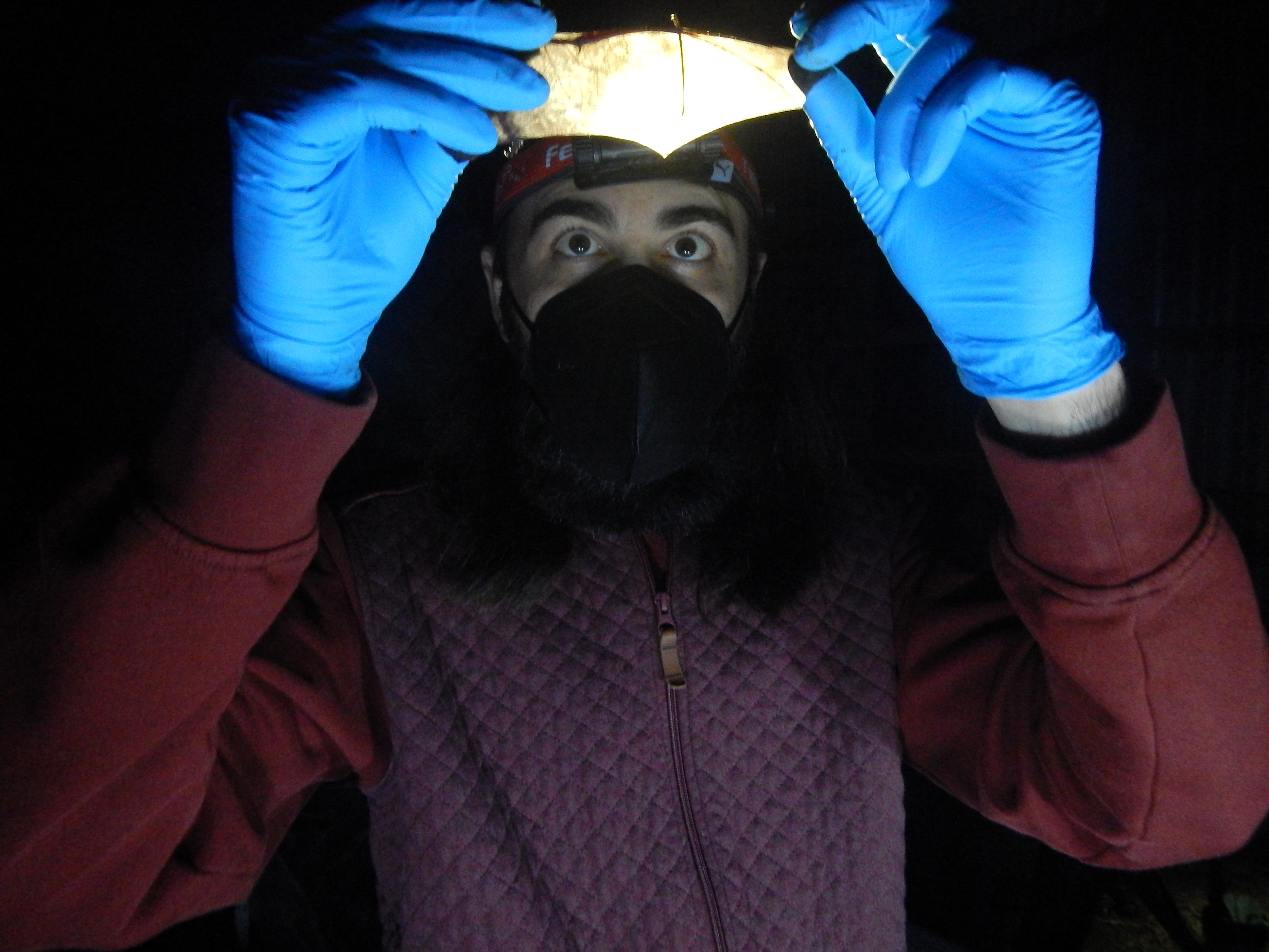
Congratulations to Mattina Along, Lucas Greville & co, whose paper Acute restraint #stress rapidly impacts reproductive neuroendocrinology and downstream gonad function in big brown #bats (Eptesicus fuscus), was the most read article published in October 2023
#biology #zoology #comparativephysiology #science
https://journals.biologists.com/jeb/article/226/19/jeb245592/330776
Client Info
Server: https://mastodon.social
Version: 2025.07
Repository: https://github.com/cyevgeniy/lmst