
Who's been to Bisbee Arizona?
.
#LavenderPit #BisbeeArizona #CopperMining #OpenPitMine #MiningHistory #IndustrialLandscape #ArizonaHistory #VintagePostcard #travel #Oldpostcards
#ArizonaHistory


Arizona State University: ASU launches groundbreaking database of Sonoran Desert archaeology . “The Digital Archive of Huhugam Archaeology, housed within tDAR, focuses on the archaeology of the ancient Sonoran Desert and the ancestors of the O’odham people living in central Arizona today.”

#OnThisDay, 30 May 1899, Pearl Hart (and Joe Boot) hold up a stagecoach in Arizona: it's one of just two recorded instances of a woman holding up a coach in the US.
#AmericanHistory #ArizonaHistory #WomenInHistory #OTD #History #WomensHistory #Histodons
Arizona Department of Transportation: Arizona Highways launches digital archive spanning 100 years. “With Arizona Highways magazine celebrating its centennial, subscribers now can peruse every issue, photograph and article thanks to a new digital archive with robust search features…. Whether you’re exploring the original Arizona Highways edition in April 1925 or something more recent, the […]
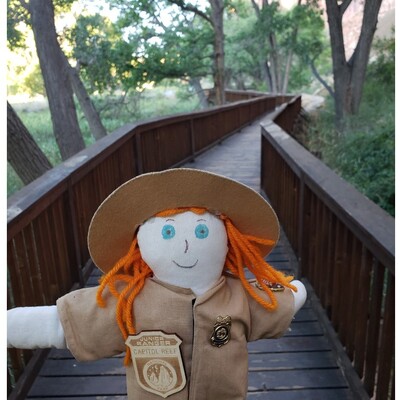
Ranger Sarah learns about the Anza Trail which passes by Tumacacori NHP. The Juan Bautista de Anza National Historic Trail commemorates the route traveled by settlers from Mexico to the San Francisco Bay Area.
— at Tumacácori National Historical Park.
#adventuresofrangersarah #rangersarah #nationalparks #nps #Arizona #arizonahistory #history #Tumacacori

Ranger Sarah walks through the orchard. Quite a few of the trees have fruit on them. The fruit trees that you see growing here today were started from seeds and cuttings of old cultivar fruit trees—the oldest trees that could be found in historic orchards and yards throughout southern Arizona. This replanted orchard was dedicated in 2007.
— at Tumacácori National Historical Park.
#adventuresofrangersarah #rangersarah #nationalparks #nps #Arizona #arizonahistory #history #Tumacacori

Ranger Sarah walks through the gate into the orchard at Tumacacori. Within this 4.6 acre enclosure, the community grew vegetables and fruit trees. Since there are few fruit trees native to this area, the orchard would have contained favorite trees brought to the mission from Europe such as peach, pomegranate, quince, and fig.
— at Tumacácori National Historical Park.
#adventuresofrangersarah #rangersarah #nationalparks #nps #Arizona #arizonahistory #history #Tumacacori

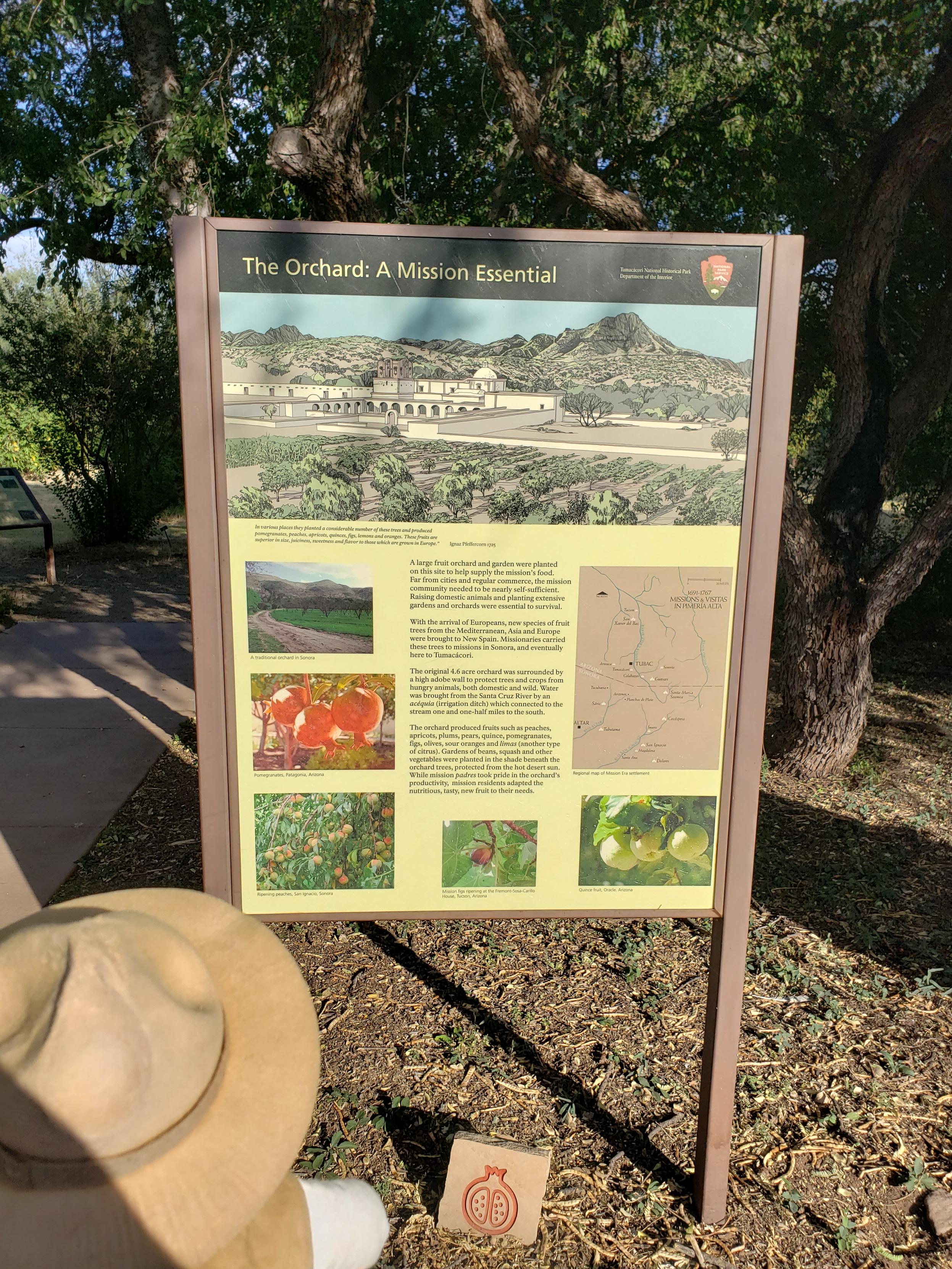
Ranger Sarah reads about the orchard at Tumacacori. The establishment of a mission brought new fruits, imported from Europe and considered essential to a “civilized” life by the priests and settlers. As farmers, the O’odham welcomed these new crops.
— at Tumacácori National Historical Park.
#adventuresofrangersarah #rangersarah #nationalparks #nps #Arizona #arizonahistory #history #Tumacacori
Ranger Sarah looks at what is left of the Acequia. The fired adobe structure is part of the acequia madre, the main irrigation channel that brought water to the mission from the Santa Cruz River a mile or more to the south.
— at Tumacácori National Historical Park.
#adventuresofrangersarah #rangersarah #nationalparks #nps #Arizona #arizonahistory #history #Tumacacori

Ranger Sarah approaches the Acequia. The all important water was taken out of the Santa Cruz River nearly a mile upstream to the south of here through a series of channels.
— at Tumacácori National Historical Park.
#adventuresofrangersarah #rangersarah #nationalparks #nps #Arizona #arizonahistory #history #Tumacacori

Ranger Sarah walks through the site where the mission garden was. While no garden grows here now, an irrigation system did bring water here.
— at Tumacácori National Historical Park.
#adventuresofrangersarah #rangersarah #nationalparks #nps #Arizona #arizonahistory #history #Tumacacori

Ranger Sarah enters the location of the Mission Garden. An irrigation channel can be seen just inside the trees.
— at Tumacácori National Historical Park.
#adventuresofrangersarah #rangersarah #nationalparks #nps #Arizona #arizonahistory #history #Tumacacori

Ranger Sarah is under the wa:ato (“WAH-ah-toe”), or mesquite ramada. Here she finds several Metate and Manos.
— at Tumacácori National Historical Park..
#adventuresofrangersarah #rangersarah #nationalparks #nps #Arizona #arizonahistory #history #Tumacacori

Ranger Sarah looks inside the Melhok Ki. The O’odham word for house is ki (“kee”). Melhok (“MOOro”) is the spiky plant known in Spanish and English as ocotillo. These houses were made of mesquite timbers, ocotillo sticks, saguaro ribs, and mud.
— at Tumacácori National Historical Park.
#adventuresofrangersarah #rangersarah #nationalparks #nps #Arizona #arizonahistory #history #Tumacacori

Ranger Sarah visits a Melhok Ki, a traditional O’odham dwelling, made of mesquite timbers, saguaro ribs, ocotillo sticks, and mud. Originally, the O’odham built round kis but later adopted the square rooms favored by the Spanish. A home would also include a juato (whä´ to), or shade ramada. See less
— Tumacácori NHP.
#adventuresofrangersarah #rangersarah #nationalparks #NPS #Arizona #arizonahistory #history #Tumacacori

Ranger Sarah stands inside the Convento Fragment. This fragment includes the rooms in which the priest likely resided. After the mission residents left, it was used as a house by various people and was even used as a school in the 1930’s during the early days of Tumacácori National Monument.
— at Tumacácori National Historical Park.
#adventuresofrangersarah #rangersarah #nationalparks #NPS #Arizona #arizonahistory #history #Tumacacori

Ranger Sarah walks up to the Convento Fragment. The standing ruin of a fragment of the convento includes the rooms in which the priest is likely to have lived.
— at Tumacácori National Historical Park.
#adventuresofrangersarah #rangersarah #nationalparks #NPS #Arizona #arizonahistory #history #Tumacacori

Ranger Sarah looks at the Jesuit Church Foundation. The outline that you see before you marks the footprint of the community’s first church, begun in the spring of 1753. The date of its completion is uncertain, but it is known to have been in use by the summer of 1757.
— at Tumacácori National Historical Park
#adventuresofrangersarah #rangersarah #nationalparks #NPS #Arizona #arizonahistory #history #Tumacacori

Ranger Sarah looks at the Lime Kiln. Here the limestone was cooked for several days over high heat until it could be pounded into a powder. The powder was made into a paste and applied to the adobe bricks.
— at Tumacácori National Historical Park.
#adventuresofrangersarah #rangersarah #nationalparks #NPS #Arizona #arizonahistory #history #Tumacacori

Ranger Sarah reads about the Lime Kiln. Lime plaster was used to protect adobe buildings from moisture. Tons of raw material (limestone boulders) had to be brought to the mission for processing so that a coat of plaster, often more than two inches thick, could be applied to the walls.
— at Tumacácori National Historical Park.
#adventuresofrangersarah #rangersarah #nationalparks #NPS #Arizona #arizonahistory #history #Tumacacori

Client Info
Server: https://mastodon.social
Version: 2025.07
Repository: https://github.com/cyevgeniy/lmst