#torii




Gray Snow
#大雪 #heavysnow #heavysnowfall #graysnow #止別神社 #yamubetsushrine #神社 #shrine #鳥居 #torii #鳥居がある風景 #斜里町 #sharitown #北海道 #hokkaido #日本 #japan #snowphotography #winterphotography #photography




Might be good to take a little break from Midwest winter scenes. Here's a photo of the torii of the Itsukushima shrine in Japan (ferry boat in the background).
#landscapephotography #boatphotography #miyajima #japantravel #itsukushima #itsukushimashrine #torii


Torii of Meiji Jingu Shrine Tokyo
#torii #shrine #tokyo #pentaxk1mkii #pentax #shootpentax #pentax_dfa28105
#torii #shrine #tokyo #pentaxk1mkii #pentax #shootpentax #pentax_dfa28105

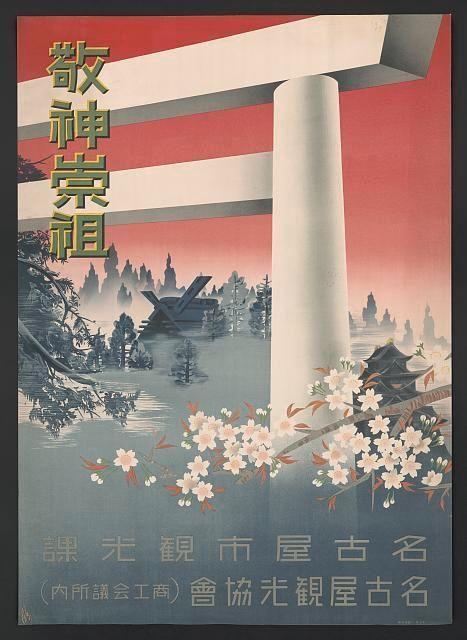
Keishin Sūso [ca. 1940]
1 print : color lithograph ; sheet 107 x 76 cm (poster format) | Poster for Nagoya-shi Kanko-ka & Nagoya Kanko Kyōkai (Nagoya City Tourism Department & Nagoya Tourism Association) shows Torii gateway and cherry blossoms with temples and forest in the distance.
#KeishinSūso #Kanko-ka&Nagoya #KankoKyōkai #Japanese #MeishoGenki #English #NagoyaCity #Nagoya-shiKanko-ka #japan #torii #temples #posters #color #cherryblossoms #lithographs #japanese #photopgraphy #LibraryOfCongress





Thousands of gates, thousands of wishes.
Each carries a prayer, a name, and a story etched in the glow of orange light. Fushimi Inari Taisha in Kyoto is one of those places where the spirit of tradition truly fills the air.
Fushimi Inari Shrine, Kyoto, Japan
#japan #kyoto #fushimiinari #torii #traveljapan #culture #asia #tradition #temple #shrine #travelphotography #wanderlust #sacredplaces #orangevibes
Each carries a prayer, a name, and a story etched in the glow of orange light. Fushimi Inari Taisha in Kyoto is one of those places where the spirit of tradition truly fills the air.
Fushimi Inari Shrine, Kyoto, Japan
#japan #kyoto #fushimiinari #torii #traveljapan #culture #asia #tradition #temple #shrine #travelphotography #wanderlust #sacredplaces #orangevibes

Design Milk : The Torii Bench by Placyle Follows the Path of the Sun https://design-milk.com/the-torii-bench-by-placyle-follows-the-path-of-the-sun/ #post-consumerrecycledplastic #recycledfurniturecollection #HomeFurnishings #100%recycledPET #homefurnishings #outdoorseating #100%recycled #outdoorbench #Toriigates #furniture #recycled #outdoor #Placyle #seating #bench #Torii #Main

Japanese Tarot deck: The Moon 🌙
#tarot #themoon #japan #ukiyoe #illustration #torii #kitsune #foxes #tarotart #tarotcollection
#tarot #themoon #japan #ukiyoe #illustration #torii #kitsune #foxes #tarotart #tarotcollection



#Japan #Torii #Shinto #JapaneseCulture #VisitJapan #JapanVibes #JapanPhotography #MinimalPhotography #ArchitecturePhotography #PhotoOfTheDay #PerspectivePhotography #TravelPhotographer


Spirituality & Religious Studiesspiritualityreligiousstudies.wordpress.com@spiritualityreligiousstudies.wordpress.com
2025-10-01Seven Lucky Gods
In Japanese mythology, the 7 Lucky Gods that are believed to grant good luck & are often represented in netsuke & in artwork. Netsuke is a miniature sculpture, beginning in 17th century Japan. 1 of the 7, Jurojin, is said to be based on an actual historical figure.
These deities mostly have their roots as ancient gods of fortune from religions popular in Japan like: from Mahayana Buddhism (Benzaiten, Bishamonten, Daikokuten, Hotei), which came to Japan via China but began in India; & from Chinese Taoism (Fukurokuju & Jurojin); the last 1 (Ebisu) is has a Japanese native ancestry.
In the beginning, these gods were worshipped by merchants as the first 2 (Ebisu & Daikokuten) were gods of business & trade. Other classes of Japanese society looked for gods that could parallel with their professions: Benzaiten as the patron of the arts, Fukurokuju as the patron of the sciences, etc.
In ancient times, these gods were worshipped separately. This rarely happens today. Only when it’s required for the specific god to act on behalf of the applicant.
The 7 Gods of Fortune started being mentioned as a collective in 1420 in Fushimi. This was in order to imitate the processions of the feudal lords, daimyos, of pre-modern Japan.
It’s said that Buddhist priest, Tenkai, picked these gods after speaking with the shogun he served, Iemitsu Tokugawa. This was at the order of seeking whoever possessed the perfect virtues: longevity, fortune, popularity, sincerity, kindness, dignity, & magnanimity. Shortly after this, Kano Yasunobu, a famous artist of the time.
List of the deities:
- Ebisu: From the era of the gods Izanami & Izanagi, Ebisu is the only 1 whose beginnings are purely Japanese. He’s the god of prosperity & wealth in business, & of plenitude & abundance in crops, cereals, & food in general. He’s the patron of fishermen & is shown with fishermen’s costumes such as a typical hat, a fishing rod in his right hand & a fish that is either a carp, a hake, a codfish, a sea bass, or any large fish. In general, that symbolizes abundance in meals, like a feast or banquet. It’s now common to see his figure in restaurants where fish is served in huge amounts of in household kitchens.
- Daikokuten: He’s the God of commerce & prosperity. He’s sometimes considered the patron of cooks, farmers, bankers, & a protector of crops. He’s also considered a demon hunter. Legend says that the god Daikokuten hung a talisman on the branch of a tree in his garden &, by using this as a trap, was able to catch a demon. This god is known for his smile, his short legs, & the hat on his head. He’s usually shown with a bag full of valuable objects. Daikokuten’s popular imagery started as a syncretic conflation of the Buddhist death deity, Mahakala, with the Shinto deity, Okuninushi. Syncretic conflation is a blending of different belief systems practices or traditions into a new, single, & often confusing or contradictory whole. The Japanese name Daikoku is a direct translation of the Sanskrit name Mahakala, which means “Great Blackness.” Per the Butsuzozui compendium of 1690, Daikoku can also manifest as a female known as Daikokunyo (literally, She of Great Blackness) or Daikokutennyo (literally, She of Great Blackness of the Heavens).
- Bishamonten: Bishamonten’s origins can be traced back to Hinduism. But he has been adopted into Japanese culture. He comes from the Hindu god Kubera & is also from the name Vaisravana. He’s the god of fortune in war & battles. He’s also connected with authority & dignity. He’s the protector of those who follow the rules & behave properly. As the patron of fighters, he was represented dressed in armor & a helmet. He’s often seen carrying a pagoda. He also acts the protector of holy sites & important places & wields a spear to fight against the evil spirits. He’s usually shown in pictures with a hoop of fire.
- Benzaiten: Benzaiten’s origin is found in Hinduism. As she comes from the Hindu goddess Saraswati. She’s the only Fukujin in modern grouping. She’s named in a number of ways: Benzaiten, Benten, Bentensama, or Benzaitennyo. When she was adapted from Buddhism, she was given the qualities of financial fortune, talent, beauty, & music among others. Often she shows up with a Torii. She’s depicted as a smart, beautiful woman with all the aforementioned attributes. She carries a biwa, a Japanese traditional lute-like instrument, & is normally accompanied by a white snake. She’s the patron of artists, writers, dances, & geisha.
- Jurojin: He’s considered the incarnation of the southern pole star, Jurojin, is the god of the elderly & of longevity in Japanese Buddhist mythology. It’s said that the legendary Juroujin is based on a real person who lived in ancient times. He was approximately 1.82 meters (or 5.97 feet) tall with a very long head. Besides his unique skull, he’s shown with a long white beard, riding a deer, & is often accompanied by a 1500-year crane (the bird) & a tortoise. These are symbols of his affinity with long lives. In addition, he is usually represented under a peach tree. The fruit of this tree is considered, by Chinese Taoism, being able to prolong life. In his hand, he holds a crane & a book or a scroll. The wisdom of the world remains written in its pages. Jurojin enjoys rice & wine &is a very cheerful figure.
- Hotei: He’s the god of fortune, guardian of children, patron of diviners, & barmen. He’s also the god of popularity. He’s shown as a fat, smiling, bald man with a curly moustache. He always appears half-naked. His clothes aren’t wide enough to cover his huge belly. He blessed the Chinese. They nicknamed him “Cho-Tei-Shi” or “Ho-Tei-Shi,” meaning ‘bag of old clothes.’ Hotei was a Zen priest. His looks & some of his actions were against their moral code. His looks made him look like a naughty person & he didn’t have a fixed place to sleep. He carries a bag on his shoulders. The bag was loaded with fortunes for those who believe in his virtues. Hotei’s traits & virtues are contentment, magnanimity, & happiness. Hotei’s original Chinese name was Kaishi. According to legend, he passed away in March 916. The Japanese began to believe in Hotei during the Edo era. The reasoning for why the Japanese have such a great respect for this god comes from a legend that says that, before Zen Buddhism came to Japan, an alternative Buddhist thought was extended by a priest of suspicious aesthetic, who was actually was a manifestation of Miroku. Miroku was the patron of those who couldn’t be saved by the beliefs of Buddha. Hotei was later observed & accepted by the Japanese as a 2nd Miroku.
- Fukurokuju: (Sometimes omitted) The god Fukurokuju also has his beginnings in China. It’s believed that he used to be a hermit during the Chinese Song dynasty. He’s distinguished for being a reincarnation of the Taoist god, Hsuan-wu. He’s the god of wisdom, luck, longevity, wealth, & happiness. This god receives certain credits, such as being 1 of the Chinese philosophers who could live without eating called breatharian. He’s the only god who was said to have the ability to resurrect the dead. Fukurokuju is portrayed by the size of his head, being almost as large as the size of his whole body. He’s represented wearing traditional Chinese costumes. He normally carries a cane in 1 hand & a scroll with writings about the world in the other hand. He’s usually accompanied by a turtle, a crow, or a deer. These animals are frequently used in Japan to symbolize a long life. It’s also said that he likes to play chess. He’s the patron of chess players. The characteristics of Fukurokuju & Jurojin overlap as they both trace back to the Chinese Taoist deity. Nanjilaoren, which is why Fukurokuju’s position is sometimes granted instead to the goddess Kichijoten, as in Butsuzosui compendium of 1783. The Butsuzosui compendium is a collection of Buddhist iconographic sketches said to have been painted by Hidenobu Tosa of the Tosa school. Originally published in 1690 in 5 volumes.
- Kichijoten: (Sometimes omitted) She’s also known as Kisshoten or Kisshoutennyo. She was adapted via Buddhism from the Hindu goddess Lakshmi. Kisshoten has the traits of beauty, happiness, & fertility. In the 1783 edition of the Butsuzozui compendium, Kichijoten replaced Fukurokuju as 1 of the Fukujin. Kichijoten’s iconography is distinguished from the other Fukujin goddesses by the Nyoihiju gem in her hand. When Kichijoten replaces Fukurokuju, & Daikoku is regarded in feminine form, all 3 of the Hindu Tridevi goddesses are then represented among the 7 Fukujin.
During the first 3 days of the New Year, the 7 Lucky Gods are said to pilot through the Heavens the Takarabune or Treasure Ship. A picture of the ship forms an essential part of traditional Japanese New Year celebrations.
There are 4 shrines:
- Imamiya Ebisu Shrine, Osaka
- Nanyo Kanjizai, Shikoku
- Nishinomiya Shrine, Hyogo
- Toka Ebisu Shrine, Fukuoka
Make a one-time donation
Make a monthly donation
Make a yearly donation
Choose an amount
$1.00 $5.00 $10.00 $1.00 $5.00 $10.00 $5.00 $10.00 $15.00Or enter a custom amount
$Your contribution is appreciated.
Your contribution is appreciated.
Your contribution is appreciated.
DonateDonate monthlyDonate yearly
#1420 #1690 #1783 #17thCentury #Benten #Bentensama #Benzaiten #Benzaitennyo #Bishamonten #Biwa #Breatharian #Buddha #Buddhism #ButsuzosuiCompendium #China #ChineseTaoism #ChoTeiShi #Daikoku #Daikokunyo #Daikokuten #Daikokutennyo #Daimyos #Ebisu #EdoEra #Fukujin #Fukuoka #Fukurokuju #Fushimi #HidenobuTosa #HinduTridevi #Hinduism #HinduismPantheon #HoTeiShi #Hotei #HsuanWu #Hyogo #IemitsuTokugawa #ImamiyaEbisuShrine #India #Izanagi #Izanzmi #Japan #JapaneseBuddhistMythology #JapaneseMythology #Jurojin #Kaishi #KanoYasunobu #Kichijoten #Kisshoten #Kisshoutennyo #Kubera #Lakshmi #Mahakala #MahayanaBuddhism #March916 #Miroku #Nanjilaoren #NanyoKanjizai #Netsuke #NewYear #NishinomiyaShrine #NyoihojuGem #Okuninushi #Osaka #Pagoda #Patron #PeachTree #Reincarnation #Sanskrit #Saraswati #SecondMiroku #SevenLuckyGods #Shikoku #Shinto #SongDynasty #SouthernPoleStar #SyncreticConflation #Takarabune #Tenkai #TokaEbisuShrine #Torii #TosaSchool #TreasureShip #Vaisravana #ZenBuddhism #ZenPriest

Client Info
Server: https://mastodon.social
Version: 2025.07
Repository: https://github.com/cyevgeniy/lmst