
Plant Jockeys at the opening of #ipbes12! Mixing sound and videos, #photynthesis, #pollination and #growth. In former #manchester central station. Let's rave this party!
#pollination


【💡Editor's Choice】
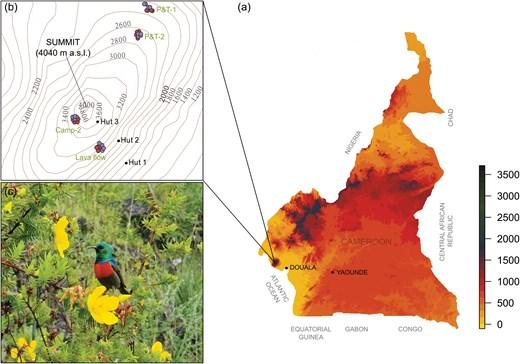
Guillermo Uceda-Gómez et al. confirmed the predicted bee-to-fly transition with increasing elevation of Hypericum revolutum in the #MontaneGrasslands of Mount Cameroon.
#Afrotropics | #ElevationalGradients | #FloralVisitorShifts | #Nectarivory | #Pollination

Distyly (Evolution 🧬)
Distyly is a breeding system in plants that is characterized by two separate flower morphs, where individual plants produce flowers that have either long styles and short stamens or short styles and long stamens. However, distyly can refer to any plant that shows some degree of self-incompatibility and has two morphs if at least one of the following cha...
https://en.wikipedia.org/wiki/Distyly
#Distyly #Genetics #Evolution #Pollination #PlantMorphology #PlantReproduction
【💡Editor's Choice】
Flower display and temperature in #RoyalIrises (Iris section #Oncocyclus, Iridaceae)
Pollinators preferred larger artificial flowers for overnight shelter.


New Study Uncovers [Another Positive] Surprising Effect[s] Of Beavers' Dam-Building Behavior
--
https://www.yahoo.com/news/articles/study-uncovers-surprising-effect-beavers-193000239.html <-- shared technical / media article
--
https://doi.org/10.1111/1365-2656.70136 <-- shared paper
--
https://www.smithsonianmag.com/smart-news/beavers-are-dam-good-for-biodiversity-bringing-bats-butterflies-and-other-critters-to-their-neighborhoods-180987717/ <-- shared technical article
--
https://doi.org/10.1111/1365-2664.70193 <-- shared paper
--
#water #surfacewater #groundwater #hydrology #natural #beaver #wildlife #habitat #ecosystem #streamflow #beaverdams #geomorphology #montane #landscape #landforms #basin #watershed #drainage #spatial #reservoir #biodiversity #bat #butterfly #pollinators #pollination #insects #arthropods #food #feeding #predation #trees #vegetation #switzerland #night #day #nightandday #sampling #remotesensing #diversity #deadwood #spatialanalysis #LiDAR #ecology #aquatic #terrestrial #ecosystemengineering #model #modeling #structuralequationmodel #SEM #species #foodsecurity #biology #wetland #butterfly #bee #hoverfly #moth


🎉 Great news! The paper ‘Between wind and visitors? Insights into floral anatomy, taxonomy and reproductive biology in Cryptangieae (Cyperaceae)’ in @AnnBot by Ana Luisa Arantes Chaves and co-authors is now #free for 2 weeks 🧵(1/8)
#AoBpapers #PlantScience #Pollination #FloralBiology #Cyperaceae #PlantEcology

🌬️🐞 Overall, the study reveals how floral anatomy, colour and ecology combine to shape pollination in Cryptangieae, highlighting the need to rethink pollination modes in sedges. (8/8)
#AoBpapers #PlantScience #Pollination #FloralBiology #Cyperaceae #PlantEcology

🌳 One tree becomes a forest. A banyan expands by aerial prop roots that descend from branches, touch earth, and thicken into secondary trunks, letting one living individual spread outward like an entire grove. Inside each fig, a tiny pollinator wasp keeps the cycle going.
✍️ Explore the science of spreading permanence: https://TPC8.short.gy/HCHv2a6A
🌱 One becomes many yet remains one.
#Banyan #Trees #Ecology #Evolution #Botany #Nature #Pollination #Biodiversity #Culture #TPC8

#HelianthusAnnuus #ApisMellifera #Bombus #Pollinators
#Pollination #PlantInsectInteractions
#Entomology #Botany #FieldObservation


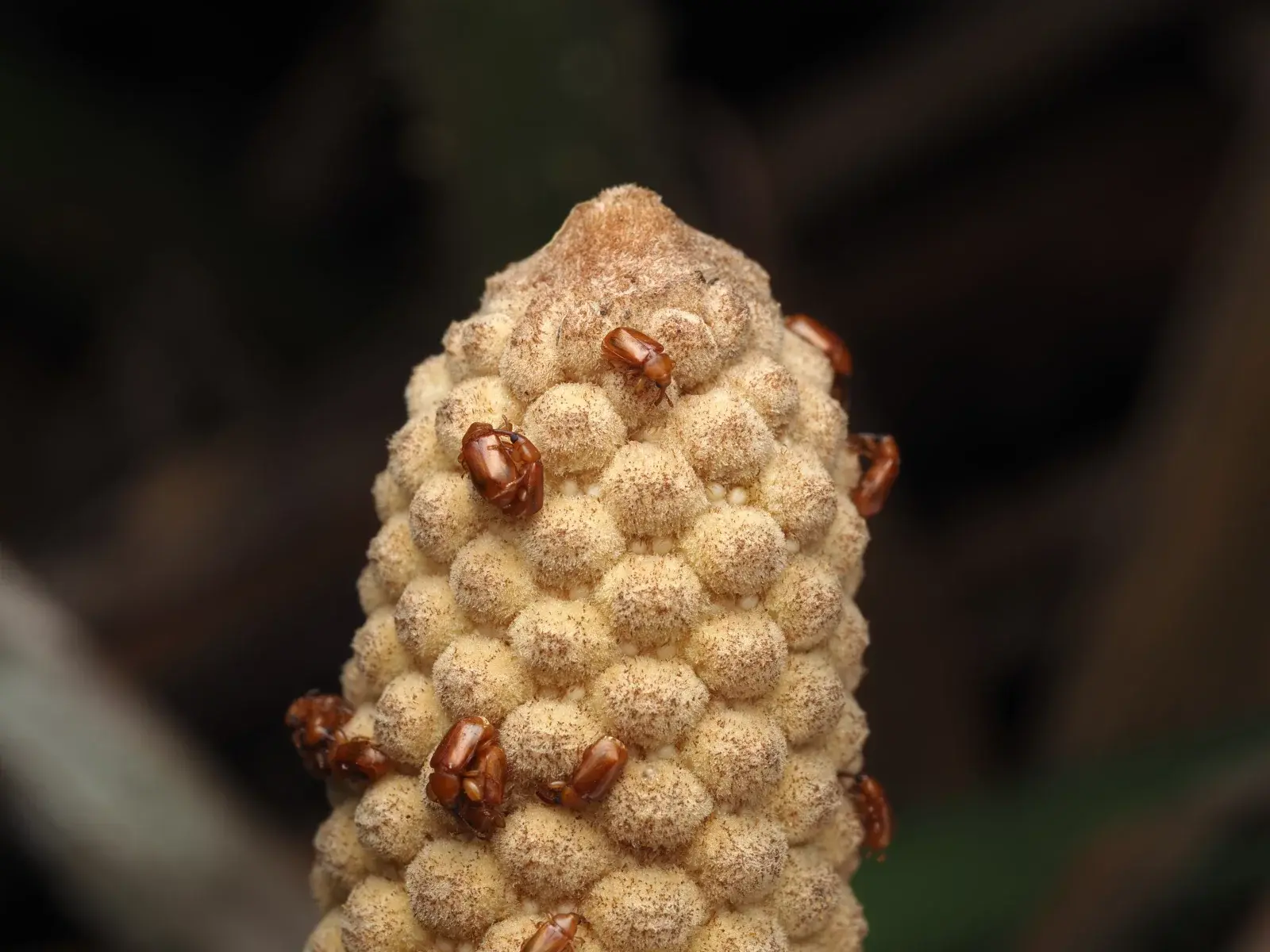
These ancient #plants attract #pollinators by getting hot https://www.npr.org/2025/12/11/nx-s1-5637486/ancient-heat-producing-plants-glow-infrared-scent-not-color
Infrared radiation is an ancient #pollination signal: Wendy Valencia-Montoya et al. https://www.science.org/doi/10.1126/science.adz1728
"long before brightly colored flowers evolved, these plants would metabolically rev themselves up when they had pollen at the ready. Nocturnal #insects such as #beetles could then see the heat from afar and home in on the target. These heat-producing #cycads exist today in tropical forests around the world"
Sissi Lozada-Gobilard et al. investigated flower display and temperature in #RoyalIrises (Iris section #Oncocyclus, Iridaceae) .



Not all flower visitors are equally helpful to the flower; separately tracking bees that buzz to release pollen and bees that steal pollen from flowers in a bunch of Chamaecrista species shows how tracking visitation alone would misrepresent the interactions


"A study published today in Science reveals that cycads, tropical plants that resemble palms, attract beetles using infrared radiation generated by their conelike reproductive structures. [...] [T]he results offer a window into “the earliest form of pollination”—a prototype for what is today one of the most transformative ecological interactions on Earth."

Pollinators: Life, Biology and Threats by Shyamasree Ghosh & Dhriti Banerjee, 2025
This book explores the critical role of dipterans (flies) in global food production, plant reproduction, and ecological services. It highlights the diversity of pollinating dipterans worldwide, with a focus on their importance in India.
#books
#nonfiction
#pollination
#pollinators
#India
#Springer

An 8-year study of plants and pollinators in a Mediterranean community in southern Spain shows they're all flowering and active earlier as climate warms, but also a little less likely to overlap with interacting species

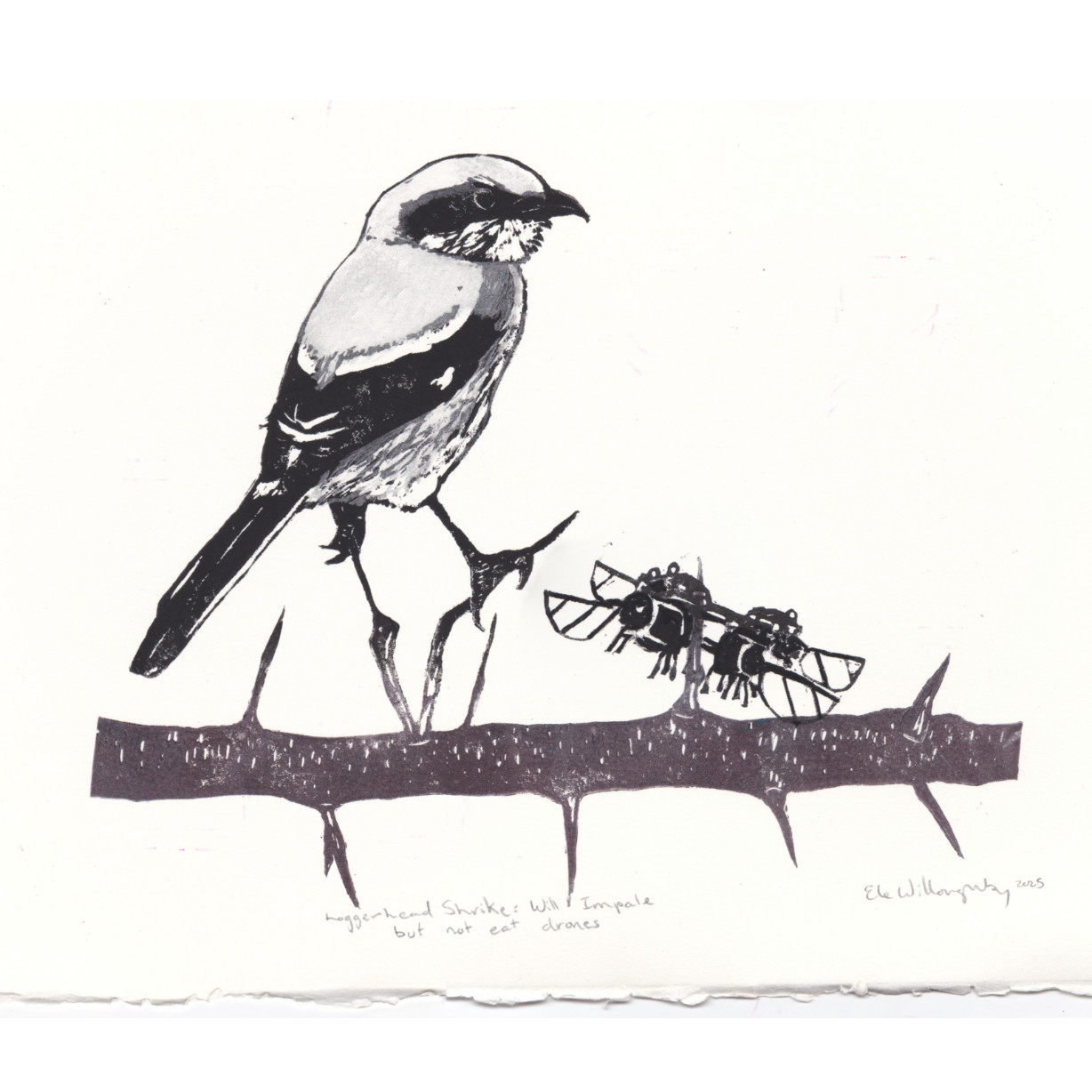
Day 11 #artAdventCalendar The loggerhead shrike, endemic to North America, is also known as the butcherbird for its carnivorous tendencies and habit of ostentatiously displaying stored prey dramatically impaled on convenient spikes like tree thorns or barbed wire. Its usual prey are insects, amphibians, lizards, small birds or small mammals. 🧵
#linocut #printmaking #sciart #pollination #future #loggerheadShrike #shrike #wildlife #ManufacturedEcosystems #mastoArt
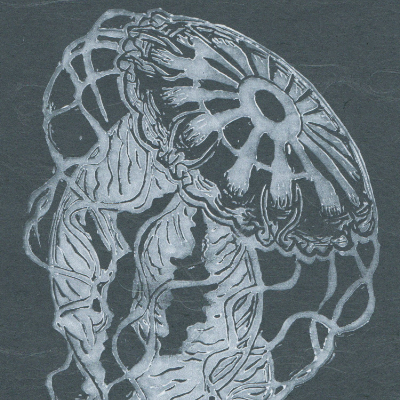
Day 10 #artAdventCalendar A piece for Manufactured Ecosystems about the future of pollination about who decides what gets pollinated if humans and our devices are the only pollinators.
The definition of “weed” is usually pretty arbitrary and usually all sorts of native plants get caught up in our human biases. Milkweed is insanely popular with the pollinators in my garden and 🧵
#linocut #sciart #printmaking #pollination #future #milkweed #ecology #manufacturedEcosystems #mastoArt

Surveys of plant-pollinator interactions taken almost a century apart show how changing timing of flowering and pollinator activity in a warmer world is reshaping these mutualisms

🌱 𝗘𝗰𝗼𝘀𝘆𝘀𝘁𝗲𝗺 𝘀𝗲𝗿𝘃𝗶𝗰𝗲𝘀–𝗕𝗶𝗼𝗰𝗼𝗻𝘁𝗿𝗼𝗹 𝗮𝗻𝗱 𝗜𝗻𝘁𝗲𝗴𝗿𝗮𝘁𝗲𝗱 𝗽𝗲𝘀𝘁 𝗺𝗮𝗻𝗮𝗴𝗲𝗺𝗲𝗻𝘁 (Keynote speaker: Ivan Hiltpold, USA)
🏗️ 𝗘𝗰𝗼𝘀𝘆𝘀𝘁𝗲𝗺 𝘀𝗲𝗿𝘃𝗶𝗰𝗲𝘀–𝗦𝗼𝗶𝗹 𝗺𝗮𝗻𝗮𝗴𝗲𝗿𝘀 𝗮𝗻𝗱 𝗔𝗿𝗰𝗵𝗶𝘁𝗲𝗰𝘁𝘀 (Keynote speaker: Jérôme Mathieu, France)
🌸 𝗘𝗰𝗼𝘀𝘆𝘀𝘁𝗲𝗺𝘀 𝘀𝗲𝗿𝘃𝗶𝗰𝗲𝘀–𝗣𝗼𝗹𝗹𝗶𝗻𝗮𝘁𝗶𝗼𝗻 (Keynote Speaker: Jane Stout, Ireland)
👉 Join us at ECE2026: https://www.ece2026.org/
#ECE2026 #InsectsAsSolutions #Biomimetism #Bioinspiration #PhotonicMaterials #Sensory #InsectsAsFeedAndFood #EcosystemServices #Biocontrol #PestManagement #SoilManagement #Pollination
Day 5 of #artAdventCalendar - For the Manufactured Ecosystems art show about the future of pollination I looked at what nature-inspired technologies exist or are already proposed or that I could envision to pollinate plants, faced with a precipitous drop in pollinator numbers. But, I am also turned an artist’s eye to larger implications.
There are already researchers working on artificial pollination with tiny 🧵
#sciart #linocut #printmaking #pollination #pollinators #manufacturedEcosystems

Client Info
Server: https://mastodon.social
Version: 2025.07
Repository: https://github.com/cyevgeniy/lmst