Dusky #langurs have a vivid 'goggles' around their eyes 👀😻 The whole troop cares for young. #Endangered by #palmoil #deforestation and the illegal pet trade, help them to survive when u shop #BoycottPalmOil 🌴☠️🤮🧐🙊⛔️ #Boycott4Wildlife @palmoildetect.bsky.social https://palmoildetectives.com/2021/06/27/dusky-langur-trachypithecus-obscurus/?utm_source=mastodon&utm_medium=Palm+Oil+Detectives&utm_campaign=publer
#langurs

Beautiful Capped Langurs and Phayre’s #Langurs are interbreeding, risking both #species’ survival. Pressures of #palmoil #deforestation and #hunting are pushing the #monkeys to the edge in #Bangladesh #Boycottpalmoil #Boycott4Wildlife @palmoildetectives https://wp.me/pcFhgU-9bY

Beautiful and Doomed: Saving Bangladesh’s Langurs From Extinction
A recent study has found hybridisation (interbreeding) between critically endangered Phayre’s #langurs and endangered capped langurs in #Bangladesh, raises serious concerns about their genetic health and future survival as distinct species. Hybridisation is a serious sign of ecological disruption, and researchers point to human-related threats such as #palmoil and #timber #deforestation, habitat fragmentation, and #hunting as key drivers for them interbreeding. These pressures not only push the species to hybridise but also threaten their long-term existence in the wild, highlighting the urgent need for conservation efforts to address habitat destruction and protect these seriously endangered primates. 🌿 Help them when you shop, go #vegan and #BoycottPalmOil #Boycott4Wildlife
Beautiful Capped Langurs and Phayre’s #Langurs are interbreeding, risking both #species’ survival. Pressures of #palmoil #deforestation and #hunting are pushing the #monkeys to the edge in #Bangladesh #Boycottpalmoil #Boycott4Wildlife 🌴🚫 @palmoildetect https://wp.me/pcFhgU-9bY
Share to BlueSky Share to TwitterHybridisation/interbreeding of two beautiful #langur 🐵🐒species in #Bangladesh puts both #animals in serious peril finds #research study 😭. #Palmoil #deforestation is a major threat. Fight back and #Boycottpalmoil #Boycott4Wildlife 🌴🛢️⛔ @palmoildetect.bsky.social https://wp.me/pcFhgU-9bY
Share to BlueSky Share to TwitterThis article was originally published in Mongabay and was written by Mohammad Al-Masum Molla, read the original article. Republished under Creative Commons attribution licence. Research by Ahmed, T., Hasan, S., Nath, S., Biswas, S. … Roos, C. (2024). Mixed-Species Groups and Genetically Confirmed Hybridization Between Sympatric Phayre’s Langur (Trachypithecus phayrei) and Capped Langur (T. pileatus) in Northeast Bangladesh. International Journal of Primatology. doi:10.1007/s10764-024-00459-x
- Bangladesh is home to less than 500 Phayre’s langurs and 600 capped langurs in the rainforests in the country’s northeast.
- A recent study has unveiled a trend of hybridisation between Phayre’s langurs and capped langurs in Bangladesh, which are listed as critically endangered and endangered, respectively, by IUCN.
- Hybridisation is a vital indicator of ecological change, and researchers are raising serious concerns about the genetic health of the two species and their future existence in the wild.
- The study holds human activities such as deforestation, habitat fragmentation and hunting as some of the causes responsible for increasing the risk of hybridisation cases.
A recent study revealed a troubling trend among the wild monkey population in Bangladesh’s northeastern forests. The study, conducted by the German Primate Centre, unveiled a concerning tendency of hybridisation between Phayre’s langurs (Trachypithecus phayrei) and capped langurs (Trachypithecus pileatus), listed as critically endangered and endangered, respectively, within Bangladesh by IUCN.
This hybridisation of the endangered primates, which researchers of the study say is caused by habitat loss due to deforestation and other human interferences, could push them to extinction in a few generations.
“Bangladesh’s langur populations are small and isolated, limiting gene flow. This hybridisation in restricted populations heightens their extinction risk. Furthermore, our laws primarily protect pure langurs, leaving hybrids unprotected. If hybrids persist into future generations, we’ll face tough decisions about their role in our ecosystem,” Tanvir Ahmed, the study’s lead researcher, told Mongabay.
Monirul H. Khan, a professor at Jahangirnagar University’s Zoology Department, agreed with Tanvir and said that the significance of interbreeding is that these langurs don’t survive for a long time.
“They are usually born infertile. So the population of langur will gradually decrease,” he said.
The study, published in the International Journal of Primatology, recently found that out of 98 langur groups observed, eight comprised both Phayre’s and capped langurs.
“We analysed genetic samples of the species in the lab and confirmed one case of hybridisation. This langur had a capped langur mother and a Phayre’s langur father. Another female with a hybrid appearance showed signs of motherhood, indicating that at least female hybrids are fertile and give birth to young,” Tanvir said.
“The genetic characteristics of a distinct species tend to become most threatened when their hybrid females can reproduce. Fertile hybrid females threaten to bring the two species closer together as the offsprings begin to mix characteristics. That is exactly what could be happening to them,” he said.
The research shows that the ‘spectacled’ Phayre’s langurs and the capped langurs, with their distinctive shock of black fur on their heads, are under threat of losing their distinct genetic makeup to hybridisation.
Researchers conducted the study over five years, between 2018 and 2023, in six forests in northeastern Bangladesh — Lawachara National Park, Satchari National Park, Rema-Kalenga Wildlife Sanctuary, Rajkandi Reserve Forest, Patharia Hill Reserve Forest and Atora Hill Reserve Forest.
The study involved field surveys for 92 days between March 2018 and April 2019 and from July to December 2022, employing three trained local eco-guides to monitor the mixed-species groups until October 2023.
(Left) A mixed-species group of Phayre’s and capped langurs in Satchari National Park. (Right) A male hybrid of Phayre’s and capped langurs in Rema-Kalenga Wildlife Sanctuary. Image by Auritro Sattar. Images by Rasel Debbarma and Auritro Sattar.Why hybridisation is a concern
The study shows that, although it’s relatively rare, hybridisation among primates is an escalating concern worldwide, often driven by habitat loss and fragmentation. It serves as a stark reminder of the significant impacts of human activity on biodiversity. The situation in Bangladesh gradually becoming more common emphasizes the urgent need for strong conservation efforts.
The study mentions how hybridisation is a vital indicator of ecological change, raising serious concerns about species’ genetic health. Tanvir added that this study is groundbreaking, as it documents the first hybridisation incidents among these langurs in Bangladesh and their entire distribution range.
Hybrids being fertile could lead to the extinction of the parent species. “Additionally, mixing species can enable the spread of diseases between previously unconnected populations, posing risks to both wildlife and human health, since these animals are often hunted and traded,” said Sabit Hasan, a researcher of the study.
The study blamed human activities such as palm oil deforestation, habitat fragmentation, hunting and trapping of primates as some of the causes that can increase the risk of such hybridisation.
“The existence of fertile hybrids is particularly alarming because it suggests that gene flow between these two endangered species could irreversibly affect their future genetic composition,” Tanvir said.
The genetically confirmed hybrid with its half-sibling feeding on fruits at Satchari National Park. Image by Harish Debbarma.The genetically confirmed juvenile hybrid with its capped langur mother and Phayre’s langur father at Satchari National Park. Image by Mahmudul Bari.Primates of Bangladesh
Ten of the 121 mammal species found in Bangladesh are primates. According to the hybridisation study, Bangladesh is home to less than 500 Phayre’s langurs and 600 capped langurs.
The Phayre’s langur has a brown to grey-brown back, white fur on its belly and face, and a “spectacled” appearance due to wide white rings around its eyes. Its face and extremities are black, and it has long hair on its head that points backward. Additionally, its tail is longer than its body and has a tuft of dark hair at the tip.
The capped langur is known for its distinctive crown of long, erect hairs on its head. It has a black face, grey to blackish-grey fur on top, and brownish-yellow or orange fur below, with the distal half of its tail being blackish.
The study suggested the government prioritize habitat preservation and create corridors to connect isolated primate populations, facilitating natural langur dispersal.
“If we don’t take action now, we risk losing not just two monkey species but also a vital part of Bangladesh’s biodiversity,” Tanvir said.
A juvenile hybrid with its Phayre’s langur father in Satchari National Park. Image by Rasel Debbarma.Banner image: The genetically confirmed hybrid (right) with its capped langur mother at Satchari National Park. Image by Harish Debbarma.
This article was originally published in Mongabay and was written by Mohammad Al-Masum Molla, read the original article. Republished under Creative Commons attribution licence. Research by Ahmed, T., Hasan, S., Nath, S., Biswas, S. … Roos, C. (2024). Mixed-Species Groups and Genetically Confirmed Hybridization Between Sympatric Phayre’s Langur (Trachypithecus phayrei) and Capped Langur (T. pileatus) in Northeast Bangladesh. International Journal of Primatology. doi:10.1007/s10764-024-00459-x
ENDS
Learn about other animals endangered by palm oil and other agriculture
Global South America S.E. Asia India Africa West Papua & PNGSunda Flying Lemur Galeopterus variegatus
Keep readingWestern Parotia Parotia sefilata
Keep readingCapped Langur Trachypithecus pileatus
Keep readingMountain Tapir Tapirus pinchaque
Keep reading Keep reading Keep readingLearn about “sustainable” palm oil greenwashing
Read more about RSPO greenwashing
Lying Fake labels Indigenous Land-grabbing Human rights abuses Deforestation Human health hazardsA 2019 World Health Organisation (WHO) report into the palm oil industry and RSPO finds extensive greenwashing of palm oil deforestation and the murder of endangered animals (i.e. biodiversity loss)
Read moreTake Action in Five Ways
1. Join the #Boycott4Wildlife on social media and subscribe to stay in the loop: Share posts from this website to your own network on Twitter, Mastadon, Instagram, Facebook and Youtube using the hashtags #Boycottpalmoil #Boycott4Wildlife.
Enter your email address
Sign Up
Join 3,177 other subscribers2. Contribute stories: Academics, conservationists, scientists, indigenous rights advocates and animal rights advocates working to expose the corruption of the palm oil industry or to save animals can contribute stories to the website.
Read moreMel Lumby: Dedicated Devotee to Borneo’s Living Beings
Read moreAnthropologist and Author Dr Sophie Chao
Read moreHealth Physician Dr Evan Allen
Read moreThe World’s Most Loved Cup: A Social, Ethical & Environmental History of Coffee by Aviary Doert
Read moreHow do we stop the world’s ecosystems from going into a death spiral? A #SteadyState Economy
Read more3. Supermarket sleuthing: Next time you’re in the supermarket, take photos of products containing palm oil. Share these to social media along with the hashtags to call out the greenwashing and ecocide of the brands who use palm oil. You can also take photos of palm oil free products and congratulate brands when they go palm oil free.
https://twitter.com/CuriousApe4/status/1526136783557529600?s=20
https://twitter.com/PhillDixon1/status/1749010345555788144?s=20
https://twitter.com/mugabe139/status/1678027567977078784?s=20
4. Take to the streets: Get in touch with Palm Oil Detectives to find out more.
5. Donate: Make a one-off or monthly donation to Palm Oil Detectives as a way of saying thank you and to help pay for ongoing running costs of the website and social media campaigns. Donate here
Pledge your support #animalBehaviour #AnimalBiodiversityNews #animalExtinction #animalRights #animals #Bangladesh #biodiversity #Boycott4wildlife #BoycottPalmOil #CappedLangur #CappedLangurTrachypithecusPileatus #deforestation #hunting #India #langur #Langurs #monkey #monkeys #PalmOil #palmOilDeforestation #palmoil #PhayreSLeafMonkeyTrachypithecusPhayrei #Primate #research #species #timber #vegan


The intelligent and social Capped #Langur 🙉🐒🐵 is under pressure from #palmoil #deforestation and hunting in #India 🇮🇳 Troops are interbreeding with Phayre's #langurs to survive. Fight for them and #Boycottpalmoil 🌴☠️❌ #Boycott4Wildlife
Capped Langur Trachypithecus pileatus
Capped Langur Trachypithecus pileatus
IUCN Red List Status: Vulnerable
Location: India, Bhutan, Bangladesh, Myanmar
This species inhabits subtropical and tropical dry forests, primarily in the foothills and highlands south of the Brahmaputra River and across fragmented patches in northeastern South Asia.
The capped #langur (Trachypithecus pileatus) is a graceful and beautiful leaf #monkey found across northeastern #India, #Bhutan, #Bangladesh, and #Myanmar. Sadly, they are listed as #Vulnerable on the IUCN Red List due to rapid population declines from #deforestation, logging, agriculture, and the devastating impacts of #palmoil plantations. Once widespread, their numbers have nearly halved in some regions like Assam due to the accelerating loss of native forest cover. Directly threatened by palm oil and monoculture expansion, this species is now confined to small, isolated forest fragments. Take action every time you shop and #BoycottPalmOil #Boycott4Wildlife
In the forests of #Bangladesh 🇧🇩 and northern #India 🇮🇳 lives a remarkable #primate with soulful hazel eyes 🐵🐒 on the verge of #extinction from #palmoil #deforestation. Help the Capped #Langur and #Boycottpalmoil 🌴🔥🚫 #Boycott4Wildlife @palmoildetect https://palmoildetectives.com/2026/01/11/capped-langur-trachypithecus-pileatus/
Share to BlueSky Share to TwitterThe intelligent and social Capped #Langur 🙉🐒🐵 is under pressure from #palmoil #deforestation and hunting in #India 🇮🇳 Troops are interbreeding with Phayre’s #langurs to survive. Fight for them and #Boycottpalmoil 🌴☠️❌ #Boycott4Wildlife @palmoildetect https://palmoildetectives.com/2026/01/11/capped-langur-trachypithecus-pileatus/
Share to BlueSky Share to TwitterAppearance & Behaviour
With their black-tufted crown, pale fur, and soulful eyes, capped langurs are among the most visually distinctive primates in the Eastern Himalayas. Their fur ranges from silver-grey to golden orange, with darker limbs and a black cap that gives them their name. They move gracefully through the canopy, rarely descending to the forest floor except for play or social grooming.
Capped langurs live in unimale, multifemale groups with sizes ranging from 8 to 15 individuals. They spend most of their time feeding (up to 67%) or resting (up to 40%), engaging in complex social grooming and vocal communication. Daily movements range from 320–800 metres across fragmented habitats of 21–64 hectares. Grooming is an important social activity, with females often taking turns in allomothering behaviour.
Threats
Palm oil, teak and rubber monoculture plantations
The spread of oil palm and other monoculture crops such as teak and rubber is destroying the capped langur’s native forests at an alarming rate. These industrial plantations eliminate the diverse tree species that capped langurs rely on for food and shelter, leaving them with little to survive on. Once a landscape is cleared and replaced with palm oil or other single crops, it becomes a green desert devoid of biodiversity, pushing the species closer to extinction. In regions like Assam and Bangladesh, palm oil is a major driver of habitat fragmentation and degradation, especially in forest corridors that once connected populations.
Timber deforestation
Widespread illegal logging, often fuelled by demand for timber and firewood, is rapidly eroding the capped langur’s habitat. Fruiting and lodging trees that are vital to their survival are cut down, leaving forests patchy and disconnected. As their home ranges shrink, capped langur groups are forced into smaller fragments, increasing their vulnerability to predators, food shortages, and inbreeding. In some areas, this pressure has led to local extinctions or the collapse of entire populations.
Slash-and-burn agriculture
Slash-and-burn agriculture destroys habitat for capped langurs and often brings them into closer contact with human settlements, increasing conflict and risk of hunting or roadkill. Forest recovery from this can take decades—time the capped langur simply doesn’t have.
Hunting and the illegal pet trade
Capped langurs are hunted for their meat, pelts, and for sale in the illegal pet trade. In many tribal and rural areas of Assam, Arunachal Pradesh, and Manipur, they are still targeted despite legal protections. Their pelts are used to make traditional knife sheaths, and infants are often captured after killing their mothers, then sold as pets. This exploitation causes severe suffering and has a devastating impact on group structures, leading to long-term population decline.
Roads cut into rainforests for mines and tea plantations
As forests are cut into smaller patches for roads, mining, tea plantations, and settlements, capped langur populations become increasingly isolated. Small, disconnected populations face higher risks of inbreeding, loss of genetic diversity, and eventual extinction. In some regions, such as Tinsukia and Sonitpur, populations have already disappeared due to this fragmentation. The collapse of corridors also disrupts daily movement, feeding patterns, and access to mates—placing enormous stress on surviving individuals.
Hybridisation with other species
Due to the rapid degradation of natural habitats, capped langurs are increasingly forming mixed-species groups with the closely related Phayre’s langur (Trachypithecus phayrei). Recent studies in northeast Bangladesh confirm genetically that hybridisation is occurring, which could result in the eventual cyto-nuclear extinction of the capped langur lineage. Although hybridisation can happen naturally, in this case it is being driven by human-induced fragmentation, forcing species into overlapping territories with fewer options for mates. This phenomenon is both a symptom and a driver of their decline, complicating conservation efforts.
Mining, infrastructure, and political conflict
Open-cast coal mining, limestone extraction, and petroleum exploration have all contributed to the destruction of capped langur habitat across Assam and Nagaland. Infrastructure projects, such as highways and border fences, not only destroy habitat directly but also block animal movements and isolate populations. In border regions, armed conflict and territorial skirmishes have already extirpated capped langurs from several reserves, such as the Nambhur and Rengma forests. Weak law enforcement allows habitat destruction to continue unchecked in many regions.
Geographic Range
Capped langurs are found in northeastern India (Arunachal Pradesh, Assam, Meghalaya, Nagaland, Manipur, Mizoram, and Tripura), Bhutan, northwestern Myanmar, and northeastern and central Bangladesh. They occur at elevations from 10 to 3,000 metres across hill forests, riverine reserves, and protected areas. However, their range is now severely fragmented by human development, with some populations disappearing from former strongholds due to mining, conflict, and agricultural encroachment.
Diet
Primarily folivorous, the capped langur’s diet includes mature and young leaves, petioles, seeds, flowers, bamboo shoots, bark, and occasionally caterpillars. They forage on more than 43 plant species, with favourites including banyan (Ficus benghalensis), sacred fig (Ficus religiosa), Terminalia bellerica, and Mallotus philippensis. Seasonal availability influences their feeding patterns, but they consistently prefer fruiting and flowering trees.
Mating and Reproduction
Breeding usually occurs in the dry season, with birthing concentrated between late December and May. The gestation period lasts about 200 days, and the interbirth interval is approximately two years. Only parous females participate in allomothering, allowing new mothers time to forage and recover, a behaviour rare among langurs and considered a form of altruism.
FAQs
How many capped langurs are left in the wild?
Exact numbers are uncertain, but estimates suggest the population in Assam has declined from 39,000 in 1989 to approximately 18,600 between 2008 and 2014 (Choudhury, 2014). This halving reflects habitat loss and increasing fragmentation, particularly in Upper Assam and the Barak Valley.
What is the average lifespan of a capped langur?
While data is limited, langurs of this genus generally live 20–25 years in the wild. Captive lifespans may extend slightly due to the absence of predators and constant food supply, though such conditions often lead to stress.
Why are capped langurs under threat?
Their decline is due to relentless deforestation, palm oil and monoculture plantations, illegal logging, and road-building. Slash-and-burn agriculture and mining also play a major role. Capped langurs are hunted in some regions for meat, pelts, and as pets, particularly in Assam, Arunachal Pradesh, and Nagaland.
Do capped langurs make good pets?
Absolutely not. Capped langurs are intelligent, social beings that rely on complex forest habitats and close-knit family groups. Removing them from the wild fuels extinction and causes immense trauma. Many die during illegal capture and transport. Keeping them as pets is a selfish act that destroys lives. If you care about capped langurs, never support the exotic pet trade!
What are the major conservation challenges for capped langurs?
The biggest issues are hybridisation with other primate species, habitat fragmentation, palm oil expansion, and human-wildlife conflict. The 2018 study in Satchari National Park found that local attitudes toward conservation vary by occupation, education, and gender, which means education and outreach are crucial. A big challenge is the rise in hybridisation with sympatric Phayre’s langurs, driven by habitat degradation—this poses long-term genetic risks (Ahmed et al., 2024).
Take Action!
Capped langurs are vanishing before our eyes, driven to the brink by out-of-control palm oil expansion, deforestation, and development. You can help save them.
Refuse to buy products made with palm oil. Support indigenous-led conservation in northeast India and the Eastern Himalayas. Demand governments halt the destruction of old-growth forests and restore wildlife corridors. Spread awareness and challenge the illegal wildlife trade. #BoycottPalmOil #Boycott4Wildlife #Vegan #BoycottMeat
Support the Capped Langur by going vegan and boycotting palm oil in the supermarket, it’s the #Boycott4Wildlife
Support the conservation of this species
This animal has no protections in place. Read about other forgotten species here. Create art to support this forgotten animal or raise awareness about them by sharing this post and using the #Boycottpalmoil #Boycott4Wildlife hashtags on social media. Also you can boycott palm oil in the supermarket.
Further Information
Ahmed, T., Hasan, S., Nath, S., Biswas, S., et al. (2024). Mixed-Species Groups and Genetically Confirmed Hybridization Between Sympatric Phayre’s Langur (Trachypithecus phayrei) and Capped Langur (T. pileatus) in Northeast Bangladesh. International Journal of Primatology, 46(1), 210–228. https://doi.org/10.1007/s10764-024-00459-x
Das, J., Chetry, D., Choudhury, A.U., & Bleisch, W. (2020). Trachypithecus pileatus (errata version published in 2021). The IUCN Red List of Threatened Species 2020: e.T22041A196580469. https://dx.doi.org/10.2305/IUCN.UK.2020-3.RLTS.T22041A196580469.en
Hasan, M.A.U., & Neha, S.A. (2018). Group size, composition and conservation challenges of capped langur (Trachypithecus pileatus) in Satchari National Park, Bangladesh. Retrieved from https://www.researchgate.net/publication/339550399
Wikipedia. (n.d.). Capped langur. Retrieved April 6, 2025, from https://en.wikipedia.org/wiki/Capped_langur
How can I help the #Boycott4Wildlife?
Take Action in Five Ways
1. Join the #Boycott4Wildlife on social media and subscribe to stay in the loop: Share posts from this website to your own network on Twitter, Mastadon, Instagram, Facebook and Youtube using the hashtags #Boycottpalmoil #Boycott4Wildlife.
Enter your email address
Sign Up
Join 3,173 other subscribers2. Contribute stories: Academics, conservationists, scientists, indigenous rights advocates and animal rights advocates working to expose the corruption of the palm oil industry or to save animals can contribute stories to the website.
Mel Lumby: Dedicated Devotee to Borneo’s Living Beings
Anthropologist and Author Dr Sophie Chao
Health Physician Dr Evan Allen
The World’s Most Loved Cup: A Social, Ethical & Environmental History of Coffee by Aviary Doert
How do we stop the world’s ecosystems from going into a death spiral? A #SteadyState Economy
3. Supermarket sleuthing: Next time you’re in the supermarket, take photos of products containing palm oil. Share these to social media along with the hashtags to call out the greenwashing and ecocide of the brands who use palm oil. You can also take photos of palm oil free products and congratulate brands when they go palm oil free.
https://twitter.com/CuriousApe4/status/1526136783557529600?s=20
https://twitter.com/PhillDixon1/status/1749010345555788144?s=20
https://twitter.com/mugabe139/status/1678027567977078784?s=20
4. Take to the streets: Get in touch with Palm Oil Detectives to find out more.
5. Donate: Make a one-off or monthly donation to Palm Oil Detectives as a way of saying thank you and to help pay for ongoing running costs of the website and social media campaigns. Donate here
Pledge your supportLearn about other animals endangered by palm oil and other agriculture
Global South America S.E. Asia India Africa West Papua & PNGCapped Langur Trachypithecus pileatus
Mountain Tapir Tapirus pinchaque
Frill-Necked Lizard Chlamydosaurus kingii
Grey Crowned Crane Balearica regulorum
Learn about “sustainable” palm oil greenwashing
Read more about RSPO greenwashing
Lying Fake labels Indigenous Land-grabbing Human rights abuses Deforestation Human health hazardsA 2019 World Health Organisation (WHO) report into the palm oil industry and RSPO finds extensive greenwashing of palm oil deforestation and the murder of endangered animals (i.e. biodiversity loss)
Read more#animals #Assam #Bangladesh #Bantrophyhunting #Bhutan #Boycott4wildlife #BoycottMeat #BoycottPalmOil #CappedLangurTrachypithecusPileatus #deforestation #extinction #ForgottenAnimals #humanWildlifeConflict #hunting #illegalPetTrade #India #langur #Langurs #mining #monkey #monkeys #Myanmar #PalmOil #palmOilDeforestation #palmoil #PhayreSLeafMonkeyTrachypithecusPhayrei #poaching #Primate #vegan #vulnerable #VulnerableSpecies


Sabah Grizzled #Langurs live in the treetops of #Sabah #Malaysia 🐒🐵🇲🇾 Their main threats are #palmoil and #meat agriculture #deforestation. Help to protect these elegant monkeys when you #BoycottPalmOil 🌴🩸🔥☠️🤮🧐🙊⛔️#Boycott4Wildlife
http://palmoildetectives.com/2021/01/25/msaban-grizzled-langur-presbytis-sabana/
Pig-tailed Snub-nosed #langurs have a cute upturned nose and a pig-like tail. They're critically #endangered by #palmoil #deforestation and hunting in #Indonesia 🇮🇩🐒 Resist their #extinction! #BoycottPalmOil 🌴☠️⛔️ #Boycott4Wildlife @palmoildetect https://palmoildetectives.com/2021/01/31/pig-tailed-snub-nosed-langur-simias-concolor/?utm_source=mastodon&utm_medium=Palm+Oil+Detectives&utm_campaign=publer
Pig-tailed Snub-nosed Langur Simias concolor
Pig-tailed Snub-nosed Langur Simias concolor
IUCN Red List Status: Critically Endangered
Location: This rare primate is endemic to the Mentawai Islands off the west coast of Sumatra, Indonesia. They are found on Siberut, Sipora, and North and South Pagai, where they inhabit lowland and hill forests in these isolated and fragile ecosystems.
The Pig-tailed Snub-nosed Langur, also known as the Pig-tailed Langur, is one of the most distinctive and endangered monkeys in the world. These ultra rare and critically endangered small primates are known for their short, upturned noses and unique pig-like tails. Pig-tailed Snub-nosed Langurs are critically endangered due to palm oil and timber deforestation, hunting, and habitat fragmentation in their tiny island homes of Siberut, Sipora, and North and South Pagai, Indonesia. Immediate conservation action is necessary to protect the remaining population and their delicate ecosystem from disappearing forever. Fight for them every time you shop and #BoycottPalmOil #Boycott4Wildlife
Forgotten #primate 🙊🐒 Pig-tailed Snub-nosed #Langur is now critically endangered on tiny islands near #Sumatra #Indonesia 🇮🇩 from #palmoil #deforestation and hunting pressures. Help them survive #BoycottPalmOil 🌴☠️⛔️ #Boycott4Wildlife @palmoildetect https://palmoildetectives.com/2021/01/31/pig-tailed-snub-nosed-langur-simias-concolor/
Share to Twitter Share to BlueSkyPig-tailed Snub-nosed #langurs have a cute upturned nose and a pig-like tail. They’re critically #endangered by #palmoil #deforestation and hunting in #Indonesia 🇮🇩🐒 Resist their #extinction! #BoycottPalmOil 🌴☠️⛔️ #Boycott4Wildlife @palmoildetect https://palmoildetectives.com/2021/01/31/pig-tailed-snub-nosed-langur-simias-concolor/
Share to Twitter Share to BlueSkyAppearance and Behaviour
The Pig-tailed Snub-nosed Langur is a medium-sized primate with a striking appearance. Their dense, greyish-brown fur contrasts with lighter underparts, and their small, upturned nose gives them a unique and endearing look. Their short, thick tail, resembling that of a pig, is another defining feature (IUCN, 2020).
These langurs are diurnal and arboreal, spending most of their time in the forest canopy. They live in social groups of up to 20 individuals, where they engage in complex communication and social bonding. Their dynamic foraging strategies allow them to adapt to the heterogeneous environments of the Mentawai Islands.
This species is listed as Critically Endangered because a population decline of 80-90% over the last 36 years (three generations) is estimated due to heavy hunting pressure and extensive habitat loss (especially on southern islands but quite significant throughout species range). The Pig-tailed Snub-nosed Langur is threatened mainly by heavy hunting and commercial logging (Whittaker 2006, Quinten et al. 2014).
IUCN Red List
Diet
The Pig-tailed Snub-nosed Langur is primarily folivorous, feeding on a variety of leaves, but they also consume fruits, seeds, and flowers when available. This specialised diet ties them closely to their forest environment, making them highly vulnerable to habitat destruction and fragmentation (IUCN, 2020).
Reproduction and Mating
As with many langurs, this species is believed to have a low reproductive rate. Females give birth to a single infant after a long gestation period, and young langurs are raised with the support of the social group. This cooperative behaviour is vital for ensuring the survival of the next generation in their challenging environment.
Geographic Range
The Pig-tailed Snub-nosed Langur is restricted to the Mentawai Islands, including Siberut, Sipora, and North and South Pagai. These islands are home to diverse but fragile ecosystems, where this species relies on primary and secondary forests for survival. Their limited geographic range makes them highly vulnerable to localised threats (IUCN, 2020).
Threats
They are also threatened by the conversion of rainforest into oil palm plantations, as well as forest clearing and product extraction by local people. Sometimes, animals are taken for the pet trade (Whittaker 2006).
IUCN Red LIST
- Palm oil and timber deforestation: The rapid expansion of out-of-control palm oil plantations, logging, and agricultural activities has resulted in the widespread destruction of the Mentawai Islands’ forests.
- Illegal hunting for bushmeat: The langur is heavily hunted for bushmeat, a significant threat in local communities.
- Habitat Fragmentation: Infrastructure development and forest clearing have fragmented their habitats, isolating populations and reducing genetic diversity.
Take Action!
Protecting the Pig-tailed Snub-nosed Langur requires urgent conservation measures to halt deforestation and hunting. By boycotting products containing palm oil, supporting indigenous-led conservation initiatives, and advocating for forest preservation, you can help safeguard this critically endangered primate. #BoycottPalmOil #Boycott4Wildlife #Vegan
Conservation efforts for these critically endangered small primates is underway. Read more about Asian Species Action Partnership (ASAP) in Indonesia.
Further Information
Quinten, M, Setiawan, A., Cheyne, S., Traeholt, C. & Whittaker, D. 2020. Simias concolor. The IUCN Red List of Threatened Species 2020: e.T20229A17953422. https://dx.doi.org/10.2305/IUCN.UK.2020-2.RLTS.T20229A17953422.en. Downloaded on 31 January 2021.
Zhao, L., et al. (2024). Dynamic foraging strategy adaptation to heterogeneous environments contributes to social aggregation in snub-nosed monkeys. Zoological Research, 45(1), 39–54. https://doi.org/10.24272/j.issn.2095-8137.2023.047
Wikipedia. (n.d.). Pig-tailed Langur. Retrieved from https://en.wikipedia.org/wiki/Pig-tailed_langur
GBIF. (n.d.). Simias concolor. Retrieved from https://www.gbif.org/species/4267130
Pig-tailed Snub-nosed Langur Simias concolor
How can I help the #Boycott4Wildlife?
Take Action in Five Ways
1. Join the #Boycott4Wildlife on social media and subscribe to stay in the loop: Share posts from this website to your own network on Twitter, Mastadon, Instagram, Facebook and Youtube using the hashtags #Boycottpalmoil #Boycott4Wildlife.
2. Contribute stories: Academics, conservationists, scientists, indigenous rights advocates and animal rights advocates working to expose the corruption of the palm oil industry or to save animals can contribute stories to the website.
Mel Lumby: Dedicated Devotee to Borneo’s Living Beings
Anthropologist and Author Dr Sophie Chao
Health Physician Dr Evan Allen
The World’s Most Loved Cup: A Social, Ethical & Environmental History of Coffee by Aviary Doert
How do we stop the world’s ecosystems from going into a death spiral? A #SteadyState Economy
3. Supermarket sleuthing: Next time you’re in the supermarket, take photos of products containing palm oil. Share these to social media along with the hashtags to call out the greenwashing and ecocide of the brands who use palm oil. You can also take photos of palm oil free products and congratulate brands when they go palm oil free.
https://twitter.com/CuriousApe4/status/1526136783557529600?s=20
https://twitter.com/PhillDixon1/status/1749010345555788144?s=20
https://twitter.com/mugabe139/status/1678027567977078784?s=20
4. Take to the streets: Get in touch with Palm Oil Detectives to find out more.
5. Donate: Make a one-off or monthly donation to Palm Oil Detectives as a way of saying thank you and to help pay for ongoing running costs of the website and social media campaigns. Donate here
Pledge your support#Boycott4wildlife #BoycottPalmOil #CottonHeadedTamarinSaguinusOedipus #CriticallyEndangeredSpecies #deforestation #endangered #extinction #Indonesia #langur #Langurs #Mammal #palmoil #Primate #Sumatra #vegan


Sabah Grizzled Langur Presbytis sabana
Sabah Grizzled Langur Presbytis sabana
Red List Status: Endangered
Location: Malaysia (Sabah), Indonesia (North Kalimantan)
This elusive primate lives in lowland, riparian, montane, and evergreen forests of northern Borneo, including protected areas such as the Danum Valley, Tabin Reserve, and the Kinabatangan region.
The Sabah Grizzled Langur Presbytis sabana, also known as the Saban Grizzled #Langur or Crested Grizzled Langur, is a strikingly beautiful leaf #monkey found only in #Borneo. Their #Endangered status is a direct result of extensive habitat destruction caused by deforestation, out-of-control palm oil expansion, and #hunting—particularly for bezoar stones used in traditional medicine. With fragmented populations and little known about their behaviour or numbers, urgent action is needed to prevent their extinction. Use your wallet as a weapon. Avoid #palmoil when you shop and demand an end to wildlife trafficking and forest destruction. #BoycottPalmOil #Boycott4Wildlife #Vegan
Sabah Grizzled #Langurs live in the treetops of #Sabah #Malaysia 🐒🐵🇲🇾 Their main threats are #palmoil and #meat agriculture #deforestation. Help to protect these elegant monkeys when you #BoycottPalmOil 🌴🩸🔥☠️🤮🧐🙊⛔️#Boycott4Wildlife @palmoildetect https://palmoildetectives.com/2021/01/25/msaban-grizzled-langur-presbytis-sabana/
Share to BlueSky Share to Twitterhttps://youtu.be/1WtBbVsREJY?si=QhlK8VUIUaMxeHjk
Appearance and Behaviour
The Sabah Grizzled Langur is a captivating primate with a thick coat of grey, grizzled fur and a pale belly, sharply contrasted by black hands and feet. A pointed crown of fur rises from their head, giving them a distinct, almost regal look. Their spade-shaped, pale-pinkish faces are framed by dark rings around wide, expressive eyes—an appearance that makes them instantly memorable to anyone lucky enough to see one.
These langurs are diurnal and arboreal, spending most of their lives high in the forest canopy. At night, they retreat to the upper branches of emergent trees to sleep, likely as a defence against predators. They are nimble and versatile movers, walking on all fours, leaping, climbing, and even hanging suspended beneath branches. Their daily lives involve foraging, grooming, resting, and socialising in cohesive groups that typically consist of one dominant male and several adult females with their young.
Diet
Sabah Grizzled Langurs are primarily folivores, feeding on a wide range of leaves, young shoots, and unripe seeds. They also eat fruit, flowers, buds, insects, bird eggs, and mineral-rich mud to supplement their diet. Their complex, multi-chambered stomachs ferment leafy material efficiently, allowing them to extract maximum nutrition from tough plant matter.
The diet of the Sabah Grizzled Langur shifts based on the level of forest disturbance. In undisturbed forests, leaves dominate their intake, but in logged areas, they consume more fruit and seeds. This adaptability may be crucial to their survival in fragmented landscapes.
Reproduction and Mating
This species follows a polygynous mating system, with a single adult male having exclusive breeding access to the females in the group. Breeding appears to occur year-round, but births peak between July and October. After a gestation of five to six months, the female gives birth to a single infant.
Infants are born with paler fur that darkens over time. They are weaned at around 11 months and become subadults between 21 and 36 months. Both males and females leave their natal groups upon reaching sexual maturity at about three years of age, either joining new groups or forming their own.
Geographic Range
Sabah Grizzled Langurs are endemic to the island of Borneo and are found only in Sabah (Malaysia) and northern parts of Indonesian Kalimantan. They inhabit evergreen, lowland, montane, and riverine forests, as well as selectively logged areas and tree plantations. Though once considered a subspecies of Presbytis hosei, they are now recognised as a distinct species. Populations are scattered and fragmented, with some surviving in protected areas like Danum Valley and the Maliau Basin, but others are highly vulnerable to extinction.
Threats
• Palm oil deforestation, monoculture expansion and habitat fragmentation
Large-scale clearing of Borneo’s forests for palm oil plantations has severely reduced the habitat of Presbytis sabana. This deforestation not only destroys the canopy cover they rely on for movement and shelter but also creates isolated forest patches that hinder gene flow and increase vulnerability to inbreeding and local extinction. Even selectively logged areas can remove critical roosting trees and food sources, leading to population collapse over time.
• Hunting for their meat and bezoar stones
Local hunting poses a grave threat to this species. Bezoar stones—calcified objects sometimes found in the gastrointestinal tracts of langurs—are falsely believed to have medicinal properties and fetch high prices in illegal markets. As a result, these langurs are hunted both for meat and for supposed curative use, putting intense pressure on already dwindling populations.
• Lack of enforcement in protected areas
While some populations live in conservation zones, many of these are inadequately protected. Illegal logging, poaching, and encroachment continue within the boundaries of national parks and reserves. Without sufficient monitoring, resources, and community involvement, these areas offer little real safety for the langurs.
• Low reproductive rate and slow population recovery
Like many primates, Sabah Grizzled Langurs have slow reproductive cycles, giving birth to a single infant every one to two years. This low birth rate means that even small increases in mortality can cause long-term population declines. Combined with hunting and habitat loss, this makes recovery especially difficult without urgent conservation action.
Take Action!
The fate of the Sabah Grizzled Langur is partially tied to our consumer choices. Avoid products that contain palm oil, especially those contributing to Bornean deforestation. Never support the exotic animal trade or products made from endangered species. Support indigenous-led conservation efforts and protect Southeast Asia’s remaining rainforests. #BoycottPalmOil #Boycott4Wildlife #Vegan #BoycottMeat
FAQs
How many Sabah Grizzled Langurs are left?
Exact population numbers are unknown due to a lack of comprehensive surveys, but the IUCN lists them as Endangered and rapidly declining. Fragmentation of their range and localised hunting make many populations highly vulnerable, and some may already be functionally extinct.
What is the lifespan of Presbytis sabana?
While the exact lifespan of Presbytis sabana is not documented, related langurs typically live around 20–25 years in the wild. Infant mortality may be high in disturbed habitats, especially where hunting pressure is intense.
Why are bezoar stones a threat?
Bezoar stones are hard masses found in the intestines of some langurs, falsely believed to have healing powers in traditional medicine. This belief drives illegal hunting, even though scientific evidence shows these stones have no proven medical value. Killing langurs for this purpose is both cruel and contributes directly to their extinction.
How are Sabah Grizzled Langurs affected by palm oil?
Palm oil plantations are a major cause of deforestation in Borneo. These plantations clear vast areas of native forest, severing the canopy corridors that langurs use to travel. Even plantations that claim to be ‘eco-friendly’ contribute to ecosystem collapse by fragmenting habitat and displacing wildlife.
Do Sabah Grizzled Langurs make good pets?
No. These langurs are not suited to captivity and have not been documented in zoos or pet markets. Their specialised diet and social needs cannot be met outside the wild. Keeping langurs as pets is illegal, unethical, and further threatens their survival.
Support the conservation of this species
This animal has no protections in place. Read about other forgotten species here. Create art to support this forgotten animal or raise awareness about them by sharing this post and using the #Boycottpalmoil #Boycott4Wildlife hashtags on social media. Also you can boycott palm oil in the supermarket.
Further Information
Nijman, V. (2017). Group composition and monandry in grizzled langurs, Presbytis comata, on Java. Folia Primatologica, 88(2), 237–254. https://doi.org/10.1159/000478695
Ramlee, H. (2013). Distribution, ecology and systematics of Presbytis hosei and other leaf monkey species in North Borneo [PhD thesis, Australian National University]. Open Research Repository. https://openresearch-repository.anu.edu.au/items/26fbc1b7-b536-427c-a8d2-62984e69b43e
Setiawan, A. & Traeholt, C. 2020. Presbytis sabana. The IUCN Red List of Threatened Species 2020: e.T39810A17987041. https://dx.doi.org/10.2305/IUCN.UK.2020-2.RLTS.T39810A17987041.en. Downloaded on 25 January 2021.
Wikipedia contributors. (n.d.). Sabah grizzled langur. Wikipedia. Retrieved from https://en.wikipedia.org/wiki/Sabah_grizzled_langur
Sabah Grizzled Langur Presbytis sabana
How can I help the #Boycott4Wildlife?
Take Action in Five Ways
1. Join the #Boycott4Wildlife on social media and subscribe to stay in the loop: Share posts from this website to your own network on Twitter, Mastadon, Instagram, Facebook and Youtube using the hashtags #Boycottpalmoil #Boycott4Wildlife.
2. Contribute stories: Academics, conservationists, scientists, indigenous rights advocates and animal rights advocates working to expose the corruption of the palm oil industry or to save animals can contribute stories to the website.
Mel Lumby: Dedicated Devotee to Borneo’s Living Beings
Anthropologist and Author Dr Sophie Chao
Health Physician Dr Evan Allen
The World’s Most Loved Cup: A Social, Ethical & Environmental History of Coffee by Aviary Doert
How do we stop the world’s ecosystems from going into a death spiral? A #SteadyState Economy
3. Supermarket sleuthing: Next time you’re in the supermarket, take photos of products containing palm oil. Share these to social media along with the hashtags to call out the greenwashing and ecocide of the brands who use palm oil. You can also take photos of palm oil free products and congratulate brands when they go palm oil free.
https://twitter.com/CuriousApe4/status/1526136783557529600?s=20
https://twitter.com/PhillDixon1/status/1749010345555788144?s=20
https://twitter.com/mugabe139/status/1678027567977078784?s=20
4. Take to the streets: Get in touch with Palm Oil Detectives to find out more.
5. Donate: Make a one-off or monthly donation to Palm Oil Detectives as a way of saying thank you and to help pay for ongoing running costs of the website and social media campaigns. Donate here
Pledge your support#Agriculture #Bornean #Borneo #Boycott4wildlife #BoycottMeat #BoycottPalmOil #deforestation #endangered #EndangeredSpecies #ForgottenAnimals #hunting #Indonesia #Kalimantan #langur #Langurs #Malaysia #Mammal #meat #monkey #palmoil #poachers #poaching #Primate #Sabah #SabahGrizzledLangurPresbytisSabana #SouthEastAsia #vegan


Regal and striking Golden #Langurs are known for their grumpy faces 🙊🐒 😠They have reason to be annoyed #Assam #India 🇮🇳 is being destroyed for #palmoil #deforestation. Fight for them each when you shop! #BoycottPalmOil #Boycott4Wildlife @palmoildetect.bsky.social https://palmoildetectives.com/2023/03/19/golden-langur-trachypithecus-geei/?utm_source=mastodon&utm_medium=Palm+Oil+Detectives&utm_campaign=publer

Гривистый тонкотел(серебристый лангур)/silvery langur(silvery lutung, silvered leaf monkey)/Trachypithecus cristatus с ребеночком.
22.07.2025
Kinabatangan river, Borneo, Malaysia
#malaysia #borneo #фотоохота #nature #naturephoto #naturephotography #wildlifephotography #wildlifephoto #wildlife #kalimantan #kinabatanganriver #kinabatangan #kinabatanganwetlandsresort #sabah #langur #langurs #silverylangur #silveredlangur #silverylutung


13.07.2025
Kinabatangan river, Borneo, Malaysia
#malaysia #borneo #фотоохота #nature #naturephoto #naturephotography #wildlifephotography #wildlifephoto #wildlife #kalimantan #kinabatanganriver #kinabatangan #kinabatanganwetlandsresort #sabah #langur #langurs #silverylangur #silveredlangur #silverylutung


Гривистый тонкотел(серебристый лангур)/silvery langur(silvery lutung, silvered leaf monkey)/Trachypithecus cristatus.
Мордочка очень необычная и красивая.
13.07.2025
Kinabatangan river, Borneo, Malaysia
#malaysia #borneo #фотоохота #nature #naturephoto #naturephotography #wildlifephotography #wildlifephoto #wildlife #kalimantan #kinabatanganriver #kinabatangan #kinabatanganwetlandsresort #sabah #langur #langurs #silverylangur #silveredlangur #silverylutung


Golden Langur Trachypithecus geei
Golden Langur Trachypithecus geei
Red List Status: Endangered
Locations: Western Assam (India), Black Mountain (Bhutan), Manas National Park, Chakrashila Wildlife Sanctuary, Kakoijana Reserve Forest, and forest fragments along the foothills of the Himalayas.
The regal, striking looking Golden #langurs Trachypithecus geei is also known by the common names Gee’s Golden #langur. They are the most endangered primate species in #India and are considered to be sacred to many Himalayan peoples. Once widespread, they are now only found in a handful of fragmented forests straddling India and Bhutan. They are classified as endangered due to #palmoil, #meat and #timber #deforestation and hunting. Golden langurs are known for their expressive eyes and grumpy expressions. This has made them the subject of global fascination and online memes. Help them every time you shop and be #vegan, #Boycottpalmoil and #Boycott4Wildlife
Golden #Langurs 🙉🐒 are the most #endangered primate in #India 🇮🇳🪷 threatened by #palmoil and #meat #deforestation. Help save them and #Boycottpalmoil 🌴🩸🚜🔥☠️❌ #Boycott4Wildlife in the supermarket! @palmoildetect https://palmoildetectives.com/2023/03/19/golden-langur-trachypithecus-geei/
Share to BlueSky Share to TwitterRegal and striking Golden #Langurs are known for their grumpy faces 🙊🐒 😠They have reason to be annoyed #Assam #India 🇮🇳 is being destroyed for #palmoil #deforestation. Fight for them when you shop! #BoycottPalmOil #Boycott4Wildlife @palmoildetect https://palmoildetectives.com/2023/03/19/golden-langur-trachypithecus-geei/
Share to BlueSky Share to TwitterAppearance & Behaviour
Adults golden langurs are striking with their vivid black faces framed by a mane of pale hair, and their expressive, deep-set eyes reflect intelligence and curiosity. By contrast, infant langurs are born with cream-coloured fur that darkens as they mature. Golden langurs are medium-sized primates, with males weighing up to 13 kilograms and females slightly less. Their long tails, often longer than their bodies, help them balance as they leap gracefully between branches. Golden langurs are highly social, living in groups of up to 40 individuals, and communicate with a repertoire of calls, grunts, and alarm barks. They spend most of their lives high in the trees, rarely descending to the ground, and their movements are fluid and silent, like shadows flickering through the leaves.
Golden Langur Eyes: Windows to Intelligent Souls
The eyes of a golden langur are truly captivating, reminiscent of the molten gold in the dappled sunlight of their forest home in India. These golden langur eyes are the subject of countless online memes, possibly because of their human-like expressions. The expressive eyes of golden langurs convey a range of emotions that resonate deeply with people. Their gaze can appear curious, contemplative, cantankerous, moody or even agitated, making these animals relatable and endearing to a broad audience. This relatability, combined with their striking appearance, makes golden langur eyes a perfect focal point for memes, highlighting the beauty of these monkeys and the importance of conserving their natural habitats.
Golden langurs are heavily dependent upon forests for their ongoing existence. They are diurnal, preferring to forage in the morning and afternoon with a midday siesta. They spend most of the time in tree canopies and rarely come down to the ground.
Social grooming and social interaction is important to Golden langurs and they typically live in troops of between 8 to 50 individuals with several females to each adult male. Grooming is an important social activity and strengthens connection between group members.
Threats
Palm oil, timber, charcoal and livestock deforestation
The Red List classifies the golden langur as Endangered, with palm oil expansion and deforestation for charcoal, livestock and timber as major drivers of habitat loss. Vast tracts of forest have been cleared for plantations and farmland, leaving the golden langur’s habitat fragmented and isolated. As the forest disappears, langur groups are forced into ever-smaller patches, increasing competition for food and shelter and exposing them to greater risks from predators and humans. The relentless pace of deforestation threatens to erase the golden langur from much of their former range, turning once-vibrant forests into silent, empty fields.
Logging and habitat fragmentation
Logging has carved roads and clearings through the golden langur’s habitat, severing the canopy highways they rely on for movement and social cohesion. Fragmentation isolates groups, reducing genetic diversity and making populations more vulnerable to disease and environmental change. In some areas, only a handful of individuals remain, cut off from neighbouring groups by expanses of cleared land. The scars of logging are visible everywhere—fallen trees, eroded soil, and the distant sound of chainsaws echoing through the forest.
Human-wildlife conflict, poaching and the illegal pet trade
As forests shrink, golden langurs are increasingly forced into contact with humans, leading to conflict and persecution. Some are killed or captured for the illegal pet trade. There is a high rate of juvenile mortality and inbreeding when golden langurs are collected as pets. This is a cruel and devastating fate for any golden langurs who are captured. Some golden langurs fall victim to retaliatory attacks when they raid crops. Snares and traps set for other animals can maim or kill golden langurs. Unexpected human-caused deaths exert a heavy toll on wild troops and their social cohesion and structure. Poaching remains a persistent threat, fuelled by demand for exotic pets and body parts in Chinese medicine.
Climate change
Shifting rainfall patterns and rising temperatures threaten to alter the delicate balance of the Himalayan forests. Changes in fruiting and flowering times can disrupt the golden langur’s food supply, while extreme weather events—such as floods and landslides—destroy habitat and isolate populations even further. The golden langur’s survival is now tied to the fate of the forests and the stability of the climate.
Habitat & geographical region
The golden langur’s range is restricted to the forests of western Assam in India and the Black Mountain region of Bhutan. Key strongholds include Manas National Park, Chakrashila Wildlife Sanctuary, Kakoijana Reserve Forest, and a scattering of forest fragments along the Himalayan foothills. Once widespread, the golden langur now survives in isolated pockets, their habitat reduced and fragmented by decades of deforestation and human encroachment.
Diet
The Golden langur is primarily folivorous, feeding on a diverse array of young leaves, fruits, flowers, and seeds. Their diet shifts with the seasons, following the cycles of fruiting and leaf flush in the forest. In times of scarcity, they may consume bark, twigs, or cultivated crops, bringing them into conflict with farmers. Golden langurs are selective feeders, choosing the most nutritious and digestible parts of plants, and their foraging plays a vital role in seed dispersal and forest regeneration.
Mating and reproduction
Golden langurs breed throughout the year, with a peak in births during the late monsoon and early winter months. Females give birth to a single infant after a gestation period of around 200 days. The newborns are born with lighter fur, which darkens as they mature, and are cared for by their mothers and other group members in a system of cooperative parenting. Social bonds are strong, with frequent grooming and play reinforcing relationships within the group. Infants cling tightly to their mothers as the group moves through the canopy, learning the skills they will need to survive in a challenging and ever-changing environment. The average lifespan of a golden langur in the wild is estimated at around 15 to 20 years, though few reach this age due to the many threats they face.
FAQs
What is the current population size of the golden langur Trachypithecus geei?
Estimates suggest that fewer than 6,500 golden langurs remain in the wild, with populations continuing to decline due to ongoing habitat loss, fragmentation, and poaching. The largest populations are found in Manas National Park and the surrounding forests of Assam and Bhutan, but even here, numbers are falling as forests are cleared for agriculture and plantations. Researchers warn that without urgent action, the golden langur could disappear from much of their current range within a generation (Biswas et al., 2024; Das et al., 2021).
How long do golden langurs live in the wild?
Golden langurs can live up to 20 years in the wild, though most do not reach this age due to threats from habitat loss, poaching, and conflict with humans. In captivity, some individuals have lived longer, but the stresses of confinement and social isolation take a heavy toll on their health and wellbeing. The golden langur’s longevity is closely tied to the health of their forest home and the strength of their social bonds (Das et al., 2021).
What are the main conservation challenges for the golden langur?
The greatest challenges facing the golden langur are palm oil, charcoal and meat deforestation, human-wildlife conflict, poaching and collection for the illegal pet trade. These threats destroy the forests these remarkable primates depend on, isolate populations, and expose them to increased risk of disease and predation. Effective protection requires indigenous-led conservation, agroecology, and the safeguarding of forest ecosystems from further destruction. Help them every time you shop and be #Vegan #BoycottPalmOil #Boycott4Wildlife (Biswas et al., 2020; Das et al., 2021).
Do golden langurs make good pets?
Absolutely not! Golden langurs do not make good pets. Captivity causes extreme stress, loneliness, and early death for these highly social, intelligent primates. The illegal pet trade tears families apart and fuels extinction, as infants are stolen from their mothers and forced into unnatural, impoverished conditions. Protecting golden langurs means rejecting the illegal pet trade and supporting their right to live wild and free in their forest homes (Das et al., 2021).
Take Action!
Use your wallet as a weapon and #BoycottPalmOil #Boycott4Wildlife. Support indigenous-led conservation and agroecology. Reject products linked to deforestation and the illegal wildlife trade. Adopt a #vegan lifestyle and #BoycottMeat to protect wild and farmed animals alike. Every choice matters—stand with the golden langur and defend the forests of Assam and Bhutan.
Spectacled bear sticking out his tongue by Natalia So for Getty ImagesSupport the conservation of this species
This animal has no protections in place. Read about other forgotten species here. Create art to support this forgotten animal or raise awareness about them by sharing this post and using the #Boycottpalmoil #Boycott4Wildlife hashtags on social media. Also you can boycott palm oil in the supermarket.
Further Information
Biswas, J., Shil, J., Sasi, R., Ahmed, M. U., Barman, K., Das, N., Basumatary, B., & Kumara, H. N. (2024). Ecological determinants of occupancy of golden langur Trachypithecus geei and its population characteristics in India. Global Ecology and Conservation, 53, e03003. https://doi.org/10.1016/j.gecco.2024.e03003
Das, J., Medhi, R. & Molur, S. 2008. Trachypithecus geei. The IUCN Red List of Threatened Species 2008: e.T22037A9348940. https://dx.doi.org/10.2305/IUCN.UK.2008.RLTS.T22037A9348940.en. Accessed on 12 November 2022.
Gee’s Golden Langur Trachypithecus geei on Wikipedia
An Indian documentary about the dangers of consuming palm oil
How can I help the #Boycott4Wildlife?
Take Action in Five Ways
1. Join the #Boycott4Wildlife on social media and subscribe to stay in the loop: Share posts from this website to your own network on Twitter, Mastadon, Instagram, Facebook and Youtube using the hashtags #Boycottpalmoil #Boycott4Wildlife.
2. Contribute stories: Academics, conservationists, scientists, indigenous rights advocates and animal rights advocates working to expose the corruption of the palm oil industry or to save animals can contribute stories to the website.
Mel Lumby: Dedicated Devotee to Borneo’s Living Beings
Anthropologist and Author Dr Sophie Chao
Health Physician Dr Evan Allen
The World’s Most Loved Cup: A Social, Ethical & Environmental History of Coffee by Aviary Doert
How do we stop the world’s ecosystems from going into a death spiral? A #SteadyState Economy
3. Supermarket sleuthing: Next time you’re in the supermarket, take photos of products containing palm oil. Share these to social media along with the hashtags to call out the greenwashing and ecocide of the brands who use palm oil. You can also take photos of palm oil free products and congratulate brands when they go palm oil free.
https://twitter.com/CuriousApe4/status/1526136783557529600?s=20
https://twitter.com/PhillDixon1/status/1749010345555788144?s=20
https://twitter.com/mugabe139/status/1678027567977078784?s=20
4. Take to the streets: Get in touch with Palm Oil Detectives to find out more.
5. Donate: Make a one-off or monthly donation to Palm Oil Detectives as a way of saying thank you and to help pay for ongoing running costs of the website and social media campaigns. Donate here
Pledge your support#animals #Assam #Bhutan #Boycott4wildlife #BoycottMeat #BoycottPalmOil #ChineseMedicine #climateChange #deforestation #endangered #EndangeredSpecies #ForgottenAnimals #GoldenLangurTrachypithecusGeei #herbivore #herbivores #humanWildlifeConflict #hunting #illegalPetTrade #India #langur #Langurs #livestock #Mammal #meat #meatAgriculture #monkey #monkeys #PalmOil #palmOilDeforestation #palmoil #poachers #poaching #Primate #timber #vegan



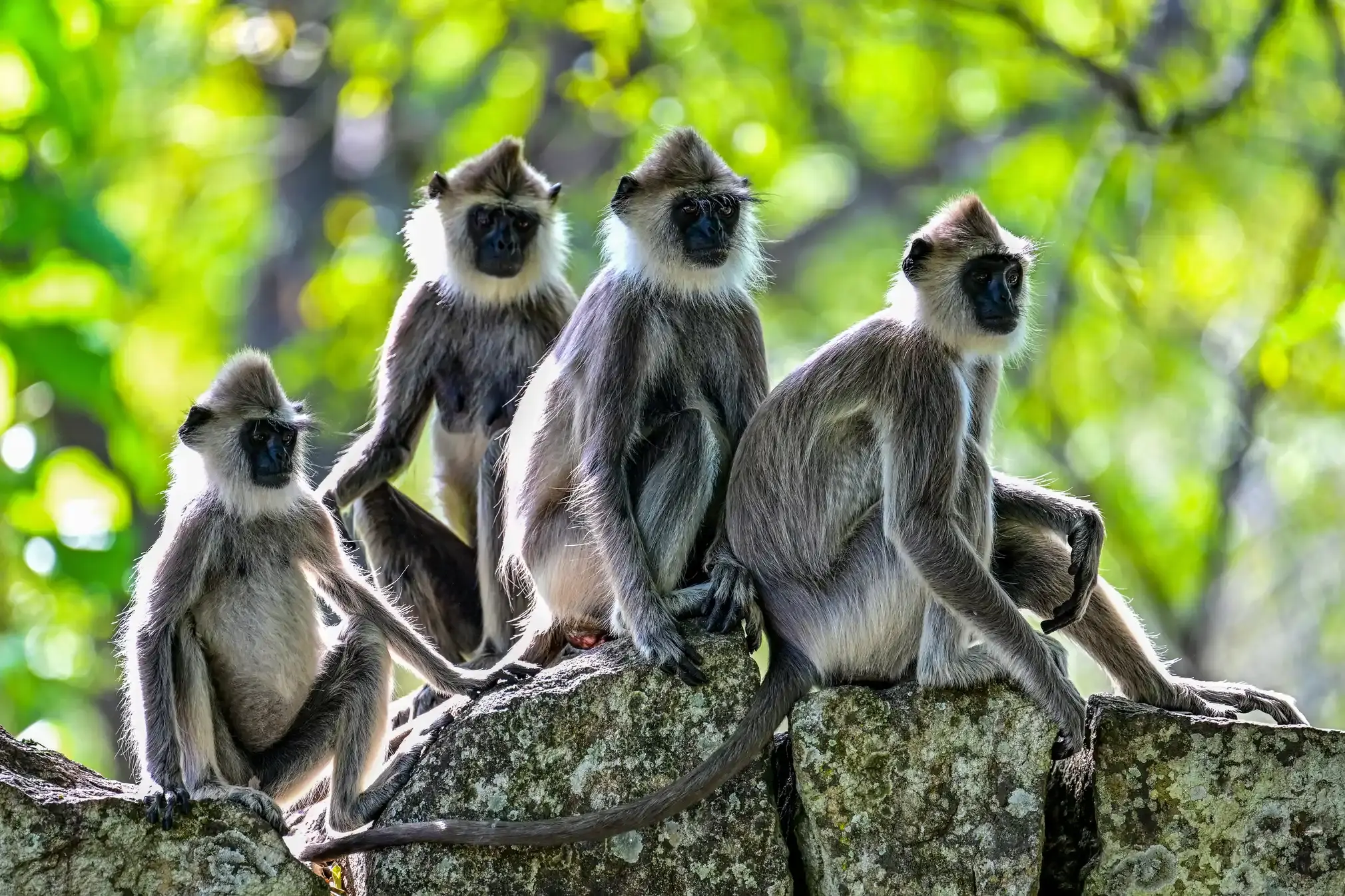
Tufted grey langurs in an enclosure outside the Mihintale temple in Sri Lanka. Officials have carried out a nationwide census of “nuisance wildlife” such as wild boar, lorises, peacocks, and monkeys, which, they say, destroy far too much of the country’s crops. (A great deal of damage is done by elephants, but they are protected by law)
Photograph: Ishara S Kodikara/AFP/Getty Images



Baby François’ langur
🐒Get Exploring, links in bio
#langurmonkey #langurus #langurs #langurmonkeys https://t.co/P6rBEqa4n4
— SloggerVlogger (@SloggerVlogger)
Nov 22, 2024
November 22, 2024 at 03:02PM
via Twitter https://twitter.com/SloggerVlogger

Study reveals Cat Ba #langurs' unique ability to drink salt water https://phys.org/news/2024-10-langurs-salt-endangered-species-defies.html
Genomic adaptation to small population size and saltwater consumption in the critically endangered Cat Ba langur https://www.nature.com/articles/s41467-024-52811-7
"Despite low genetic diversity, the langurs have retained key genetic traits that help them survive in their isolated environment on Cat Ba Island in #Vietnam. One of these remarkable adaptations is the ability to drink salt water."


Langurs in Bangladesh face extinction as hybridization between species escalates #Bangladesh #environment #wildlife #langurs https://news.mongabay.com/2024/10/langurs-in-bangladesh-face-extinction-as-hybridization-between-species-escalates/
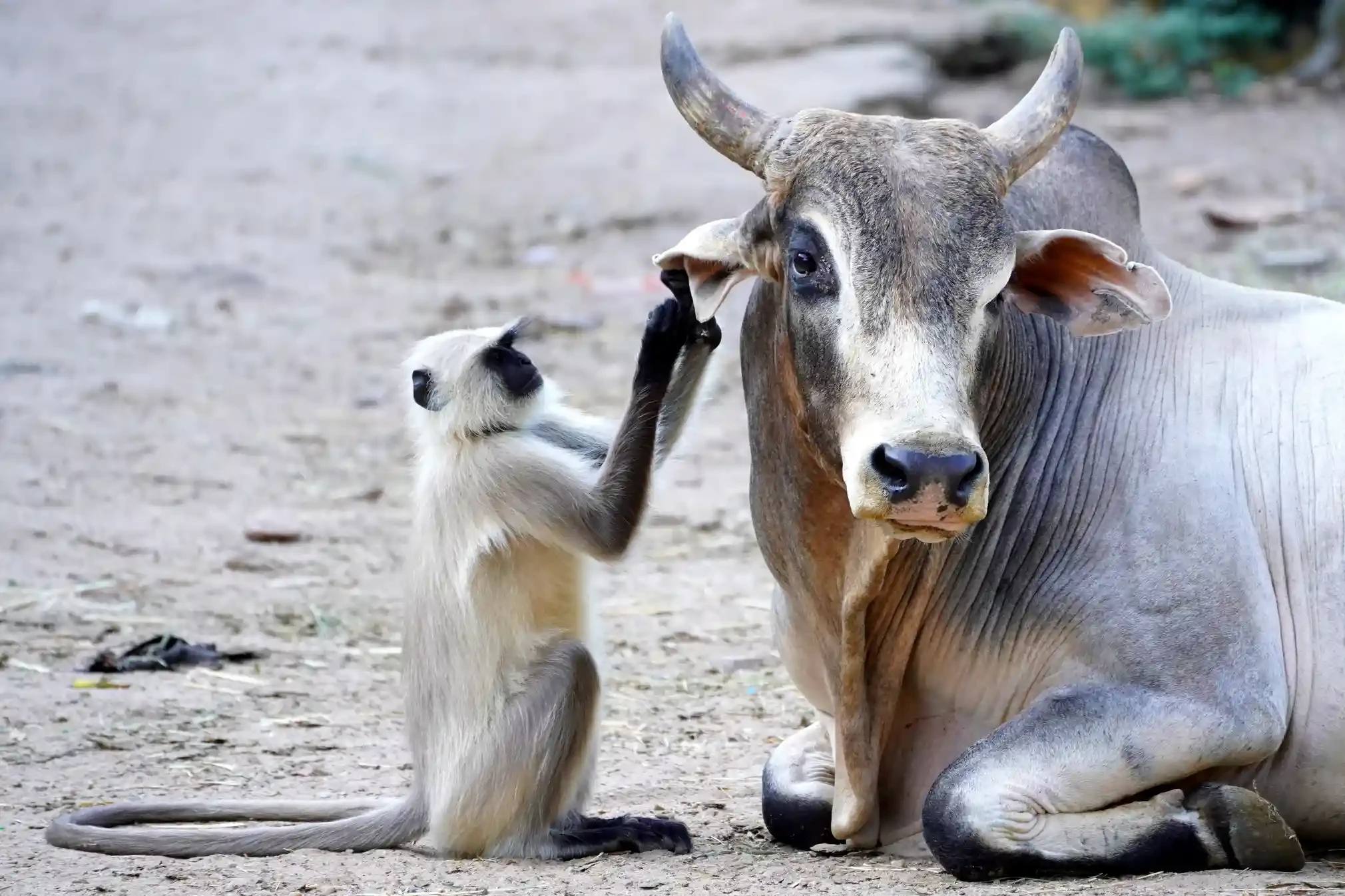
House call
A langur monkey inspects the ear of a nonchalant bull in Pushkar, India
Photograph: Himanshu Sharma/NurPhoto/Shutterstock
Client Info
Server: https://mastodon.social
Version: 2025.07
Repository: https://github.com/cyevgeniy/lmst