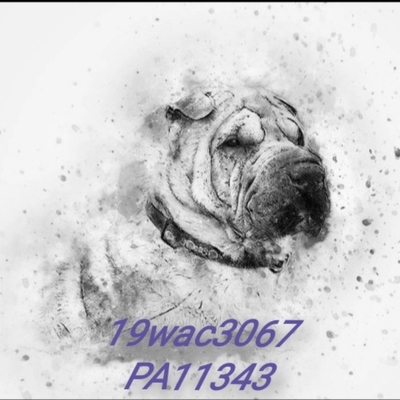
Every time I read the expression "HAM operator" I was thinking of this... so I had to see if it would work, and it does.
#ham #hamoperator #radio #amateurradio #c #programming #joke #pun #it #sorrynotsorry #dadjoke
Every time I read the expression "HAM operator" I was thinking of this... so I had to see if it would work, and it does.
#ham #hamoperator #radio #amateurradio #c #programming #joke #pun #it #sorrynotsorry #dadjoke

Basic Electronics for the Amateur Radio Operator: What You Need to Know for Your Technician License
1,003 words, 5 minutes read time.
If you’re preparing for the Amateur Radio Technician License Exam, understanding basic electronics is a must. While you don’t need to be an electrical engineer, the exam includes fundamental concepts like Ohm’s Law, circuits, components, and RF safety. This guide will walk you through the essential topics, ensuring you’re ready for the test and your first steps as a ham radio operator.
Understanding Electricity: The Basics for Amateur Radio
Electricity is the movement of electrons through a conductor, like a wire. Three key electrical properties define how electricity behaves:
These three are tied together by Ohm’s Law, a fundamental equation in electronics:
V=I×R
This means if you know any two values, you can calculate the third. Understanding this equation is critical for both the exam and real-world troubleshooting.
Direct Current (DC) vs. Alternating Current (AC)
Electricity comes in two forms:
For amateur radio, most equipment runs on DC power, but you’ll also need to understand AC because radio signals are alternating currents that oscillate at high frequencies.
Essential Electronic Components and Their Functions
Several key electronic components appear on the Technician Exam. Here’s what they do:
Understanding these basics helps you answer questions about circuit behavior and troubleshooting.
Series and Parallel Circuits
Circuits are made up of components arranged in either series or parallel:
For the exam, you should know how voltage, current, and resistance behave in each type of circuit. For example, total resistance in a series circuit is the sum of all resistances, while in parallel circuits, total resistance is lower than the smallest individual resistor.
Basic AC Concepts and Frequency
Radio waves are AC signals that oscillate at different frequencies. Frequency (f) is measured in hertz (Hz) and tells us how many times per second the wave changes direction. One kilohertz (kHz) is 1,000 Hz, and one megahertz (MHz) is 1,000,000 Hz.
Ham radios operate in different frequency bands, such as:
Higher frequencies allow for shorter antennas and are good for local communication, while lower frequencies travel further.
Modulation: How We Send Information Over Radio Waves
Modulation is how a radio wave (carrier wave) carries information. The Technician Exam covers three main types:
Knowing these helps when selecting modes for different types of contacts.
Power, Batteries, and Safety
Most ham radios run on 12V DC power sources, such as batteries or regulated power supplies. It’s important to understand:
Another key topic on the test is RF exposure safety. High-power transmissions can generate strong radio frequency (RF) radiation, which may cause health risks. To minimize exposure:
Ohm’s Law in Real-World Ham Radio Applications
A common exam question might involve calculating current or voltage using Ohm’s Law. For example:
Question: If a radio operates at 12V and draws 2A of current, what is the resistance?
Using Ohm’s Law:
Understanding these calculations can help with troubleshooting and designing circuits.
Final Thoughts: Studying for the Exam and Beyond
The Technician License Exam covers these topics, but learning electronics doesn’t stop there. Once licensed, you’ll continue exploring concepts like antenna design, signal propagation, and digital communication.
Great resources for studying include:
By mastering these basic electronics concepts, you’ll be well on your way to passing the exam and starting your journey in amateur radio. Keep practicing, get hands-on experience, and soon, you’ll be making contacts on the air!
D. Bryan King
Sources
Disclaimer:
The views and opinions expressed in this post are solely those of the author. The information provided is based on personal research, experience, and understanding of the subject matter at the time of writing. Readers should consult relevant experts or authorities for specific guidance related to their unique situations.
Related Posts
Rate this:
#ACVsDC #am #AmateurRadio #amateurRadioEducation #amateurRadioTraining #antennaTheory #ARRLStudyGuide #basicElectronics #beginnerHamRadio #capacitors #circuits #current #diodes #electricalComponents #electronicsBasics #examPrep #FCCExam #FM #hamExam #hamLicense #hamOperator #hamRadio #hamRadioBands #hamRadioBeginner #hamRadioComponents #hamRadioEquipment #hamRadioOperator #hamRadioStudy #HamRadioStudyGuide #HamRadioTraining #hamStudyGuide #inductors #modulation #OhmSLaw #powerSupply #radioBroadcasting #radioCommunication #radioFrequencies #radioFrequency #radioFundamentals #RadioLicensing #radioSignals #RadioTechnology #radioTransmission #radioWaves #resistance #resistors #RFExposure #RFSafety #SSB #technicianClass #TechnicianLicense #transistors #UHF #VHF #voltage


Understanding the Metric System in Amateur Radio: A Comprehensive Guide for Success
1,426 words, 8 minutes read time.
The metric system is one of the most universally used systems of measurement, and it’s crucial for success in amateur radio. From frequencies to power ratings, resistance, and voltage, the metric system provides a standardized framework for understanding and communicating technical data. For those preparing for the Amateur Radio Technician exam, mastering the metric system is essential to navigating the test with confidence and accuracy. This guide will explain the importance of the metric system in amateur radio, its relevance to the exam, and offer tips and tricks to help you succeed.
The Metric System and Amateur Radio: Why It Matters
In the world of amateur radio, the metric system plays a fundamental role in creating a consistent, universal language for communication. The metric system, or International System of Units (SI), is used worldwide, except in the United States, Myanmar, and Liberia. This system simplifies the process of sharing technical information across borders, ensuring that radio operators in different countries can understand one another’s measurements without confusion.
Whether you’re measuring frequency, power, voltage, or resistance, the metric system provides clear, standardized units for all these parameters. It helps create a foundation for understanding complex radio concepts, such as signal propagation, radio wave behavior, and power calculations. As the most widely used system for scientific and technical applications, it’s indispensable for anyone interested in becoming an amateur radio operator.
For example, frequency in amateur radio is measured in hertz (Hz), and its multiples are expressed in kilohertz (kHz) or megahertz (MHz). Similarly, power is measured in watts (W), with milliwatts (mW) and kilowatts (kW) as commonly used multiples. Resistance is measured in ohms (Ω), with kiloohms (kΩ) and milliohms (mΩ) as commonly used units for different levels of resistance. Voltage is measured in volts (V), with common multiples being millivolts (mV) and kilovolts (kV).
The Role of the Metric System in the Amateur Radio Technician Exam
The Technician Class license exam for amateur radio requires knowledge of the metric system because it is directly related to various technical questions about frequency, power, voltage, resistance, and more. The exam is structured with 35 multiple-choice questions, covering a wide range of topics including basic electronics, radio wave propagation, safety, and regulations. Understanding the metric system is crucial for answering questions related to these concepts.
One of the challenges that exam-takers face is converting between different units within the metric system. For instance, you may be asked to convert a frequency value from kilohertz (kHz) to megahertz (MHz), or convert milliwatts (mW) into watts (W). Having a solid grasp of the metric system and how to make these conversions is key to answering these types of questions correctly.
In the context of amateur radio, conversions often come up when you’re working with different power levels or adjusting to varying frequency bands. The ability to convert seamlessly between units can help you save time and avoid making mistakes during the exam. That’s why it’s essential to know the common prefixes used in the metric system, like milli (m), kilo (k), and mega (M), and their corresponding values.
Understanding Metric Units and Prefixes
To fully comprehend the metric system in amateur radio, you must first understand the most common units and their prefixes. These prefixes are used to represent different scales of measurement. Here are some of the most important prefixes and their values:
These prefixes are applied to various units such as watts, volts, ohms, and hertz, and they help simplify calculations. For instance, you might encounter a situation where you need to convert a signal’s power from milliwatts (mW) to watts (W). To convert from milliwatts to watts, you would divide by 1,000. So, if you have 500 mW, you would divide by 1,000 to get 0.5 W.
Additionally, when working with frequencies, you might need to convert between kilohertz and megahertz. If a radio signal’s frequency is given in kilohertz, but the question asks you to provide the value in megahertz, you can divide the frequency by 1,000. For example, 2,500 kHz is equivalent to 2.5 MHz.
Metric System Practice for the Technician Exam
To perform well on the Technician Class exam, it’s vital to practice working with the metric system. Start by memorizing the common prefixes and their corresponding values. After you’ve committed these to memory, practice applying them to different types of radio-related problems.
One of the most effective ways to practice is by using sample questions from previous exams. These questions often cover the key concepts you need to know, such as frequency conversions, power calculations, and understanding units of voltage and resistance. By solving practice problems, you’ll develop a deeper understanding of the metric system and become more comfortable making conversions under pressure.
You can find numerous online resources that provide practice questions and detailed solutions, such as websites and apps designed specifically for amateur radio exam preparation. These resources will help you hone your skills and identify areas where you need more practice.
Test Tips and Tricks for Metric System Success
Here are a few test-taking strategies to help you succeed in the Technician Class exam when dealing with metric system questions:
Common Mistakes to Avoid
When working with the metric system in amateur radio, there are a few common pitfalls to be aware of:
Conclusion
The metric system is a crucial aspect of amateur radio, and understanding it is essential for success in the Technician Class exam. By learning the common prefixes, practicing unit conversions, and using effective test-taking strategies, you’ll be well-prepared for the exam and confident in your ability to apply these concepts in real-world radio operations.
For anyone aiming to pass the Technician Class exam, dedicating time to mastering the metric system will make a significant difference in your performance. As with any subject, practice is key, and by utilizing available resources and committing the important concepts to memory, you’ll be ready to tackle the exam with ease.
With the right preparation and understanding of the metric system, you’ll not only pass the exam but also gain valuable knowledge that will serve you well as you embark on your journey as an amateur radio operator.
D. Bryan King
Sources
Disclaimer:
The views and opinions expressed in this post are solely those of the author. The information provided is based on personal research, experience, and understanding of the subject matter at the time of writing. Readers should consult relevant experts or authorities for specific guidance related to their unique situations.
Related Posts
Rate this:
#AmateurRadio #amateurRadioKnowledge #amateurRadioStudy #conversionTips #examPrep #examSuccess #examSuccessTips #frequencyConversions #hamOperator #hamRadio #hamRadioLicense #hamRadioPreparation #hamRadioTips #hertz #kilo #kilohertz #mega #megahertz #metricConversions #metricPrefixes #metricSystem #metricUnits #milliwatts #ohms #powerCalculations #powerRatings #radioCommunication #radioEquipment #radioExamGuide #radioExamQuestions #radioExamTips #radioFrequency #radioHobby #radioKnowledge #RadioLicensing #radioMeasurementUnits #radioOperator #radioSafety #radioTechnician #radioTests #radioTraining #radioWaves #resistance #SIUnits #technicalKnowledge #TechnicianClassExam #TechnicianExamPractice #testStudyGuide #testTakingStrategies #voltage #volts #watts

Visited a #hamoperator last night. To buy a #cbradio antennamatcher / SWRmeter. It was an long educational & cozy evening.
But today I have to go back, I forgot the purchase. 🤦♂️