#climatic


www.pnas.org/doi/abs/10.1...
1/
"we project a 36 to 50% contraction in suitable grazing areas by 2100 due to future #climate change. We show the loss of safe #climatic space for grazing overlaps significantly with regions already suffering from severe #poverty, #hunger, and #political #fragility.
Climate change drives a declin...

https://www.pnas.org/doi/abs/10.1073/pnas.2534015123
"we project a 36 to 50% contraction in suitable grazing areas by 2100 due to future #climate change. We show the loss of safe #climatic space for grazing overlaps significantly with regions already suffering from severe #poverty, #hunger, and #political #fragility. We estimate this could displace the #livelihoods of over 100 million #pastoralist

New publication: Multispecies #grasslands produce more #yield from lower #nitrogen inputs across a #climatic gradient.
https://doi.org/10.1126/science.ady0764


#India - Farmers devastated after 80% of key crops are wiped out — here's what happened
Story by Tina Deines, February 4, 2026
"#TomatoFarmers in one region in India are struggling after their crops were hit hard by #pests and #climatic factors.
What's happening?
"The Pioneer reported on the challenging growing season for farmers around the town of #Gaulapar in northern India, an area that is known for tomato production. According to growers there, about 80% of their cultivated tomatoes have been damaged by pests.
"The publication also lists '#ClimaticFactors' as a challenge for tomato farmers. For one, young tomato plants suffered damage in the initial phase of cultivation due to #HighTemperatures during the planting season.
Why is this crop damage concerning?
"According to the publication, the drop in tomato yields has led to surging prices at the market, affecting consumers. While some farmers are benefitting from higher prices, most are suffering due to the crop damage they've endured.
"This is yet the latest example of the struggles facing food producers worldwide and the cascading impacts they have on consumers.
"One recent study tied recent dramatic price increases in staple foods to rising global temperatures, which are leading to prolonged droughts, more severe heat waves, unpredictable precipitation patterns, and other severe weather. For instance, #Malaysians are facing soaring prices at the supermarket after a heavy #monsoon season wiped out a number of local #crops."
#NewZealand (#Aotearoa) - #NativePlants - an introduction to #SeedCollection, #propagation and on-farm nurseries
Excerpt: "Collecting seeds
A common method of sourcing seeds is called #EcoSourcing. Eco-sourcing seeds refers to collecting seeds from native plants that are already established in your area. This allows you to grow plants that have adapted to, and are suited to, your local #climatic conditions, and therefore your plants are more likely to survive.
Some considerations for eco-sourcing, as identified by the Department of Conservation, include:
- planting species that you know to be native to the local area
- collecting seed from as close to your restoration area as possible
- collecting seed from a similar ecosystem/environment to that to which you are restoring
- trying to collect your seeds from plants that are natively occurring rather than those that have been planted
While eco-sourcing is a great habit to get into, there is also nothing wrong with introducing new species into your restoration areas. Some considerations for this would include:
- is this species likely to be able to survive in this environment?
- is this species and its characteristics suitable? Is this the right plant for this particular planting site?
When it comes to collecting seeds from plants, late-Summer to Autumn is most commonly the time when seeds are ready for collection due to drying off/berries ripening etc. However, the timing of seeds being ready to collect is species dependent.
The Department of Conservation has created calendars and guides for seed collection for some common native #tree species, as well as #grasses, #sedges and #flaxes, which can be accessed by the links below."
#SolarPunkSunday #NativePlantsNewZealand #Gardening #GardeningInNewZealand #SouthernHemisphereGardening

#Scientists have a dire new warning about the state of the planet
They add recent #climatic developments “emphasize the extreme insufficiency of global efforts to reduce #greenhousegas #emissions and mark the beginning of a grim new chapter for life on #Earth.”
In #2023, for instance, ability of the land to absorb our #carbon emissions dropped significantly. The report confirms that last year was the hottest on record, and was likely the hottest in at least 125,000 years.
https://grist.org/climate/scientists-have-a-dire-new-warning-about-the-state-of-the-planet/

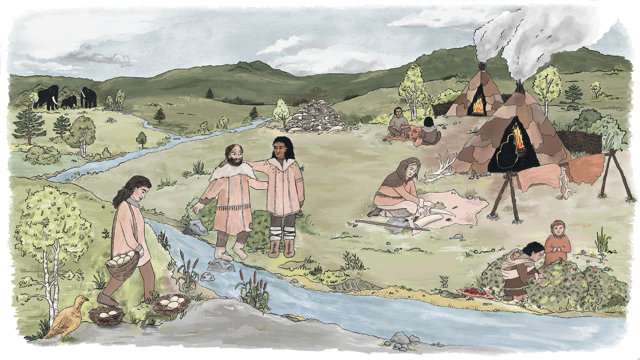
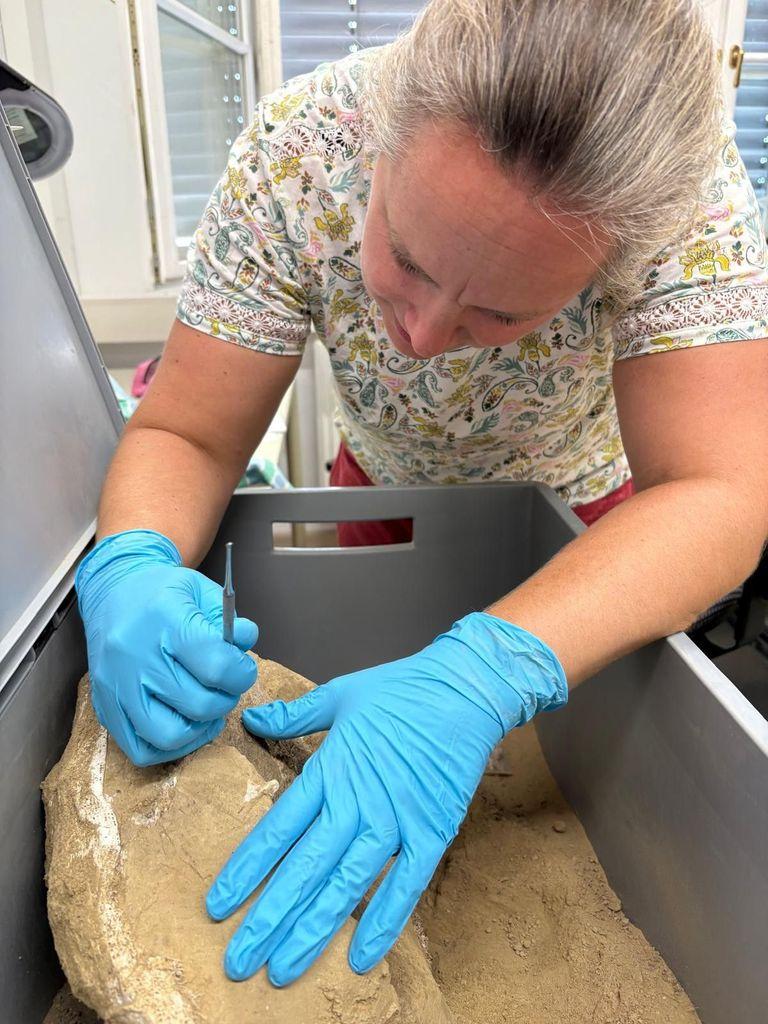
👏👏 Congratulations to our colleague Marjolein D. Bosch on receiving an #ERC Starting Grant for her COPE project. She will explore how Ice Age hunters and gatherers responded to cold temperatures, resource scarcity 💦 🦌 🌱 , and environmental changes 30,000 years ago.
Using sediment biomarkers, isotope analysis, and paleogenetics, she is studying a site in Lower Austria to gain a new understanding of human resilience in extreme #climatic conditions.
More info: https://www.oeaw.ac.at/en/oeai/media/news-archive/news-detail/cope


Fascinating new work by Wang et al. shows how #climatic barriers and local #environmental selection collaborate to facilitate adaptation to heterogeneous landscapes in East #Asia from a #phylogeographic perspective.
https://doi.org/10.1111/jse.13197 @WileyEcolEvol #systematics #JSE #ClimateChange


La Gravière - Genève #streetart #mural #avengersclimatic #avengers #climatic #suisse #geneve

Yan et al. explore the #climatic niche breadth of Betula spp.--likely to be a key attribute in their ability to avoid decline or #extinction under #ClimateChange.
Find out more in this remarkable new #JSE paper!
https://doi.org/10.1111/jse.13176
@WileyEcolEvol
#ecology #evolution #PlantSci #botany #OpenAccess


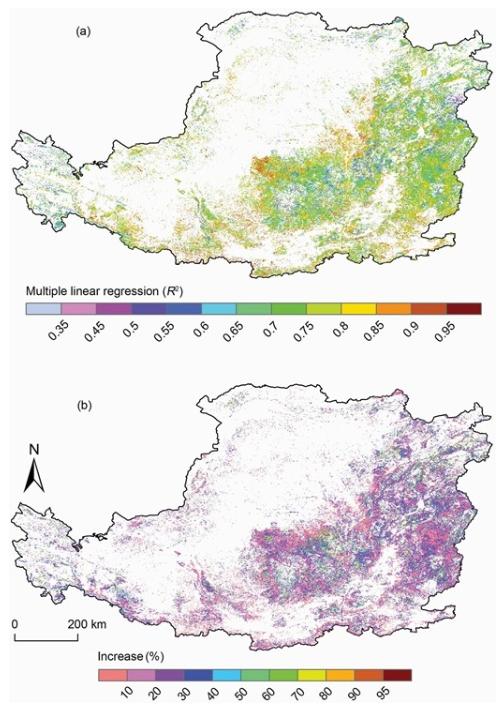
#Climatic factors have #TemporalEffects on #VegetationGrowth, Ning Liu et al. investigated the response of #VegetationPhenology to the #TimeLag and #TimeAccumulation effects of climatic factors, under both time-lag and time-accumulation effects scenario.
https://doi.org/10.1093/jpe/rtac063
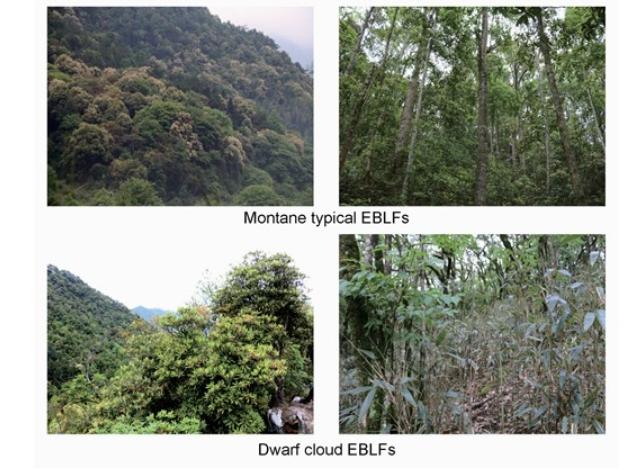
#EvergreenBroad-leavedForest ( #EBLF ) is climax vegetation in East China, and Jiangxi Province is located at the center of EBLF. In this study, Yizhen Liu et al. provided a high-level #ClassificationFramework for EBLF in #Jiangxi and exploring the roles of #Topographic and #Climatic factors in driving their distributions.
https://doi.org/10.1093/jpe/rtac059

#WeekendReading: Yasuhara et al., on #food supply regulation of deep-sea ecological regulation as a signal carrier of #climatic forcing of the Southern #Ocean over the last half million years.
https://www.cell.com/current-biology/fulltext/S0960-9822(24)01567-7

Thousands of #sinkhole's opening in #Turkey recently, getting closer to settlements. Size ranging from 4 up to 100 meters, depth usually 5 to 40 meters, and they are opening in a few seconds.
Said to be caused by the extremely lowering level of #groundwater due to #climatic catastrophe and irrigation.

The #National #Climatic #Data #Center is based in Asheville, North Carolina.
As I write this, the center's website remains offline.
That's because Asheville, a city in North Carolina's Blue Ridge Mountains, is the epicenter of catastrophic flooding from #Hurricane #Helene that has played out over the last week.
🔥The climate data facility is inoperable because water and electricity services in the region have entirely broken down due to flooding.

"By 2090, Sydneysiders could swelter through another week’s worth of days above 35 degrees, and sea levels could rise 35 centimetres – and that’s if the Paris Agreement succeeds.
While the modelling shows that some #climatic changes are baked in, it highlights the stark difference between countries achieving decarbonisation versus a business-as-usual approach."
https://www.smh.com.au/environment/climate-change/state-s-climate-future-revealed-success-is-hot-and-failure-is-hotter-20240819-p5k3ix.html
#NewSouthWales #Australia

#GenderEquality in #Africa Has Everything to Do With #ClimateChange
When a #climatic #disaster #strikes, #women have nowhere to go.
#Women #Transgender #LGBTQ #LGBTQIA #Africa #Kenya #Representation #Culture
https://allafrica.com/stories/202408160122.html

The #vegetation’s 🌿 speed of adaptation to temperature 🌡️ changes through eco-evolutionary processes can strongly influence global rates of organic carbon burial and silicate weathering. The calculated carbon sinks do not match the reconstructed rates of carbon release by degassing and oxidative weathering. Imbalances of this magnitude are implausible as they would have resulted in a runaway #greenhouse effect and extreme #climatic conditions on #Earth https://www.science.org/doi/10.1126/sciadv.adj4408

The prevailing #climatic conditions found in a particular region are the primary determinant of the suitability of that area to support #plant #pests and #diseases. Review in the journal EPPO Bulletin of the uncertainties of #climate change and how they affect pest risk assessments by Catherine Bradshaw and others - https://doi.org/10.1111/epp.12985