#bmaa

2025-12-07

✈️ Licence to Thrill (and Revalidate)

The 1st of October 2025 marked the start of the most significant licensing changes for UK microlight pilots in years. As an instructor, I’ve been fielding questions from students and fellow pilots alike: What’s changing? Why now? And how does it affect me?

The short answer: the Civil Aviation Authority (CAA) is simplifying and aligning licensing rules across NPPL, PPL, and LAPL. For microlight pilots, this means both new obligations and new opportunities.

🌤️ Why These Changes Are Needed

Since Brexit, UK licensing has been a patchwork of retained EASA rules, national privileges, and exemptions. The CAA’s Licensing Review (2022–2025) set out to streamline this system, reduce confusion, and ensure consistency across general aviation. Amazingly, I think they have succeeded… mostly.

For microlight pilots, the changes bring us closer to parity with other licence holders. They also recognise the real value of three axis microlight flying experience.

🛩️ Key Changes for NPPL(M) Holders

  • Revalidation Cycle Standardised: The old 5 hours in 13 months rule is being phased out. From 1 Nov 2026, all pilots must adopt the NPPL model of 12 hours in 24 months. This includes 6 hours in the final year. It also requires 12 take‑offs/landings and 1 instructional hour.
  • Microlight Hours Count Toward ICAO PPL: Three-axis microlight time now contributes to building hours for a full ICAO PPL. This is potentially a huge win for young aspiring commercial pilots.
  • Ratings Simplified: SSEA becomes SEP, SLMG becomes TMG. SEP holders can fly microlights after differences training, without needing a separate microlight rating.
  • Instructional Hour Clarified: It’s not a test—just a refresher flight, tailored to the pilot’s needs. Use it to do the tasks you rarely attempt. Regain confidence in your abilities. You’ll definitely get something out of it if you use the time effectively.
  • CAP Guidance: A dedicated microlight CAP document is coming, replacing the withdrawn CAP 804.

✅ Benefits

  1. Recognition of Microlight Experience – Hours now count toward ICAO PPL, opening pathways for young pilots.
  2. Simplified Administration – Ratings consolidated, fewer duplications, and retention of fast licensing issue via our superb BMAA.
  3. Improved Safety Culture – Mandatory instructional hour for all pilots ensures regular contact with instructors, encouraging skill refreshers.

⚠️ Drawbacks

  1. Loss of Privilege – The shift from 5 in 13 to 12 in 24 will feel like a step back. Some pilots may perceive it negatively.
  2. Transition Confusion – With exemptions valid until 31 Oct 2026, pilots may struggle to track which cycle applies.
  3. Training Organisation Burden – Updating syllabi, examiner guidance, and paperwork will take time.

✍️ My Opinion

While the removal of the 5‑in‑13 cycle will sting for some, the broader picture is positive. These changes simplify licensing, recognise microlight flying as serious aviation, and begin to align us with international standards.

As instructors, we should frame the instructional hour as an opportunity, not a burden. And for students dreaming of airline careers, the ability to start in microlights is a game‑changer.

Overall, this is a step toward a clearer, fairer, and more easily understood licensing system.

📚 Further Reading

#aviation #bmaa #caa #flying #ga #lapl #licensing #microlights #news #nppl #pilot #pilotTraining #ppl #sep #ssea #ultralights
2024-08-25

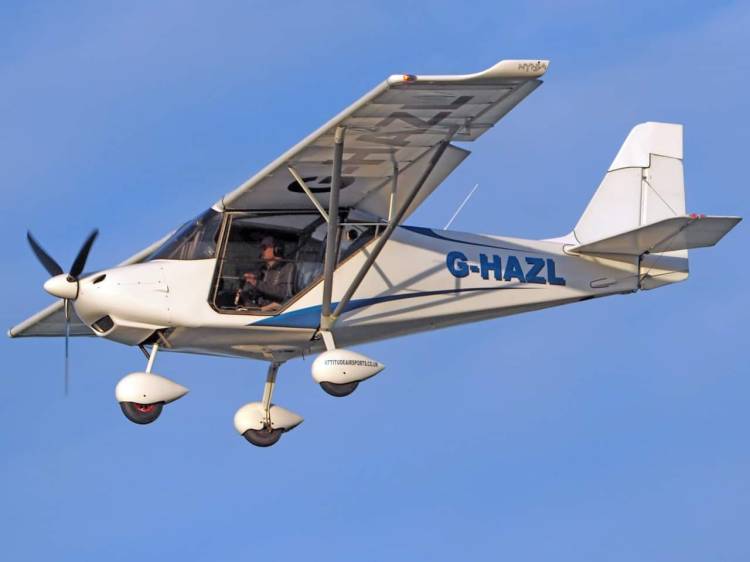
Fly me into the hedge please!

The end of the runway is in sight.

Sadly we are still at 400 feet and on a glidepath that will take us beyond the hedge at the far end of the runway.

“What are you thinking?” I enquire optimistically as my student wrestles internally with the decision making process that should really go something like this:

“Dan’s asked me what I’m thinking. That probably means that this approach is not very good. I should go around.”

“I think its ok.” is the optimistic reply I get.

With a sigh I command, “Ok, full power go-around.”

This type of exchange happens from time to time and its usually when the student has been ‘circuit bashing’, or practising repeated take offs and landings for some time without success. However, it’s also usually around this point that the student is right on the cusp of ‘getting it’.

Yep, definitely looking a little high here…

Getting it: that joyful moment when something that someone has been struggling with suddenly clicks. It happens all the time in life, from the moment you take your first steps (although granted, its likely you can’t remember those), to the time your dad ran along behind you pretending to hold the bike seat as you rode without your stabilisers the first time. Or what about the time you finally swam without your armbands?

Flying, and in particular landing, is no different. Once you understand what you are trying to achieve, and get it, you will never forget.

Spoiler alert, you will still make some shit landings!

But, you will at least be able to work out why it went wrong, and more importantly, what you can do differently next time to address it.

It’s one of the greatest joys of my job as a flight instructor to see someone ‘get it’ – in fact it’s probably more rewarding than seeing someone’s first solo, as I’m just generally just like a mother hen during that particular milestone, fussing and worrying (unnecessarily I might add). The ‘getting it’ moments are just as big in my eyes, as that is when people start to fly the plane, rather than being flown by the plane.

And that moment, when someone flies a stable glide approach, to the aiming point, rounds out at just the right height, holds the plane in the air until the speed has bled off, and does NOT attempt to fly it into the runway, erm, I mean land it, that moment is one of the most satisfying moments there is when teaching people to fly.

The secret to landing, paradoxically, is to try not to land. And as soon as my students not only realise that, but actually believe it, that’s when they begin to make real progress.

That’s when they can judge the angle of the approach more accurately, and at 400ft over the middle of the runway, we’d already be at full power on the go-around without me needing to utter a single syllable.

That’s when they ‘get it’.

#AttitudeAirsports #Aviation #BMAA #FlightInstructor #Flying #Humour #Landing #LearningToFly #Microlights #Pilot #StudentPilot #Ultralights

JanPVJanPV
2024-06-23

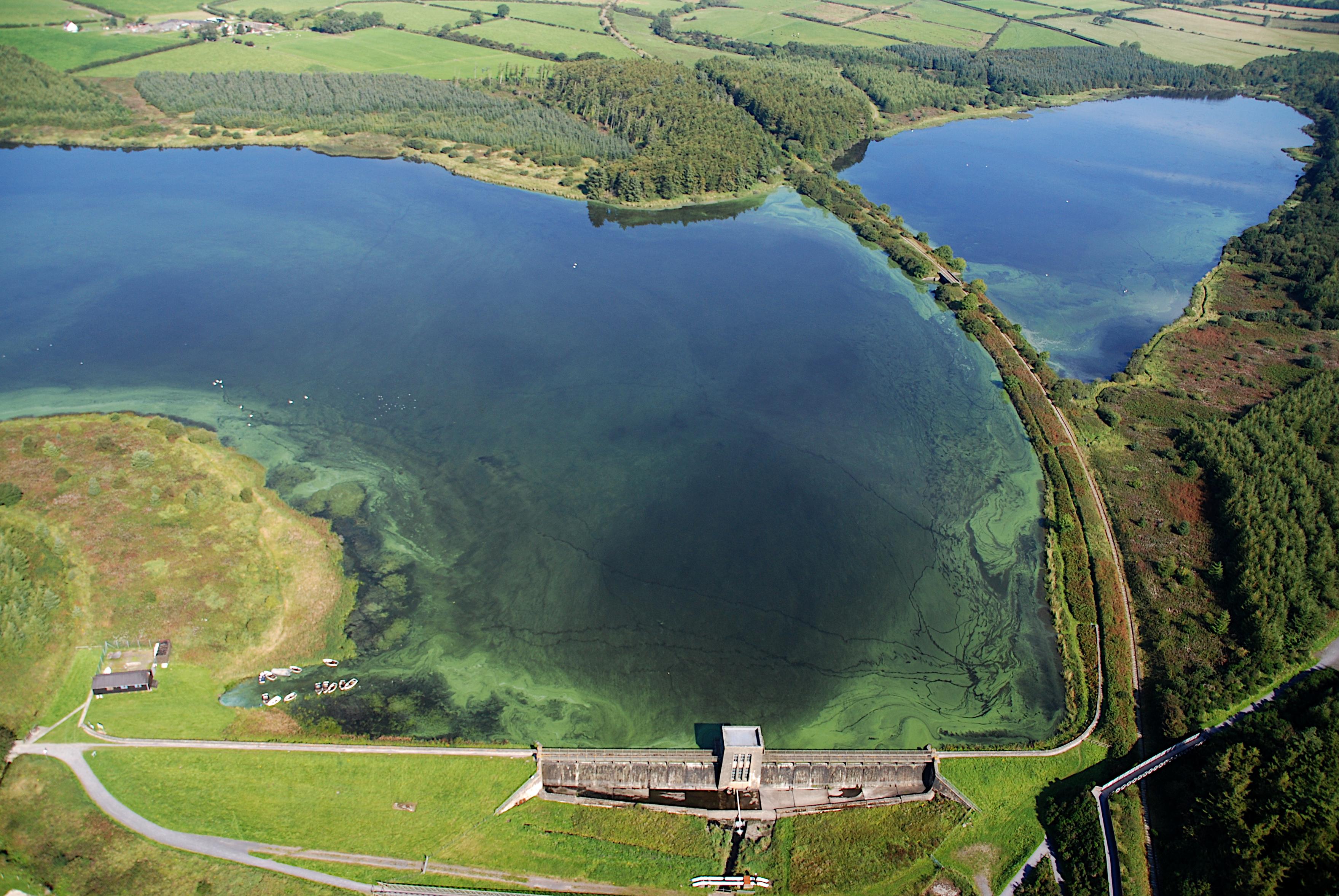
If you drink from reservoirs, it is very likely that those reservoirs will be populated by regular summer blooms (though they can last into early winter) of cyanobacteria - 'blue-green algae' as they are commonly but wrongly known.

Cyanobacteria produce , a neurotoxin linked to neurodegenerative diseases. Water companies invariably do not test for it. Which begs the question: why aren't water companies forced to test for BMAA?

The next health scandal?

en.wikipedia.org/wiki/%CE%92-M

An aerial view of a small reservoir for public potable water, heavily affected by a late summer cyanobacterial bloom. The reservoir is green, with particular concentrations of cyanobacteria near the shores, driven there by wind.
2024-02-03

Our flying school at Felthorpe, near Norwich is now open! #learntofly #ikarus #bmaa #aviation #norwich #fyp

2023-05-30

Location Location Location

“Final to land zero two,” announces the anonymous voice on the radio in the club house

I glance up at final approach, and naturally there is no aircraft there.

Shifting my gaze slightly more eastwards, I eventually find the aircraft from which the radio call emanated half way along right base.

“You’re not though. Are you?” I mutter to myself, imagine the eye rolling emoji…

“Golf Alpha Bravo Charlie Delta overhead descending for downwind join…”

What does that even mean?

Again, a glance to the overhead shows no sign of the aircraft from which this fabulously cryptic radio call was transmitted.

You might think I’m being pedantic but the above two examples are just two of many that I regularly hear when I fly.

“But why does it matter?” I hear you ask.

Safety.

It’s really as simple as that. If you’re going to use the radio, and of course, no one has to *, then be accurate in your position reporting and intentions. No one is saying your R/T procedures must be faultless, indeed I recently invented ‘Late Final two zero’ as a radio call when under a little pressure, instead of the more traditional ‘Short Final two zero’, however it still conveyed exactly where I was and what the situation was.

The BMAA Circuit Matters document states:

“13.11. The “final” call is made when the aircraft has turned from the base leg to the final approach leg.

Calling final when you are not is simply dangerous and gives people a false indication of where the traffic is. Similarly, calling downwind, when you are at the end of the crosswind leg and just starting to turn is just as risky.

From BMAA Circuit Matters document again:

“13.7. The “downwind” call is made when the aircraft is abeam the upwind end of the runway flying in the downwind leg.”

In plain English that’s when you are directly across from the end of the runway from which you intend to land. If you take a look at the image below you will see the problem quite clearly if the downwind call is made at the end of the crosswind leg.

Imagine the pilot who has joined overhead using a standard overhead join and is now flying the abbreviated crosswind leg to join mid way downwind. If that pilot hears you call downwind, they will likely assume you will not be a threat to them, and will be further ahead on the downwind leg, when the reality would be far different as the aircraft converge on the same bit of air.

So yes, it matters.

Of course everyone should be keeping a good lookout and not just relying on the radio, but in reality, we are all humans and those inaccurate position calls have and will cause accidents, of that, I have no doubt.

Another point to make, and I’m sure we all remember our own instructors drumming this in to us, is fly the damn aircraft, and then, if there is time and it’s safe to do so, make a radio call.

Don’t worry if you can’t make the downwind radio call; do your downwind checks first.

Don’t worry if you can’t make the final radio call; configure the aircraft to land first.

What you shouldn’t do is try and cram your radio call in first by making it early; this is the kind of thing that may lead to bad habits and poor position reporting.

So, the message of this post is simple: think before you transmit. Be accurate in your location/position reporting. And if you get it wrong, just make a correction call.

I’ll leave you with this, small anecdote.

I recently heard a story of a pilot who when working as a ground call sign giving radio checks at a recent fly in, kept giving “readability 4”. When challenged by a colleague on this, who said “but they are perfectly readable,” the response was “Ahh, but I never give a five as I’ve got bad hearing.”

Straight from CAP413 I’m sure you’ll agree, and absolutely terrifying…

Fly safe, and if in doubt or unsure on the radio, ask an instructor or a FISO/ATCO for advice. We’ll all be delighted to help.

* in uncontrolled airspace, unless it is a Radio Mandatory Zone (RMZ)

#aviation #bmaa #flying #ga #microlights #pilot #radio #rt #safety #ultralights

Client Info

Server: https://mastodon.social
Version: 2025.07
Repository: https://github.com/cyevgeniy/lmst