
Oulu Prison was designed in 1882 by Ludvig Isak Lindqvist, Director General of the National Board of Public Buildings. The first prisoners arrived on 25 July 1885, a date still carved into the brick wall beside the main gate: “18 25/7 85 Tultiin Linnan.”
The prison ceased operations in December 2025, when a new facility opened in Ruskonselkä. Rising above the rooftops of Myllytulli, the red-brick building forms a prominent landmark. Its future use has not yet been decided; possible plans include cultural spaces or a hotel.
#Oulu #HistoricArchitecture #BrickArchitecture #Winter #Myllytulli #AdaptiveReuse
#adaptiveReuse


A rammed earth house that reuses existing material on site and works in harmony with the surrounding landscape
Beautiful architecture and down to earth (pun intended) - brilliantly written up by @edwinheathcote 👏
https://giftarticle.ft.com/giftarticle/actions/redeem/6ffb9fd9-e702-4520-b7c9-f3cf6d9ff0fd

Villa Renovation by Christian Prasser redefines a modernist house through subtraction rather than addition. Clean volumes, precise openings, and a singular circular window balance memory and clarity, turning renovation into an act of architectural restraint.
#ZAHRCHIVE #Architecture #VillaRenovation #Modernism #Vienna #AdaptiveReuse

Masseria Carovigna restores a historic stone structure through restraint and material continuity. Vaulted spaces, lime surfaces, and minimal insertions preserve memory while allowing contemporary life to inhabit the architecture quietly.
#ZAHRCHIVE #Architecture #AdaptiveReuse #HistoricArchitecture #StoneArchitecture #ItalianArchitecture #MargaroneArchitects #ArchitecturalRestoration

A disciplined conversion: the new glass hall reads as a clear, contemporary layer that clarifies the castle’s massing. Transparency turns heritage into a civic interior—welcoming, legible, and restrained—where old and new stay distinct yet coherent.#Architecture #AdaptiveReuse #Renovation #Heritage #ConcertHall #gmpArchitects #bbbarchitekten #ContemporaryArchitecture #ArchitecturalDesign

Typesetting a city: Lessons from Chicago’s Printers Row
As with a printer’s typeset layout case, each part of a city is organized and choreographed to fit the space in which it is defined. Individual lots are separated into neatly aligned rectangles, while the blocks are divided by streets and alleys. Comparatively, individual sorts (letters, numbers, and punctuation) are stored into individual rectangular boxes, which are separated by slats. As the two images below show, the lay of typesetter’s job case and the traditional grid layout of a city’s street network are eerily similar.
California style typesetter’s job case – Source: glog.nf.com 1891 map of the Printing House District – Source: chicagology.comHeadlining each of the ten (10) planning lessons provided below are classic typesetting terms (provided by gemini.ai) that uniquely correspond to my previously written planning insights. While some of the terms may be more “metaphorically spot-on” than others, they, like the two images above, provide a fascinating comparison between urban planning and printing.
With the exception of the first lesson below, these ten (10) takeaways are not presented by order of importance. The gemini.google.ai definition for each typesetting term is provided at the bottom of the lesson list.
Peace!
——-
“A Skyline of the Mind” – Image source: stockcake.com- Lesson 1: The Frontispiece (The Curated Entry): Printers Row (officially Printing House Row District) is much like a well-curated bookstore. It is meant to be browsed…to be taken in at a slow pace where one can pause to truly admire the fine works of art and architecture. Each vertical volume is displayed side-by-side with its distinctive cover, binding, and details set upon the symbolic street shelf literally forming “A Skyline of the Mind.”
- Lesson 2: Standing Type (The Living Organism): As with most living organisms, a city, or subset thereof like Printers Row will germinate, grow, blossom, flower, decline, decay, grow dormant, and regenerate to flower once again.
- Lesson 3: The Serif (Engaging & Timeless Detail): The architecture of Printers Row proves that engaging and inspiring building design is literally timeless.
- Lesson 4: Killed Matter (The Near-Erasure): The thought that collective “we” were so devoid of common sense as to once consider demolishing Printers Row for mid-20th century freeway construction leaves one to wonder about humankind’s sanity.
- Lesson 5: The Distribution (Adaptive Reuse): Adaptive reuse, when done thoughtfully, can introduce whole new generations to the marvels of previous urban incarnations.
- Lesson 6: The Sorts (Preserving the Working Parts): Whenever possible, preserving the “actively working” portions of this former printing and publishing district would be akin to witnessing the harnessed raw power that permeates the cotton mills of Lowell National Historical Park. This would be particularly true when the machinery is activated to reveal its powerful and rumbling roar.
- Lesson 7: Kerning (The Walkable Scale): Printers Row demonstrates the benefits and justification for a compact and walkable city form, where the transportation hub is placed to provide ease of access and a grid pattern is employed for interconnections.
- Lesson 8: The Proof (A Snapshot of History): The de-industrialization of America has had some notable benefits, including but not limited to the presenting later generations with a snapshot of our history in brick, mortar, stone, and steel.
- Lesson 9: Pi (The Underrepresented Industrial Form): The Industrial Revolution is underrepresented in our visual and visceral preservation of American history, particularly within the Midwest. Greater emphasis to preserve and protect significant examples is imperative SOON before they are lost forever.
- Lesson 10: The Colophon (The Essential Urban Chapter): No urbanist, bibliophile, or architecture aficionado would consider their trip to Chicago to be complete, nor successful without time spent visiting Printers Row.
——–
Typesetting term definitions (per gemini.google.ai):
The Frontispiece – An illustration or decorative piece facing the title page of a book.
Standing Type – Metal type that has been set and is kept “standing” for future use rather than being melted down.
The Serif – The small decorative strokes or “feet” at the ends of a letter’s main strokes.
Killed Matter – Type that has been used and is designated to be broken up or melted down in the furnace “hellbox.”
Distribution – The process of returning individual pieces of type to their proper compartments in a case after printing for use in a future (or different) story.
The Sorts – The individual characters or special pieces that make up a complete typeface.
Kerning – The adjustment of space between individual characters to improve legibility and appearance.
The Proof – A trial impression taken from the type to check for errors before the final printing.
Pi – A mass of type that has been spilled or jumbled together and rendered unreadable.
The Colophon – A final statement at the end of a book giving details about its authorship and production.
#adaptiveReuse #bookshelves #Chicago #cities #design #Illinois #layout #planningLandUse #PrinterSRow #printing #publishing #typesetting


A pantone of classic Chicago: Printers Row & S. Dearborn
“The excellence of every art must consist in the complete accomplishment of its purpose.” Source: Quote on the Second Franklin Building on Printer’s Row.
Easily this blog author’s favorite part of Chicago’s Loop, the classic skyscrapers of Printers Row and South Dearborn Street evoke the city’s robust architectural and manufacturing heritage within a few square blocks. From the exterior iron and steel fire escapes, to the brick and masonry facades, to the literal heartbeat of city’s printing and publishing industry, this illustrative historic district in the South Loop showcases a fascinating aspect of Chicago’s muscle and might.
Mosaic depicting the art of printing on the second Franklin Building (1912).“Arguably the most famous publisher located on Printers Row was Rand McNally, which was founded in 1856 in Chicago and opened its fourth headquarters in 1912 at 536 S. Clark. But perhaps the most-read publications came from Lakeside Press, a division of R.R. Donnelley & Sons. The company printed both the Montgomery Ward and Sears catalogs, as well as the Encyclopedia Britannica, Time and Life magazines, at 731 S. Plymouth.” Source: playeatlas.com
Most of these magnificent buildings, once used for offices and/or production of print materials, have been lovingly restored and adapted into mixed uses or residential structures. Many of the ground floors now contain a delightful mix of small shops, pubs, and dining establishments.
Frankly, today’s modern glass edifices can hardly compete for attention given the distinctive architectural embellishments and adornments set upon these classic Chicago high-rises. They are simply a visual feast for the eyes. One can also easily imagine the continuously rumbling sounds of gigantic printing presses, as the machinery churned out multitudes of documents, magazines, and publications.
If you are in Chicago, skip the typical tourist venues around downtown and take a stroll along South Dearborn Street (and paralleling streets) through Printer’s Row. If you are lucky enough, perhaps the Printers Row LitFest will be taking place while you are visiting.
Peace and enjoy the images in the post!
Metal, masonry, might, and brick Rowe Building (1892) – the blog author’s personal favorite Beauty in detail Donohue Building (1883) and Annex (1913) Plymouth Building – left (1899) and Manhattan Building – right (1891) A lengthy litany of fire escape stairs. Dearborn Station (1885) – now a shopping and dining venue Old Colony Building (1894) – tallest high-rise in Chicago when completed at ~ 215 feet Fisher Building of Chicago – oldest portion to the left (1896) and addition (1907) to the right Adornment atop the Harold Washington Chicago Public Library Printers Row (1925) by Robert Addison – Source: chicagology.com#adaptiveReuse #architecture #art #Chicago #cities #design #highRises #highrises #history #Illinois #planning #preservation #PrinterSRow #printing #publishing #skylines #tourism #travel


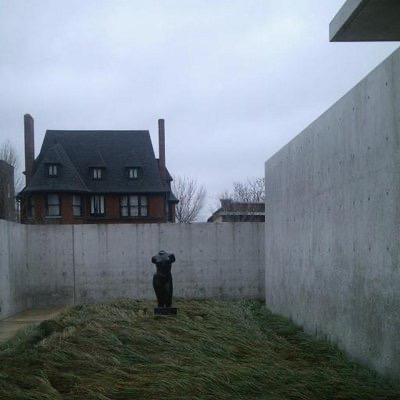
"the 310-room hotel will be converted to a 220-unit building, with renderings suggesting a mix of studio and one-bedroom apartments" https://www.denverpost.com/2025/12/31/holiday-inn-denver-housing-hotel-apartments #adaptivereuse *this is right around corner from us and adjacent to at least two major transit routes!

It's too bad it couldn't be re-used for something -- and leave the trees! @ObsidianUrbex
That is wicked clever, @schokopuddingg ! Tagging for #SolarPunkSunday !

RE: https://mastodon.murkworks.net/@moira/115823927559800398
Surprising amount of interest in this little laundry-detergent-cup-to-storage design, so I put both versions on Thingiverse!
https://www.thingiverse.com/thing:7258979
The nub version is nice because it's no-support no-cleanup, just print-and-use. The version with spiral threading needs supports and so needs cleanup, but is a tighter/stronger fit.
#3dPrinting #storage #reuse #AdaptiveReuse #tide #caps #lids #container #organisation
And here are the files - I'll also quote the original post with a link:
https://www.thingiverse.com/thing:7258979
#3dPrinting #storage #reuse #AdaptiveReuse #tide #caps #lids #container #organisation

Archdaily : Stefan Żeromski Theatre / WXCA https://www.archdaily.com/1036577/stefan-zeromski-theatre-wxca #CulturalArchitecture #Theaters&Performance #Refurbishment #Adaptivereuse #Renovation #theater
Archdaily : Enor Showroom / studioknot https://www.archdaily.com/1036408/enor #RetailInteriors #InteriorDesign #Refurbishment #Adaptivereuse
Archdaily : Grande Armée L1ve Office Building / Baumschlager Eberle Architekten https://www.archdaily.com/1018539/grande-armee-l1ve-office-building-baumschlager-eberle-architekten #Officebuildings #Refurbishment #Adaptivereuse #Offices
Archdaily : Rami Library / Han Tümertekin Design & Consultancy https://www.archdaily.com/1036523/rami-library-han-tumertekin-design-and-consultancy #CulturalArchitecture #Refurbishment #Adaptivereuse #Library
Archdaily : Zero-Carbon Eco Home / Bindloss Dawes https://www.archdaily.com/1036486/zero-carbon-eco-home-bindloss-dawes #ResidentialArchitecture #Sustainability #Refurbishment #Adaptivereuse #Houses
Archdaily : Cercle Calongí Cultural Center / Anna Prats Joan Valls https://www.archdaily.com/1036326/cercle-calongi-cultural-center-anna-prats-joan-valls #CulturalArchitecture #CulturalCenter #Refurbishment #Adaptivereuse #Heritage
Archdaily : Cafe Zest / VAHID JOUDI STUDIO [Architecture + Design + Construction] https://www.archdaily.com/1036510/cafe-zest #HospitalityInteriors #CoffeeShopInteriors #InteriorDesign #Refurbishment #Adaptivereuse
Archdaily : Commercial Space in Minato / ROOVICE https://www.archdaily.com/1021355/commercial-space-in-minato-roovice #Refurbishment #Adaptivereuse #Offices
Client Info
Server: https://mastodon.social
Version: 2025.07
Repository: https://github.com/cyevgeniy/lmst