Yesterday I shared a chapter from my upcoming book Heterodyssey & this linguist objected to Thoth's speech here, claiming that my word choice were based on assumptions that snuck in a theory of language.
#Heterodyssey #linguistics #language #thoth
#Thoth

🪷 27 Jan Going Forth of #Thoth / #Tehuti & #Akhu / #Khu / #Iakhu who lead divinized mortals/ancestors to visit the living. Thoth is keeper of astral records. Khu is the soul, which returns to its place within the infinite. The Egyptian symbol for this concept is a 5-pointed star. 🪷


Could there be a more positive, hopeful, beautiful spread than this, especially after a long, draining and distressing day? 💜🥰


Lee esta impresionante historia en el siguiente link https://escritoresrebeldes.com/2026/01/13/la-pluma-antes-del-silencio/
#scifi #distopia #juegoderol #maat #juicio #verdad #thoth #futurolejano #ia #instabooks #instabookers #bookgrammers

My year 2025 according to the most frequently appeared cards in my daily Thoth readings. No further comments at this time…
Wishing a happy 2026 to all!


𓃩 alienossan's 6 drawings 𓃩
These lovely illustrations are from around 2018 or so.
Anubis looks great. Ra has what could be seen as a bull's tail, which the Kings and Pharoah's often wore as a symbol of power.
Set, Sekhmet, and Bast also look great.
The leg hair on the male deities is rather hilarious to me for some reason. It is not something I've seen very often in fan art of these entities.
Artist: alienossan | https://alienossan.tumblr.com/



https://www.storyangles.com/post/thoth-the-ancient-egyptian-god-of-wisdom
Thoth, The Ancient Egyptian God of Wisdom.
An influential force in the world of mythology, religion, and esotericism.
#thoth #tarot #mythology #StoryAngles #aleistercrowley #Egypt #mythology #esotericism
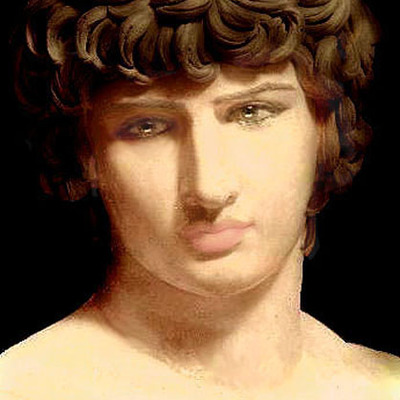
🪷 18 Nov is #OccultDay: Ancient historians said #Hadrian cast a love spell that rebounded, killing #Antinous, & also that #Antinoos dabbled in Egyptian occult sacrificial magic at #Hermopolis, fabled site of #Thoth's Scroll of Life, by which #Isis raised #Osiris from the dead. Art by #AntoniusSubia 🪷

🪷 The days of 7 Nov - 9 Nov are dedicated to Divine Justice and those deities who embody this quality. In Egyptian myth, this is #Maat, who is symbolised by the feather of truth, which always outweighs any lies, and also #Thoth, who is the keeper of divine records. #Themis is the Greek Titan goddess of divine law, custom and prophecy. The Romans called her #Justitia. In Norse myth, we find #Forseti, known as the Law Speaker. #Antinous embraces all deities as god of love and reconciliation. 🪷


Trailer Gods of Egypt https://trailers.zouluvo.com/gods-of-egypt/
#AlexProyas #NikolajCosterWaldau #BrentonThwaites #ChadwickBoseman #ElodieYung #CourtneyEaton #GerardButler #GeoffreyRush #BryanBrown #RufusSewell #26fevrier2016 #EtatsUnis #Australie #2016EtatsUnis #fevrier2016 #fantasy #aventure #action #SummitEntertainment #ThunderRoadPictures #MysteryClockCinema #Lionsgate #dieux #Egypte #Horus #Set #Bek #Ra #Thoth #effetsspeciaux #mythologie

Alexander de Grote in Memfis
De Apis (Liebieghaus, Frankfurt)In het vorige blogje vertelde ik dat Alexander de Grote zich eind november, begin december 332 v.Chr. vrij eenvoudig meester maakte van Pelousion, de oostelijke tak van de Nijl en Heliopolis. Even verderop lag de oeroude hoofdstad Memfis, die de eenheid symboliseerde van Nijldelta en Nijldal. In het deel van het stadscentrum dat bekendstond als Inebu-hedj, “het witte fort”, loste een Macedonisch garnizoen de laatste Perzische troepen af.
Vermoedelijk bleven zij in Egypte en traden ze in dienst van Alexander. Dat deed in elk geval een zekere Doloaspis, een man met een Iraanse naam die door de geschiedschrijver Arrianus ten onrechte wordt aangeduid als Egyptenaar. Na Alexanders vertrek deelde Doloaspis de hoogste macht met Petosiris, de hogepriester van de god Thoth, en toen zijn collega aftrad, werd Doloaspis satraap van zowel Beneden- als Boven-Egypte.
Het graf van PetosirisMemfis
In Memfis bezocht de Macedonische koning de tempel van de god Ptah, de Hut-ka-Ptah. Het heiligdom was zo beroemd dat zijn naam, verbasterd tot Aigyptos, al in de tijd van Homeros door de Grieken werd gebruikt als aanduiding van het hele land aan de Nijl. Zij stelden Ptah, die de ambachtslieden beschermde, gelijk aan hun eigen god Hefaistos, maar ter plekke werd hij vooral beschouwd als een schepper-god die nog ouder was dan de Ra-Atum van het rivaliserende Heliopolis. Elders in Egypte bleef de Heliopolitaanse scheppingsmythe echter populairder dan het Memfitische verhaal. Terwijl de Heliopolitaanse Ra traditioneel gold als beschermer van het koningschap en dus van de Egyptische staat, heeft niet één farao zich ooit gepresenteerd als beschermeling van Ptah.
Zo bezien is het wat merkwaardig dat Alexander, toen hij de macht in Egypte had overgenomen, zijn respect betuigde aan de stier Apis, een van de manifestaties van deze god:
In Memfis bracht hij offers aan de goden, met name aan de heilige stier Apis, en organiseerde wedstrijden in atletiek en de muzische kunsten; de beroemdste atleten en kunstenaars waren daarvoor uit Griekenland gekomen.noot Arrianus, Anabasis 3.1.4; vert. Simone Mooij.
Een offer aan Ra of een traditionele koningskroning in Heliopolis zouden handiger zijn geweest om de inheemse bevolking te tonen dat de nieuwe koning hun beschaving met respect bejegende. Het eerbewijs voor de Apis illustreert dat Alexander, zelfs als hij zich aan de Egyptenaren als een der hunnen wilde presenteren, bleef denken vanuit een Grieks kader. Herodotos had (overigens ten onrechte) beschreven hoe de Perzische veroveraar Kambyses in 525 de Apis had verwond, en sindsdien overschatten de Grieken het belang van het heilige dier en de Ptah-cultus enigszins. Ook sportwedstrijden en kunstenaarscompetities waren Griekse, geen Egyptische, gebruiken. Het goedbedoelde feest in Memfis zal zeker enige sympathie bij de Egyptenaren hebben opgeroepen, maar moet ook aanleiding zijn geweest voor verbaasd commentaar.
Zoon van de zon
Toen de Macedonische koning enkele Egyptische koningstitels aannam, doorbrak hij opnieuw de verwachtingen. De farao voerde naast zijn persoonsnaam vier titels en de laatste heersers van het onafhankelijke Egypte hadden deze traditie in ere gehouden. Alexander nam alleen de eerste en vierde titel aan. Hij was nu “de Horus, beschermer van Egypte” en de “geliefde van Amun, uitverkorene van Ra”. De enige vorsten die dezelfde selectie van twee titels hadden gemaakt, waren Kambyses en Darius de Grote, en de vraagt komt op of Alexander zich misschien door een Pers als Doloaspis heeft laten adviseren.
Met het aannemen van deze titels verkreeg Alexander ook de bijzondere rang van “zoon van de zon”, waaraan hij grote betekenis hechtte. Volgens de gebruikelijke genealogie stamde het Macedonische koninklijk huis via Herakles af van Zeus, maar er bestond een tweede traditie, die de dynastie in verband bracht met de zonnegod. Herodotos vermeldt dat de Zon de grondlegger van de Macedonische koninklijke familie ooit speciaal had beschermd; in de koninklijke graven van Vergina zijn afbeeldingen gevonden van een zestienpuntige zon; en Alexander schreef Darius eens dat de aarde geen twee zonnen duldde.
De Zon van Vergina (Archeologisch Museum, Thessaloniki)De oppergod en zonnegod waren dus al belangrijk voor de Macedonische koning voor hij aankwam in Egypte, waar deze twee goden niet alleen identiek bleken te zijn, maar de vorst bovendien gold als zoon van het opperwezen. Alexander zou zich voortaan “zoon van Zeus” kunnen noemen. Misschien aarzelde hij nog even omdat ook hij zich realiseerde dat het aanmatigend kon overkomen, maar korte tijd later zou er iets gebeuren dat alle schroom wegnam. Daarover volgende maand.
[Een overzicht van blogjes over Alexander de Grote is hier.]
#AlexanderDeGrote #Apis #Arrianus #DariusIDeGrote #DariusIIICodomannus #Doloaspis #Hefaistos #Heliopolis #Herakles #HerodotosVanHalikarnassos #KambysesII #koningsideologie #Memfis #Nijl #Petosiris #Ptah #Ra #Thoth #ZonVanVergina


Spirituality & Religious Studiesspiritualityreligiousstudies.wordpress.com@spiritualityreligiousstudies.wordpress.com
2025-09-30Ma’at
She comprised the ancient Egyptian concepts of truth, balance, order, harmony, law, morality, & justice. Ma’at was also the goddess who personified these concepts, & regulated the stars, seasons, & the actions of mortals & the deities who had brought order from chaos at the moment of creation. Her ideological opposite is Isfet (Egyptian: jzft), meaning injustice, chaos, violence, or to do evil.
The earliest surviving records indicating that Ma’at is the norm for nature & society in this world & the next, were recorded during the Old Kingdom of Egypt. The earliest significant surviving examples being found in the Pyramid Texts of Unas (circa 2375 BCE-2345 BCE).
Most Egyptian goddesses were paired with a male counterpart. Her masculine equivalent was Thoth. This is because their traits are similar. In other accounts, Thoth was paired off with Seshat, the goddess of writing & measure, who’s a lesser-known deity.
After her role in creation & continuously preventing the universe from returning from & returning to chaos, her primary role in ancient Egyptian religion dealt with the Weighing of the Heart that took place in the Duat.
Her feather was the measure that determined whether the souls (considered to reside in the heart) of the departed would reach the paradise other afterlife successfully. In other versions, Ma’at was the feather as the personifications of truth, justice, & harmony.
Pharaohs are often shown with the emblems of Ma’at to emphasize their roles in upholding the laws & righteousness. From the 18th Dynasty (circa 1550-1295 BC), Ma’at was shown as the daughter of Ra, suggesting that Pharaohs were believed to rule through her authority.
As the goddess of harmony, justice, & truth, Ma’at was shown as a young woman. She’s sometimes shown with wings on each arm or as a woman with an ostrich feather on her head.
The sun-god Ra came from the primaeval mound of creation only after he set his daughter Ma’at in place of isfet (chaos). Kings inherited the duty to ensure Ma’at remained in place. They with Ra are said to “live on Ma’at,” with Akhenaten in particular emphasizing the concept to a degree that the king’s contemporaries are seen as intolerance & fanaticism. Some kings combined Ma’at into their names, being referred to as Lords of Ma’at or Meri-Ma’at (Beloved of Ma’at). Ma’at had a central role in the ceremony of the Weighing of the Heart.
Ma’at represented the ethical & moral principle that all Egyptian citizens were expected to follow throughout their daily lives. They were to act with honor & truth in matters that involve family, the community, the nation, the environment, & the gods.
Ma’at was the spirit in which justice was applied rather than the detailed legalistic account of rules. She represented the normal & basic values that formed the setting for the application of justice that had to be carried out in the spirit & fairness.
From the 5th Dynasty (circa 2510-2370 BC) onward, the vizier (Jafar’s job in Disney’s Aladdin, the 1st one.) was responsible for justice and was called the Priest of Ma’at. In later periods, judges wore images of Ma’at.
The goddess Ma’at was the daughter of the Egyptian sun-god Ra. She was/is the wife of Thoth, who’s the god of wisdom who invented writing. She’s associated with the judgment of the dead & whether a person has done what’s right in their life. To do Ma’at was to act in a manner unreproachable or innocent.
So revered was the concept of Ma’at that Egyptian kings would often pay tribute to gods, offering small statues of Ma’at. This indicated that they were successfully upholding the universal order.
The earliest evidence for a dedicated temple is in the New Kingdom (circa 1569-1081 BC) era. Amenhotep III commissioned a temple in the Karnek complex. While textual evidence indicates that other temples of Ma’at were located in Memphis & at Deir el-Medina. The Ma’at temple at Karnak was also used by courts to meet regarding the robberies of the royal tombs during the rule of Ramesses IX.
In the Duat, the Egyptian underworld, the hearts of the dead were said to be weighed against Ma’at’s single “Feather of Ma’at.” This symbolically represented the concept of Ma’at in the Hall of 2 Truths.
This is why hearts were left in the Egyptian mummies while other organs were removed, as the heart (called “ib”) was seen as part of the Egyptian soul. If the heart was found to be lighter or equal to the feather of Ma’at, the deceased had led a virtuous life & would go to Aaru. A heart that’s unworthy was devoured by the goddess Ammit & its owner condemned to remain to the Duat.
The Weighing of the Heart, as usually shown on papyrus in the Book of the Dead (or in tomb scenes) shows Anubis overseeing the weighing & Ammit seated awaiting the results to eat those who failed. The image contains a balancing scale with an upright heart standing on 1 side & the Shu-feather standing on the other.
Other traditions God that Anubis brought the soul before the posthumous Osiris who performed weighing while the heart was weighed the deceased recited the 42 Negative Confessions as the Assessors of Ma’at looked on.
The Assessors of Ma’at are the 42 deities listed in the Papyrus of Nebseni, to whom the deceased make the Negative Confession in the Papyrus of Ani. They represent the 42 united nomes of Egypt. They’re called “the hidden Ma’ati gods, who feed upon Ma’at during the years of their lives.”
One-Time Monthly YearlyMake a one-time donation
Make a monthly donation
Make a yearly donation
Choose an amount
$1.00 $5.00 $10.00 $1.00 $5.00 $10.00 $5.00 $10.00 $15.00Or enter a custom amount
$Your contribution is appreciated.
Your contribution is appreciated.
Your contribution is appreciated.
DonateDonate monthlyDonate yearly
#1081BC #1550BC #1569BC #18thDynasty #2345BCE #2370BC #2375BCE #2510BC #42NegativeConfessions #5thDynasty #Akhenaten #Aladdin #AmenhotepIII #Ammit #Anubis #AssessorsOfMaAt #BelovedOfMaAt #BookOfTheDead #Chaos #DeirElMedina #Disney #Duat #Egypt #EgyptianBookOfTheDead #Feather #FeatherOfMaAt #Goddess #HallOfTwoTruths #Ib #Isfet #Jzft #Karnek #LordsOfMaAt #MaAt #Memphis #MeriMaAt #Mummies #NewKingdom #OldKingdomOfEgypt #Osiris #OstrichFeather #PapyrusOfAni #PapyrusOfNebseni #Pharaoh #PriestOfMaAt #PyramidTextsOfUnas #Ra #RamesesIX #Seshat #ShuFeather #SunGod #Thoth #Vizier #WeighingOfTheHeart

Spirituality & Religious Studiesspiritualityreligiousstudies.wordpress.com@spiritualityreligiousstudies.wordpress.com
2025-09-29Duat
This is a concept in Ancient Egyptian mythology involving death. It’s most commonly seen as a domain where people go after they pass away.
What we know about the Duat comes mainly from funerary texts such as: the Book of Gates, the Book of Caverns, the Coffin Texts, the Amduat, the (Egyptian) Book of the Dead.
It’s typically known best as a dark subsurface realm that not only houses the deceased, but an assortment of deities. The deities shown in these texts are: Osiris, Anubis, Thoth, Horus, & Ma’at in various forms. While all of those documents/books involve the Duat. Each of them fulfilled a different purpose & showed the Duat in a variety of unique ways.
The Duat is divided into sections by 12 guarded gates that represented each hour of the night & are closely connected with the journey of Ra & conspicuously feature Osiris, the god of the Duat & the personification of rebirth.
The west bank of the Nile was affiliated with the dead. Funeral barges would mimic the sun god Ra’s journey through the sky during the day. The Duat also is often described as having many realistic features like rivers, islands, fields, paths, & lakes.
Texts also depict fantastic lakes of fire, walls of iron, & trees of turquoise. These lands are described as being dark & were partitioned with a series of gates. They’re mostly identified as Shetit, a dangerous land translated as ‘The Beyond.’
There were important locations relating to the deceased would be ‘The Hall of Truth.’ It is often shown alongside the ‘Weighing of the Heart’ ritual in the Book(s) of the Dead & mentioned in the 6th hour of Ra’s journey.
If the dead are found to be virtuous, they’ll be allowed to live in A’aru. This is also known as ‘The Field of Reeds.’ It’s shown as a paradise where the dead could live their former life with their loved ones without pain or suffering.
There’s hundreds of different divinities of shifting importance related to the Duat throughout time with the most referenced being:
- Osiris: He’s believed to be the lord of the realm & personifies rebirth & the afterlife. In his own mythology, he himself is reborn after his brother, Set, kills him & Osiris’ wife partially revives him. He’s shown as a man with green skin, partially wrapped in bandages.
- Anubis: The son of Osiris & Nephthys. He weighs the heart of the deceased. His domains also cover the embalming & mummification process. As well as guiding souls to the Duat upon death. He’s shown with the black head of a canine. But most often assumed to be a jackal. Nephthys is a goddess of the night, mourning, & death.
- Thoth: He records the verdict of the ‘Weighing of the Heart.’ He’s most often shown as an ibis-headed with a stylus & tablet.
- Horus: The son of Osiris & Isis. He protects Ra during his journey through the Duet. He’s also the heir to Osiris.
- Ma’at: She’s both the goddess of order & the conception of order, balance, & truth itself. She’s the feather that’s weighed against the heart in the ‘Weighing of the Heart’ ritual.
- Ammit: She eats the hearts & souls of those who cannot pass the ‘Weighing of the Heart’ ritual. She’s often shown near the Scales in the Book(s) of the Dead with the face of a crocodile, the mane & front half of a lion, & the hindquarters of a hippopotamus.
- Ra: He’s the God of the sun who must journey through the Duat every night to be reborn every morning.
- Apep: The personification of darkness & true chaos who tries to devour Ra & bring about eternal chaos.
In order to receive judgment, the dead journeyed through the different parts of the Duat to be judged. If the deceased was successfully able to pass different challenges, then they would reach the Judgment of the Dead.
In this ritual, the deceased’s 1st task was to correctly address each of the 42 Assessors of Ma’at by name. While reciting the sins they didn’t commit during their lifetime.
After confirming that they were sinless, the heart of the deceased was weighed by Anubis against the feather of Ma’at which represents truth & justice. Any heart that’s heavier than the feather failed the test, & was rejected & eaten by Ammit, the devourer of souls.
As these people were denied existence after death in the Duat. The souls that were lighter than the feather would pass this most important test, & would be allowed to travel to Aaru.
The Duat isn’t equal to the notions of Hell in Abrahamic religions. This is where the souls are condemned with fiery torment. The absolute punishment for the wicked in ancient Egyptian though, was the denial of an afterlife to the deceased, ceasing to exist in the intellectual form seen through the devouring of the heart by Ammit.
Each night, Ra journeyed through the Duat. Bringing revival to the dead as their main benefit. When in the underworld, he was in his ram-headed form, Af. Ra travelled under the world on his Atet barge from West to East. On the course of the underground journey, he was transformed from his aged Atum form into his young Khepri form – the new dawning sun.
The role of the dead king, worshipped as a god, was also central to the mythology surrounding the concept of Duat, often shown as being identical with Ra.
Along with the sun god, the dead king travelled through the Duat, the Kingdom of Osiris, using the special knowledge he was supposed to possess, which was recorded in the Coffin Texts. This served as a guide to the Hereafter. Not just for the king but for all the deceased.
According to the Amduat, the underworld consists of 12 areas signifying the 12 hours of the sun God’s journey through it. Battling Apep in order to bring order back to the earth in the morning. As his rays illuminated the Duat during the journey, the revived the dead who lived in the underworld & let them enjoy life after death during that hour of the night when they were in the presence of the sun god. After which they resumed their sleep, waiting for the god’s return the next night.
One-Time Monthly YearlyMake a one-time donation
Make a monthly donation
Make a yearly donation
Choose an amount
$1.00 $5.00 $10.00 $1.00 $5.00 $10.00 $5.00 $10.00 $15.00Or enter a custom amount
$Your contribution is appreciated.
Your contribution is appreciated.
Your contribution is appreciated.
DonateDonate monthlyDonate yearly
#42AssessorsOfMaAt #AAru #AbrahamicFaiths #Af #Amduat #Ammit #AncientEgypt #Anubis #Apep #AtetBarge #Atum #BookOfCaverns #BookOfGates #CoffinTexts #Crocodile #Duat #EgyptianBookOfTheDead #EgyptianMythology #EgyptianPantheon #Egyptians #Embalming #FuneralBarges #Hippopotamus #IbisHeaded #Jackal #JudgmentOfTheDead #Khepri #Lion #MaAt #Mummification #Nephthys #Nile #Osiris #Paradise #Ra #RamHeaded #Reincarnation #Scales #Set #Shetit #TheFieldOfReeds #TheHallOfTruth #Thoth #WeighingOfTheHeart
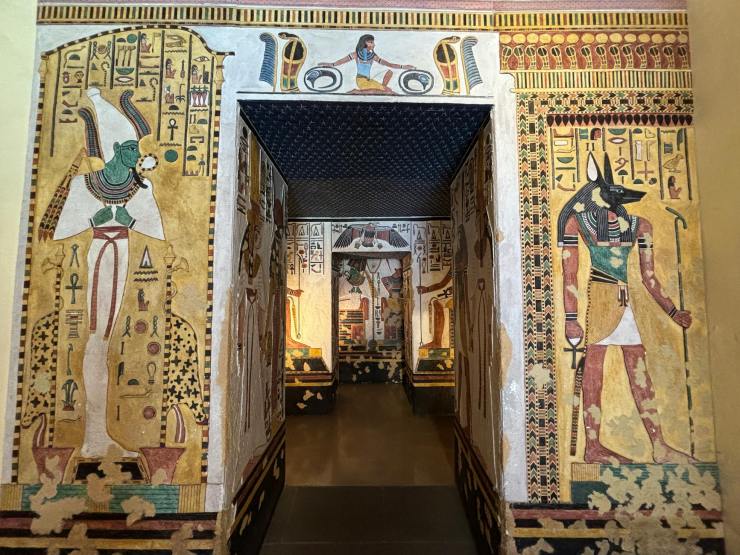
🪷 The hare glyph "wn" means "to exist". The #hare goddess Wenut/Unut was revered with #Thoth / #Hermes at #Hermopolis across the Nile from #Antinoopolis. Originally depicted as a snake the "swift one". Later she had a goddess' body with a hare / #rabbit head. #InternationalRabbitDay. 🪷


Thoth, the god of writing and art and one i personally always liked.
#art #digitalart #thoth #mythology #egyptianmythology #writer #ibis #godofwisdom

Katherine Makoyana is another artist whose galleries have caused me to waste much time.
This piece with Anubis weighing the human heart against the feather of Maat, while Thoth records the result is pretty fine.
I especially live the incorporation of Maat herself as the "scales". A very interesting take on the immediate afterlife ritual.
These truly are fantastic interpretations.
Artist: Katherine Makoyana- https://makoyana.artstation.com/

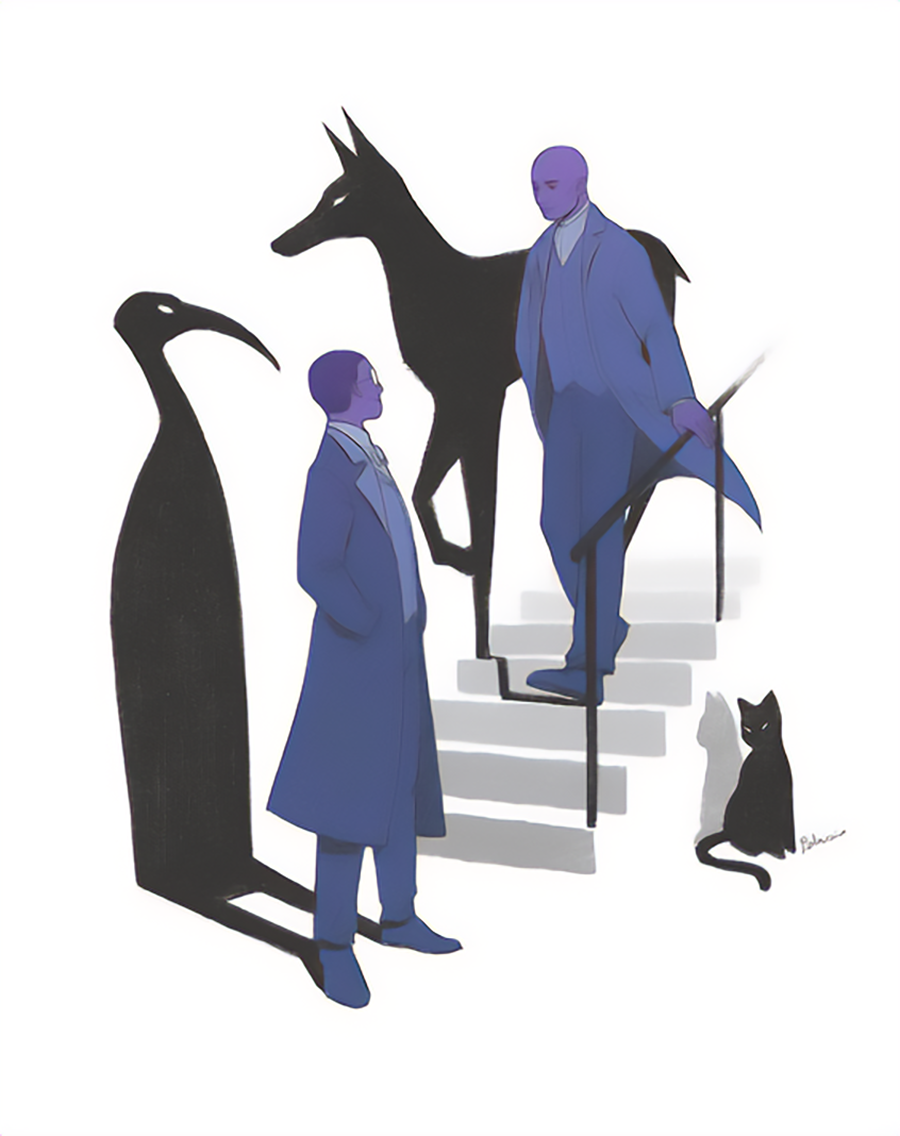
In my search for ever more great Anubis interpretations, I stumbled across this image and immediately knew what is was.
A great illustration of Mr. Jacquel and Mr. Ibis and Bast from Neil Gaiman's novel "American Gods". Well, I suspect the are going for the tv adaptation.
It has been years since I read it.
Artist: @mintonia - https://www.tumblr.com/mintonia
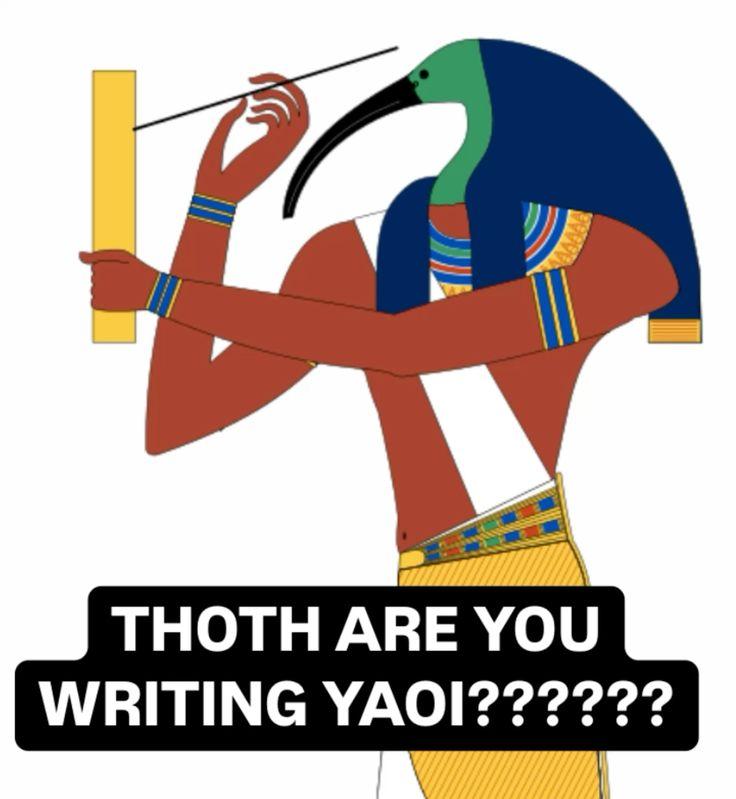
Inonibird's Stick-Gods never fails to entertain me with its shere brilliance.
I did NOT expect THAT when I stumbled across this gif! LOL!
Artist: Inonibird
#kemet #ancientegypt #stickgods #thoth #set #humor
🪷 24 May is Hermes #Trismegistus Day. Last city seen by #Antinous in 130 AD was #Hermopolis, city of #Thoth #Djehuty #Hermes #Trismegistos, who gave Isis the magic to raise Osiris from the dead. What secrets from the Scroll of Life did #Antinoos glean? https://antinousstars.blogspot.com/2022/10/antinous-in-hermopolis-by-our-flamen.html 🪷


Client Info
Server: https://mastodon.social
Version: 2025.07
Repository: https://github.com/cyevgeniy/lmst