#Technopoly

2026-02-20

More reasons to say "No!" to #SpaceX and #Starlink (and other unnecessary satellites!).

SpaceX rocket fireball linked to plume of polluting lithium

Georgina Rannard, Science reporter, February 19, 2025

Excerpts: "When a SpaceX rocket failure set the skies aflame over western Europe last February, no-one was sure if the debris was also polluting our #atmosphere.

"Now scientists are directly linking the uncontrolled rocket re-entry to a plume of #lithium measured less than 100km above Earth.

"It is the first time researchers have drawn a direct link between a known piece of #SpaceDebris crashing to Earth and #pollution levels.

They warn that as SpaceX chief #ElonMusk pledges to launch one million satellites in the coming years, this #contamination could be the tip of the iceberg."

[...]

"Earlier research has suggested that 10% of aerosols in the atmosphere are already contaminated by space debris.

"SpaceX has not responded to emailed requests from BBC News for comment. The researchers also sent their findings to the company but did not receive a response.

"Almost 30,000 pieces of debris are calculated to be free-floating in space, created when rockets break up in space or satellites disintegrate.

"Scientists warn that the debris is congesting space and threatens collision with rockets, the International Space Station, and our planet.

"Musk's SpaceX is the world's leading company for rocket launches including for sending humans into space and maintaining a network of 10,000 Starlink internet satellites.

"Musk recently announced he has applied to launch one million satellites to support #ArtificialIntelligence (#AI) data centres in space.

"Scientists warn that as humans move more activities off-Earth, more debris will fall to Earth, polluting as it plummets."

Read more:
bbc.com/news/articles/cpd8z4eq

#LithiumPollution #AtmosphericPollution #NoAIInSpace #NoDatacentersInSpace #LEO #KesslerEffect #SpaceJunk #DarkSkies #LowerEarthOrbit #LEO #AIBullshitMachines #TechBros #xAI #Technopoly #SpacePollution
#AISucks #DataCenters #SkyNet #KesslerSyndrome #USPol #WorldPol #SpaceNews

2026-02-07

This #SpaceX Situation: Not Good!

by Jason Koebler, Feb 5, 2026

Excerpt: "There are many reasons that 'AI data centers in space' may be a pipe dream and may not happen, but what he is proposing is a magnitude of #SpaceJunk that no other company could plausibly promise to launch. Data centers or not, SpaceX is now dominating #LowEarthOrbit in a way no other company or country has. While Musk has been gutting the federal government, interfering in #elections, allowing people to generate #CSAM, engaging in white supremacy, planning trips to #EpsteinsIsland, implanting #chips into people’s brains, siphoning off taxpayer money to build ridiculous tunnels, giving his sperm to whoever will take it, turning his cars into experimental robot taxis, and pretending to build #HumanoidRobots, #SpaceX has somewhat (?) quietly #colonized and dominated low earth orbit.

"Musk has taken this space for his own use, concerns about #LightPollution, satellite collisions, and telecom #monopolies be damned. This has always been concerning, but explicitly intertwining the aspirations and fate of SpaceX with Musk’s CSAM generating social media website, his #AIBullshitMachines, and his right wing political project is horrifying and monopolistic. What happens next, I have no idea."

Read more:
404media.co/this-spacex-situat

Archived version:
archive.ph/vUubi

#TechBros #Technopoly #DarkSkies #SpacePollution #AISucks #DataCenters #SkyNet #KesslerEffect #KesslerSyndrome #USPol #WorldPol #SpaceNews #EpsteinFiles

Don Curren 🇨🇦🇺🇦dbcurren.bsky.social@bsky.brid.gy
2025-12-03

“Media theorist #NeilPostman warned that a “ #technopoly” arises when societies surrender judgment to #technological #imperatives - when #efficiency and #innovation become moral goods in themselves.” www.currentaffairs.org/news/ai-is-d...

AI is Destroying the Universit...

2023-04-21

Aligning our life goals with our technology use

therealists.org/?p=7793

Stand Out of Our Light

I just finished reading James Wilson Williams’s brilliant book Stand Out of Our Light: Freedom and Resistance in the Attention Economy. So many passages stood out.

Williams exhorts readers to think about their life goals and aspirations. The big picture as well smaller, daily goals.

Williams writes:

Now try to imagine what your technologies’ goals are for you. What do you think they are? I don’t mean the companies’ mission statements and high-flying marketing messages – I mean the goals on the dashboards in their product design meetings, the metrics they’re using to define what success means for your life. How likely do you think it is that they reflect the goals you have for yourself? Not very likely, sorry to say. Instead of your goals, success from their perspective is usually defined in the form of low-level “engagement” goals, as they’re often called. These include things like maximizing the amount of time you spend with their product, keeping you clicking or tapping or scrolling as much as possible, or showing you as many pages or ads as they can.

Williams continues:

No one wakes up in the morning and asks, “How much time can I possibly spend using social media today?” (If there is someone like that, I’d love to meet them and understand their mind.)

He later points out:

What this means, though, is that there’s a deep misalignment between the goals we have for ourselves and the goals our technologies have for us. This seems to me to be a really big deal, and one that nobody talks about nearly enough. We trust these technologies to be companion systems for our lives: we trust them to help us do the things we want to do, to become the people we want to be.

Williams illustrates the misalignment between our goals and the goals of our technologies with a poignant analogy. It’s like a faulty GPS system… if your GPS kept sending you to the wrong destination, you would lose trust in it. And yet… most of us keep using technologies whose goals are misaligned with ours.

How can we harness the power of technology in a mindful way, to achieve our goals and arrive at our chosen destination?

I think at first it would be a very helpful exercise to write down your goals – some objectives that are important to you and that you feel could significantly improve your life.

And then reflect on how you can use technology to achieve them – or find out if technology is getting in the way, preventing you from succeeding in your goals.

I have three examples of clear goals I have for myself: some that are aided by technology and two that can only be achieved by being offline.

My first goal: read more books

I’ve always been an avid reader of books – mostly non-fiction – something that started in my childhood. In the last few years, as life as a new mom got a lot busier, I struggled to find time to read books. It’s been a lot easier to mindlessly consume content on Reddit and read the New York Times on my phone. Not good, I know. I feel that after a lifetime of reading, of being able to be fully immersed in a book, my power of concentration got annihilated by the demands of caring for a small child and the addictive qualities of the Internet.

Now that my child is a toddler, sleeping 11 hours a night, I really have no excuses to keep scrolling Reddit when she’s asleep.

I set up a system in Notion to keep track of books I’m reading, want to read next, and to visualize on a calendar my ideal reading schedule.

a screenshot of my Notion books database

While last year I only read 14 books (sigh), so far this year, on April 21st, I have already completed 13 books.

Visualizing my book goals in Notion and keeping track of the books in a calendar view is doing wonders to sustain my goal. In the sense that knowledge is power, having a books “dashboard” that shows me my reading progress is a sort of accountability buddy.

A screenshot of my Books database in Notion, showing my Calendar view

My second goal: keep in touch with the most important people in my life

Last December I wrote a long post titled “Better than social media: how I built a private, independent database to keep in touch with the most important people in my life.

An excerpt:

My database is platform-agnostic and it empowers me, recalling when I last spoke to my favorite people… and if it has been too long, it reminds me to get in touch with them.

My reasoning:

We all lead incredibly busy lives and it’s practical and a major time saver to have that information at a glance – especially when you have a network of friends, contacts and clients spread across several countries around the world. It takes me less than 5 seconds to update the “Last Connected” tab. My goal on any given day is to connect with at least 6-10 people from the database and I love how in Notion I can filter out results by date. Every month I start from scratch.

I have been using this system for over 6 months now and I find it incredibly empowering to be able to know – at a glance – when was the last time I interacted with any given friend or professional contact.

A screenshot of my “People to KIT with” database, showing my monthly goal

For example, I have a dear friend in Italy that I have known since I was 15-years-old. We can let months go by without talking or seeing each other, but it feels like no time has elapsed. Well, thanks to this database I built in Notion, now I don’t let more than 2 weeks go by without checking in on her.

My third goal: write more

A book that made a profound impression on me is Julia Cameron’s The Artist’s Way. In it, Cameron recommends a daily practice to unleash one’s creativity: the “Morning Pages.” She explains:

The bedrock tool of a creative recovery is a daily practice called Morning Pages. […] Morning Pages are three pages of longhand, stream of consciousness writing, done first thing in the morning. There is no wrong way to do Morning Pages – they are not high art. They are not even “writing.” They are about anything and everything that crosses your mind– and they are for your eyes only. Morning Pages provoke, clarify, comfort, cajole, prioritize and synchronize the day at hand. Do not over-think Morning Pages: just put three pages of anything on the page…and then do three more pages tomorrow.

I took up this practice in 2019… but a few months in I gave up on it. I longed to return to them, but the unpredictability of my sleep schedule (with an infant) made it hard to do.

Well, I’m certain there are scores of busy parents of little ones who still manage to do their Morning Pages. I wake up at 6-6:30 am every day and my little one typically wakes up at 8:30am. I use the time to read books and get ready for the day, but I could definitely squeeze in the practice of Morning Pages. I honestly don’t have any excuses anymore.

I recently rediscovered my old Morning Pages and it’s been fascinating to re-read them. From my stated goal on day 1 to be more creative and spend less time on screens… to day 4 when I wrote:

I’m only a few days in, but my goal – to recapture the spirit and concentration of life before social media (and before the internet scrambled my brain) is proceeding well and providing some clear results. I no longer crave discussion threads on Reddit. When I have a free moment, I grab either a physical book or my Kindle. I am able to be fully immersed in a book, without the itch to check the internet. On Sunday I read 100 pages in one sitting…

a photo of my old Morning Pages journal

The analog pleasures of pen on paper… of being able to study your old handwriting to gauge how you felt while writing a sentence… It’s so appealing to me right now. So I’m stating it here, my new goal starting tomorrow: to pick up the practice of Morning Pages again.

What about you?

What are your life goals (big and small)?

And how can you use technology to assist you in achieving them?

I’d love to hear your takes.

#Books #JamesWilsonWilliams #lifeGoals #StandOutOfOurLight #Technopoly

Richard Rathenickrauchen@c.im
2025-05-10

I need to circle back and re-read his "Technopoly: The Surrender of Culture to Technology".

I read it when it came out in 1992, but frankly don't remember much from it.

Edit: Free #PDF on archive.org! 🙂

ia601802.us.archive.org/27/ite

This is from the Wikipedia entry:

"Postman considers technopoly to be the most recent of three kinds of cultures distinguished by shifts in their attitude towards technology – tool-using cultures, technocracies, and technopolies. Each, he says, is produced by the emergence of new technologies that "compete with old ones…mostly for dominance of their worldviews".

#NeilPostman #Technopoly #Technology #Media #Politics #InternetArchive

Book Cover "Technopoly: The Surrender of Culture to Technology"
2025-02-27

🧵
> Those engines of mischief were sentenced to die
By unanimous vote of the trade
And Ludd who can all opposition defy
Was the grand executioner made
> And when in the work he destruction employs
Himself to no method confines
By fire and by water he gets them destroyed
For the elements aid his designs
genius.com/Chumbawamba-the-tri
#CultOfInformation #Technopoly #MonkeyWrenchGang #ProgressWithoutPeople
@bsmall2@writing.exchange

2024-04-04

5 stories about Big Tech to improve your digital literacy skills

therealists.org/?p=8077

If you were to ask me what is my favorite book on the subject of technology and digital mindfulness, I wouldn’t hesitate for a second: it is, without doubt, Neil Postman’s Technopoly: The Surrender of Culture to Technology – published in 1993 but still extremely relevant today.

Acclaimed cultural critic Neil Postman wrote:

Technopoly is a state of culture. It is also a state of mind. It consists in the deification of technology, which means that the culture seeks its authorization in technology, finds its satisfactions in technology, and takes its orders from technology.

To the late Postman (he passed away in 2003), education is the best remedy to counteract the negative effects of this “technopoly.” Postmas wrote: “education as an excellent corrective to the antihistorical, information-saturated, technology-loving character of Technopoly.

As a Realist, if I had one wish, it would be for everyone to be more media savvy, to be better versed in media literacy – and especially digital literacy. I notice how we often take new announcements by Big Tech at face value, never questioning the agenda behind innovations and new product launches. The current AI hype is a perfect representation of what Postman warned about.

Here are five stories about Big Tech to increase your digital literacy skills.

1: Amazon’s AI Lies

Have you ever heard of Amazon’s Mechanical Turks? According to Wikipedia:

Amazon Mechanical Turk is a crowdsourcing website with which businesses can hire remotely located “crowdworkers” to perform discrete on-demand tasks that computers are currently unable to do as economically. It is operated under Amazon Web Services, and is owned by Amazon.

Well, as it turns out, the service takes its name from an elaborate hoax from the late 1770s: a chess playing machine that was touted to play a game of chess against a human opponent. It wowed royals and crowds in Austria and then in tours across Europe and the United States. After 8 decades of public demonstrations, it was ultimately revealed to be a fraud: a human operator hid inside of it to play against an opponent.

It’s supremely ironic that the term “Mechanical Turk” has been made widely known by Amazon. Because this week the company was embroiled in a mechanical turk-like scandal that made headline news around the world. From MSN: “Amazon’s ‘Just Walk Out’ tech relied on low-paid Indian workers, not AI“. In case you are not familiar with Amazon Fresh stores, they are modern grocery stores that allow people to walk around, add items to their carts and leave without passing by a checkout line or paying a cashier – thanks to a technology called “Just Walk Out” which was supposedly powered by cameras and artificial intelligence.

The MSN article explains:

The Information reported that even though Amazon claimed that it used a host of cameras and sensors around the store to track what customers grabbed, hundreds of Indian workers were used by the company to track customers instead of relying completely on AI and technology.

Yes, you read that correctly. An awe-inducing technology heavily promoted by Amazon turned out to be 1,000 low-paid workers in India, watching and labeling videos of customers shopping in Amazon Fresh stores.

2: Google and its Fake AI Demo

On the subject of AI hype and faking the capabilities of an “artificial intelligence” system, there is this December 2023 story about Google. The company was caught red-handed, faking a demo of its new AI system. From TechCrunch: “Google’s best Gemini demo was faked”.

Google’s new Gemini AI model is getting a mixed reception after its big debut yesterday, but users may have less confidence in the company’s tech or integrity after finding out that the most impressive demo of Gemini was pretty much faked.

If you are curious, you can watch the faked demo on YouTube – which included heavy editing to create the illusion of a brilliant AI system.

3: Microsoft’s New Data Collection Service

If you use Microsoft Outlook as an email client, it’s time to reconsider your options. This detailed report by Proton Mail is a must read: “Outlook is Microsoft’s new data collection service”.

Proton’s Edward Komenda writes:

Everyone talks about the privacy-washing campaigns of Google and Apple as they mine your online data to generate advertising revenue. But now it looks like Outlook is no longer simply an email service; it’s a data collection mechanism for Microsoft’s 801 external partners and an ad delivery system for Microsoft itself.

The company is also now storing email passwords from external clients, granting unprecedented access:

When you sync third-party email accounts from services like Yahoo or Gmail with the new Outlook, you risk granting Microsoft access to the IMAP and SMTP credentials, emails, contacts, and events associated with those accounts, according to the German IT blog Heise Online.

Komenda explains:

A deeper dive into Microsoft’s privacy policy shows what personal data it may extract:

Name and contact data
Passwords
Demographic data
Payment data
Subscription and licensing data
Search queries
Device and usage data
Error reports and performance data
Voice data
Text, inking, and typing data
Images
Location data
Content
Feedback and ratings
Traffic data

Bonus digital literacy points: it’s worth pointing out that this exposé about Microsoft comes from ProtonMail – a Swiss end-to-end encrypted email service that is one of its competitors. While the evidence Proton shared is accurate, it’s important to remember it’s in their vested interest to get Microsoft users interested in ProtonMail services.

4: Facebook snoops on Snap users with “Project Ghostbusters”

From TechCrunch reporter Lorenzo Franceschi-Bicchierai:

Meta tried to gain a competitive advantage over its competitors, including Snapchat and later Amazon and YouTube, by analyzing the network traffic of how its users were interacting with Meta’s competitors. Given these apps’ use of encryption, Facebook needed to develop special technology to get around it. […] Facebook’s engineers solution was to use Onavo, a VPN-like service that Facebook acquired in 2013. In 2019, Facebook shut down Onavo after a TechCrunch investigation revealed that Facebook had been secretly paying teenagers to use Onavo so the company could access all of their web activity.

This story is a routine reminder to check the trustworthiness of your VPN service – if you are using one. If you are using a free VPN, there is a high likelihood that the service is tracking, profiling (and possibly reselling) your traffic data. This story from The Next Web may be 6 years old but is as relevant as ever: “Be cautious, free VPNs are selling your data to 3rd parties.”

5: Apple’s Gatekeeping

From Variety: “Jon Stewart Says Apple ‘Wouldn’t Let Us Do’ an Anti-AI Segment and ‘Asked Us Not’ to Have Federal Trade Commission Chair as a Guest: ‘What Is That Sensitivity?’”

The Daily Show host Jon Stewart invited Federal Trade Commission chair Lina Khan to appear on his show. He revealed to her how, when he was hosting his (now cancelled) Apple TV talk show The Problem with Jon Stewart he had expressed an interest in interviewing FTC chair Khan – but Apple TV turned down his request, openly asking him to refrain from interviewing her.

From Variety:

Considering Khan’s work at the FTC targets tech giants’ monopolistic practices, Apple allegedly did not want Stewart bringing her on the program to presumably talk about such topics. […] Stewart went one step further and said Apple didn’t even want him talking about the perils of AI on his podcast. He said “they wouldn’t let us do even that dumb thing we just did in the first act on AI,” referring to a near 15-minute segment Stewart did earlier in the show in which he criticized the rise of AI and spoke about how it’s making human workers obsolete.

Stewart said to Khan on his Daily Show: “Like, what is that sensitivity? Why are they so afraid to even have these conversations out in the public sphere?” And Khan responded: “I think it just shows the danger of what happens when you concentrate so much power and so much decision making in a small number of companies.

It should not be surprising that Apple didn’t want an episode about the perils of AI on Apple TV – considering that Apple is now trying to catch up with OpenAI, Google Gemini and Anthropic. The company is expected to reveal its AI plans at his developer conference in June 2024.

Is there any story that surprised you about the state of tech or the hype surrounding AI? Share your thoughts in the comments.

As always, thanks for being here.

Elena

#AI #AIHype #Amazon #Apple #BigTech #digitalLiteracy #Facebook #Google #hoax #mechanicalTurk #mediaLiteracy #Microsoft #NeilPostman #privacy #Technopoly

an illustration about the mechanical turk hoax with the title THE REALISTS on top
2024-09-06

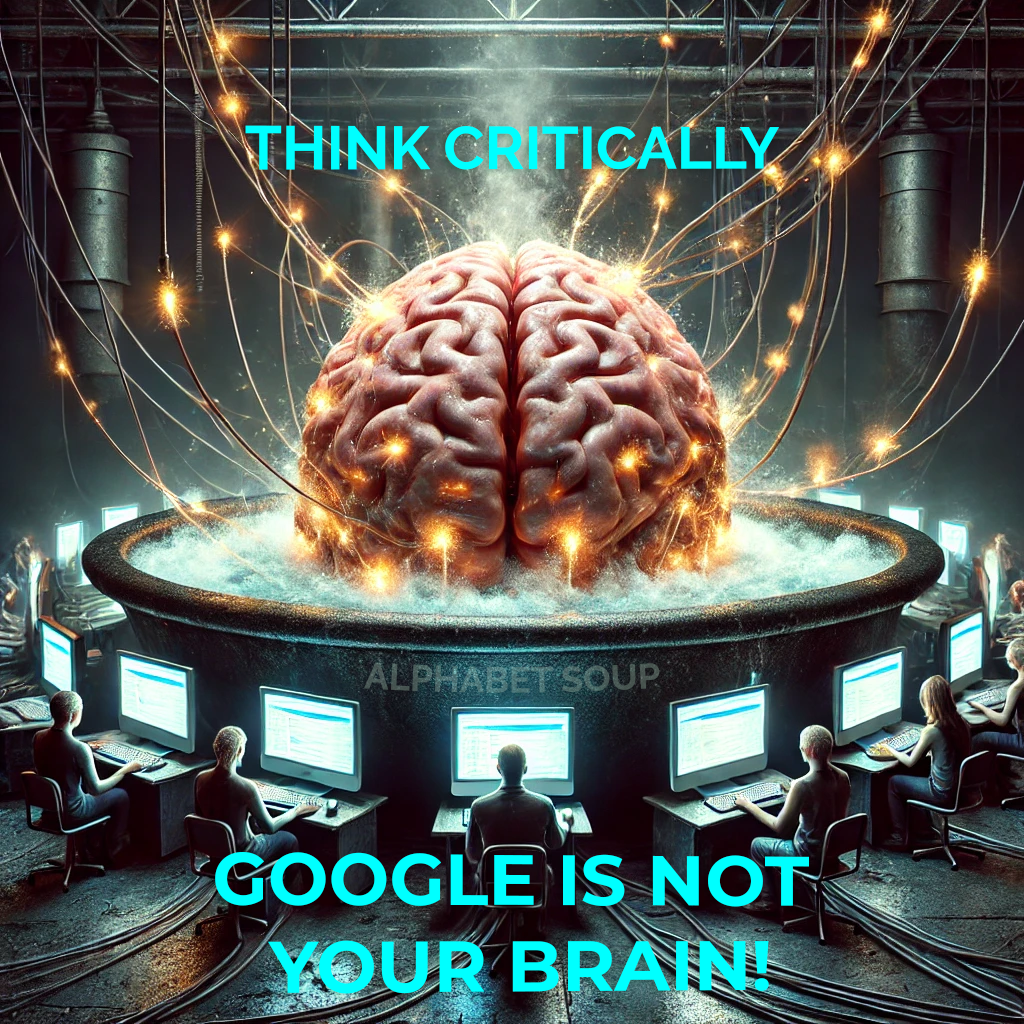
Are we on the cusp of a Technopoly? Neil Postman warned we’d surrender to tech, and it’s happening. Algorithms shape our thoughts, replacing critical thinking with viral noise. Google feeds us clicks, not truth.
But we can fight back. Join the 1%, resist algorithmic poisoning, and think critically.
Rise up! #Technopoly #OnePercent #Resistance

Paul BessoPBesso
2024-09-06

Are we on the cusp of a Technopoly? Neil Postman warned we’d surrender to tech, and it’s happening. Algorithms shape our thoughts, replacing critical thinking with viral noise. Google feeds us clicks, not truth.
But we can fight back. Join the 1%, resist algorithmic poisoning, and think critically.
Rise up!

2024-07-12

気候についての国際世論調査が興味深い。 日本もそうだけど、 いろいろな国(オンラインの五千人分?)の世論に矛盾があるかどうか、ゆっくりと見て考えたいなぁ。「政府の取り組み」を「信頼できる」けど「うそをついている」? 「気候変動への対応方法」を「見捨てられた」が「大切にしている」? 英語番おあって、 「意識化」に使えるかおも。

> アメリカ[米国]のテクノポリーに抵抗する人々は:
> どのような質問がされ、なぜそういうらう質問がされるかを知らないかぎり、世論調査に応じたり投票したりしない人
> #ニールポストマン#TECHNOPOLY #技術vs人間 」p.240
qos.dentsusoken.com/wp-content

#気候変動世論調査 #気候不安国際比較 #気候不安 #気候危機 #気候変動 #気候崩壊 #温暖化

投稿にリンクされているpdfからの41と42ページです。 政府の気候変動の取り組みについて「信用できる」か「うそをついているか」の二つの質問があって。 国によって、 矛盾しているのかな? やっぱろ 世論調査って、 微妙でしょうね? 言葉の選び「気候変動」を「気候危機」にしたら、 どれぐらい結果が違っただろうか? または 故郷についての質問したりすればどうかな? 

https://qos.dentsusoken.com/wp-content/uploads/2023/03/%E5%9B%BD%E9%9A%9B%E6%AF%94%E8%BC%83%E7%89%88%E3%80%90%E9%9B%BB%E9%80%9A%E7%B7%8F%E7%A0%94%E3%82%B3%E3%83%B3%E3%83%91%E3%82%B9%E7%AC%AC9%E5%9B%9E%E8%AA%BF%E6%9F%BB%E3%80%91%E6%B0%97%E5%80%99%E4%B8%8D%E5%AE%89%E3%81%AB%E9%96%A2%E3%81%99%E3%82%8B%E6%84%8F%E8%AD%98%E8%AA%BF%E6%9F%BB.pdf投稿にリンクされているpdfからの55と56ページです。 世論調査をどうやって解釈しょうとしているかを説明するページです。皆 悲観的か 否定的か、 気持ちは安心か裏切りか... 

https://qos.dentsusoken.com/wp-content/uploads/2023/03/%E5%9B%BD%E9%9A%9B%E6%AF%94%E8%BC%83%E7%89%88%E3%80%90%E9%9B%BB%E9%80%9A%E7%B7%8F%E7%A0%94%E3%82%B3%E3%83%B3%E3%83%91%E3%82%B9%E7%AC%AC9%E5%9B%9E%E8%AA%BF%E6%9F%BB%E3%80%91%E6%B0%97%E5%80%99%E4%B8%8D%E5%AE%89%E3%81%AB%E9%96%A2%E3%81%99%E3%82%8B%E6%84%8F%E8%AD%98%E8%AA%BF%E6%9F%BB.pdf投稿にリンクされているpdfからの47と51ページです。政府が気候変動お対応方法を「見捨てられた」か「大切にしているか」 国によって割合みたら、 大くの人が同時に矛盾お気持ちがあるみたいかな? ゆっくり考えると興味深いかも。

https://qos.dentsusoken.com/wp-content/uploads/2023/03/%E5%9B%BD%E9%9A%9B%E6%AF%94%E8%BC%83%E7%89%88%E3%80%90%E9%9B%BB%E9%80%9A%E7%B7%8F%E7%A0%94%E3%82%B3%E3%83%B3%E3%83%91%E3%82%B9%E7%AC%AC9%E5%9B%9E%E8%AA%BF%E6%9F%BB%E3%80%91%E6%B0%97%E5%80%99%E4%B8%8D%E5%AE%89%E3%81%AB%E9%96%A2%E3%81%99%E3%82%8B%E6%84%8F%E8%AD%98%E8%AA%BF%E6%9F%BB.pdf投稿にリンクされているpdfからの34と35ページです。 政府の取り組みに安心か、または他の気持ちについての質問リストもあります。

https://qos.dentsusoken.com/wp-content/uploads/2023/03/%E5%9B%BD%E9%9A%9B%E6%AF%94%E8%BC%83%E7%89%88%E3%80%90%E9%9B%BB%E9%80%9A%E7%B7%8F%E7%A0%94%E3%82%B3%E3%83%B3%E3%83%91%E3%82%B9%E7%AC%AC9%E5%9B%9E%E8%AA%BF%E6%9F%BB%E3%80%91%E6%B0%97%E5%80%99%E4%B8%8D%E5%AE%89%E3%81%AB%E9%96%A2%E3%81%99%E3%82%8B%E6%84%8F%E8%AD%98%E8%AA%BF%E6%9F%BB.pdf
2024-07-09

Thinking about polls^1 for key ideas^2 in the classroom and #NeilPostman's #LovingResistanceFighter in #Technopoly came to mind. The first of his #TenCommandments is about polls/surveys:

> Those who resist the American[U.S.] technopoly are people:
> who pay no attention to a poll unless they know what questions were asked, and why;

^1 - 11-country climate anxiety survey:
- qosen.dentsusoken.com/articles
^2 Climate Breakdown is the fuel-driven change
- motherjones.com/environment/20

2024-03-22

"Under technopoly, Postman wrote, “the idea of human progress, as [Francis] Bacon expressed it, has been replaced by the idea of technological progress. The aim is not to reduce ignorance, superstition, and suffering but to accommodate ourselves to the requirements of new technologies.” 
#technopoly #Dune @novara_unofficial
novaramedia.com/2024/03/20/the

2024-01-31

> ... George Washington’s final days, Washington was bled seven times on the night he died, which, no doubt, had something to do with why he died. All of this occurred, mind you, 153 years after Harvey discovered that blood circulates throughout the body.

#NeilPostman in #Technopoly on #WilliamHarvey and #GeorgeWashington #GeorgeWashingtonsDeath #GeorgeWashingtonsMedicine

Martin Nuttymnutty@mastodon.ie
2024-01-01

Excellent piece from #CalNewport on the importance of being thoughtful about new #Technology.

Are we compliant drones on the face of a #technopoly?

Do we acquiesce to easily to the latest and greatest #tech simply because it is new?

Should we regulate tech even if we lose the next whiz bang thing if it is likely to cause problems for a community? Who gets to decide?

Can we become #technoselectionists?

newyorker.com/tech/annals-of-t

2023-10-27

As a teacher of budding scientific and technical professionals, I’m again and again struck by how little sense of personal autonomy is part of today’s education, our modern ›Paideia.‹ Students hope to master the fundamentals of, say, one of the branches of engineering, get a ›good job,‹ come up with some lucrative ›innovation‹ and live happily ever after. Very often they simply lack any sense that they might reflect upon, talk about, and seek to realize an independent, personal understanding of life’s possibilities. Thus, the autonomy of technology often comes to the fore when ascertaining people’s sense of basic priorities. But the intellectual and moral autonomy of today’s students, employees and citizens? Not so much.
#LangdonWinner on #Technopoly reference #JaquesEllul and #KarlMarx "who always knew who was in charge..
... surprises and troubles attributed to technologies that seem to have become ›autonomous‹ can often be traced back to the persons and groups that are ›in charge.‹ Marx describes the kinds of mechanical apparatus that fully claimed the bodies and minds of factory workers in his day. As he explains such calamities in his h#TheoryOfCapital, it’s clear that the owners of the #MeansOfProduction bear full responsibility for what happens.
#AgenticShift
@bsmall2@mstdn.jp

2023-05-12

#technopoly excellent blog from ⁦‪@Horslean‬⁩ on the marginalisation of #cultural-heritage practitioners deep and tacit knowledge by the adoption of new data systems while users’ access to information is curtailed by search algorithms.
generic.wordpress.soton.ac.uk/

2023-03-31
The real enemy of a Realist isn’t Big Tech… It’s Indifference therealists.org/?p=7755

I recently had a powerful epiphany: all the research and the work I had been doing for The Realists had the framing all wrong.

For years, I had been thinking that my “enemy”, my nemesis, adversary – however you want to call it – was Big Tech… the companies that have built systems of surveillance capitalism and are profiting from it. The platforms promoting unattainable beauty and life ideals. The popular apps that are addictive by design.

But no, I now realize I had it all wrong.

The real “enemy” is indifference – people’s indifference to the monumental changes brought on by Big Tech. What they are doing to our humanity. How they are changing what we value. How we see ourselves. Our dreams and aspirations. How we socialize. How we raise our kids.

Big Tech will continue to keep a powerful hold on our lives if we think that “the toothpaste is already out of the tube”, that the changes are inevitable, and that it’s a good thing to jump on all the latest trends, use the most popular apps, under the belief that they will make our lives better.

Media Consumption

I find it astonishing that nowadays people worldwide spend an average of 455 minutes per day consuming media – that’s 7.58 hours a day. And yet, most people have a vague understanding of the effects of media on their lives, self-esteem and worldview.

My interest in the subject? I have a Bachelor of Science degree in Mass Communication and I still vividly remember concepts from my college classes about “Persuasion and Public Opinion” and “Media Effects.”

For example, are you familiar with any of these media theories? “Agenda setting” and “Gatekeeping”? “Cultivation Theory”? The “Magic Bullet Theory”?

I learned about these theories many years ago and today the media landscape is completely different. There are now powerful communication devices in everyone’s pocket… and they are being used extensively, for most of people’s waking lives, without much thought about it.

I notice indifference… and I also notice – and experience – resistance to tech resistance. What do I mean by that? I have the perfect example from my personal life.

Resistance to (Tech) Resistance

I’m the mom of a two-year-old daughter.

I have been called a “Taliban” “Putin” and an “extremist” for wanting to raise her screen-free, without any visual media except for interactive FaceTime videos with her grandparents who live far away. (Incidentally, that’s what the American Academy of Pediatrics recommends, but to some people, it appears to be extreme).

It’s ironic that I’m a filmmaker – but my child has never watched a video in her life. To her, a phone is something that stays in the back pocket; an iPad is a magical portal for video calls with her grandparents. I don’t own a TV and aside from iPad video calls her screen time is exactly 0 minutes a day. She’s 26 months old. And I wouldn’t do things any other way.

Thankfully the colorful nicknames/insults came from one person and they have been toned down since that person watched a documentary on the effects of screen time on young children’s brain development.

These nicknames may sound a bit harsh, but in several situations, with other adults around me and my child, I have noticed similar attitudes. Resistance to my resistance.

I’ve been told that it would be impossible to handle my child on the plane without a tablet or smartphone… and yet she aced her first flights, entertained by her parents, her favorite books and a teddy bear.

I’ve been called “excessive” for voicing my concerns about screen time and reading “too many books” to my child. I was warned I would ruin her eyes with books.

I’ve been advised not to talk about how I raise my child screen-free lest I offend other parents and grandparents who do things differently.

But I think it’s important to share my experiences, to show that there is another way.

Thankfully my husband is on the same page as me, wanting to raise her like we were raised. Think: a childhood like we had in the 1980s – minus television, plus an iPad only for FaceTime calls.

Who’s Raising the Kids?


I have been closely following the work of Dr. Susan Linn for years – a psychologist who founded the Campaign for a Commercial-Free Childhood. I have interviewed her for my documentary The Illusionists and I recently read her powerful new book Who’s Raising the Kids? Big Tech, Big Media, and the Lives of Children.

Dr. Linn writes:

You’re dealing with a culture dominated by multinational corporations spending billions of dollars and using seductive technologies to bypass parents and target children directly with messages designed — sometimes ingeniously — to capture their hearts and minds. And their primary purpose is not to help kids lead healthy lives or to promote positive values or even to make their lives better. It’s to generate profit.

Later in the book, she adds:

Traditionally, for kids having what Winnicott might call “good enough” childhoods, the adults with whom they mostly interacted, and who had the most influence over them, were parents, other caregivers, and teachers. They were all familiar family or community members who were at least supposed to have children’s interests at heart. For better or worse, it’s common to raise children to be wary of strangers. Yet in a digitized, commercialized culture, we blithely turn vast portions of a child’s day over to strangers. We don’t see these people. Our kids never meet them. But these strangers know an enormous amount about our children. They know how to capture their attention, to exploit their vulnerabilities, and to trigger their longings. These are the strangers who own, manufacture, and advertise the apps, toys, and games that occupy children’s time and whose jobs demand that they develop and market products that generate big bucks regardless of their impact on the kids who use them.


Instant Gratification and Continuous Distraction


What worries me the most about the shifts brought on by this brave new technological world is this: the internet, smartphones and apps have created a frictionless world of instant gratification and constant distraction.

Are you bored? Fish your phone out of your pocket and you can scroll social media, listen to any song you may think of courtesy of Spotify or watch a video on YouTube.

Do you feel lonely? A couple of taps on the phone and you could communicate with a friend or see what they have posted on social media. Turn on the TV, keep it on in the background, and feel like you are not home alone.

Hungry? A meal can be delivered to your door in 30 minutes or less, courtesy of an app.

Everyday activities that take actual effort are starting to be frowned upon.

Silence and time away from a screen may make certain people uncomfortable.

Technology sweeps in, allowing people to never feel bored and giving them the illusion of connection… and handing them any object they may desire, delivered straight to their doors.

When it comes to spending time with a small child, many adults default to entertaining children with screens… not really thinking about the consequences of screen time and the content they will consume. These devices take away all the effort – but they also take away human connection and the opportunity for a child to develop their curiosity.

I can understand why people do this. Smartphones and tablets have been around for less than 20 years and to hundreds of millions of people they still have a magical aura around them. That’s why it’s so hard for adults to see them in a critical light. Dissenting voices are a minority. Tech giants spend a fortune in marketing their shiny devices and platforms. And – this is key – most people equate technology with progress and modernity – positive things. But media consumption and screen time carry consequences.

Dr. Linn writes in her book:

Today, children’s opportunities for silence — to experience wonder but also to play, dream, and explore — are rare. […] It was a long – ago conversation with Fred Rogers that first got me thinking about the importance of silence in children’s lives. Silence was so important to him that he once used an egg timer to tick off a whole minute of it on his television show. And after listening to cellist Yo-Yo Ma play his cello, Fred commented, “After you’ve heard someone play beautiful music, sometimes you just like to have a quiet time to remember it. Let’s just sit and think about what we’ve heard.”


The Universal Need for Media and Digital Literacy

I think media literacy AND digital literacy classes should be mandatory… not just for young people but also for all educators, parents, grandparents and caretakers. For all humans, really.

Because if you are a parent or grandparent and you read this sentence by Dr. Linn, wouldn’t you start to care?

It became clear to me that the problem with the tech-driven, omnipresent marketing that kids experience today isn’t just that they’re being sold stuff. It’s that the values, conventions, and behaviors embraced and engendered by gargantuan, minimally regulated, for-profit conglomerates permeate all aspects of society, including the lives of children.

I think they would. And they may think twice before handing their toddler a tablet or putting them in front of a TV.

The Lumineers’ song “Stubborn Love” goes: “The opposite of love’s indifference. So pay attention now…

The ways in which technology has invaded the lives of small children – with most people accepting this uncritically – is just an example of indifference to Big Tech. I think it’s a particularly salient example because it powerfully affects a new generation.

How do we counteract indifference to Big Tech?

Through education. Media literacy AND digital literacy.

If you haven’t already, I would highly encourage you to read the late Neil Postman’s book Technopoly and Dr. Linn’s Who’s Raising the Kids? Listen to podcasts such as The Ezra Klein Show or Offline with Jon Favreau. And don’t be afraid to be different. To resist.

At the end of Technopoly Neil Postman writes:

A resistance fighter understands that technology must never be accepted as part of the natural order of things, that every technology—from an IQ test to an automobile to a television set to a computer—is a product of a particular economic and political context and carries with it a program, an agenda, and a philosophy that may or may not be life-enhancing and that therefore require scrutiny, criticism, and control. In short, a technological resistance fighter maintains an epistemological and psychic distance from any technology, so that it always appears somewhat strange, never inevitable, never natural.

I encourage you to re-read Postman’s powerful words slowly, carefully.

And then spend a minute thinking about them – à la Fred Rogers.

“Let’s just sit and think about what we’ve heard.”

– Elena Rossini


#BigTech #children #digitalLiteracy #DrSusanLinn #FredRogers #indifference #mediaConsumption #mediaLiteracy #mediaTheory #NeilPostman #parenting #screenTime #Technopoly #WhoSRaisingTheKids
The Realists Kid TV
2023-02-22

> Of all the disciplines that might be included in the curriculum, semantics is certainly among the most “basic.” Because it deals with the processes by which we make and interpret meaning, it has great potential to affect the deepest levels of student intelligence. And yet semantics is rarely mentioned when “back to the basics” is proposed. Why? My guess is that it cuts too deep...

#NeilPostman #Technopoly on #Semantics #Meaning

2023-02-22

> Why blame people? We may call this line of thinking an “#AgenticShift,” a term.. from #StanleyMilgram to name the process whereby humans transfer responsibility for an outcome from themselves to a more abstract agent. When this happens, we have relinquished control, which in the case of #TheComputer [#AI] means that we may, without excessive remorse, pursue ill-advised or even #InhumanGoals because the computer can accomplish them or be imagined to accomplish them.
#NeilPostman #Technopoly

Client Info

Server: https://mastodon.social
Version: 2025.07
Repository: https://github.com/cyevgeniy/lmst