
Jeff Hawke by Sydney Jordan
#comicstrip #jeffhawke #scifi #sciencefiction #comicstrips #spaceopera
#SpaceOpera


Halcyon Years
Alastair Reynolds’ new novel, Halcyon Years, starts off as a murder mystery that takes place on an interstellar generation ship, a sealed O’Neill cylinder type environment, with cities, rivers, lakes, and forests. The ship is ruled by two rich families, the Urrys and the DelRossos, who hate each other. And while there are separate municipal governments and police forces, they’re largely corrupt and in the pocket of the families.
Yuri Gagarin is a small time private detective who is approached by a mysterious woman named Ruby Blue, an agent of the Department of Works. She asks him to investigate a couple of mysterious deaths, one in each of the major families. Ruby Blue provides the financially strapped detective with a new car and later a robot assistant. But Yuri immediately begins encountering resistance from just about everyone, the Urrys, the DelRossos, and the police.
And there are a lot of things about the situation which are strange.
If Yuri’s name seems familiar, it’s because it’s the name of the first man in space. We immediately learn that this is no coincidence, that Yuri remembers his life as the famous Soviet cosmonaut. He also remembers being awoken from the ship’s cryogenic storage of bodies and discovering his new life separate from everything he once knew. As a “Jack,” someone awoken from storage, he’s looked down on by everyone as an outsider; no one remembers his previous fame. An obvious question is how the body of a Cold War era cosmonaut, who died centuries before the ship was launched, ended up in cold storage on that ship.
Another oddity is that most of the technology used by everyone seems retro, more like the technology available to Sam Spade in the Maltese Falcon than what we might suppose would exist in a generation ship several centuries in the future. Why is everyone reading physical newspapers, doing physical paperwork, using cameras with film, and using old style telephones?
We do gradually learn that things have deteriorated somewhat on the ship. There used to be lots of robots available, but they are now scarce. Although the feel of the technology is a bit too era specific to just be from that deterioration. That and it becomes obvious that everyone also dresses and acts in a way consistent with early to mid-twentieth century society.
Finally, Yuri’s only friend at the beginning of the book is a guy named Milvus, who Yuri often plays checkers with. Milvus, who seems to be homeless, is something of a conspiracy freak, convinced that the whole system is rigged. When he learns that Yuri’s investigation could take him outside of the ship, he implores Yuri to take pictures of the stars so he can compare them to the photos he already has from previous decades.
As the novel progresses, it turns into an exploration of the nature of the world the characters find themselves living in. There are numerous reveals, which I won’t spoil, except to say that they’re not lame. (As anyone who notices similarities with a certain TV show might fear.) The reveals rachet up the wonder rather than undermine it.
So I enjoyed and recommend it. It’s a bit shorter than Reynolds’ typical books, but that ended up working for this type of story.
#bookReview #bookReviews #bookReview #bookReviews #books #Fiction #sciFi #ScienceFiction #SciFi #SpaceOpera

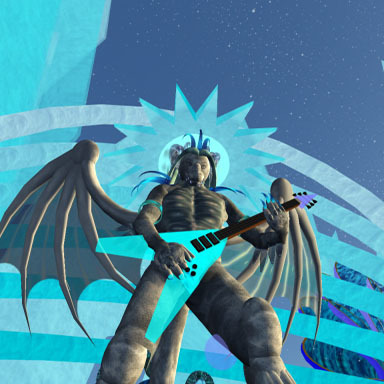
Here’s the YouTube live stream of our show this evening, Saturday 07 February 2026:
https://www.youtube.com/watch?v=SIex0wfidzk
#alazarinmobius #theinvisibleband #interplanetaryliberationfront #progressiverock #spacerock #secondlife #cubase #livestream #bandcamp #youtube #music #progrock #livestreammusic #scifi #spaceopera #mastomusic #musodon

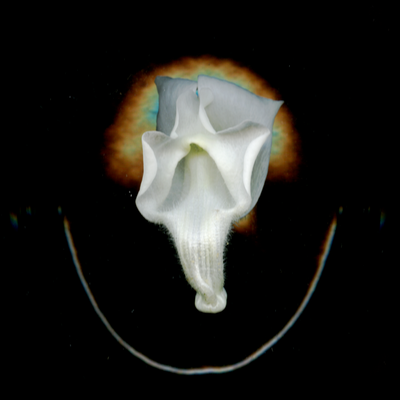
Ruby Rockatansky – Pleiades Squad // Landfall /// Thirst Contact (The Vampires of Vulcan)
#Metal #progmetal #progressivemetal #scifi #spaceopera #trans #transgender #Illinois
CC BY-SA (#CreativeCommons Attribution Share Alike) #ccmusic
https://rubyrockatansky.bandcamp.com/album/pleiades-squad-landfall-thirst-contact-the-vampires-of-vulcan
Jeff Hawke by Sydney Jordan
#comicstrip #jeffhawke #scifi #sciencefiction #comicstrips #spaceopera

Ruby Rockatansky – Prologue // A Cosmos Reborn /// The Unseen Consequence
#Metal #audiodrama #conceptalbum #progmetal #progressivemetal #scifi #spaceopera #trans #transgender #Illinois
CC BY-SA (#CreativeCommons Attribution Share Alike) #ccmusic
https://rubyrockatansky.bandcamp.com/album/prologue-a-cosmos-reborn-the-unseen-consequence

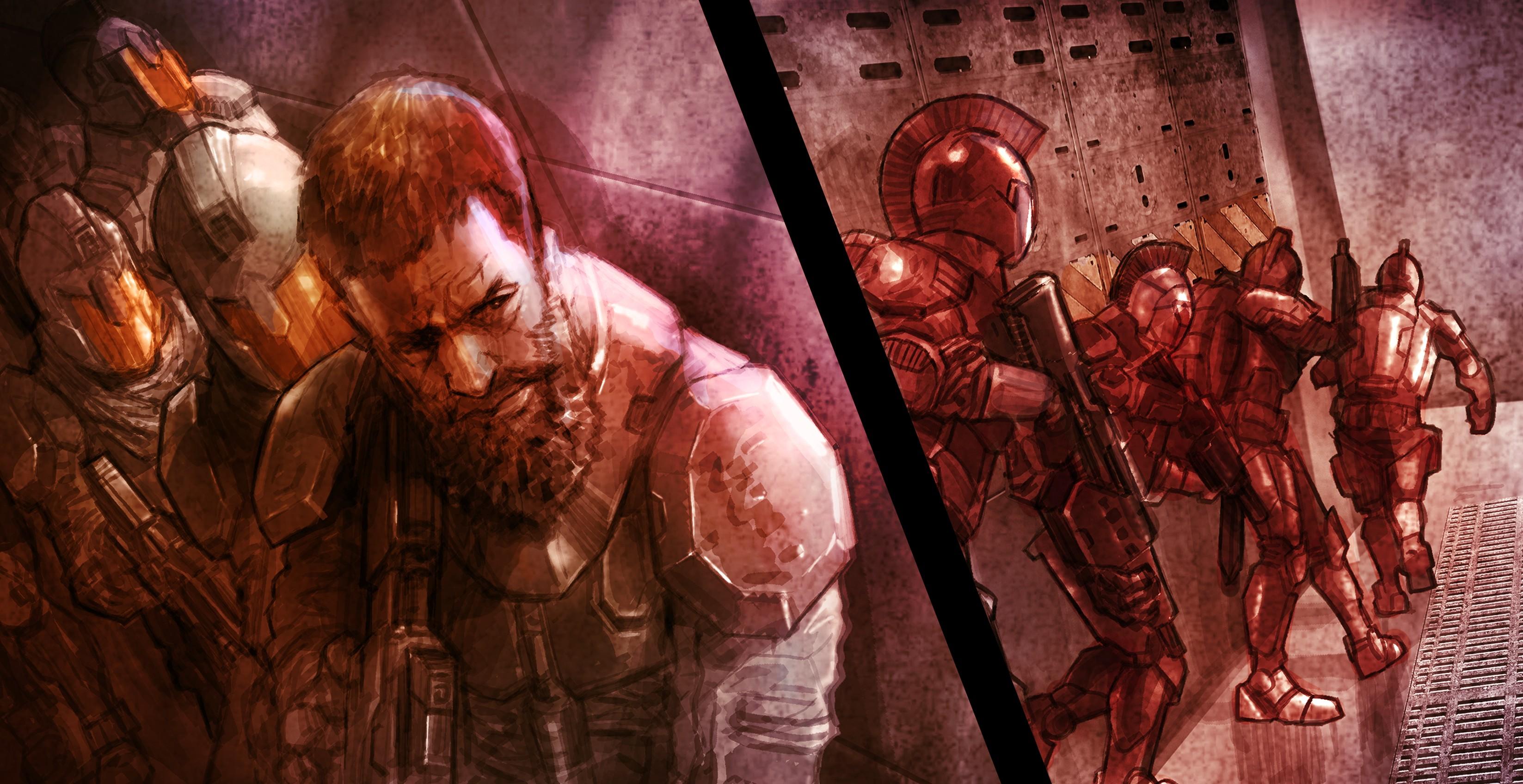
When you hear I'm adapting #TheOdyssey, you don't expect to see #spaceships, do you? Well...
More info here: https://www.kickstarter.com/projects/redwulfcomics/space-odyssey-1-homers-epic-like-youve-never-seen-it
#odyssey #scifi #sciencefiction #spaceopera #indiecomics #booksky #mythology #epic #homer #adaptation #classic #literature

This is TROY! Yes, THAT Troy - and its legendary impenetrable wall.
The most epic journey of all literature made even more EPIC. And it begins here. Press that "Notify me on Launch" button now.
#TheOdyssey #Odyssey #Odysseus #greekmythology #mythology #classicliterature #cliterature #comics #comicbooks #illustration #art #artwork #spaceart #planets #EpicStory #spaceopera #scifiart #scifi #sciencefiction #MythologyReimagined #newseries #worldbuilding #literature #epic
Ruby Rockatansky – The Vampires of Vulcan (Seven Sisters Saga Vol. 2)
#Metal #SymphonicMetal #audiodrama #conceptalbum #progressivemetal #scifi #spaceopera #transgender #Illinois
CC BY-SA (#CreativeCommons Attribution Share Alike) #ccmusic
https://rubyrockatansky.bandcamp.com/album/the-vampires-of-vulcan-seven-sisters-saga-vol-2
Here’s the YouTube live stream of our show this evening, Friday 06 February 2026:
https://www.youtube.com/watch?v=qepdF6XqwzA
#alazarinmobius #theinvisibleband #interplanetaryliberationfront #progressiverock #spacerock #secondlife #cubase #livestream #bandcamp #youtube #music #progrock #livestreammusic #scifi #spaceopera #mastomusic #musodon

Jeff Hawke by Sydney Jordan
#comicstrip #jeffhawke #scifi #sciencefiction #comicstrips #spaceopera

Part 6 is here, bringing you the first crisis on board the starship Symbiosis. And believe me, it won’t be the last . . . 🥸👽🤖🌚
https://jetse.substack.com/p/the-three-reflectors-of-consensual-506
#sciencefiction #Novel #spaceopera #consciousness #futureshock

The thing about a base on the moon is that everyone underestimates the amount of support the Earth provides. Even with a so-called sealed environment, there is considerable support provided by the outside.
So when they established the first moonbase, it was very short lived. To be fair, it was only really intended as a temporary establishment, but it only lasted just over one and a half times the design life. Which for a NASA project is abysmal. So 36 months after being established, it was abandoned. The next one, an ESA project, lasted about the same.
The third was a Chinese military one. It was meant to be permanent, but they abandoned it after two years because of the cost of resupply.
The fourth one was an attempt at a lunar hotel. It lasted three months before the company running it went bust, and a joint NASA/ESA rescue mission had to be sent to bring the staff home.
The fifth one was a genuine attempt at colonisation, headed up by a multi-billionaire. They were well funded, and established a large semi-underground city space. Several hundred people moved there. Most of them died there. The oxygen plant worked, the CO2 scrubbers worked, but the small population did not have enough depth in skills to keep it running safely. Eight people survived the catastrophic cascade that destroyed the biome and the containment. Only seven of them made it back to Earth. The last one remained behind to manage the launch of the one remaining earth-return ship.
The sixth and seventh ones followed similar patterns, at great loss of life.
This cooled the idea of a permanent moon base for several decades.
Eventually someone tried again. This time it was an international consortium of space agencies. Their objective was to try and determine what would be needed for any sort of permanent non-terrestrial colony.
The answer was shocking to everyone.
Over thirty thousand people ended up needed to provide the required depth of skills. And for each of them approximately two hectares of wild space was needed, in addition to the farmed areas.
What was the extra space for? It provided sufficient complexity to the support biomes to ensure that they could not easily go into a systemic collapse. It provided for pollinators to breed, for detritus processors to grow, and all the millions of little things that were needed for an actual ecosystem.
It took them nearly thirty years to build it. And it remains the only one that Earth has ever successfully built.
The Selenites, as they call themselves, have, however, built two more as their population has grown.
#SF #SFF #SciFi #SpaceOpera #microfic #microfiction #tootfic #IAmWriting
#TheOdyssey is a #scifi #spaceopera adaptation of the immortal #epic by Homer. Think #greek #mythology meets #starwars.
Sounds interesting? Press the "Notify me on Launch" button and #kickstarter will let you know when it comes out:


Jeff Hawke by Sydney Jordan
#comicstrip #jeffhawke #scifi #sciencefiction #comicstrips #spaceopera

Here’s the YouTube live stream of our show this evening, Wednesday 04 February 2026:
https://www.youtube.com/watch?v=xyffpZcI1Vk
#alazarinmobius #theinvisibleband #interplanetaryliberationfront #progressiverock #spacerock #secondlife #cubase #livestream #bandcamp #youtube #music #progrock #livestreammusic #scifi #spaceopera #mastomusic #musodon

Jeff Hawke by Sydney Jordan
#comicstrip #jeffhawke #scifi #sciencefiction #comicstrips #spaceopera

Client Info
Server: https://mastodon.social
Version: 2025.07
Repository: https://github.com/cyevgeniy/lmst