Political battle erupts as Llanelli Rural Council approves 8% council tax rise – bringing three-year increase to 47%
The decision will affect residents across communities outside Llanelli town centre, including Llwynhendy, Pemberton, Five Roads, Bynea, Dafen, Felinfoel, Swiss Valley, and Glyn.
Opposition councillors from Plaid Cymru and Independent groups condemned the decision, warning it will place a further burden on households during the ongoing cost of living crisis, following an “eye-watering” 32% increase last year.
But Council Leader Cllr Rob Evans hit back, claiming the opposition councillors themselves were responsible for driving up the precept by insisting on ward-specific projects – and accused them of hypocrisy for criticising allowances while earning approximately £20,000 per year as County Councillors.
Cllr Alex Evans, Leader of the Opposition, said the decision shows “the administration is out of touch with the priorities of ordinary residents.”
“People are already struggling to get by. Forcing them to pay almost 50% more in council tax than just three years ago is just not on — that is why we had to vote against the proposed budget tonight. Residents are being asked to pay more while council leaders spend on luxuries,” he said.
Opposition councillors also criticised continued spending on councillor attendance payments, along with a leased car and chauffeur to escort the Chair of Council to events. An optional attendance payment allows councillors to claim £15 for each meeting they attend, with several meetings lasting less than 10 minutes in 2025, and the shortest lasting only three minutes.
“Opposition councillors and residents will rightly question the judgement and priorities of Labour councillors after refusing to scrap attendance payments and return the leased car,” Cllr Evans added.
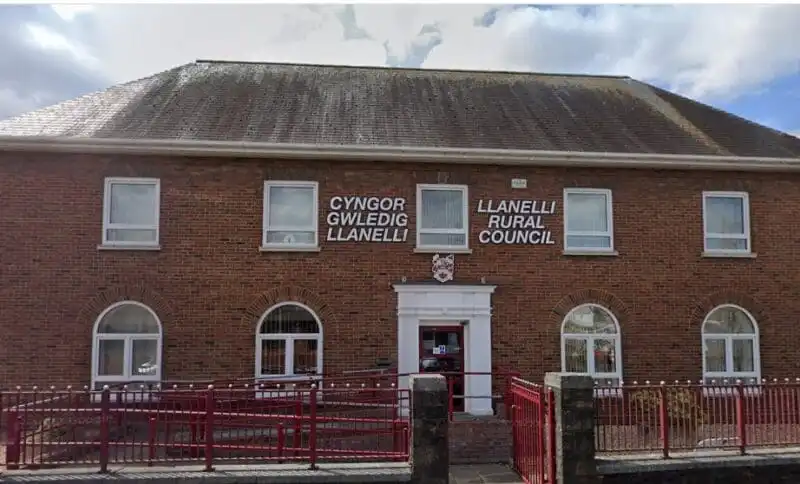
Llanelli Rural Council offices on Vauxhall in Llanelli town centre, where councillors approved an 8% council tax rise bringing the three-year increase to 47%. Image: Google Maps/Llanelli Rural Council
Opposition councillors contrasted the move with neighbouring Llanelli Town Council which voted to freeze its tax.
The council has since moved from being Labour-run to a new Independent administration and has committed to scrapping councillor payments.
Cllr Sharen Davies, Independent member who also voted against the budget, challenged the administration’s claim that the tax rise was driven in part by the Canolfan Llwynhendy project.
“This development has been funded largely through grants and partner support. It should not be used as a smokescreen to justify excessive tax rises. Llwynhendy residents deserve investment and improvements in our community,” she said.
“This tax hike is completely unacceptable and will put serious financial pressure on our residents. Labour must rethink this further tax increase and start cutting back on unnecessary luxuries.”
However, Council Leader Cllr Rob Evans strongly rejected the criticism, pointing out that the Council’s administration is a coalition of Labour, Independent, and Plaid Cymru members – not a solely Labour-led authority.
He said the current Council has inherited a significant backlog of issues from the previous administration’s “lack of foresight” when adopting numerous new projects and asset transfers.
Cllr Evans explained that last year’s 32% increase was driven by unavoidable commitments, including £107,000 required in the Llwynhendy/Pemberton Ward to complete the new Canolfan Llwynhendy build and to fund unexpected drainage works at Gwili Fields in Cllr Sharen Davies’s ward, recruitment of additional staff to support growing community facilities, and replacement of a grounds maintenance vehicle.
He said this year’s 8% rise primarily reflects investment in Plaid Cymru and Independent wards, including £40,000 for refurbishing a play area for the Five Roads/Glyn Ward – Cllr Alex Evans’s ward – and further investment in Canolfan Llwynhendy.
“It is important to note that had Councillors Alex Evans and Sharen Davies not insisted on these additional ward-specific projects, this year’s rise would have been closer to the general cost of living and would have eased financial pressure on local households. For a Band D property, the increase equates to 28 pence per week,” Cllr Evans said.
On the Chairperson’s car, he said the Council continues to maintain a car and driver because the Chair must represent the Council at numerous civic events across the community, and not all Chairpersons are able to drive. “This support ensures the Chair can fulfil the role effectively and inclusively,” he added.
Regarding councillor allowances, Cllr Evans said Llanelli Rural Council is one of the largest and most ambitious town and community councils in Wales, and as a result, councillors face increasing demand on their time to meet governance and regulatory requirements.
“The role is no longer entirely voluntary in practice. Members dedicate substantial time to reading agendas, reports, and background papers, in addition to attending meetings. The meeting allowance ensures councillors are not out of pocket for fulfilling their duties,” he said.
He added:
“It must also be acknowledged that the councillors quoted in the opposition press release are themselves County Councillors. County Councillors receive a basic salary of approximately £20,000 per year, and for context this is more than the rural council’s entire budget.”
The council’s administration said it remains committed to transparency, responsible financial management, and ensuring that all communities within the Council area benefit from sustained investment and high quality services.
#Bynea #CllrAlexEvans #CllrRobEvans #CllrSharenDavies #Dafen #Felinfoel #FiveRoads #Glyn #IndependentPoliticians #Llanelli #LlanelliRuralCouncil #Llangennech #Llwynhendy #Pemberton #PlaidCymru #SwissValley #WelshLabour