
@LoganFive You realize that you just described the entire work life of every #librarian right?
#Librarian

RE: https://journa.host/@winnipegfreepress/116066020156169741
Great story focused on the work of a #collections #librarian. And a #WesternUniversity alum.

Are you in Debt?
Do you want to get Out?
"Finally Free: The Ultimate Guide for Getting Out of Debt and Staying Out:
Now available at https://www.tracytaylorbooks.com.
#readers, #reading, #bookstagram, #books, #bookcommunity, #momlife, #family,
#librarian, #fyp, #foryou, #viral, #discover, #BlackMastodon, #YoungAdultBooks,
#GenX, #GenY, #GenZ, #GenAlpha, #GenBeta,

Are you in Debt?
Do you want to get Out?
"Finally Free: The Ultimate Guide for Getting Out of Debt and Staying Out:
Now available at www.tracytaylorbooks.com.
#readers, #reading, #bookstagram, #books, #bookcommunity, #momlife, #family,
#librarian, #fyp, #foryou, #viral, #discover, #YoungAdultBooks,
#GenX, #GenY, #GenZ, #GenAlpha, #GenBeta,


If you, a systems, erm or ux #librarian, hate the way the AI/LLM Reading Assistant in #ScienceDirect does a dark pattern & pops up to cover the actual damn thing you are trying to read, you can email #Elsevier support & ask them to disable it for your institution. It may take a while, but given that they did it for me, they’ll probably do it for you. #LibraryLife #libraries

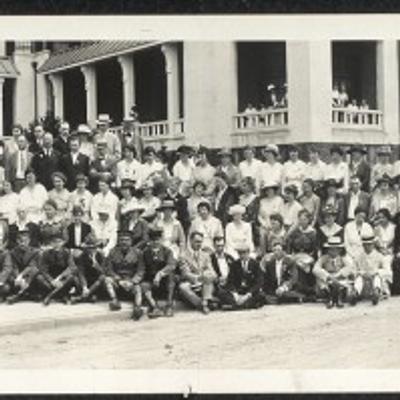
Winter Reruns: “After 14 years as a librarian, I honestly don’t recommend librarianship to anyone anymore.”
After taking a few months off, I’ve decided to sunset this project. I’m finishing up my scheduled selection of Hiring Librarians’ greatest hits and most reviled posts, and then will stop updating in late February/early March. Thanks so much for reading!
This survey response was submitted on February 6, 2023 and the post originally ran on June 9, 2023. It’s fairly high up in my “most viewed of all time” list, especially for a more recent post. I think perhaps it’s the quote I pulled for the title; many of the most-viewed posts express some form of library doomsaying – librarianship is dead, we’re tired, things aren’t what they used to be, etc.
Walton LaVonda, U.S. Fish and Wildlife Service, Public domain, via Wikimedia CommonsPlease note: this is an anonymous response to an online survey; I do not have any way of contacting the respondent or verifying responses. Their answers may reflect good, bad, or middling job searching practices. I invite you to take what’s useful and leave the rest.
Your Demographics and Search Parameters
How long have you been job hunting?
√ Less than six months
Why are you job hunting?
√ Looking for more money
√ Because I reassessed my priorities after COVID
√ Other: Looking to possibly get out of librarianship
Where do you look for open positions?
Indeed, ALA jobs, CCC registry, friends
What position level are you looking for?
√ Other: Something that pays better than librarianship
What type(s) of organization are you looking in?
√ Other: Maybe higher ed (but not a library) or an organization or company or work from home
What part of the world are you in?
√ Western US (including Pacific Northwest)
What’s your region like?
√ Urban area
√ Suburban area
Are you willing/able to move for employment?
√ No
What are the top three things you’re looking for in a job?
Flexibility, work from home, better pay
How many jobs have you applied to during your current search? (Please indicate if it’s an estimate or exact)
None. I’m willing to go to a community college library but nothing open. All other jobs are entry level and pay is very low. No good jobs to apply to.
What steps, actions, or attributes are most important for employers to take to sell you on the job?
√ Pay well
√ Having (and describing) excellent benefits
√ Funding professional development
√ Prioritizing EDI work
√ Prioritizing work-life balance
Do you expect to see the salary range listed in a job ad?
√ Yes, and it’s a red flag when it’s not
Other than not listing a salary range, are there other “red flags” that would prevent you from applying to a job?
Jobs that say you may need to work overtime often
The Process
How much time do you spend preparing an application packet?
2-5 hours: the cover letters take a while and having to repeat my resume on an online application is a time waster.
What are the steps you follow to prepare an application packet?
Carve out time to do it
How do you prefer to communicate with potential employers?
√ Phone for good news, email for bad news
When would you like potential employers to contact you?
√ To acknowledge my application
√ To tell me if the search is at the interview stage, even if I have not been selected
√ Once the position has been filled, even if it’s not me
How long do you expect an organization’s application process to take, from the point you submit your documents to the point of either an offer or rejection?
Depends on the institution but academics take months. Took 6 months from application to hire in my current job.
How do you prepare for interviews?
Review questions, review position description
What are your most hated interview questions, and why?
Why do you want this job? (Because I need money. It’s like jobs want you to tell them that it’s your dream to work for them. I need money to live)
What are your strengths and weaknesses? (Again, we all know they want a weakness and how we make it a strength).
During your current search, have you had any of the following experiences:
- Submitted an application and got no response √ Happened the majority of the time or always
- Had an interview and never heard back √ Happened more than once
- Interviewed for a job where an internal candidate was eventually chosen √ Happened more than once
- Asked for an accommodation for a disability √ Not Applicable
- Withdrawn an application before the offer stage √ Not Applicable
- Turned down an offer √ Happened once
If you want to share a great, inspirational, funny, horrific or other story about an experience you have had at any stage in the hiring process, please do so here:
Haha! The whole process of applying and interviewing is a joke. Applications are repetitive and waste time. The actual interviews are awful most of the time. People are not welcoming and a whole day interview for an academic librarian job is just unnecessary. Stop acting like jobs are sacred. It’s a job! Hire the person that can do it and don’t take 6 months. People need jobs asap. If a job doesn’t post the salary I no longer consider it. Low ball offers are a waste of time.
What should employers do to make the hiring process better for job hunters?
Actually respond to people, add a decent salary, make the interviews less than 1 hour, be friendly and inviting, answer questions honestly. I can’t tell you how many times I’ve actually gotten to a second interview and then heard nothing. I’ve learned about not getting the job by seeing LinkedIn postings of people sharing their new jobs. HR depts need to do better.
You and Your Well-Being
How are you doing, generally?
√ I’m frustrated
What are your job search self-care strategies?
I only apply to jobs worth my time now. No more jobs with no salary posted or jobs that list everything under the sun with low pay.
Do you have any advice or words of support you’d like to share with other job hunters, is there anything you’d like to say to employers, or is there anything else you’d like to say about job hunting?
Don’t give up and only apply to jobs worth your time. Something great will come along, whether it’s a library job or not.
Do you have any comments for Emily (the survey author) or are there any other questions you think we should add to this survey?
Maybe add questions about salary (like what do you make and what should you be making and how long you’ve been in libraries), are you looking for jobs other than library jobs, are you thinking of leaving librarianship. After 14 years as a librarian, I honestly don’t recommend librarianship to anyone anymore. It’s low pay, people don’t respect us, and there are no jobs. Ask about the kind/type of library jobs they’re looking for.
Job Hunting Post Graduate School
If you have an MLIS or other graduate level degree in a LIS field, what year did you graduate? (Or what year do you anticipate graduating?)
Got my MLIS in 2009
When did you start your first job search for a “professional” position (or other position that utilized your degree)?
√ Six months before graduating with my MLIS/other LIS degree
In relation to your graduation, when did you find your first “professional” position?
√ I was actually hired before I graduated
What kind of work was your first post-graduation professional position?
√ Full Time
Did you get support from your library school for your first job hunt (and/or any subsequent ones)?
Nope! Library’s school did nothing.
Is there anything else you’d like to tell us about searching for or finding your first post-graduation position?
I started my search about 3-4 months before graduation and was lucky to start a month before my graduation. Unfortunately, I was laid off a year later. Only reason I feel I got lucky was because I had been working in libraries PT before I graduated so I had some experience. My advice: don’t get a non-librarian job once you get the degree. Only apply to librarian jobs.
#Librarian #librarians #libraries #libraryCareers #libraryHiring #libraryInterview #libraryJobs
✨We're launching Our First Conference 🥳 (July, Leeds)
📣Call for papers is on:
nlisn.org/conference/
We welcome anything related to neurodivergence & #library, information, or #archive work.
Short or long talks, workshops or wildcard ideas
#Neurodivergent
#Neurodiversity
#LibraryWorker
#Librarian
Conference
Winter Reruns: “If an Agency Sends You a Role You Aren’t Interested in It is Better to Reply and Explain the Reasons Why Not, So the Agency Can Get a Closer Match Next Time”
I’m taking time off! I’ll be back with new content in late February. Take this survey to share your opinions about what would be most helpful/interesting. While I’m out, I’m running a selection of Hiring Librarians’ greatest hits and most reviled posts.
This is another high-viewed post, which first ran on June 25, 2012. It is from a series of posts I called Recruiter Spotlight, which, as the name may tell you, were interviews with people who worked as recruiters in the LIS field (I’d be happy to restart this, so if you’re a recruiter and you want to be interviewed, shoot me an email at hiringlibrarians at gmail and I’ll respond just as soon as I get back).
Nicola also answered many questions for Further Questions. She has since shifted industries and is no longer recruiting for LIS; her update is included in the post Job Hunter’s Web Guide: Sites of Yore.
This interview is with independent recruiter Nicola Franklin. Her firm, The Library Career Centre, provides recruitment services for employers as well as for-pay candidate services such as CV / resume writing and interview coaching. Ms. Franklin has been in the library recruitment field for 20 years. Prior to striking out on her own, she worked with Manpower pls, Sue Hill Recruitment, and then the international firm, Fabric. She is a fellow of the Recruitment & Employment Confederation and member of the Special Libraries Association.
Questions about Recruitment:
Can you give us a brief run-down of how a recruitment firm works?
When you send your CV or resume to register with a recruitment firm, they will generally invite you for an interview (phone/skype or in person depending on distance, etc) and your CV/resume will be added to a database. Your file on the database will usually also have notes of your interview and some codes or classification tags added, covering basic categories such as locations, salary bands, qualifications, industry sectors and skills.
When a recruiter gets a new vacancy from a client, they will use the codes to search the database, to gather a ‘long list’ of potential candidates. In most library firms, the consultant will then look through the resumes and interview notes for each of those candidates, matching more closely between the job requirements and each candidate’s’ skills and requirements.
This weeding process will create a slightly shorter long-list, and it is those people who will be contacted (either by a mail-merge email or on the phone, depending on how many potentially suitable people make the list). Some of those contacted will either not reply at all, or will decline to apply for the role, leaving a short-list. It is important for candidates to realise that their response (or non response) will be recorded; if an agency sends you a role you aren’t interested in it is better to reply and explain the reasons why not, so the agency can get a closer match next time, rather than to ignore it. On the one hand, the agency will be no wiser as to what would interest you, and on the other (after several tries at contacting you) the agency may assume you’re no longer looking and archive your file.
In some cases all of those on the short-list will be submitted to the client, in other cases the consultant will sift the list further to reduce the numbers – a consultant would generally want to send between 3 and 10 resumes to their client, depending on what’s been agreed. In most cases, the consultant will either also submit a report on each candidate, explaining why they’re a good fit for the role, or call or visit the client to present each candidate verbally. This is really where the value of having a recruiter work for you shows through, as you have someone rooting for you and trying to persuade the hirer to interview you!
What types of vacancies are you most frequently placing candidates in? In what types of organizations?
I cover all part of the wider information industry, including traditional library roles in public or academic settings, information or knowledge management in government and the private sector, and records management across all kinds of organisations.
Increasingly there has been a merger of these different disciplines, especially at more senior levels. In the UK there has been a marked decrease in roles in the public sector over the past two or three years, while the private sector declined earlier than that and has since been recovering (albeit slowly).
The main problem caused by the recession has been a dearth of mid-level roles. There have been some entry-level roles still being recruited, and organisations have generally replaced senior or very specialist roles, but they often seem to feel they can ‘make do’ with fewer Assistant Librarians or Information Officers. This has made career development very difficult for many people, especially as this situation has persisted since 2008.
What should candidates do differently when applying to a recruitment firm? Is there anything they should be sure to include with you that they wouldn’t tell a direct-hire job, etc.?
A resume or CV for a recruitment firm should be slightly longer and more detailed than when sending it direct to a hirer. In the latter case you are tailoring it specifically for that role, while for an agency there may be several types of role you’d like to be considered for and so your resume needs to reflect a broader range of your skills and experiences. Also remember that some agency databases can search CVs for keywords, so make sure the ‘jargon’ keywords or acronyms are included (something I’d be advising against for a CV to be sent directly to a hirer).
At the interview stage with an agency, be sure to tell your recruiter honestly about any gaps or any issues you have had (eg a personality clash with a colleague or manager). They will be able to advise you on how to best present things at an employer interview.
Are there particular qualities or experiences that will give a candidate an edge in being considered for positions you are trying to fill?
The main quality to display is enthusiasm. Librarianship isn’t a role most people get into for the monetary rewards, and hirers expect candidates to be passionate about what they’re doing. Coming across as fed up, bored or even worse hostile, is a sure way to make a consultant think twice when deciding whether to put you forward to their client. You need to make sure they will feel confident representing you.
Secondly, candidates who have a realistic appreciation of their skills and aptitudes, and clear career goals, are easier for both recruiters and hirers to assess and fit into their open vacancies. Spending time doing an audit of your skills and reflecting on what you have to offer, and also where you want your career to go, will pay off dividends later.
Once an initial placement has been made, what should a candidate do to keep on good terms with your agency (in order to ensure future placements)?
It’s good to keep in touch with your recruitment agency, from an initial call or email to let them know how you’re settling into your new role to an update later on. You never know when you might need their services again! I attend many library and information sector specialist group’s networking events and seminars, and it’s always nice when candidates come up and say hi. Recruiters are used to being discrete, so don’t be afraid one will say ‘are you looking again’ or anything embarrassing while your boss is nearby!
Is there anything else you’d like my readers to know about recruitment agencies or the Library Career Centre?
I set up The Library Career Centre so that I could offer services over and above the standard recruitment process described above. During my 20 years in the library recruitment sector, I had noticed that candidates often needed guidance on improving their resume, or their interview technique could do with some tweaking, or they simply had difficulty articulating what skills they had to offer or what their career goals were.
During a recruitment agency registration interview there is only about half an hour to gather all the information the consultant needs on career history and future goals – which doesn’t leave much time to give advice. The Library Career Centre therefore offers support and advice directly to candidates on all these areas, in a more relaxed atmosphere where we can take time to explore issues more carefully. This support is offered via 1-1 coaching as well as workshops and seminars. The 1-1 services are designed on a modular basis, so a job seeker can pick and chose to get help on just those areas they are struggling with, or can put together a programme of support to suit their own needs.
I also use social media a great deal to keep up to date with issues and in touch with people – @NicolaFranklin on Twitter or http://uk.linkedin.com/in/nicolafranklin on LinkedIn, and I make regular posts on my blog.
Questions from the survey:
What are the top three things you look for in a candidate?
Relevant experience and skills for the role in question
Open minded and keen to continue learning
Enthusiasm and energy
Do you have any instant deal breakers, either in the application packet or the interview process?
Body language or answers which contradict claims made on the resume/application form, eg; ‘great interpersonal sills’ on the resume coupled with awkward/introverted body language, or ‘excellent ICT skills’ on the resume coupled with obvious inability to use tabs or other formatting tools in Word. Quite apart from the skills that were claimed which may be lacking, the mere fact of making exaggerated or untrue claims show either (at best) poor self awareness or (at worst) dishonesty.
What are you tired of seeing on resumes/in cover letters?
Profile statements which are clearly regurgitated cliches, and don’t show any correlation between the applicants touted attributes and those required for the job.
Is there anything that people don’t put on their resumes that you wish they did?
Achievements – most resumes recount experiences or duties, some add in skills or attributes, very few include achievements (ie, how did the organisation benefit from having hired the applicant).
How many pages should a cover letter be?
√ Only one!
How many pages should a resume/CV be?
√ Two is ok, but no more
Do you have a preferred format for application documents?
√ No preference, as long as I can open it
Should a resume/CV have an Objective statement?
√ Yes
If applications are emailed, how should the cover letter be submitted?
√ I don’t care
What’s the best way to win you over in an interview?
Be engaged with the role and organisation; demonstrate that you’ve done (good quality) research about the organisation, understand the role requirements and have put some thought into how your skills match up to the tasks in the job.
What are some of the most common mistakes people make in an interview?
Not having done enough preparation, even for obvious questions like ‘why would you be good for this role’ or ‘where do you want your career to be in 5 years’.
How has hiring changed at your organization since you’ve been in on the process?
Over the past 20 years library recruitment has shifted emphasis away from a need to have used all the specific databases/cataloguing standards/etc of the hiring organisation, and towards more generic aptitude and ability to learn packages and systems.
Anything else you’d like to let job-seekers know?
Make sure you have plenty of questions to ask the interviewer too! An interview should be a two way communication, as you need to know whether you’d like to work in this place, if you are fortunate to receive an offer. Also, having no questions to ask when invited to do so is a sure way of saying ‘I’m not really interested in this job’ to the interviewer.
#CurriculumVitae #Employment #EmploymentAgency #Librarian #Résumé #Recruiter #Recruitment #SpecialLibrariesAssociation



Got someone who works in libraries trying to tell me we should be neutral and not political. The act of choosing to represent many voices and not just the voice of the dominant culture is not neutral. It is deeply political. People who don’t see what libraries do as being deeply political are privileged people who don’t see that EVERYTHING is political. They don’t see that politics affects every part of life because they are privileged enough to be insulated. Their privilege is that whichever way the political wind blows, they will probably be ok. #Libraries #Librarian

Unboxing book donations as we prepare for the librarian book fair #… | TikTok
... librarian book fair #unboxing #books #asmr #librarian #donation”. Unboxing original sound - Meet Me… Read original article: Read More

Certain librarians are guardians of Ancient Knowledge, and asking one of them for information - any information - will ensure you've stepped onto the right path in your quest.

Librarian Average Salary in USA, 2026 » QA Realm
https://qarealm.com/librarian-average-salary-in-usa-2026/
Tags: #Librarian, #Average, #Salary, #USA, #2026, #QA, #Realm

"Digital Defense: Library Cybersecurity Webinar Series, January - June 2026"
https://sherpaintelligence.substack.com/p/digital-defense-library-cybersecurity
- This will be a six-part series featuring a variety of guest presenters speaking on a range of #cybersecurity topics.
- These sessions are open to anyone, anywhere and will be recorded.
- First session January 28th!

Strictly Overdue



ICYMI:🎧The Quiet Librarian by Allen Eskens
#BookReview #4Hearts #AudioBookReview #Librarian #War
https://booksofmyheart.net/2025/02/22/%f0%9f%8e%a7the-quiet-librarian-by-allen-eskens/?fsp_sid=10114


This made me happy! I feel like their update is saying, yes yes yes Robert, we fuckin’ get it. Our catalog has bugs. Could you pretty please find a hobby or a man so you will quit pointing out bugs to our development team? Your constant nagging about our accessibility issues piss us off a lot, too! Go find a man or a hobby.
Our team is continually making improvements to the Hoopla app to make it faster and more reliable. This update includes minor updates to the store listing. Thanks for supporting your local library!
https://apps.apple.com/us/app/hoopla-digital/id580643740 #Hoopla #Library #Libraries #HooplaDigital #Librarian

TIL about a #Philadelphia hero #librarian who recorded 33 years of TV news (and other shows) on a huge collection of VHS tapes that's now being digitized by the #InternetArchive
https://hackaday.com/2026/01/20/marion-stokes-fought-disinformation-with-vcrs/
Today's #Januread was from
Isaac Asimov: Zweite Foundation
[Second Foundation, translated by Rosemarie Hundertmarck]
A #librarian has been sent on a clandestine interstellar mission.
#Reading #Lesen #ScienceFiction
Januread by the #ScottishBookTrust supports reading every day in January: https://www.scottishbooktrust.com/reading-and-stories/januread
Client Info
Server: https://mastodon.social
Version: 2025.07
Repository: https://github.com/cyevgeniy/lmst