
Legal experts, francophone groups decry Alberta premier’s call for more input in federal judicial appointments
Canadian legal experts and francophone groups are criticizing Alberta Premier Danielle Smith’s calls for more input on federal judicial appointments and relaxing bilingualism requirements for Supreme Court judges as threats to jud...
#judicialappointments #languagerights #independence
https://www.cbc.ca/news/canada/calgary/alta-judges-legal-experts-francophone-groups-9.7075285?cmp=rss
#LanguageRights


Legal experts, francophone groups decry Alberta premier’s call for more input in federal judicial appointments
Canadian legal experts and francophone groups are criticizing Alberta Premier Danielle Smith’s calls for more input on federal judicial appointments and relaxing bilingualism requirements for Supreme Court judges as threats to jud...
#judicialappointments #languagerights #independence
https://www.cbc.ca/news/canada/calgary/alta-judges-legal-experts-francophone-groups-9.7075285?cmp=rss


Legal experts, francophone groups decry Alberta premier’s call for more input in federal judicial appointments
Canadian legal experts and francophone groups are criticizing Alberta Premier Danielle Smith’s calls for more input on federal judicial appointments and relaxing bilingualism requirements for Supreme Court judges as threats to jud...
#judicialappointments #languagerights #independence
https://www.cbc.ca/news/canada/calgary/alta-judges-legal-experts-francophone-groups-9.7075285?cmp=rss


Legal experts, francophone groups decry Alberta premier’s call for more input in federal judicial appointments
Canadian legal experts and francophone groups are criticizing Alberta Premier Danielle Smith’s calls for more input on federal judicial appointments and relaxing bilingualism requirements for Supreme Court judges as threats to jud...
#judicialappointments #languagerights #independence
https://www.cbc.ca/news/canada/calgary/alta-judges-legal-experts-francophone-groups-9.7075285?cmp=rss


In many client apps of the Fediverse micro-blogging, I could see that there is no option for languages including Kadazandusun, Iban, Bidayuh, Rungus. Please don't tell me that the Fediverse is inclusive.
#Fediverse #Mastodon #Indigenous #LanguageRights #Sabah #Sarawak #Borneo #Kadazandusun #Iban

⚠️ "It’s not just language; it’s a map of erasure." Analysing the #Taliban's shift to Pashto as a tool for total exclusion. A warning to non-Pashtuns: The removal of #Farsi—the civilizational bridge—is the prelude to silencing all independent voices. Unity is the only defense. 🇦🇫🚫
#Afghanistan #LanguageRights #Politics
https://kokcha.news/10133/?utm_source=mastodon&utm_medium=jetpack_social

Global protest round-up from MiniMia on Mastodon - Dec. 14
#FreePalestine #WorkersRights #ClimateAction #LanguageRights
#Palestine #Gaza @palestine
#news #politics

When “Speak English Only” Isn’t Courtesy But Control
A teacher telling students “don’t speak Spanish in class” isn’t the same as “no side conversations during work time.” One is a neutral behavior guideline. The other polices identity. For multilingual kids—Latine kids especially—language is how they belong, play, and breathe. It’s not a disruption by default; it’s culture in motion.
Here’s why the “English-only = courtesy” framing falls apart—and what the research (and a sweet moment from Pixar’s Elio) tells us about belonging, learning, and language.
1) U.S. civil rights law protects students from language-based discrimination
Schools that receive federal funds can’t discriminate based on national origin, which the Department of Education has long interpreted to include language. Federal guidance makes clear that English Learners are entitled to appropriate language supports so they can access instruction—without being punished for using their home language. Singling out Spanish instead of addressing the behavior (off-task chatting) risks crossing from classroom management into discriminatory territory.
2) Research is overwhelmingly clear: bilingual approaches help kids learn
Decades of large-scale studies show that students in well-implemented bilingual and dual-language programs match or outperform peers in English-only settings over time. Longitudinal work by Thomas & Collier and subsequent reviews consistently find stronger long-term academic outcomes when schools leverage students’ home languages as assets—not barriers. Recent roundups echo this: bilingual models are linked to better graduation rates and content mastery.
ED475048DownloadAnd it’s not just test scores. Newer research on cognitive load shows that allowing students to process in a familiar language improves comprehension—a common-sense win if the goal is learning, not gatekeeping.
3) Translanguaging is sound pedagogy, not chaos
“Translanguaging” describes how bilinguals naturally draw on their full linguistic repertoire to make meaning. Classrooms that welcome translanguaging—e.g., brainstorming in Spanish, drafting in English, comparing structures across languages—build deeper conceptual understanding and ultimately more flexible, higher-level academic language. This isn’t a fad; it’s a well-documented approach with classroom-tested materials and outcomes.
4) “Secret” languages are part of healthy social development
Kids invent codes and playful “private” languages all the time. Linguists call these practices ludlings or familects—intimate codes that foster belonging, privacy, and joy. They aren’t inherently disrespectful; they’re relationship glue. When adults treat all non-English speech as rude, we collapse a rich social behavior into a discipline issue—and kids get the message that their voice is a problem.
5) What “courtesy” actually looks like
Courtesy is content-agnostic:
- “It’s quiet work time—no side conversations.” ✅
- “During whole-class discussion, use a language everyone in your group understands.” ✅
- “No Spanish in here.” ❌ That targets identity rather than the behavior.
States and districts are also pushing back on the “English-only” myth in policy briefs, reminding educators that continuing to use the first language (L1) scaffolds content learning and accelerates English acquisition.
6) Elio shows why kids create “just-for-us” language
In Pixar’s Elio (2025), 11-year-old Elio invents a private language (often called “Elio-ese” in press and fan coverage). It starts as playful ownership—a way to feel seen and safe—and becomes a bridge to connection with his aunt Olga. Watching an adult learn a child’s tongue flips the script: the grown-up meets the kid where he is, validating his inner world. That’s what culturally responsive care looks like.
That tiny story beat matters. It models a better question for adults: How can I honor your language while setting fair norms for focus and participation? Not, How do I make you smaller so I feel more comfortable?
Practical takeaways for classrooms
- Name the behavior, not the language. Use neutral norms like “no side conversations during instruction” and “use a shared language for group work.”
- Leverage home languages as tools. Allow brainstorming, note-taking, or peer explanation in students’ strongest language; ask for end products in English as appropriate.
- Invite translanguaging moments. Compare vocabulary/structures across languages to deepen understanding (a strategy used in successful bilingual classrooms worldwide).
- Signal safety. If students know their language won’t be policed, they spend less energy masking and more on learning. That’s good pedagogy and good humanity.
Bottom line
“Don’t speak Spanish” isn’t courtesy, it’s a form of control we have come to see as classroom management. Courtesy is fair, clear, and universal. Control is selective and cultural. And kids deserve better. They also know better.
#bilingualEducation #classroomInclusivity #culturalAwareness #culturalBias #educationEquity #languageDiscrimination #languageRights #latineVoices #linguisticDiversity #multilingualIdentity #psychologicalImpactOfLanguagePolicing #speakEnglishOnly


Learn more about the dynamics of grassroots language activism in Galicia, Spain, and examine how urban-based language revitalization initiatives can be understood through the lens of social movement theory.
📖 http://dx.doi.org/10.1007/s10993-024-09687-6
📷 Spain Less Traveled
#language #academia #galicia #languages #languagerights #minorityrights #minority #minoritylanguage #activism #democracy #press #politics #languagepolicy #spain #travel #travelling #research

Bill 96 erodes legislative language equality
#Quebec #Canada #Bill96 #QuebecLaw #Bilingualism #LanguageRights #LegalEquality #CanadianLaw #Constitution #ConstitutionalLaw #FrenchAndEnglish #SupremeCourt #CharterOfTheFrenchLanguage #LanguageJustice
https://the-14.com/bill-96-erodes-legislative-language-equality/

Tamil Nadu Clings to Its Identity: Says No to Hindi
#TamilNadu #TamilLanguage
#HindiDebate #IndianCulture
#LanguageRights
https://eng.harbouchanews.com/2025/04/tamil-nadu-clings-to-its-identity-says.html

Language Rights Remain Protected by Law
https://crla.org/articles/know-your-rights-executive-order-14224-and-language-access

Africa: Mind Your Language - the Battle for Linguistic Diversity in AI: [UN News] For two years, one international organization under the umbrella of the UN has been leading a relentless campaign in the corridors of global digital diplomacy. Its mission? To bring linguistic diversity to English-dominated artificial intelligence. http://newsfeed.facilit8.network/TJjS8b #LinguisticDiversity #AIDiversity #LanguageRights #GlobalDiplomacy #ArtificialIntelligence

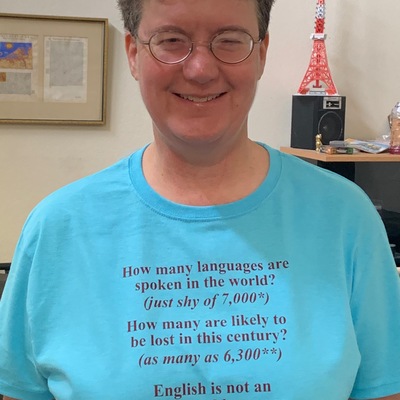
Thanks to the Linguistic Society of America for this response to the recent attempt of the U.S. government to make English the official language of the U.S. We have not had an official language until now, and do not need one. I enjoy teaching this topic whenever I get to teach an intro course. https://www.lsadc.org/lsa-statement-against-designating-english-as-the-official-language #USPol #LanguageRights #LSA
Minority language rights in the digital age
#Quebec #Canada #Politics #MinorityRights #EnglishLanguage #LanguagePolicy #DigitalAge #Bilingualism #Federalism #LanguageRights #Anglophones #FrenchLanguage #QCGN #QuebecLanguage #Bill101 #Bill96 #Bill84
https://the-14.com/minority-language-rights-in-the-digital-age/

Linguistic #anthropologist #GeraldRoche calling for a Global #languagerights movement
Major article by #GeraldRoche on #Global #languagerights
'I explore three key areas where language rights provide the foundations for a mass movement in defence of linguistic diversity. First, I look at how language rights provide a discursive frame that resonates with other movements and clarifies the problem that needs to be addressed. Second, I look at how the concept of language rights can help recruit individuals and organisations into a mass movement and sustain their involvement in the cause. Third, I discuss how language rights provide a basis for effective collective action.'

By #MariselaAmador via #CTV News #Montreal @ 5:54pm EDT on Sept 16, 2024
The #WestIslandHealthAuthority has launched a new campaign aimed at informing patients of their #LanguageRights when obtaining #HealthCare in #Quebec.
Electronic signs at agency facilities, including at the #LakeshoreGeneralHospital, now display: "Service in #French or #English. It's your right! Tell the staff which #language to speak with you."

(This post is being modified)

Have you ever been to the Scottish Parliament? Well here's a look at some of the great work being done to protect our languages there.
#scottishparliament #Scotland #edinburgh #holyrood #scottishlanguages #scottishlanguagesbill #scottishlanguagesact #gàidhlig #gaidhlig #equality #scottish #gaelic #scottishgaelic #scots #scotslanguage #scotsleid #translation #interpretation #simultaneousinterpretation #uk #legislation #politics #languagerights #minoritsedlanguages #crosspartygroup
Client Info
Server: https://mastodon.social
Version: 2025.07
Repository: https://github.com/cyevgeniy/lmst