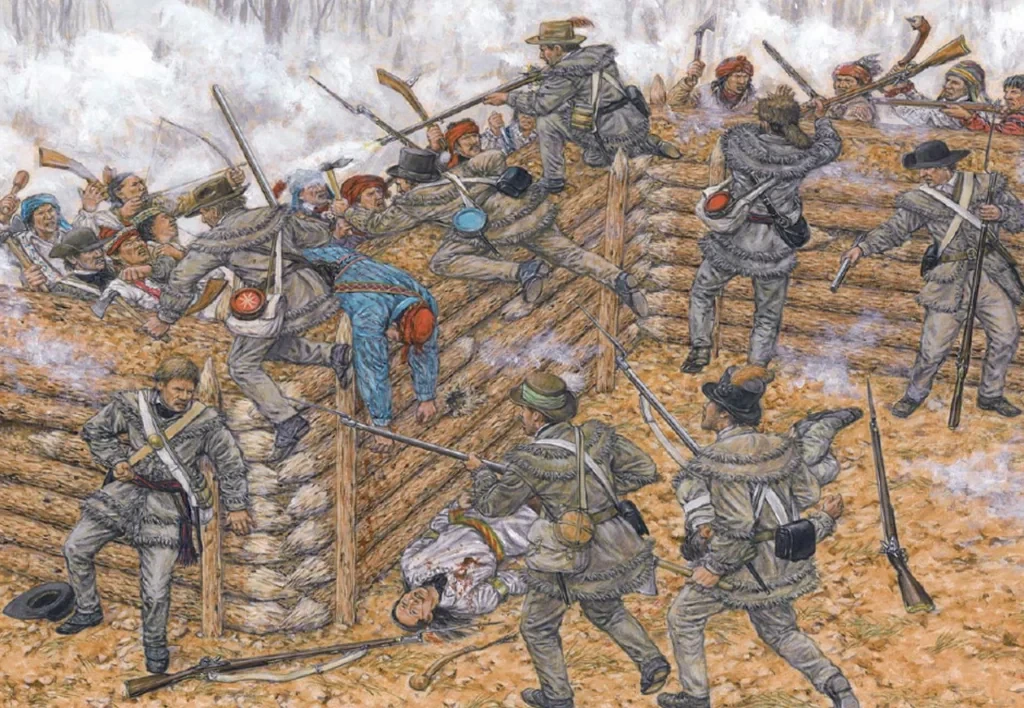
Despite her rictus smile, the federal Liberals' first female leader is running fast towards a brick wall of impatient male ambition.Walls usually fare better - human flesh yielding in much the same way as bricks don't.
But that doesn't make a collision right for an unpopular Liberal-Nationals combination at risk of being eclipsed by One Nation on primary vote share whether together or apart.
In a heroic rebuttal of the clear democratic-demographic message from voters in last year's electoral tsunami, the Liberal Party's conservatives have had enough of what one called "an experiment [with Sussan Ley] that hasn't connected".
Believing they have a majority in the party room, hardliners want to hark back, double-down and muscle-up.
This, after losing almost every urban contest to Labor and centrist independent candidates (mainly women) over two elections. It is an odd call given their party holds just nine of 88 urban seats nationwide.
On paper, Ley could be the ideal leader for a fast-delaminating electorate, were she granted the time and space to chart the new liberal course she signalled.
However, her authority has never been acknowledged by the party's right faction (and its media vassals) and nor has that authority been projected by her.
Since narrowly beating Angus Taylor for the post last year, Ley has avoided conflicts on matters of policy or principle. Retaining Scott Morrison's net zero-by-2050 commitment would have been the logical place. Or ditching nuclear energy.
This timidity was a mistake, but hardly a new one. Invariably, vulnerable leaders model vulnerability. They never get stronger through appeasement, and as much as they delude themselves to the contrary, they never grow on their internal enemies.
Ley's best chance of survival was always to focus on rebuilding public support by delivering on her own pledge to "meet the Australian people where they are".
Were she to pursue that path single-mindedly as a newly elected leader, her rivals would have griped but they could hardly have cut her down in those early months - especially in the wake of such a comprehensive electoral caning.
Had it even begun to work, Ley would have been strengthened by the uptick in public support.
Not convinced? Never underestimate the attractiveness of good polls within beleaguered political parties.
It was enough for Labor factions to switch to Kevin Rudd twice (2006 and 2013) despite him lacking institutional roots within the labour movement. And it was enough for Liberal right-wingers to hold their noses and replace Tony Abbott with moderate Malcolm Turnbull in 2015. In both cases, as if to prove the point, it was also their declining public popularity which eventually left them exposed internally.
This should have been Ley's sole KPI. If she pushed for affirmative action quotas, backed renewables rather than nuclear, and proposed sensible changes to drive housing affordability, her standing among younger voters might have shielded her against internal opponents.
In her first big speech as leader, she outlined this very course. She talked of urbanising her party, taking material steps to recruit women, bringing back respect and accountability to conservative politics, and to leaving culture wars behind.
Her watchwords might have been, inclusion, opportunity, community.
Now, her fortunes look dire with speculation rife of an imminent strike by Taylor and a tandem process already under way against Nationals Leader, David Littleproud.
The core state of centre-right politics in Australia right now is summarised by three less hopeful descriptors: disloyalty, dysfunction, delusion.
From the main agitants involving themselves in a squalid stereo implosion, perhaps only Ley and the little-known Colin Boyce have clean hands.
Leaving aside that Ley politicised the aftermath of the Bondi terrorist attack - to the country's detriment, and her own, as it turned out - she at least stuck to an established principle in accepting the resignations of three Nationals who breached shadow cabinet solidarity by crossing the floor.
Just as a stronger and more confident opposition leader would have worked with Anthony Albanese post-Bondi rather than trying to skewer him politically, Littleproud should have turned his ostensibly safer leadership towards working with Ley so as to avoid a coalition-ending crisis.
He now faces a spill motion from Boyce, a sophomore backbencher who argues pointedly (i) that Littleproud has recklessly dissolved the coalition twice inside 12 months, and (ii) that by declaring the Nats cannot partner with the Liberals with Ley as the leader, Littleproud has made his own position "untenable".
Both are fair points.
Boyce's one-man raid mightn't depose Littleproud, but it has highlighted that a once serious party has succumbed to student-politics style stunts.
With diminishing room to move, Ley recognises the break-up for the threat it is.
On Friday, she offered Littleproud a slender chance for re-admission by delaying until February 9 the naming of Liberals in shadow cabinet vacancies created by Nationals.
It is inherently defensive - an attempt to survive a crisis by a leader who knows she is up against a wall.
And it further underscores that she might have been better served by building her own wall out of public support for fresh policies attuned to the times and directed at the realities of modern Australia.
After all, what's the worst that could have happened?
- Mark Kenny is The Canberra Times' political analyst and a professor at the ANU's Australian Studies Institute. He hosts the Democracy Sausage podcast. He writes a column every Sunday.