#Edwards

🅱🅸🅶🅾🆁🆁🅴.🅾🆁🅶bigorre_org
2026-02-26

How many runways can you see for Edwards Air Force Base airport (USA) ? : The answer is on bigorre.org/aero/meteo/kedw/en vl

2026-02-18

The latest FPL team news + quotes

Mikel Arteta, Rob Edwards and Eddie Howe all faced the media on Tuesday ahead of their midweek ties.…
#NewsBeep #News #Headlines #Arteta #Calafioriinjury #edwards #fplteamnews #Havertzinjury #Howe #Odegaardinjury #UK #UnitedKingdom #Whiteinjury
newsbeep.com/400097/

🅱🅸🅶🅾🆁🆁🅴.🅾🆁🅶bigorre_org
2026-02-11

How many runways can you see for Edwards Air Force Base airport (USA) ? : The answer is on bigorre.org/aero/meteo/kedw/en vl

Eskimos in kayaks, Noatak, Alaska c1929.
Curtis, Edward S., 1868-1952
1 photographic print.

#Eskimos #Noatak #Alaska #Curtis #EdwardS #1920-1930 #Alaska #Canoes #Eskimos #Noatak #undefined

loc.gov/item/94506151/

The image shows a group of individuals in small, narrow boats known as kayaks. These kayaks appear to be made from wood and have long paddles that the occupants use for rowing through water. The scene is black-and-white, suggesting it might be an older photograph or styled to look vintage.

There are seven people visible in the image, each occupying a kayak. They seem focused on their task of navigating the calm waters with minimal disturbance from ripples around them. Their expressions range from concentrated to contemplative as they paddle forward.

The background features a tranquil water body that extends towards the horizon where it meets what seems like land or a distant shoreline. The sky is overcast, and there are no significant shadows on the water's surface, indicating an even diffused light condition typical of cloudy days.

There is nothing else in terms of notable landmarks or objects to indicate location specifics other than the calm body of water which could be part of any large lake or river system.

Hooper Bay homes, Hooper Bay, Alaska c1929.
Curtis, Edward S., 1868-1952
1 photographic print.

#HooperBay #Alaska #Curtis #EdwardS #HooperBays #1920-1930 #Alaska #Dwellings #HooperBay #Structures #undefined

loc.gov/item/93503254/

The image depicts a collection of modest, wooden structures situated on an elevated terrain covered with grass. These rudimentary dwellings appear to be set up in close proximity and exhibit signs of wear or construction in progress, as some are incomplete with visible framework exposed. The environment seems remote and naturalistic, lacking any modern amenities. In the foreground is a dense patch of grass which adds depth to the composition and draws focus toward the structures. Above them, an overcast sky looms, suggesting a somber ambiance that complements the humble living conditions suggested by these homes. This black-and-white photograph likely dates back around 1929 as indicated in its caption for archival purposes or historical documentation of Hooper Bay's residential life during this period.

Acoma belfry c1905.
Curtis, Edward S., 1868-1952
1 photographic print.

#Acoma #Curtis #EdwardS #AcomaPueblo #1900-1910 #Acoma #AcomaIndians #Belfrys #NewMexico #Structures #undefined

loc.gov/item/97503159/

The image depicts a black and white photograph of an old, stone structure that appears to be the belfry or entrance gate of Acoma Pueblo. It is constructed from large stones in a rough-hewn pattern with no apparent mortar between them. Within this opening hangs a single bell suspended by chains, which creates an impression of solemnity and historic significance.

The landscape surrounding the structure reveals flat terrain with scattered buildings indicative of a settlement or village in the distance under a cloudy sky. The absence of any modern elements suggests that the photograph was taken during a time when such structures were still commonly used for ceremonial purposes rather than purely functional ones like signaling events to villagers outside the walls.

In summary, this image captures an old stone belfry with a bell at Acoma Pueblo from around 1905. The overall atmosphere of the photo conveys historical significance and cultural heritage.

Cutting up a beluga--Kotzebue c1929.
Curtis, Edward S., 1868-1952
1 photographic print. | Three women cutting up a beluga whale.

#Curtis #EdwardS #EdwardSCurtis #NativeAmerican #Kotzebue #Alaska #1900-1910 #1920-1930 #Alaska #KotzebueSound #undefined

loc.gov/item/96502456/

The image is an old black and white photograph depicting three women engaged in the process of cutting up a large beluga whale. They are dressed in traditional clothing, suggesting that this may be from a cultural or historical context related to indigenous communities.

In the background, there's evidence of rural living conditions with makeshift structures such as wooden fences, drying racks for clothes and possibly fish, indicating a setting likely on an open field near a settlement or campsite. The surrounding vegetation is sparse but present, suggesting this activity may be taking place during non-winter months when plant life has not been fully dormant.

The photograph carries the title "Cutting up a beluga--Kotzebue c1929," which provides additional context for its origin and subject matter. Edward S. Curtis was known for his extensive documentation of Native American cultures, so it is plausible that this image falls within such a thematic scope. The specific reference to Kotzebue suggests the location might be related to Alaska or another region where beluga whales are found.

The photograph appears aged with some marks and possibly faded details due to its historical nature. It's worth noting that images like these can serve as valuable records of past practices, cultural traditions, and the livelihoods of indigenous peoples during times when such documentation  [...]

Food containers, Pokes--Kotzebue c1929.
Curtis, Edward S., 1868-1952
1 photographic print. | Seal skin food containers on ground.

#Curtis #EdwardS #English #1920-1930 #Alaska #Containers #Eskimos #undefined

loc.gov/item/96512915/

The image depicts a collection of seal fat pouches, also known as pokes or kots in English. These are large bags filled with the preserved meat and fats from seals. The black-and-white photo appears to be quite old, possibly dating back to around 1929 based on its visual style and context provided by the caption "Food containers, Pokes--Kotzebue c1929."

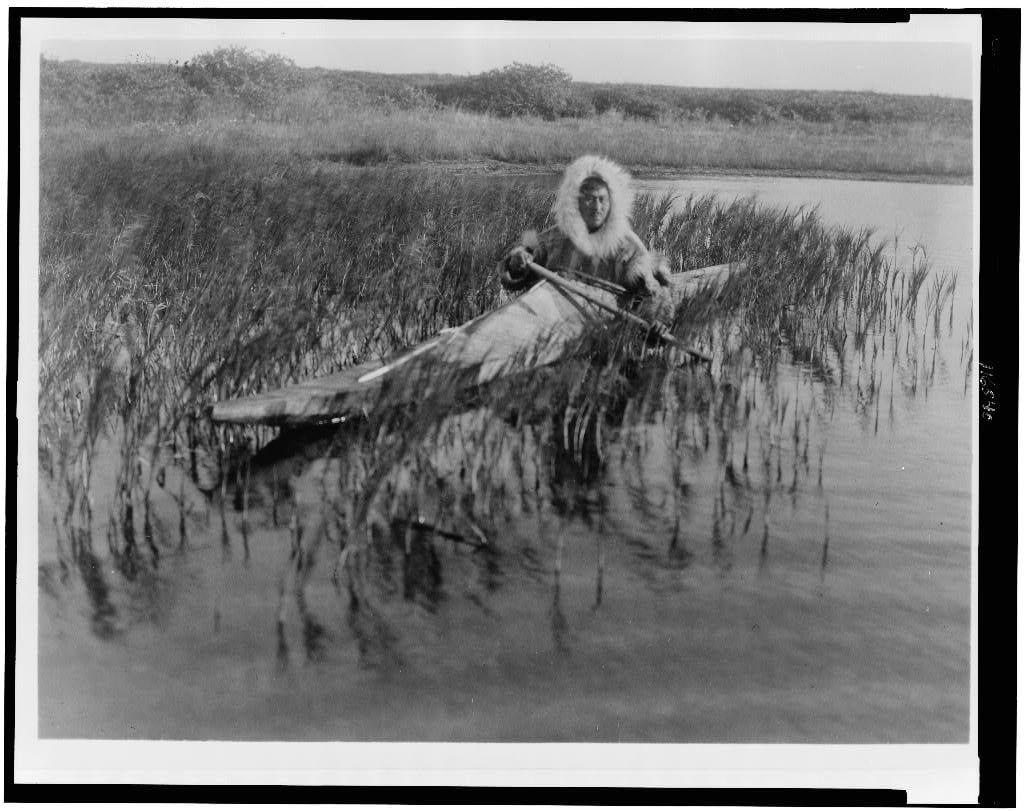
The Muskrat-hunter--Kotzebue c1929.
Curtis, Edward S., 1868-1952
1 photographic print. | Kotzebue man paddles kayak through marsh.

#Muskrat #--Kotzebue #Curtis #EdwardS #Kotzebue #Arctic #EdwardSCurtis #1920-1930 #Alaska #Eskimos #Kayaks #Transportation #undefined
loc.gov/item/96512830/

The image is a black and white photograph depicting an individual paddling a kayak through what appears to be marshland. The person, who seems to belong to the indigenous Kotzebue community as indicated by the caption, is wearing traditional clothing with fur lining which suggests they are prepared for cold weather conditions common in Arctic regions.

The setting includes tall grasses and reeds that are partially submerged in water, indicative of a wetland or marsh environment. The person's attire consists of a hooded garment made from animal hides, possibly sealskin, designed to protect against the harsh climate while engaging in activities such as hunting and travel across icy waters during winter months.

The individual is handling two paddles; one held in each hand alternately for propulsion through the waterway. Their posture shows exertion or focus on navigating their vessel efficiently. The photograph captures a moment of daily life, showcasing traditional practices within an indigenous Arctic community around 1929 as documented by Edward S. Curtis.

The image carries historical significance and offers insight into cultural practices specific to this group's adaptation to the challenges posed by their environment during that era.

Offering the pipe to the Earth--Cheyenne c1910.
Curtis, Edward S., 1868-1952
1 photographic print. | Cheyenne woman holding pipe close to earth, during the sun dance ceremony.

#Earth #Curtis #EdwardS #Cheyenne #NativeAmerican #EdwardSCurtis #NorthAmerica #CheyenneIndians #Montana #Spirituallife #Sundance #undefined

loc.gov/item/98502601/

The image depicts a woman in traditional attire of the Cheyenne tribe, performing what appears to be part of a sun dance ceremony. She is kneeling on one knee beside a tree stump or similar structure and holding branches that she has gathered from around her. The landscape behind her features open fields with some sparse vegetation and white tents set up at various distances in the background. This scene likely represents cultural practices within Native American tribes during early 20th-century documentation efforts by Edward S. Curtis, a renowned photographer known for his work on documenting indigenous cultures of North America.

Before the final journey--Cheyenne c1910.
Curtis, Edward S., 1868-1952
1 photographic print. | Cheyenne people gathered in open area, for Sun Dance ceremony; several tents and hills in background.

#Cheyenne #Curtis #EdwardS #SunDance #NativeAmerican #CheyenneIndians #Montana #Spirituallife #Sundance #undefined

loc.gov/item/98502599/

The image depicts a group of people gathered outdoors, with several individuals seated and standing in what appears to be an open field. The landscape includes hills or low mountains in the background under a cloudy sky. In the foreground, there are scattered blankets or mats on the ground where some individuals sit. A few tents can also be seen spread out across the scene, suggesting that this might be a temporary settlement or gathering place.

The black-and-white photograph conveys a historical and cultural context, likely documenting an event such as the Sun Dance ceremony among the Cheyenne people from around 1910, as mentioned in the caption. The attire of the individuals indicates traditional clothing styles associated with Native American tribes during that period.

On the Merced--Southern Miwok c1924.
Curtis, Edward S., 1868-1952
1 photographic print. | Miwok man holding spear, sitting on boulder in a creek.

#Merced #SouthernMiwok #Curtis #EdwardS #Miwok #NativeAmerican #EdwardSCurtis #American #theUnitedStates #NorthAmerican #Indian #LoeperCollection #1920-1930 #California #Clothing&dress #SaclanIndians #undefined

loc.gov/item/98502529/

The image is a black and white photograph depicting an indigenous person, likely from the Miwok tribe, as indicated by the reference in the provided information. The individual appears to be sitting on a large rock beside a flowing creek or river. They are holding what seems to be a spear or fishing rod with one hand while grasping something that could possibly be food with their other hand.
The person is wearing minimal clothing and has long hair, which suggests they might belong to an earlier period in history when such attire was common among indigenous tribes in the region. The surroundings include dense vegetation and various rocks along the water's edge, creating a natural setting typical of Native American landscapes during that time. This photograph captures a moment of quietude or daily activity within this person’s life as they engage with their environment.
The image is credited to Edward S. Curtis (1868-1952), an American photographer known for his documentation and portrayal of various indigenous peoples in the United States through photographs, which were published under titles such "American Nudes" and books like "The North American Indian," among others that sought to preserve cultural heritage as well as artistic expression. The photograph is noted with a reference code from Loeper Collection (LZ-20371) on its bottom right corner.

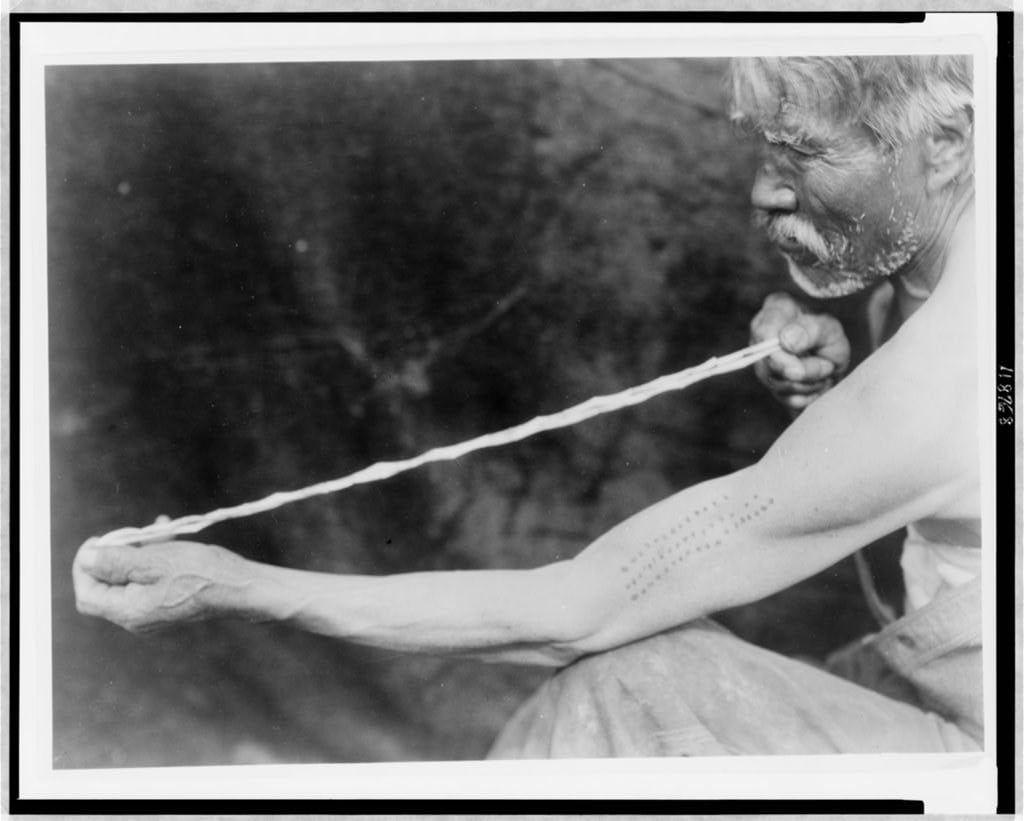
Measuring shell money--Tolowa c1923.
Curtis, Edward S., 1868-1952
1 photographic print. | Man holding string of shells.

#Tolowa #Curtis #EdwardS #NativeAmerican #1920-1930 #Money #TolowaIndians #undefined
loc.gov/item/97507102/

A black and white photograph showing an older man with a rough, weathered appearance holding what appears to be a string or rope. His face is smeared with dirt or soot, adding to his unkempt look. The most striking feature of the image is the numerous tattoos etched onto both arms in neat rows containing various characters that may represent writing from an indigenous language or symbols specific to Native American culture.

The man's right arm displays a series of dots and lines forming words which are difficult to decipher due to their size, while his left arm features longer strings of text. The tattoos extend across the full length of both arms, with some markings more prominent than others. His eyes are closed or nearly shut as if in deep concentration or fatigue.

The background is blurry but suggests a natural outdoor setting, possibly forested terrain given its dark and indistinct appearance. This image seems to document aspects of Native American culture during the early 20th century, with an emphasis on body art through tattoos, which could have had cultural significance at that time.

Baskets in the Painted Cave--Yokuts c1924.
Curtis, Edward S., 1868-1952
1 photographic print.

#thePaintedCave #Curtis #EdwardS #1920-1930 #Arts&crafts #Baskets #YokutsIndians #undefined

loc.gov/item/97507105/

This black and white photograph shows a collection of woven baskets with various patterns on their rims. The background appears to be an outdoor setting, possibly the exterior of a building or cave-like structure, given its rough texture and dark tones. There are seven bowls in total; some stand upright while others lie partially collapsed at different angles. Each basket displays intricate geometric designs such as zigzags, diamonds, triangles, concentric circles with smaller rings within them, and other symmetrical patterns that suggest cultural significance or craftsmanship associated with their creation.

At the ford c1903 July 20.
Curtis, Edward S., 1868-1952
1 photographic print. | Three Apaches, one with a child, with horses laden with water jugs, a colt, and a dog stopped beside a stream.

#Curtis #EdwardS #Apaches #1900-1910 #ApacheIndians #Domesticlife #Horses #Streams #Watercarriers #undefined

loc.gov/item/2003652702/

The image depicts three Apaches with horses, one of which has a child on its back. They are stopped beside a stream in an outdoor setting, possibly during the early 1900s based on historical context and clothing style. The photograph is monochromatic, suggesting it's black-and-white or sepia-toned. A dog can be seen near the horses' feet, and water jugs indicate they may have been traveling to fetch water for their journey.

Watching for the signal--Nez Percé c1910 December 8.
Curtis, Edward S., 1868-1952
1 photographic print. | Two Nez Percé men on horseback, on holding a bow, with gun in holster, while the other is holding a coup stick.

#NezPercé #Curtis #EdwardS #Perce #NativeAmerican #EdwardSCurtis #NezPerce #Horses #NezPercéIndians #Night #undefined

loc.gov/item/2002722466/

The image depicts two Nez Perce men on horseback at night, illuminated by a dark sky speckled with stars. One man is holding a bow in his right hand and appears to be looking upwards or into the distance, while the other man holds what seems to be a coup stick over his shoulder, suggesting they may be involved in traditional hunting practices associated with their culture. The horses are saddled but not fully equipped for riding, indicating that this could be a moment of pause during travel.

The men and their mounts stand on rocky terrain which suggests a rugged outdoor setting typical of the Nez Perce tribe's natural environment. This photograph is monochromatic, emphasizing contrasts between light and shadow to highlight the subjects against the dark background. The image captures an authentic glimpse into Native American life as documented by Edward S. Curtis in his works.

The additional information provided notes that this particular photo was taken during a period when Nez Perce people were being watched for signals after their relocation, reflecting historical events surrounding the tribe's struggle and displacement at the turn of the 20th century. The reference to "Curtis" indicates Edward S. Curtis is likely associated with capturing such cultural documents through photography.

The image has a vintage feel, indicative of early photographic techniques used in do [...]

Wichita mortar c1927.
Curtis, Edward S., 1868-1952
1 photographic print. | Wichita woman using mortar and pestle.

#Wichita #Curtis #EdwardS #theUnitedStates #EdwardSCurtis #1920-1930 #Clothing&dress #Domesticlife #WichitaIndians #undefined

loc.gov/item/96501666/

The image depicts a black-and-white photograph of an older woman engaged in the traditional activity of using a mortar and pestle. She is dressed in period clothing, consisting of a long-sleeved shirt with polka dots on one sleeve and possibly dark fabric on the other sleeve, along with patterned pants that seem to be made from cloth featuring small white motifs. The woman has shoulder-length hair styled away from her face.

She stands outdoors next to what appears to be tall grass or brush in a natural setting. In front of her is an upright wooden post fixed into the ground; she holds onto this pole, which serves as part of the mechanism for grinding ingredients within the mortar and pestle setup that rests on top of another cylindrical structure beside it.

The focus of the photograph seems to be capturing everyday life or traditional practices from a specific cultural group. There are no clear indicators of modern technology or contemporary settings in sight; hence, this image likely aims at documenting an aspect of early 20th-century daily activities among indigenous people within what is now known as the United States.

Additional context suggests that Edward S. Curtis was the photographer and that "Wichita mortar c1927" may refer to a specific cultural group or community associated with this activity, possibly dating from around 1927 according to archival records.

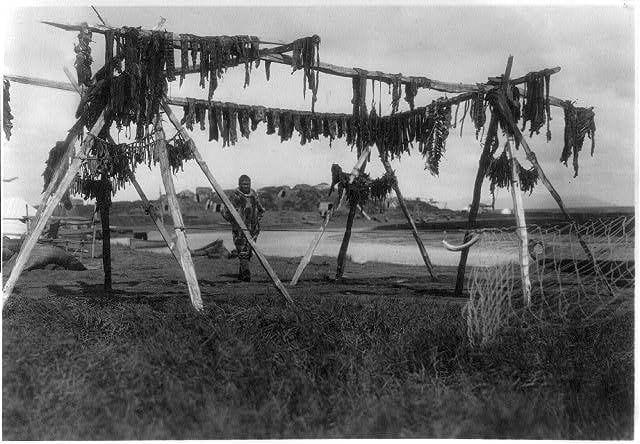
Eskimos in Alaska: Drying whale meat, Hooper Bay c1929.
Curtis, Edward S., 1868-1952
1 photographic print.
#Eskimos #Alaska #HooperBay #Curtis #EdwardS #undefined

loc.gov/item/2004665525/

The image depicts a black and white photograph of an individual standing in front of multiple wooden frames, which appear to be used for drying strips of material or food items. These frames are erected on what seems to be grassy terrain with some sparse vegetation around them.

In the background, there is water visible along with more landmasses that suggest a coastal environment. The sky looks overcast and somewhat bleak in this black-and-white image which contributes to an overall somber mood.

There's no color due to it being monochrome photography but details like shadows can be discerned from light source directionality indicating the sun or another strong lighting fixture shining on one side of the frame creating stark contrasts.

Client Info

Server: https://mastodon.social
Version: 2025.07
Repository: https://github.com/cyevgeniy/lmst