
Read this article and the first thing that popped into my mind was "I hope it's to/from Ea-nāṣir." Then I clicked through to the actual link and Reddit commenters did not disappoint me 😂
#Cuneiform

Mesopotamian inventions include many items taken for granted today, most of which were created during the Early Dynastic period (circa 2900-2350/2334 BCE) or developed from achievements of the Uruk period (circa 4000-3100 BCE). #History #Writing #Sumer #Pottery #Mesopotamia #CylinderSeal #Cuneiform #City #Time #Wheel #HistoryFact https://whe.to/ci/2-1859-en/
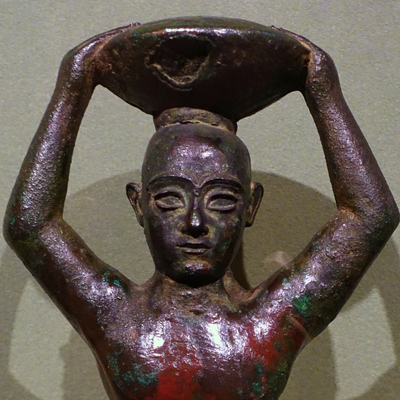






Voices In Clay - with Dr. Irving Finkel Inside The British Museum - YouTube
https://www.youtube.com/watch?v=shiB3QXDqUU
He is great to listen to. I have a playlist even ;-)
https://www.youtube.com/playlist?list=PL-aKLEHpdXVa73G0TNQFRPGGNMC70VHOv

Finally finished the second. As you can see the long delay between mentioning it & posting it is absolutely no indication of quality 😁
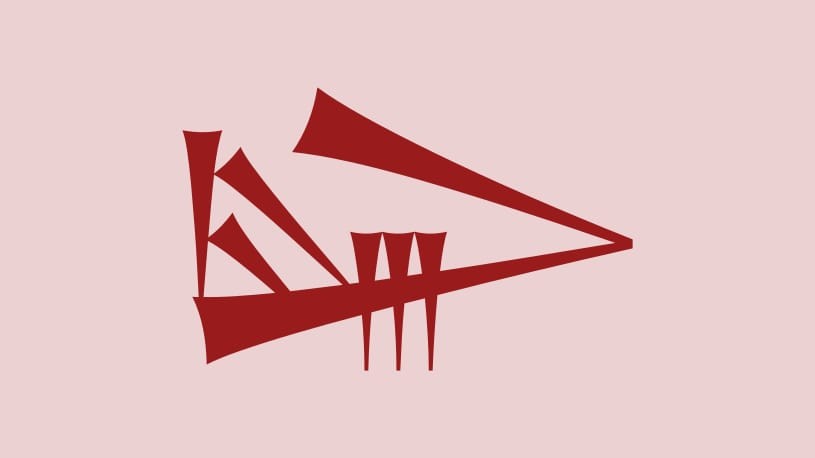
The second sign is marked as dog/beast & I started off doing dog, but my dogs were NOT magnificent. My beast however... 😆
Magnificent. Beast.


Two small clay cylinders finally give Nebuchadnezzar II his voice. A firsthand account of restoring the ziggurat of Kish, written in cuneiform and buried for millennia. When kings speak through clay. #Archaeology #AncientMesopotamia #Cuneiform #History https://www.anthropology.net/p/when-a-king-spoke-in-clay
Did you know that Mastodon has a bot that posts one Sumerian cuneiform with its meaning every day?
No? You can find it at @sumerian
Did you know every now and then I make a note of them, thinking I might be able to use them for something?
No? Well you do now.
Below I give you three cuneiform with a helpful* illustration to help you remember them.
Thing. That. Ba.
*shush, yes helpful



What to Keep, What to Discard: The Mesopotamian Answer
Rome was not built in a day, but my emails were transferred in one! A Baroque tapestry of the AEDIFICATIO BABILONIAE in the city museum, Rimini.It is the end of the semester in which I graduated, so I have been working to back up my emails onto my computer (Austrian university webmail is limited to 500 MB, and does IMAP not POP, so when the account closes the emails go away unless you move them to local folders). The Anglo chattering class loves to talk about what to do with old papers and knicknacks, with Marie Kondo or the Swedish Death Purge inspiring opinion pieces and social media threads. Did you know that the cuneiform world had a pretty firm opinion on the matter?
You see, in the ancient Near East archives rarely extend for more than three generations. Often they end in a sudden rupture, such as the conquest of Mari, the abandonment of Amarna, the fall of the Assyrian kingdom, the revolts in the second year of Xerxes, or the time when Alexander’s warlords stopped pretending they were just murdering each other on behalf of his wives and children and would give up their power as soon as it was safe. Moreover, letters are only preserved at one end of the exchange (even though it was common for the sender to keep a copy). This gives Assyriologists a suspicion that Mesopotamian archivists were aggressive at going through old files and discarding anything which did not seem relevant. We are most likely to get a cache of documents when this process was interrupted and a whole archive was put aside or buried in rubble at once. Writing on sun-baked or oven-fired clay could last forever, and unlike paper or parchment old tablets did not have value as raw materials, but very few people were interested in preserving ordinary documents indefinitely. The kind of archival culture we take for granted got started with notaries in medieval Italy (with some help from the culture of the Catholic church, which discovered that preserving or creating documents was very important if they wanted to defend their property for hundreds of years).
While some cuneiform letters are astonishingly frank and personal, in most archives these are relatively rare. When most of the rich families of southern Mesopotamia were closing their archives after the revolts against Xerxes, they left few letters, even in a world where the lowly military colonists at Elephantine were trading notes between the island and the mainland like we trade text messages. The course of the revolts, who supported them and who stayed faithful to the king, has to be deduced from dating formulas and the families which suddenly decided that records of their property ownership were no longer worth keeping. It is possible that informal, short-term writing was mostly written on writing boards, papyrus, or scraps of stone or pottery which do not survive so long (although we have quite a few Aramaic ritual bowls with texts painted on them).
However, I think it is also possible that these wily survivors had learned that it is not wise to commit some things to writing or preserve them after you have read them. When there was some temporary disagreement about who was king, or some minor local disturbances which the governor did not need to know about, the wise were aware that whatever they wrote on the subject might one day be read aloud in court before the assembly of the city or the judges of the king. We know some things that they don’t, but our chattering class sure seems determined to give our Cardinal Richelieus their two lines of writing* whenever they want to search Twitter or subpoena Google.
* The history of that quote is interesting! It seems to descend from Françoise Bertaut de Motteville (d. 1689) who said that everyone knew the Cardinal said that given two lines of writing he could find enough to prosecute the author, however respectable (Richelieu died in 1642, so you can take or leave this hearsay). It was then “sharpened” to “six lines” and “enough to hang him” by later collectors of sayings.
Edit 2025-12-14: block editor


Client Info
Server: https://mastodon.social
Version: 2025.07
Repository: https://github.com/cyevgeniy/lmst