
A melting #Greenland is easier to exploit — but also more perilous
#Climatechange is opening up previously inaccessible land and sea, boosting global interest in Greenland. Never mind that as Greenland’s meltwater flows into the ocean, it could raise sea levels by up to 10.6 inches by the end of this century. If #fossilfuel emissions continue as expected, most of the Arctic Ocean could be free of summer #seaice by 2050, reshaping global trade.
https://grist.org/climate/a-melting-greenland-is-easier-to-exploit-but-also-more-perilous/
#Seaice

In february 2026, the #SeaIce global extent was 4.5% below 1991-2020 mean. Since the beginning of records (1978):
- #Arctic, 3rd lowest monthly mean, with 4.8% less extent than normal (-712,597km²)
- #Antarctic, 26th lowest monthly mean, with 3.1% less extent than normal (-105,212km²)
for more: https://osi-saf.eumetsat.int/sea-ice-index
#ClimateChange #OSISAF @eumetsat


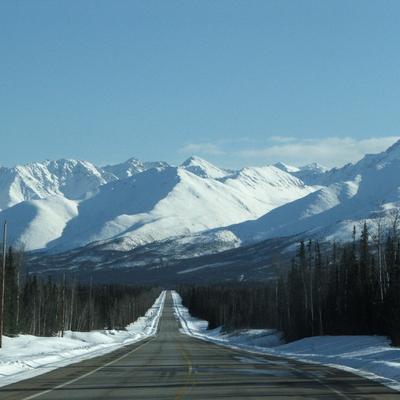
Sea ice rapidly expanding in the Bering Sea past several days with very low temperatures and sustained north winds east of the date line. Big swings in ice extent area in the Bering are not unusual this time of year. Data courtesy NSIDC. #akwx #Arctic #SeaIce
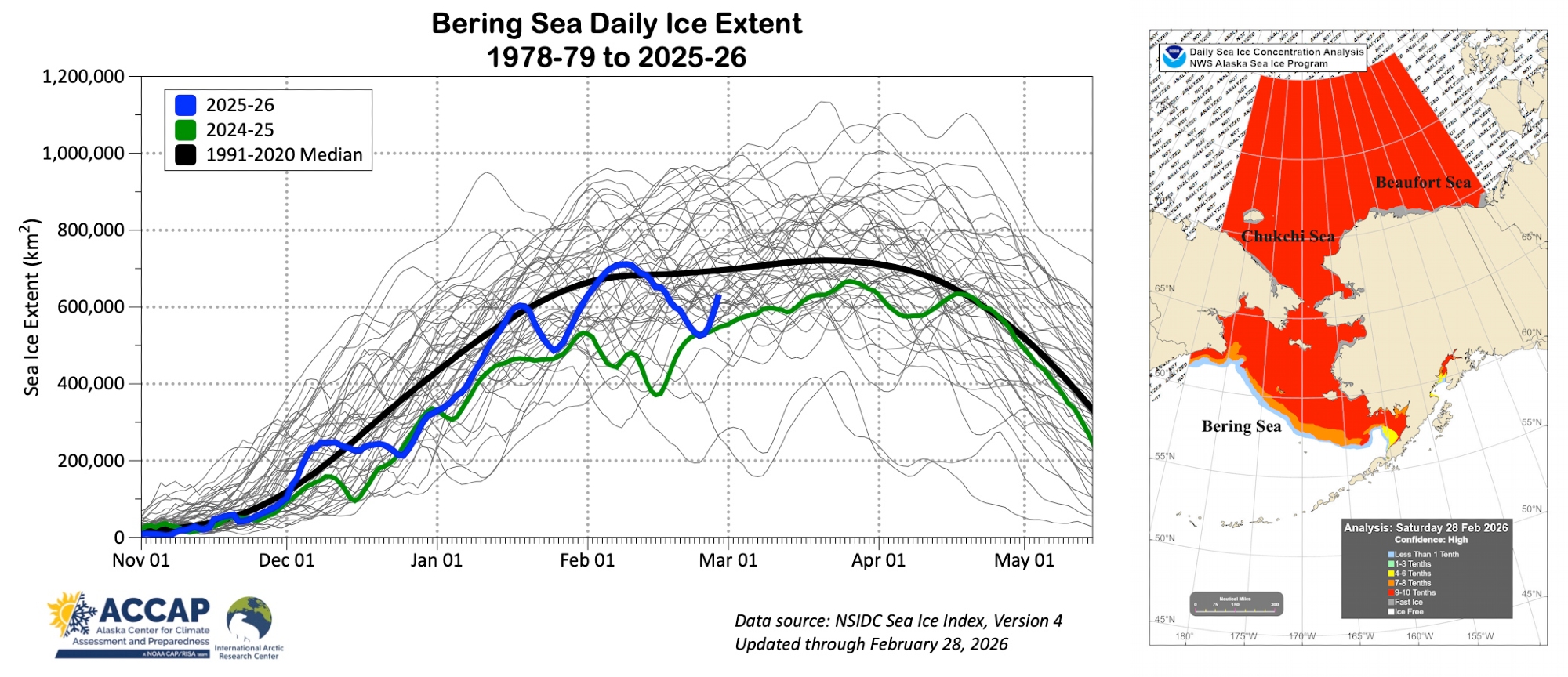
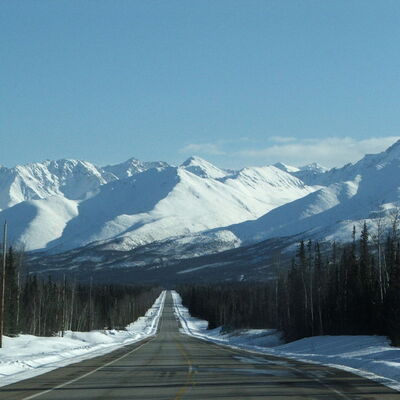
Sea ice rapidly expanding in the Bering Sea past several days with very low temperatures and sustained north winds east of the date line. Big swings in ice extent area in the Bering are not unusual this time of year. Data courtesy NSIDC. @Climatologist49 @ZLabe @Jdnome




Another walk on the wintery landscape by the sea. Finally, the weather got warmer and the sea ice started moving towards the shoreline, creating layers of ice broken by the waves.
#february #sunset #balticsea #seaice #nature #winter #frosty #2026
#february #sunset #balticsea #seaice #nature #winter #frosty #2026


Update on the late February 2026 status of Arctic snowpack and sea ice in the latest from the Alaska and Arctic Climate newsletter. #Arctic #SeaIce #Snow #Winter2026 alaskaclimate.substack.com/p/february-2...
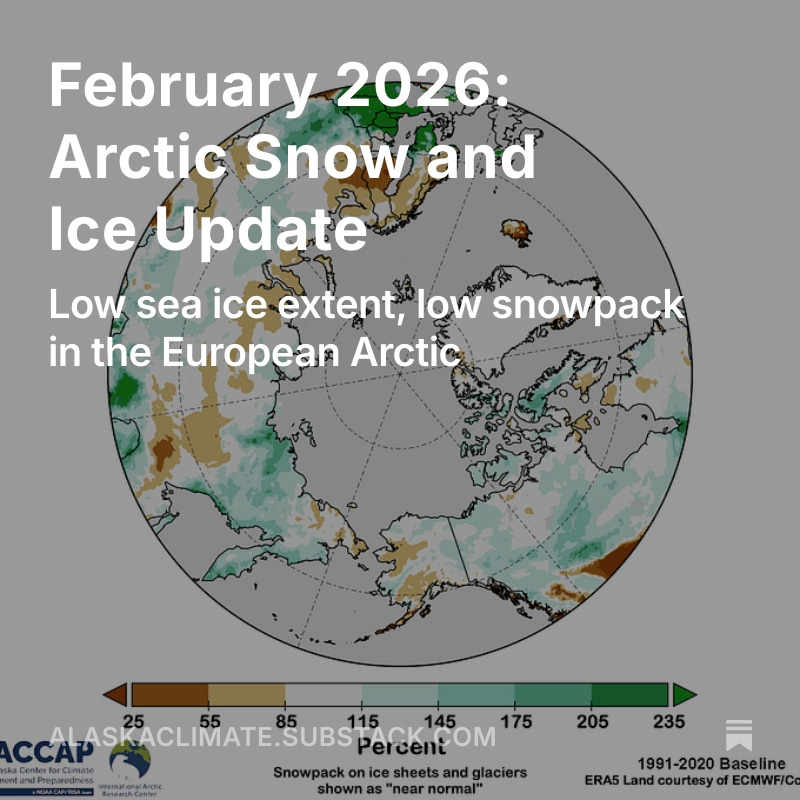
Update on the late February 2026 status of Arctic snowpack and sea ice in the latest from the Alaska and Arctic Climate newsletter. @Climatologist49
https://alaskaclimate.substack.com/p/february-2026-arctic-snow-and-ice


Rain is coming to Antarctica – here’s how it will change the frozen continent
#Antarctica #AntarcticPeninsula #ClimateChange #Glaciers #IceSheets #SeaIce #IceShelves #LarsenIceShelf #Penguins #Penguins #ExtremeWeather #PolarResearch #Environment
https://the-14.com/rain-is-coming-to-antarctica-heres-how-it-will-change-the-frozen-continent/
Sea ice extent in the Bering Sea has decreased 20 percent in the past two weeks due to frequent storminess/south winds. Dramatic weather pattern change is imminent with colder air & north winds poised to return, so it's quite possible the maximum extent is yet to be reached. #akwx #Arctic #SeaIce

Sea ice extent in the Bering Sea has decreased 20 percent in the past two weeks due to frequent storminess and south winds. Dramatic weather pattern change is imminent as much colder air and north winds set to return, so it's quite possible the seasonal maximum extent is yet to be set. @Climatologist49 @ZLabe

Halting irreversible changes to #Antarctica depends on choices made today
Team documented how peninsula is transforming as planet warms, and assessed how different amounts of warming by 2100 could alter the peninsula’s fate, including its ecosystems, land and #seaice, ice shelves and #extremeweather events. Those #globalwarming estimates — of 1.8, 3.6 & 4.4C relative to pre-industrial — based on three what-if scenarios of #greenhousegas #emissions.
https://www.sciencenews.org/article/irreversible-climate-antarctica
https://archive.ph/uTT2V
Sea ice extent in the Bering Sea is right at the 1991-2020 median in NSIDC data. Pack ice has moved back to north of the Pribilof Islands but reformed in upper Bristol Bay. The area of reduced ice concentration in the Chukchi Sea west of Point Barrow is common in late winter. #akwx #Arctic #SeaIce
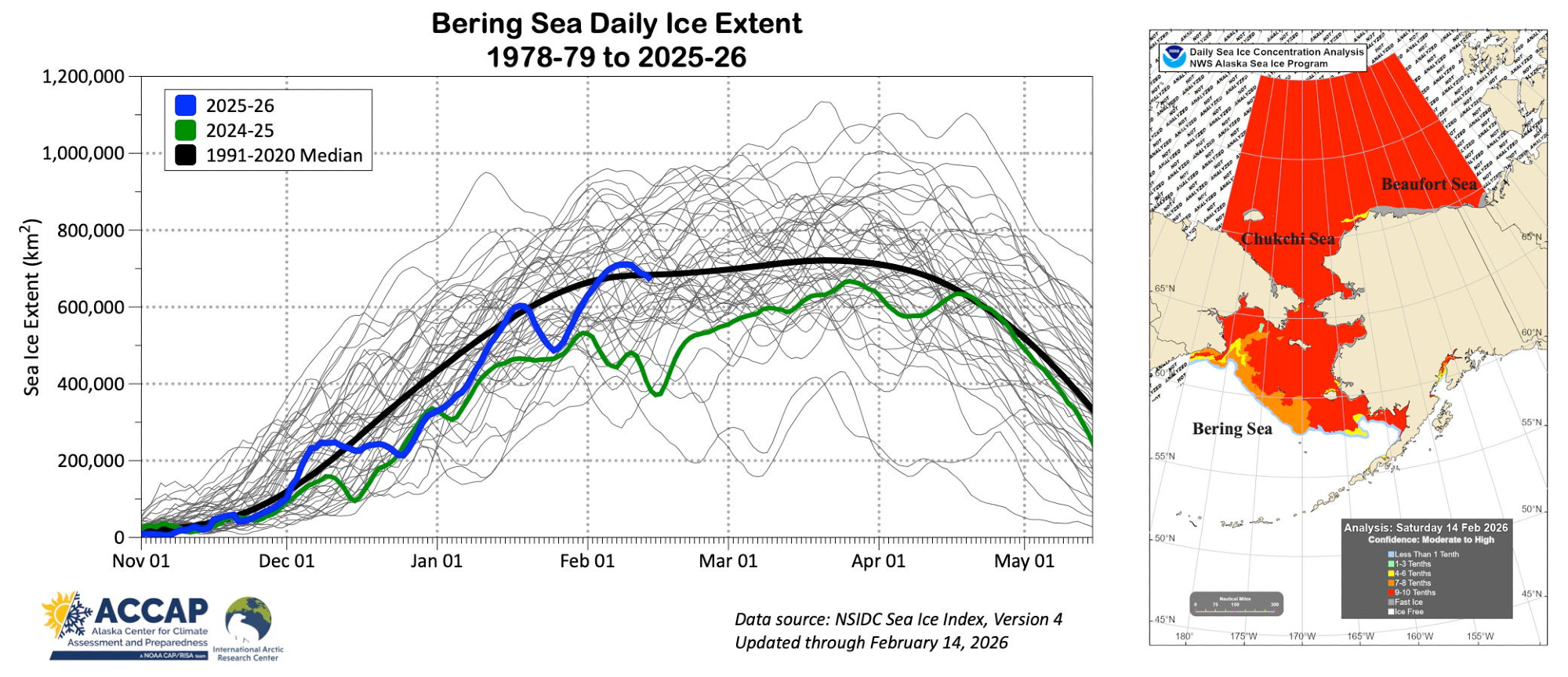
Sea ice extent in the Bering Sea is right at the 1991-2020 median in NSIDC data. In the past week the pack ice has moved back to north of the Pribilof Islands but reformed in upper Bristol Bay. The area of reduced ice concentration in the Chukchi Sea west of Point Barrow is common this time of year. @Climatologist49 @ZLabe

Sea ice extent in the Bering Sea increased 17 percent in the past week with sustained north winds. Ice reached St. Paul Island (Pribilofs) but main pack ice stayed just to the north. Overall extent near the 1991-2020 median in NSIDC data but higher than any time last season. #akwx #Arctic #SeaIce
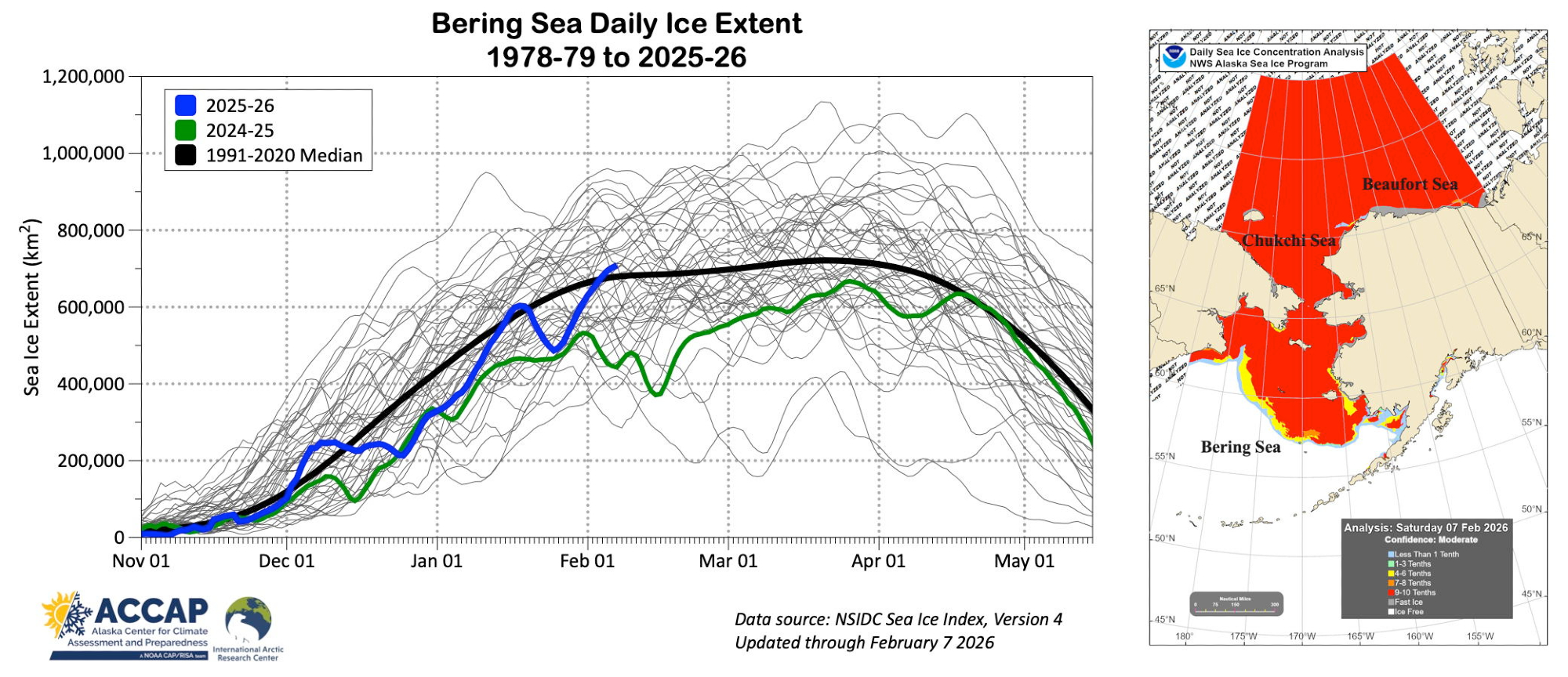
Sea ice extent in the Bering Sea increased 17 percent during the past week with sustained cold north winds. Some ice reached St. Paul Island in the Pribilofs but pack ice remained just to the north. Overall extent close to the 1991-2020 median in NSIDC data but is significantly higher than extent got at any time last season. @Climatologist49 @ZLabe


The ice outside Helsinki is strong enough and the Sunday lives up to it’s name. Locals flock the frozen sea in their hundreds. #landscapephotography #winter #seaice #finland #gulfoffinland #landscape #iceformation #sunday


3-Feb-2026
Accurately predicting #Arctic #seaIce in real time
Sea ice coverage is difficult to predict short-term, but sea ice health is crucial for the global #climate.
Client Info
Server: https://mastodon.social
Version: 2025.07
Repository: https://github.com/cyevgeniy/lmst