Turns out find is turing complete: https://arxiv.org/abs/2602.20762
> These results place \texttt{find} among the ``surprisingly Turing-complete'' systems, highlighting the hidden complexity within seemingly simple standard utilities.

Turns out find is turing complete: https://arxiv.org/abs/2602.20762
> These results place \texttt{find} among the ``surprisingly Turing-complete'' systems, highlighting the hidden complexity within seemingly simple standard utilities.
How far back in time can you understand English?
It’s a thousand years of the English language, compressed into a single blog post.
"... as his post goes on, his language gets older. A hundred years older with each jump. The spelling changes. The grammar changes. Words you know are replaced by unfamiliar words, and his attitude gets older too, as the blogger’s voice is replaced by that of a Georgian diarist, an Elizabethan pamphleteer, a medieval chronicler."
https://www.deadlanguagesociety.com/p/how-far-back-in-time-understand-english
RE: https://toot.cafe/@codepo8/116101774993992906
This is what we want for UI redesign, Apple, instead of liquid glass
A themeable, accessible component library inspired by the Warcraft III interface.
https://wc3ui.banteg.xyz
America is at risk of becoming an automotive backwater https://www.theverge.com/transportation/882194/america-auto-backwater-ev-loss-detroit-trump-emissions
Anyone who is about to complete, or already has completed, an age-verification or identity-verification process online should read this short article.
Especially if it's on LinkedIn or Discord.
"I Verified My LinkedIn Identity. Here's What I Actually Handed Over." by @thelocalstack
https://thelocalstack.eu/posts/linkedin-identity-verification-privacy/
#Privacy #LinkedIn #Discord #AgeVerification #IdentityVerification #MassSurveillance
When I was in my early twenties I read The Visual Display of Quantitative Information from Tufte and agonized over making charts great for users.
These days, Microsoft releases graphs like this

Somebody linked me RFC 7565, which linked to RFC7564, and if that's the place to look this appears to be the list of disallowed characters in a Fediverse username, and I'm cracking up because it's *mostly* stuff you'd expect, except the very first category of banned characters, specially, is "pre-1700 Korean characters".
The fediverse is welcome to all. EXCEPT KOREAN TIME TRAVELERS. Did you just wake up from being frozen in ice during the Joseon dynasty? The IETF is targeting you PERSONALLY

In which our hero uses a post about vibe coding to tell a forty year old programmer origin story.
Imagine a protocol like #LSP, but for adding real-time collaboration to existing text editors. It would allow #Neovim to edit a #Hedgedoc, or peer-to-peer pair programming between #VSCode and #Emacs!
We've come up with our own little protocol like that (for Teamtype), but we'd like to open up the discussion:
That's why we're inviting everyone interested to an initial online gathering on Feb 26, 19:00 UTC, to gauge interest for working on a protocol like this together!

Package-suggestions for #emacs has been merged into the master branch (to be Emacs 31): https://mail.gnu.org/archive/html/emacs-devel/2026-02/msg00328.html. If you have any feedback please send it to this thread or write me an email directly!
Note that for now the minor mode `package-autosuggest-mode`, that would indicate that Emacs knows of a related package to install for a file type, is disabled by default. You can still use the `package-autosuggest` command.
![A Emacs frame with a window containing ALGOL 68 code without major mode support and a window below with instructions to install the `a68-mode` package from ELPA that provides a major mode for this file type. The text buffer indicates the package suggestion in the mode line by adding a "[Upgrade?]" after the major mode name.](https://files.mastodon.social/cache/media_attachments/files/116/060/016/460/927/347/original/c8470d01a0a16732.png)
*That's a pretty good design essay about ugly and freakish modern military hacks. #hedgehogtank #killerdrone
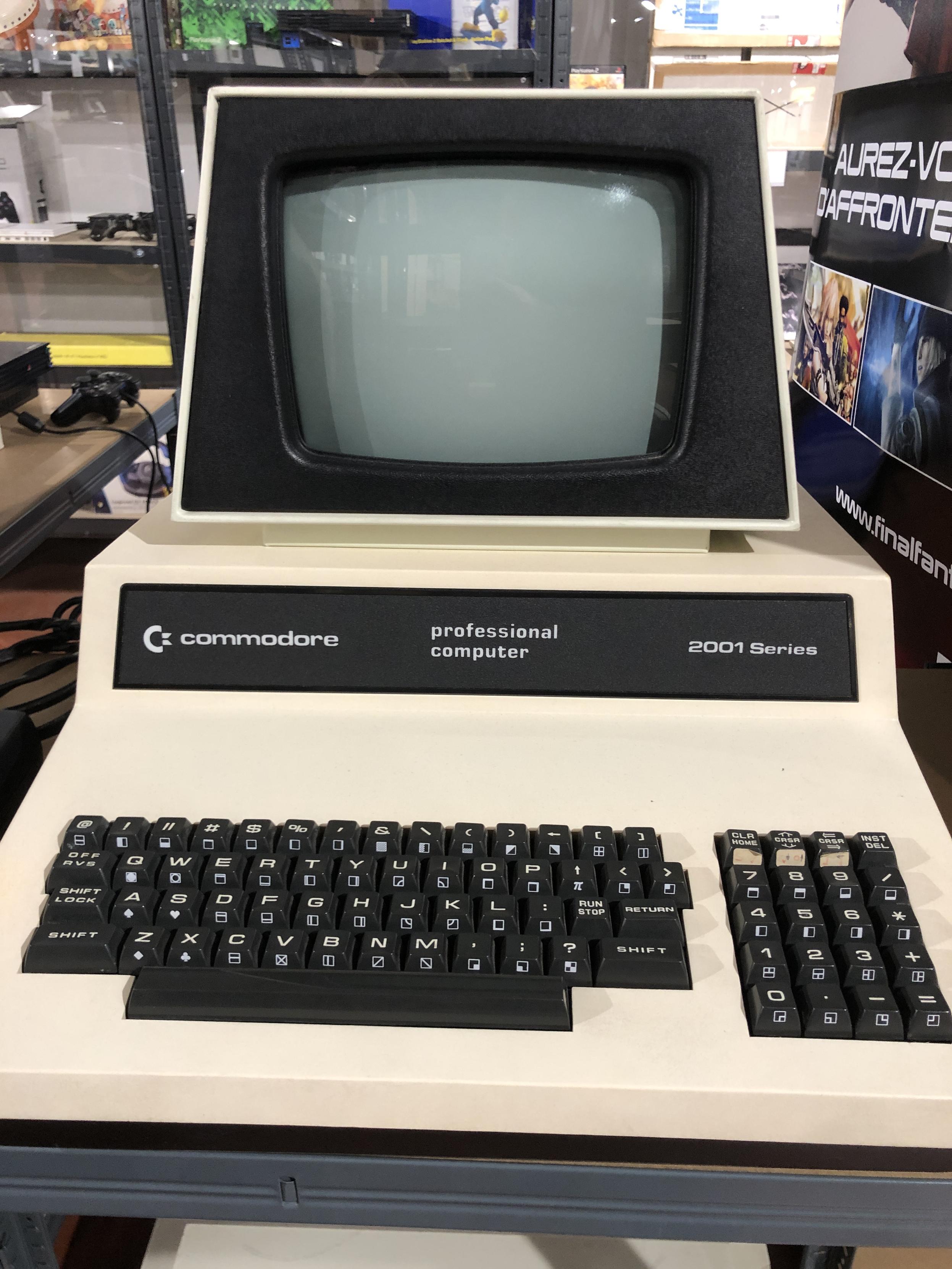
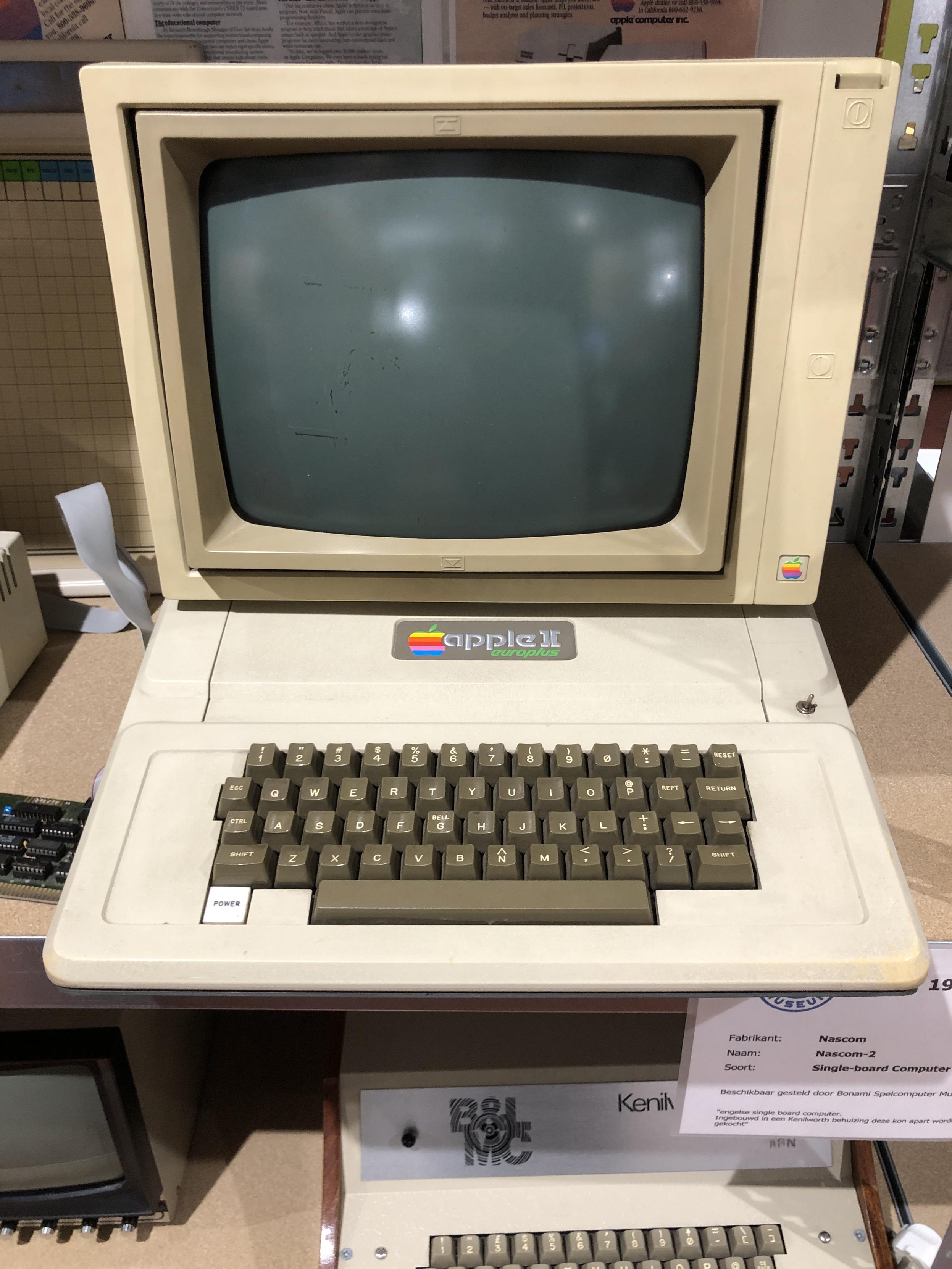
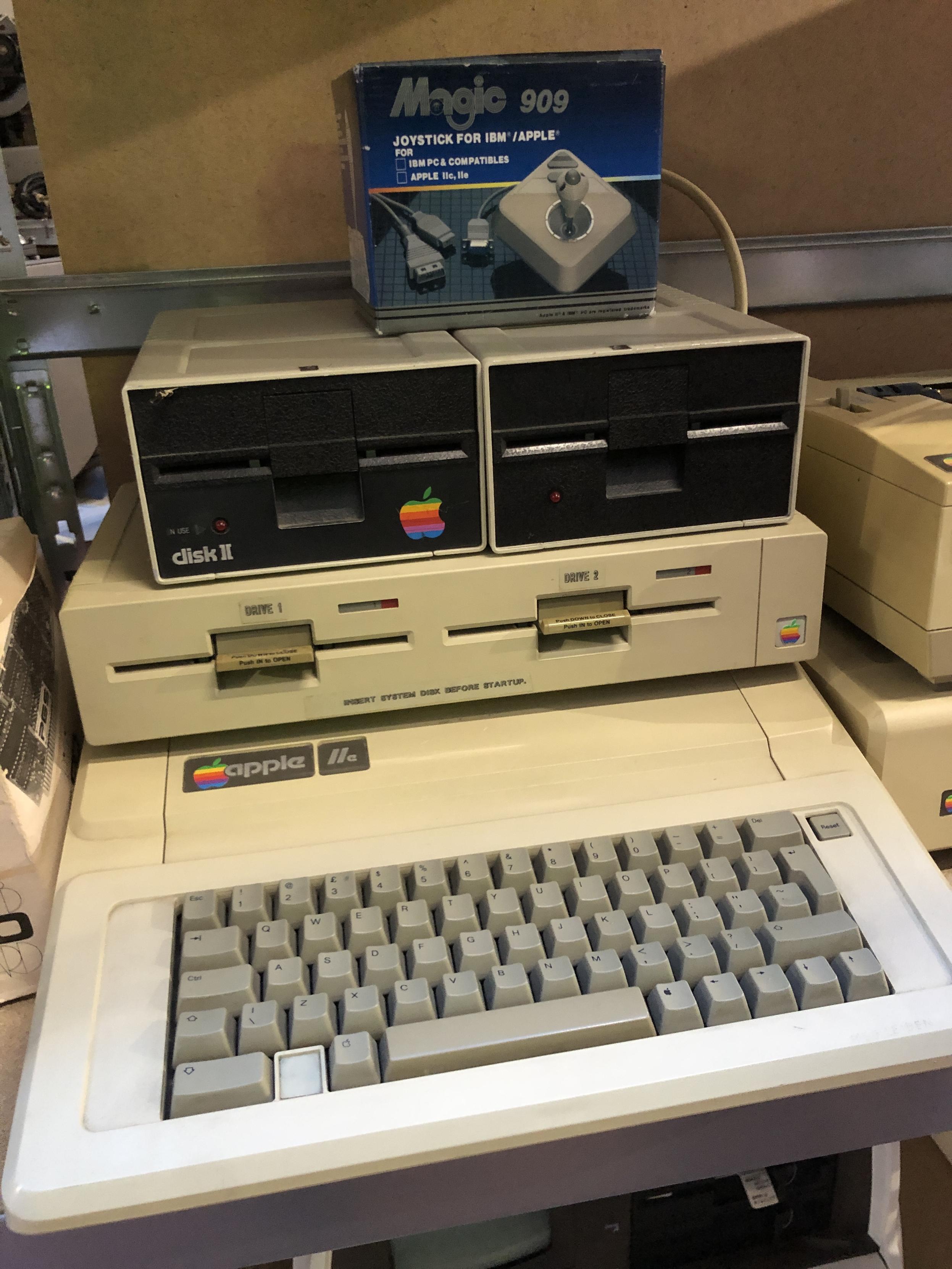
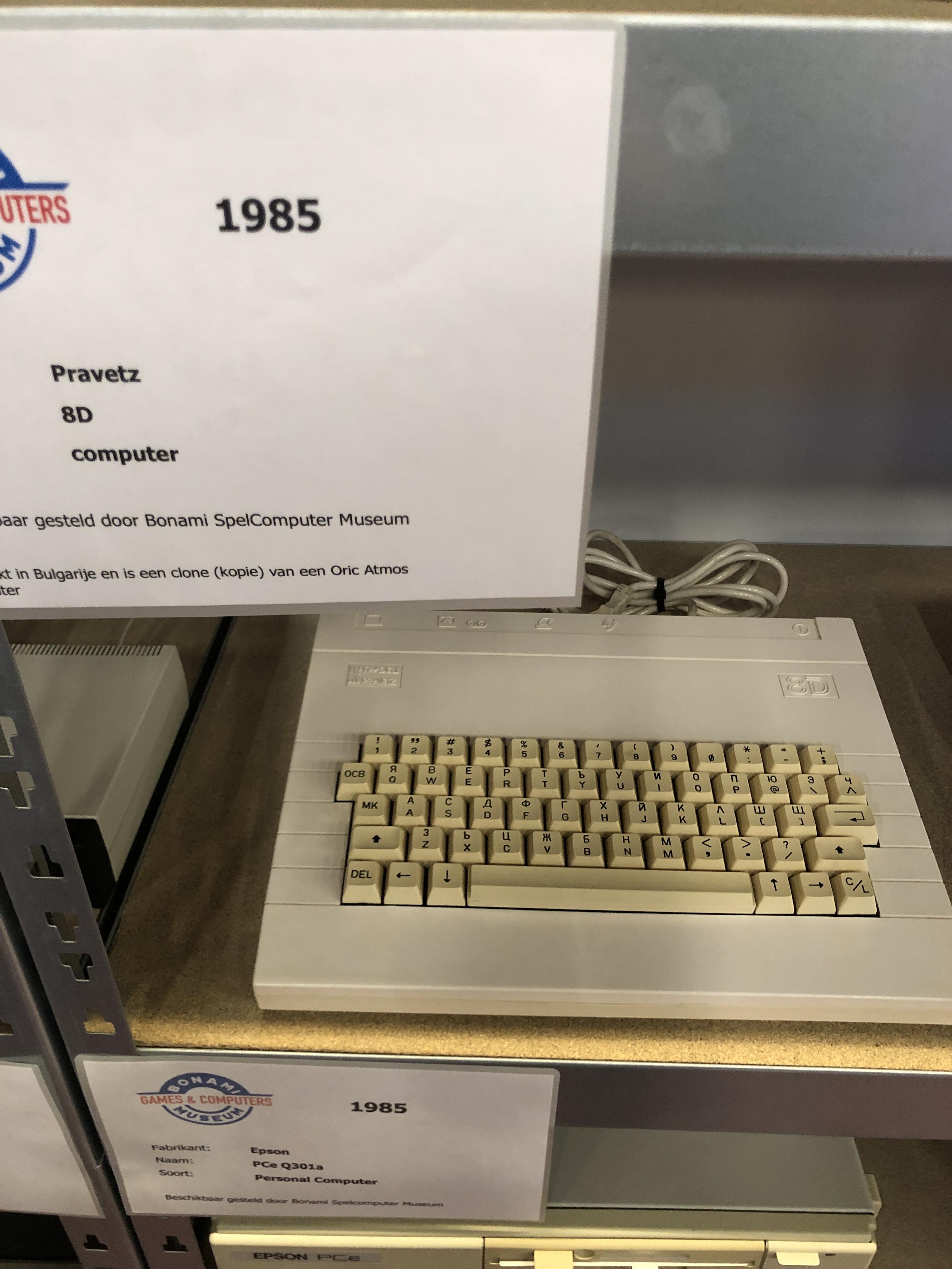
I took my dad to the Bonami Computer Museum in Zwolle.
We saw a bunch of legendary machines like the Commodore 2001, Commodore 64, an Apple II Europlus, Apple IIe and even a Bulgarian Pravetz 8D from 1985.
I started computering in the i486/Pentium era and had only read/heard about these computers.
It was interesting to see/feel them and listen to the echoes of simpler times.
The reason that
$ … | tr "[a-z]" "[A-Z]"
works is that the left-bracket gets translated to a left-bracket and the right-bracket gets translated to a right bracket, so you don't see an issue.
It *is* documented in man pages:
>System V has historically implemented character ranges using the syntax “[c-c]” instead of the “c-c” used by historic BSD implementations and standardized by POSIX. … if the shell script is deleting or squeezing characters as in the command “tr -d [a-z]”, the characters ‘[’ and ‘]’ will be included in the deletion or compression list which would not have happened under a historic System V implementation.
But it's easy to miss.
Very interesting blog post:
https://www.iankduncan.com/engineering/2026-02-06-bash-is-not-enough/
@zekjur one advantage of this approach is that it could build context-aware operations, in particular for Git or other VCS storage. I’m very excited to see this. Eventually I’m sure it could end up built into Emacs itself.
Interesting project for my #Emacs crowd: https://github.com/ArthurHeymans/emacs-tramp-rpc replaces the shell-parsing bits of TRAMP with a high-performance RPC server.
When I get a chance, I’ll try and see if this makes a noticeable difference. I wouldn’t be surprised — TRAMP is not the fastest…
If anyone has already tried it and made good or bad experiences, let me know :)
emacs-tramp-rpc: High-performance TRAMP backend using JSON-RPC instead of shell parsing via @sunng https://lobste.rs/s/tplqv1 #emacs
https://github.com/ArthurHeymans/emacs-tramp-rpc
@crandel I use and like crux-rename-file-and-buffer https://emacsredux.com/blog/2013/05/04/rename-file-and-buffer/