Age gates sold as protecting kids from social media will be used for content moderation, law enforcement, marketing, political control. Always. Every time. Without exception. That's what function creep means. New PsyberSpace® on why this is the oldest trick in the book. https://bit.ly/4k66r27
leslie
Researching power dynamics, resistance, adaptation, identity, communication in digital age 🏳️🌈 auDHD 🎓 PhD candidate 🍉 Psyber.Space for the pod🎙️
Find Me Online
PhD Student
Applied Psychology, concentration in media and technology
MA
Media Psychology, Tech and Innovation concentration
BA
Organizational Psychology
"Therapy isn't working" might mean you need a different approach, not that you're broken. New episode breaks down CBT, DBT, EMDR, somatic work, psychedelic assisted therapy & more - who they help, who they don't, and why matching matters. https://bit.ly/3LpJ5rg

leslie boosted:

https://www.youtube.com/live/7JXQhff9aGc?si=8AQdbD9UqnqqHAUe
Heather Cox Richardson's very cogent explanation of why the attack on Venezuela is more than 'oil.'
The timeline she indicates is critical: the next 3 mos are going to be intense as this govt tries to do everything it can to solidify its position and extend its use of force to maintain control.
I (and others) think we'll have a clear sign by/before June or July if those midterms everyone is hanging their hopes on will actually take place. (Especially if Congress and the military make no effort to stop the Death Star.)
By then, our current fragile veil of normalcy will be in tatters. There is no 'three more years of this.' If you get what I mean.
So what do we do?
Whatever we can, wherever we are.
Yes, protest.
Yes, build community.
Yes, protect the community.
Yes, advocate and agitate as you can/are able.
Yes, take direct action.
Yes, share information.
Yes, keep an eye on....things.
Yes, use your skills and resources to change our current trajectory.
Study hall is over.

As 2025 closes and 2026 looms, it seems like a great time to re-share this episode about the psychology of New Year's resolutions, since your brain doesn't care about an arbitrary date.
Listen here: https://bit.ly/4gt3pBT
New #PsyberSpace episode: Going No Contact - Why Adult Children Are Choosing Their Mental Health Over Family
Research findings:
-27% of adults are estranged from family
-68% feel significant stigma about it
-Adult children cite abuse and lack of acceptance
-Parents blame third parties 80% of the time
Trying different formats for the podcast, different platforms for sharing. Long form post on LinkedIn today for the episode on trust in research: https://www.linkedin.com/pulse/how-engineered-doubt-language-restrictions-undermine-public-kqtzc/?trackingId=KK7XjuGBJKV%2FY0uRfZZ33w%3D%3D
Ever notice how certain phrases end conversations? "You can't stop progress." "It is what it is." "We're all family here."
In this PsyberSpace episode, I break down thought-terminating clichés; why they work, who benefits, and how to fight back. From workplace manipulation to tech industry talking points, these phrases are everywhere.
Apple Podcasts: https://apple.co/4pX3p23
All players: https://psyber.space/episodes/stop-thinking-how-clever-phrases-hijack-your-brain

The final episode in the week long series on living through the Entropy Age is live! Let's talk about moving from entropy to action: https://bit.ly/3XK88b8

New PsyberSpace episode: Your brain isn't recording reality—it's predicting it. We explore why two people can witness the same event and construct genuinely different experiences, from the McGurk effect to deepfakes. Listen now: https://bit.ly/4ok5h4h
Everyone's talking about AI replacing jobs. Nobody's talking about the job AI just created: The AI Fact Checker.
Organizations are finally realizing that "the AI made it up" isn't an acceptable excuse when you're facing sanctions, lawsuits, or regulatory investigations. Legal departments learned this the hard way. Academic institutions are learning it now. Your marketing team is probably next.
Here's why this role matters: https://bit.ly/47gRg1l
leslie boosted:

It just so happens that the owner of this publication is also the founder of Amazon, the world’s biggest builder of data centers
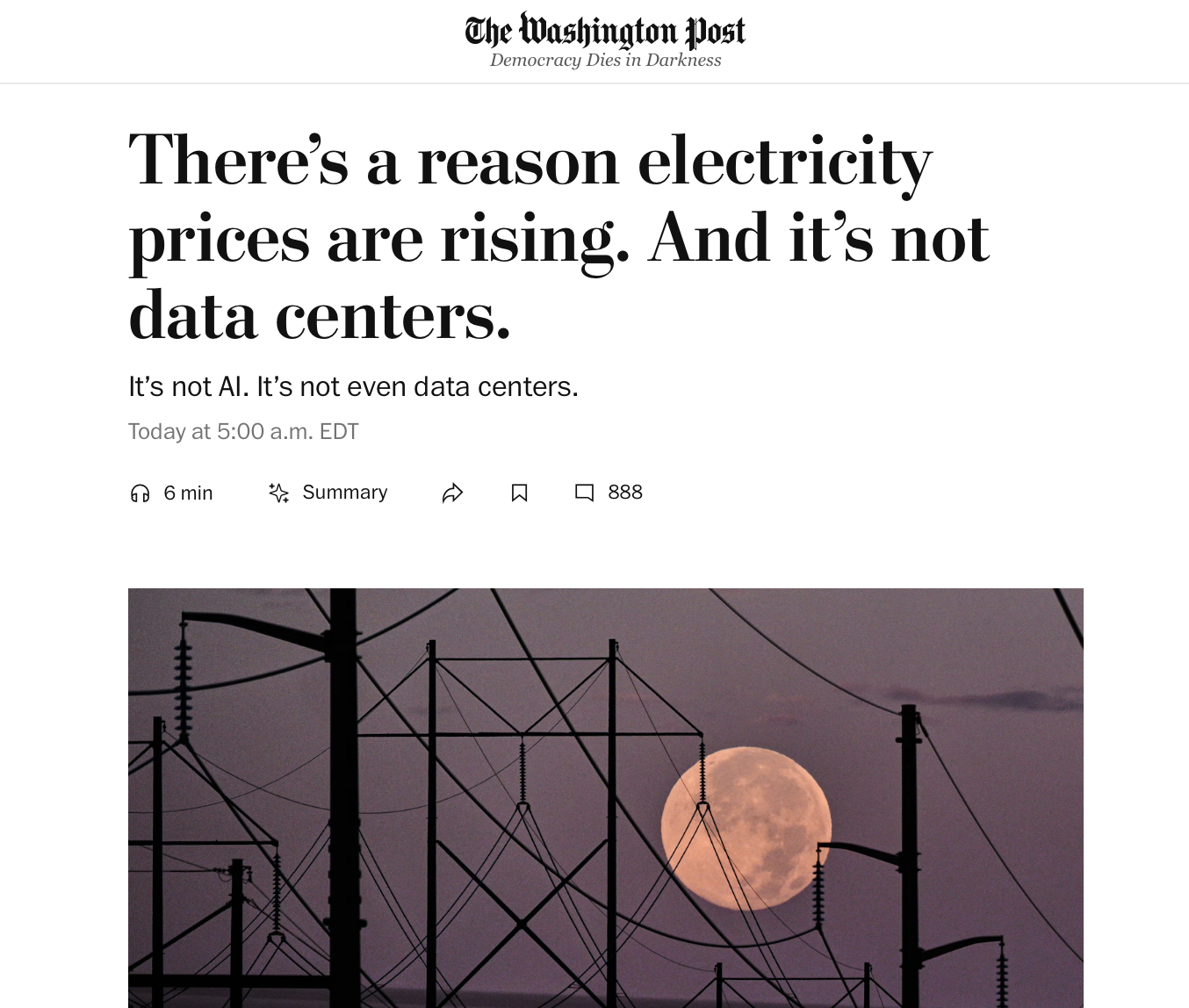
RE: https://mastodon.social/@leslie/115406434640328789
My podcast host was down yesterday like everything else, so if you missed the episode, it's up now:
New PsyberSpace: The Psychology of Better Work
Why do execs push RTO when research shows remote work, 4-day weeks & flexibility work better?
I examine:
-Remote work & autonomy
-Iceland & UK 4-day week trials
-UBI's mental health benefits
-RTO as disguised layoffs
-AI as the new excuse
The science is clear: autonomy drives motivation. Flexibility improves wellbeing. Rest enables performance.


It's complicated. On this episode, I unpacked the myths and realities of how platforms impact children's wellbeing. Move beyond the screen to understand the nuanced psychological effects. Listen here: https://psyber.space/episodes/beyond-the-screen-unpacking-the-myths-of-social-medias-impact-on-children
Technology is reshaping education, but not without "tech tension." On this PsyberSpace episode, I explored the psychological effects of EdTech and ways to balance benefits and risks. Tune in: https://bit.ly/48rrybw
Why do meetings suck? On this PsyberSpace, I explored the science behind unproductive work rituals and shared tips to make them suck less. Listen now: https://psyber.space/episodes/why-meetings-suck-thehidden-psychological-costs-of-modern-work-rituals

Getting the word out: https://medium.com/@leslie/how-we-contort-ourselves-to-be-heard-online-3bc3223ad504
Climate anxiety affects 45% of people's daily lives, but it can be channeled into action rather than paralysis.
Psychological barriers to climate action: distance bias (feels far away), doom fatigue (emotional exhaustion), bystander effect (my actions won't matter), and system justification (defending the status quo).
Research shows participation in collective climate action increases well-being and sense of agency.
https://bit.ly/3KEgy0J
🎧 New #PsyberSpace episode: Why Your Surgeon Wears Special Socks
Why do professionals at the top of their fields—surgeons, pilots, Olympic athletes—rely on small rituals and lucky charms?
Turns out superstition isn't irrational. It's a stress-regulation tool that helps humans handle uncertainty and perform under pressure.
Charms don't change probability. They change us. And sometimes, that's enough.
Listen: https://bit.ly/48l08Ea
#psychology


Client Info
Server: https://mastodon.social
Version: 2025.07
Repository: https://github.com/cyevgeniy/lmst